


























On Tuesday, July 28, 2026, Australian company DroneShield unveiled RfAI-3, the third generation of its proprietary radio-frequency analysis module. RfAI-3 represents a significant evolution in counter-unmanned aircraft system (C-UAS) doctrine by prioritizing wideband detection of drone threats beyond known and pre-classified emitters, providing decision-grade situational awareness in the complex and rapidly evolving threat environments that define modern operations.
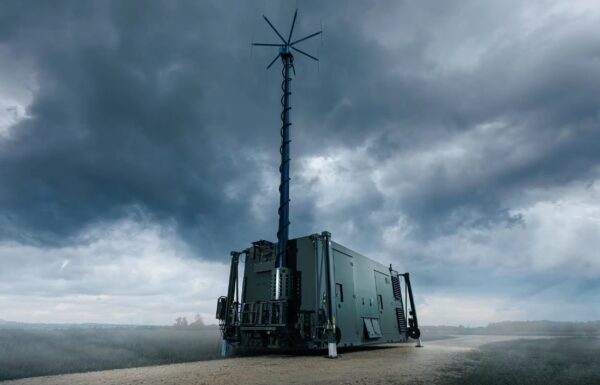
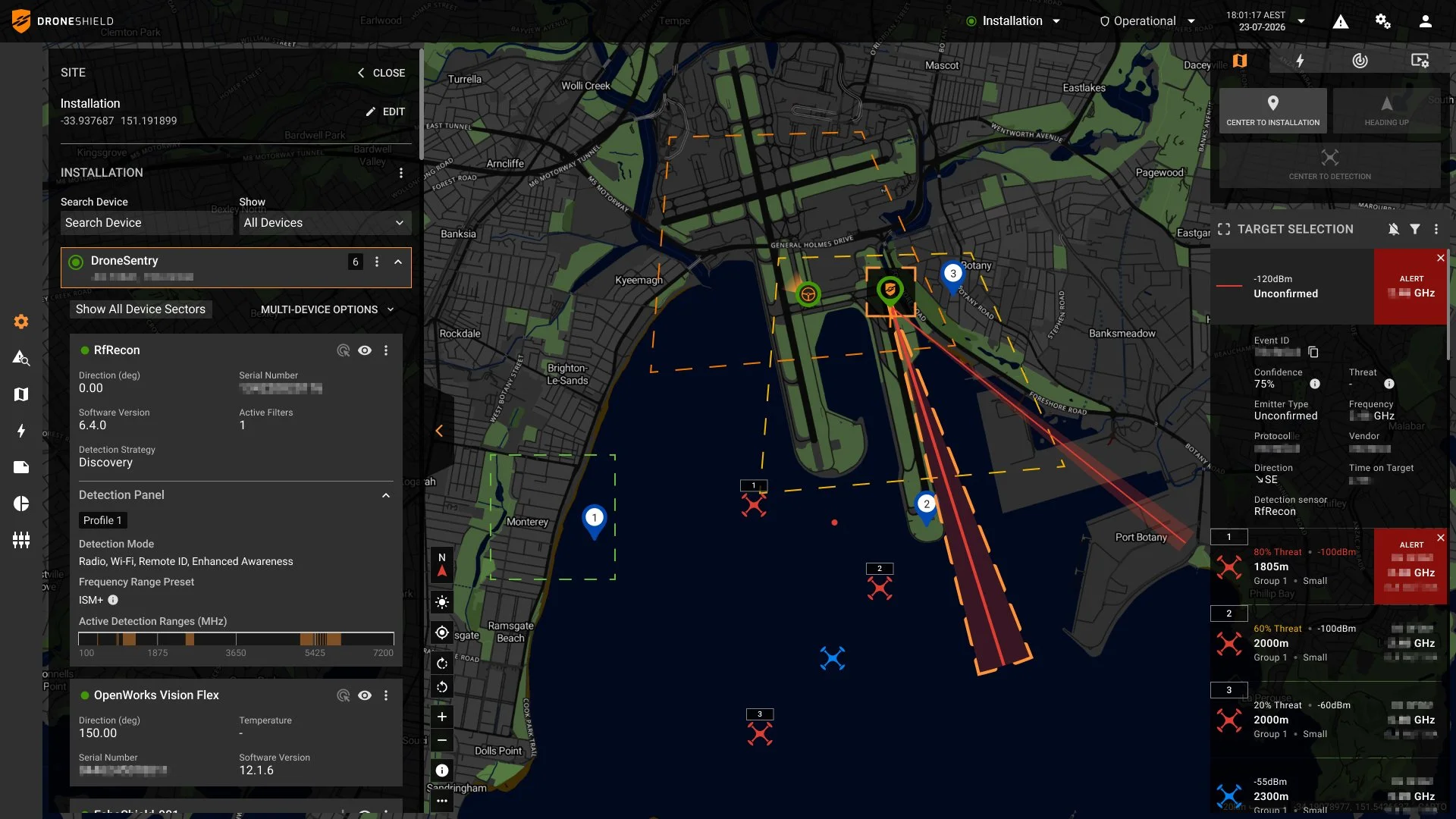 The RfAI-3 system detects unknown radio-frequency emissions within DroneSentry-C2 command-and-control software, providing operational context and enabling rapid decision-making / Photo: DroneShield
A new detection paradigm
Industry-standard RF detection systems operate on a classified-emitter model: a drone must first be cataloged in an RF dataset before it can be reliably identified. As drone proliferation accelerates and adversaries deploy increasingly novel commercial and purpose-built systems, this limitation creates a critical and growing capability gap.
RfAI-3 reverses the conventional approach. Instead of searching the spectrum for signals it already recognizes, the model detects emissions that are present and then compares each of them with previously observed drone signatures. When a match is found, the emitter is classified in detail. When no match is found, RfAI-3 generates an unknown-emission signature and presents it to the operator together with a confidence assessment, correlated against the broader spectrum picture. Nothing is discarded simply because it is unfamiliar, and every new signature generated by the model becomes a reference point for the next encounter.
„The drone threat doesn’t wait for classification. RfAI-3 represents a fundamental shift in how we approach RF-based detection. We are no longer limited to seeing only what we already know. Wideband changes the calculus for our operators and for the adversaries trying to evade them,” said Angus Bean, Chief Executive Officer of DroneShield.
Evolution of the RfAI system
Initially developed in 2018, RfAI laid the foundations for DroneShield’s RF detection architecture, enabling the real-time classification of known signals emitted by drones with a level of precision unattainable by rigid rule-based systems.
Introduced in 2023, the second-generation RfAI-2 transformed the RF intelligence database into a continuously evolving resource. New drone models, protocols, and threat vectors identified through DroneShield’s ongoing signal acquisition and analysis program were distributed to deployed systems.
Unveiled yesterday, the third-generation RfAI-3 builds on these strong foundations while breaking with the existing paradigm. Wideband detection extends beyond the confines of the RF database itself, enabling the detection of drone emissions not included in any catalog. Combined with the continuously expanding RF intelligence database inherited from RfAI-2, the system gains detection capabilities that accumulate over time while retaining the ability to identify previously unseen signals.
Cumulative intelligence capability
A key feature of the RfAI architecture, retained and enhanced in RfAI-3, is its continuously evolving RF intelligence database. DroneShield’s engineering teams conduct a rigorous signal identification, classification, and integration program, ensuring that known threat signatures are cataloged and distributed to all deployed systems.
This means that the system’s effectiveness in detecting known signals increases over time. An RfAI-3 system deployed today will be more capable six months after entering service than it was on the day of deployment, not because of hardware upgrades, but because of the continuous expansion of the intelligence database on which it relies.
Delivery and availability
RfAI-3 has been designed specifically for DroneShield’s next-generation hardware platforms. The first versions are expected to enter the market in the second half of 2026, followed by additional releases in 2027. DroneShield’s current product portfolio will continue to be supported under its software subscription model, including the ongoing expansion of detectable signal coverage as the RF intelligence database grows.
Today marks the introduction of a new generation of RF intelligence.
Read the full release: https://t.co/XFlHsjqwdu#RfAI3 #DroneShield pic.twitter.com/kMVg8WHTsW
— DroneShield® (ASX:DRO) (@DroneShield) July 28, 2026
See also: