
















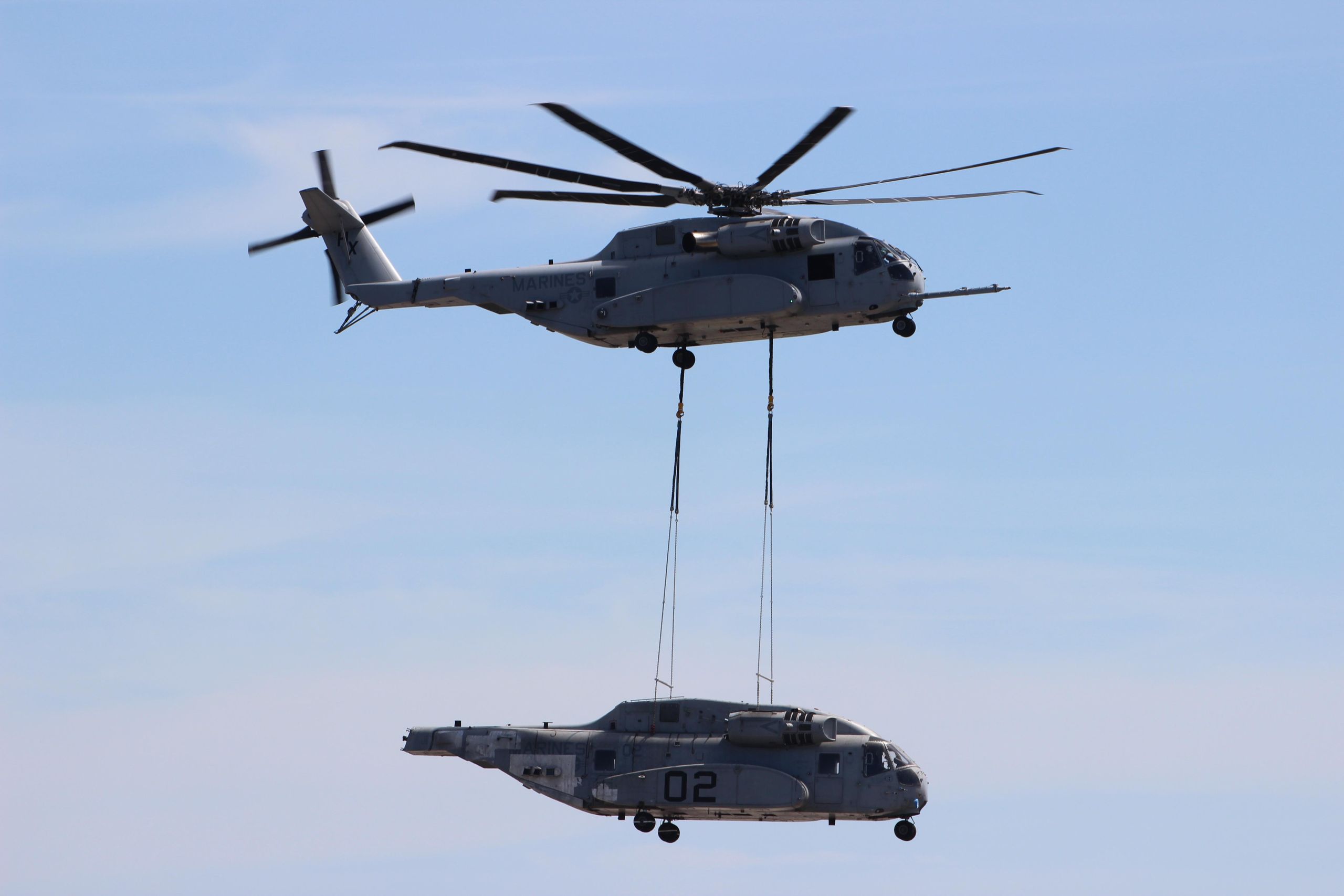
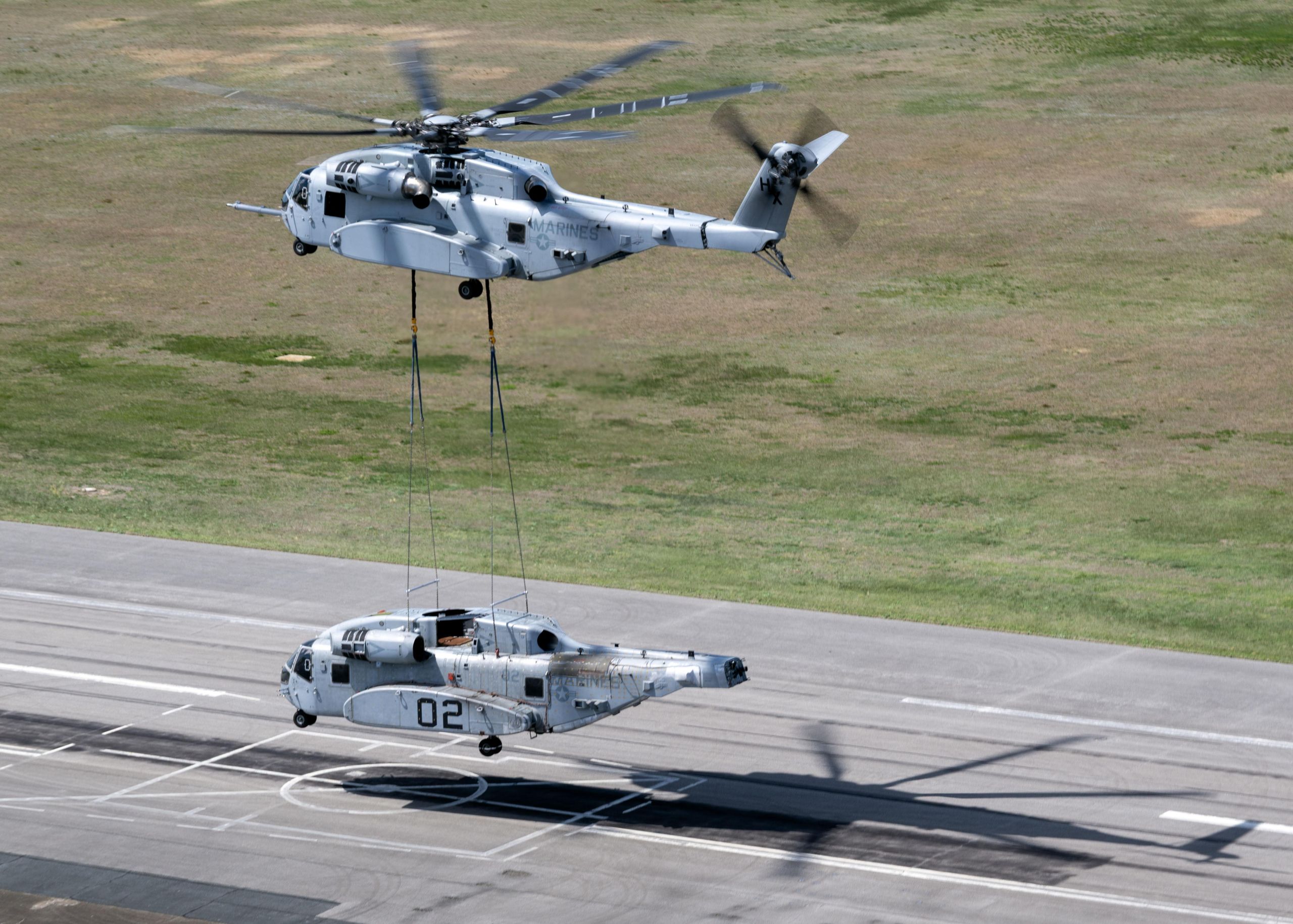
On Thursday, May 7, 2026, Naval Air Systems Command (NAVAIR) of the U.S. Navy, based at Patuxent River, Maryland, published on social media a video of the first test involving the lifting and sling-load transport of a Lockheed Martin/Sikorsky CH-53K King Stallion heavy-lift transport helicopter by a twin rotorcraft – both belonging to the U.S. Marine Corps (USMC). According to the announcement, the load weighed about 12.7 t (27,000 lb).
#ICYMI: The CH-53K King Stallion achieved a new milestone by lifting itself. The ~28,000lb load was an Engineering Development Model from the program’s early developmental testing years.
📰: https://t.co/JVn4An6Hlx pic.twitter.com/m8GDAY8JAk
— NAVAIR (@NAVAIRNews) May 7, 2026
The information about the feat itself was published on Monday, April 20 this year. The tests were conducted by the U.S. Navy’s Air Test and Evaluation Squadron 21 (HX-21 Blackjack), under the supervision of the H-53 Heavy Lift Helicopters program office, PMA-261, and formed part of the sling-load transport evaluation for the USMC’s newest transport helicopter.
“This is a capability we hope will never be needed in the fleet,” said Col. Kate Fleeger, Program Manager, PMA-261. “However, the continued expansion of the aircraft’s capabilities ensures a faster response to emerging requirements and highlights its ability to perform.”
The main objective of the evaluation was to verify the specialized sling rigging and procedures required to safely airlift a downed or damaged CH-53K helicopter – a capability that has not yet been standardized in official U.S. Navy recovery manuals. During the test, the team sought to understand the flight characteristics and load dynamics associated with such a heavy lift in order to provide the Marine Corps with the ability to safely conduct Tactical Recovery of Aircraft and Personnel (TRAP) missions in the future.
Photos: NAVAIR
“The insights and data gathered from this test will directly inform updates to the Aircraft Salvage Operations manual, providing the fleet with standardized procedures for a dual-point external lift of a CH-53K,” said Fleeger.
The helicopter that was lifted was one of four Engineering Development Model (EDM) prototypes used during the early years of testing in the program. Its three General Electric T408-GE-400 turboshaft engines, most of the transmission system, the main and tail rotors, and part of the tail boom were removed before the lift to reduce the weight to about 28,000 lb, or approximately 12,477 kg. This still falls within the CH-53K’s current external lift capacity of 36,000 lb, or approximately 16,477 kg. The EDM will continue to serve the program, as it will be transferred to Marine Heavy Helicopter Training Squadron 302 (HMHT-302) at New River, North Carolina, where it will be used as a ground-operations crew trainer, helping educate and train the next generation of King Stallion crews and maintenance personnel.
See also: