





























On Sunday, January 11, 2026, the UK Ministry of Defence announced that the planned new tactical ballistic missile systems to be developed under the codenamed Nightfall program for the British Army will also be delivered to Ukraine. A Request for Information (RFI) for the program was published on August 27, 2025.
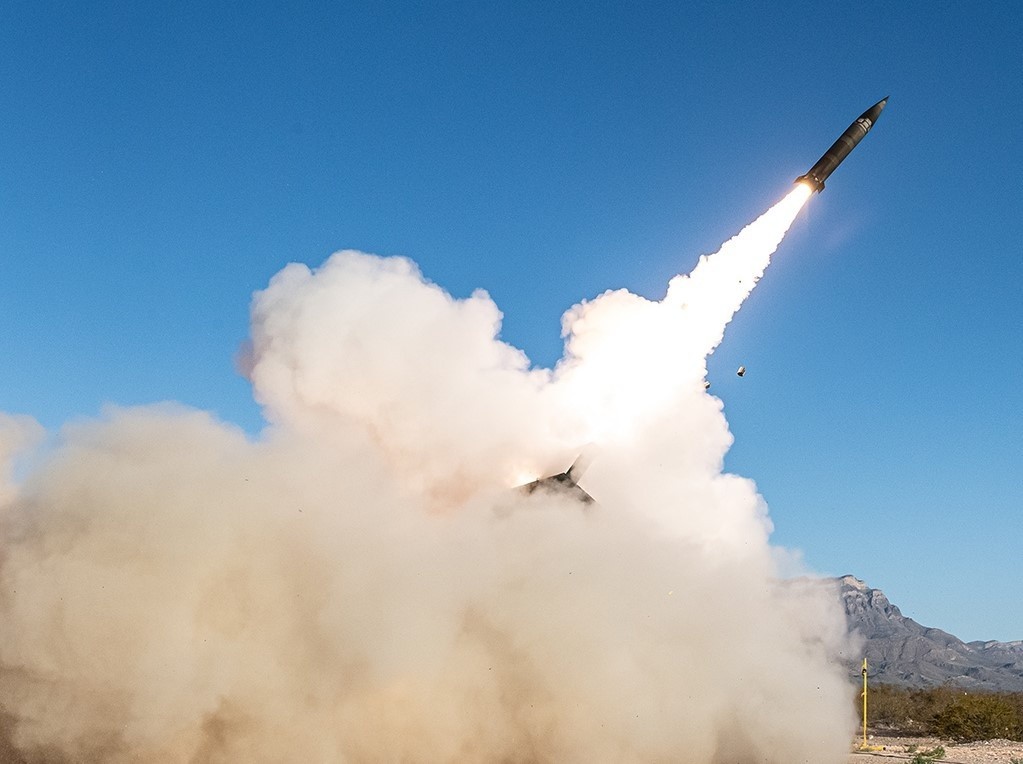 Launch of a PrSM ballistic missile from an M270A2 MLRS launcher / Photo: Lockheed Martin
The last weapon system of this class in the British Army’s arsenal was the U.S.-made MGM-52 Lance ballistic missile (optionally equipped with a nuclear warhead), which entered service with the 50th Missile Regiment, Royal Artillery in 1976 and was withdrawn in 1993.
According to the requirements, the new missile system is to have a strike range of at least 500 km while carrying a 200-kilogram warhead (earlier requirements cited a minimum range of 600 km and a warhead weighing approximately 300 kg – editor’s note.). The government in London wants serial production to reach 10 systems per month, with a maximum unit price per missile of 800,000 GBP. The missiles are to be carried on mobile platforms.
As emphasized, the missiles will be capable of being launched in salvos at short intervals, and the mobile platforms will be able to withdraw from launch positions within minutes, enabling Ukrainian forces to strike key military targets before Russian forces can respond.
The Nightfall program is based on the United Kingdom’s unwavering commitment to Ukraine, particularly in strengthening its long-range capabilities, including through the donation of thousands of long-range one-way combat drones.
UK Secretary of State for Defence John Healey said:
“The attacks overnight on Thursday just go to show how Putin thinks he can act with impunity, targeting civilian areas with advanced weaponry. Instead of seriously negotiating a peace, he’s seriously escalating his illegal war. We were close enough to hear the air raid sirens around Lviv on our journey to Kyiv, it was a serious moment and a stark reminder of the barrage of drones and missiles hitting Ukrainians in sub-zero conditions. We won’t stand for this, which is why we are determined to put leading edge weapons into the hands of Ukrainians as they fight back.”
Minister for Defence Readiness and Industry, Luke Pollard MP added:
“A secure Europe needs a strong Ukraine. These new long-range British missiles will keep Ukraine in the fight and give Putin another thing to worry about. In 2026, we will continue to stand shoulder to shoulder with Ukraine. Providing equipment to keep them in the fight today, whilst working to secure the peace tomorrow.”
The aim of the program is to award three industry teams a development contract worth 9 million GBP to design, develop, and deliver the first three missiles within 12 months for testing purposes.
Detailed requirements for the Nightfall system were shared with industry partners on December 19, 2025, after they signed the required confidentiality and security agreements. The deadline for submitting system development proposals is February 9, 2026, with the development contract(s) expected to be awarded in March 2026.
It is worth noting that on May 15, 2025, the UK Ministry of Defence announced that, together with the Federal Ministry of Defence and industry partners, it would develop a long-range strike missile system capable of precisely engaging targets deep in enemy territory at distances exceeding 2,000 km. This declaration stems from the Trinity House defense agreement, which strengthens military cooperation between the two NATO allies and was signed on October 23, 2024.
No details were provided, but for example Germany is a participant in the European initiative to develop long-range precision strike capabilities codenamed ELSA (European Long-Range Strike Approach), together with Poland, France, and Italy; Sweden and the United Kingdom later joined the initiative as well. In addition, since November 2024 it has been known that the French government is examining the possibility of developing a conventional ballistic missile with a range exceeding 1,000 km, for which France plans to allocate nearly 1 billion EUR.
It is also worth noting that the United Kingdom, planning to procure 15 new M270A2 multiple-launch rocket systems alongside the modernization of 61 older M270B1 launchers to the M270B2 standard, has never purchased MGM-140 ATACMS ballistic missiles with ranges of 165–300 km for these platforms (which in any case do not meet the Nightfall requirements). By contrast, their successor being fielded by the United States and Australia, the PrSM (Precision Strike Missile), while compatible with the M270A2 and offering a range of 400–700 km (and up to 1,000 km in the future as LRMF – Long Range Maneuverable Fires), currently carries too small a high-explosive fragmentation warhead, weighing only 90 kg.
It is also worth adding that among NATO members on this side of the Atlantic, only Turkey has developed conventional, land-based ballistic missiles. These include the Tayfun, with a range exceeding 500 km (ultimately over 1,000 km), derived from the KAAN Bora missile with a range of 280 to 400 km. The warhead weight is unknown.
Ukraine, meanwhile, according to information from June 2025, has developed a new ballistic missile that destroyed a Russian command post after traveling nearly 300 km. In previous years, the OTRK Grom-2/Sapsan (also known as Hrim-2) was developed as a successor to the outdated OTR-21 Tochka-U missiles.
Finally, it should be noted that the United Kingdom is also interested in hypersonic weapons.
Last night, Russia launched a barrage of attacks against Ukraine, including an ‘Oreshnik’ ballistic missile fired at Lviv, killing and injuring dozens. These attacks are yet another attempt by Putin to terrorise the people of Ukraine and threaten the security of Europe.
That… pic.twitter.com/H1LshRxwc1
— Ministry of Defence 🇬🇧 (@DefenceHQ) January 9, 2026
A clear reminder: why we must support Ukraine in the fight today, to help secure the long-term peace tomorrow.@JohnHealey_MP from Kyiv 👇 pic.twitter.com/mUnvNpaV82
— Ministry of Defence 🇬🇧 (@DefenceHQ) January 10, 2026