







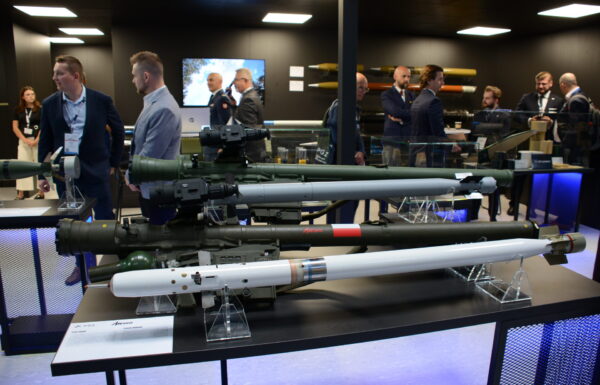
















On Friday, May 1, 2026, the U.S. Department of State approved three potential sales to Israel, Qatar, and the United Arab Emirates of packages containing WGU-59/B APKWS II (Advanced Precision Kill Weapon System) laser guidance kits for Hydra 70 rockets.
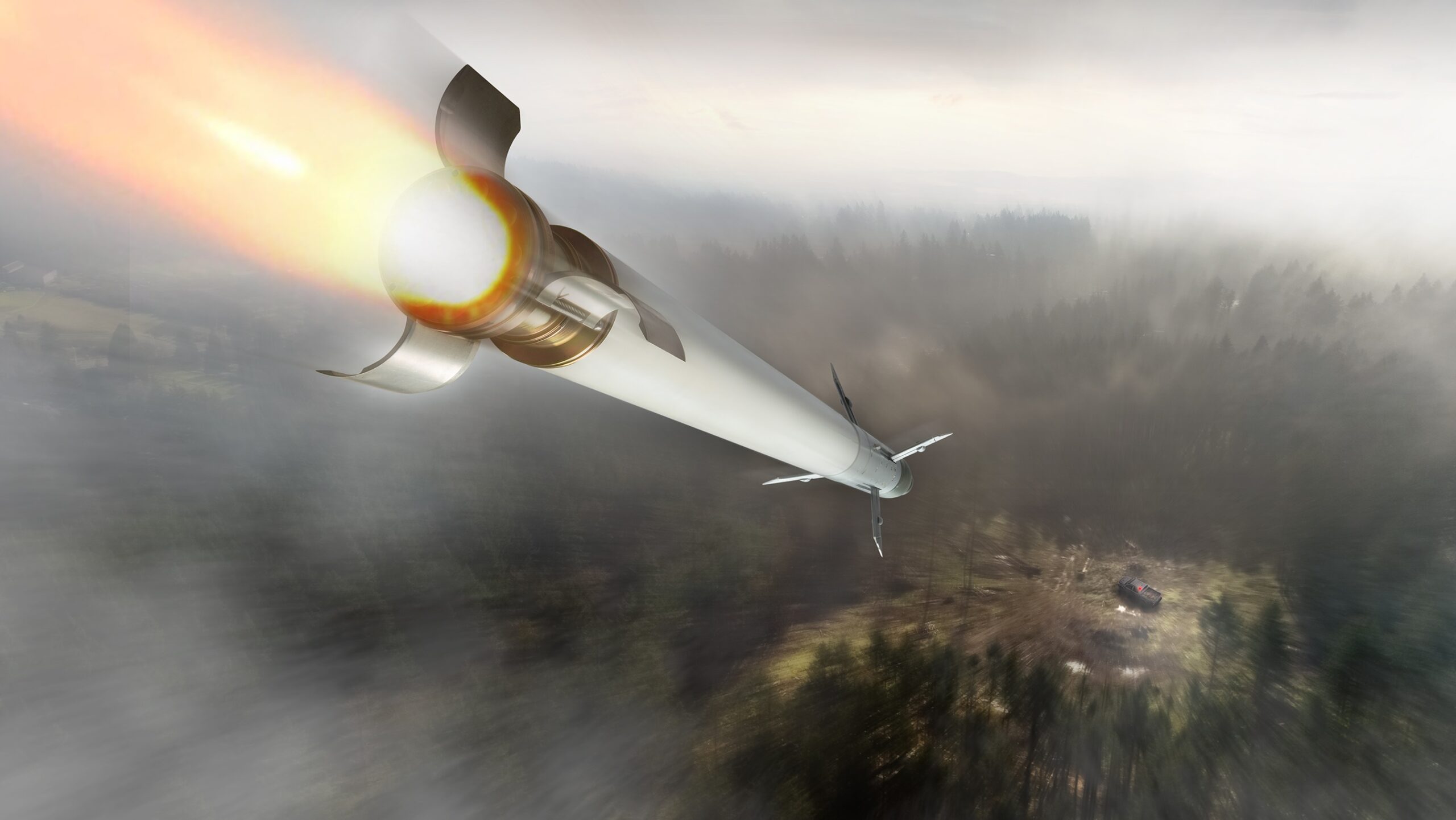 Image: BAE Systems Inc.
Israel received approval to purchase 10,000 WGU-59/B APKWS II guidance kits for up to 992.4 million USD. The request also included the following non-MDE (Major Defense Equipment) items: test equipment; other support equipment; technical data; spare and repair parts; publications and technical documentation; personnel training equipment; transportation; U.S. government and contractor engineering, technical, and logistics services, with BAE Systems Inc. as the contractor; and other related elements of logistics and program support.
Qatar requested the same number, 10,000 kits, with its package also valued at up to 992.4 million USD. The package also includes, among other items, LAU-131 A/A rocket launchers, Mk 152 high-explosive fragmentation warheads, Mk 66 rocket motors, proximity fuzes, WTU-1/B practice warheads, and the same support elements listed above.
The United Arab Emirates, in turn, requested only 1,500 kits, valued at up to 147.6 million USD.
In all three cases, the Secretary of State determined and provided a detailed justification that an emergency exists requiring the immediate sale of the packages in the national security interests of the United States, thereby waiving the congressional review requirements under Section 36(b) of the federal Arms Export Control Act.
It appears that these countries are not accidental customers for the kits, which have recently been tested as a low-cost means of countering threats such as long-range unmanned aerial vehicles, in the context of recent events in the Middle East.
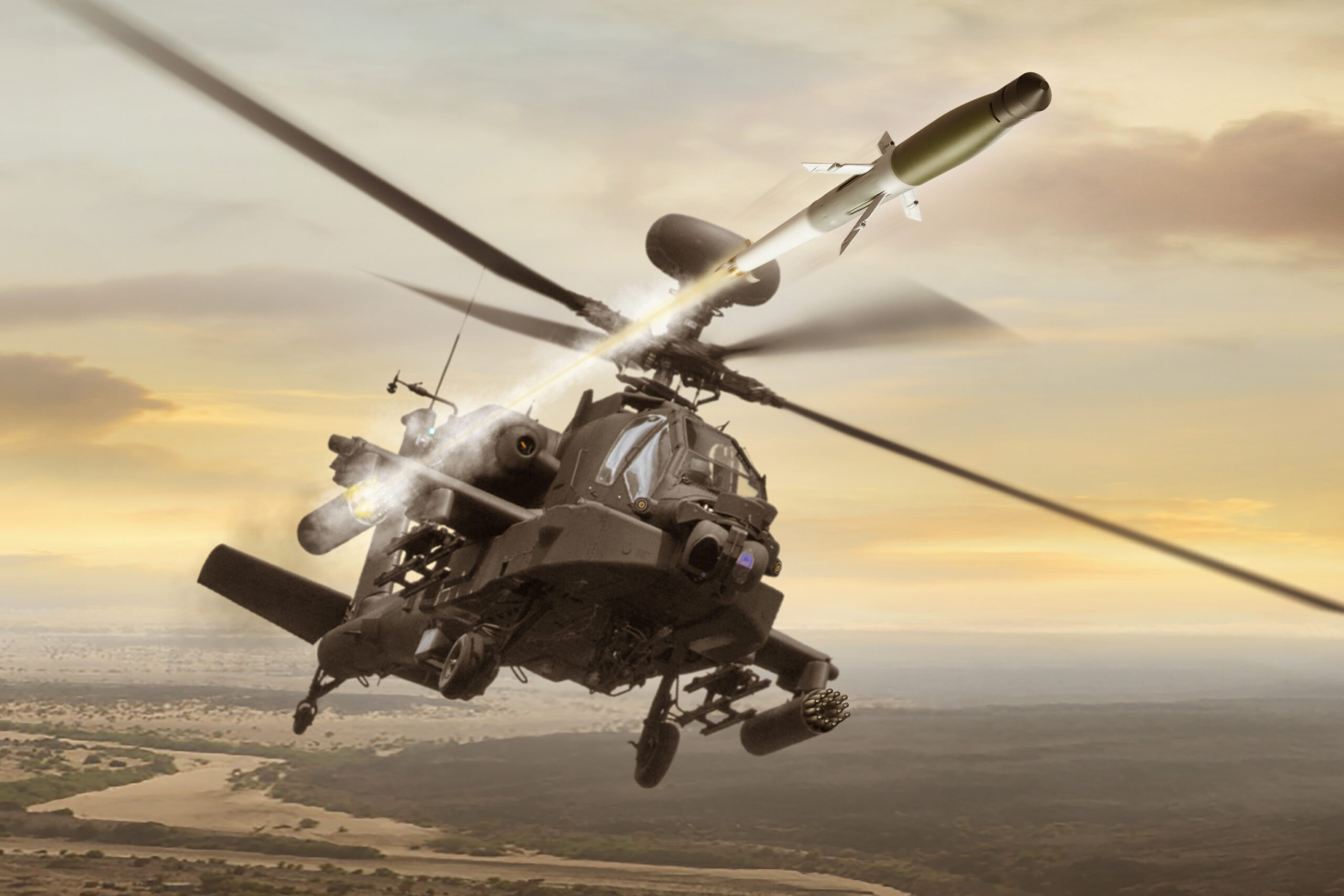
WGU-59/B APKWS II
BAE Systems Inc. has been producing the kits for more than 13 years at its facilities in Hudson, New Hampshire, and Austin, Texas (BAE Systems to Continue Production of APKWS II Laser-Guidance Kits).
The key component of the WGU-59/B APKWS II module is the DASALS (Distributed Aperture Semi-Active Laser Seeker) guidance system, which is installed between the Mk 152 warhead with the Mk 435 fuze and the Mk 66 Mod 4 rocket motor and the rocket’s fuel section. This converts 70 mm unguided Hydra 70 rockets into semi-active laser-guided anti-tank rockets.
So far, APKWS II has been integrated with AV-8B, OV-10, F-16C/D, A-10, A-29, F/A-18, and CN-235 aircraft, as well as UH-1Y, AH-1W/Z, AH-64, Tiger, MH-60R/S, Bell 407GT, and AH-6i helicopters. They are launched from LAU-131A/A, LAU-68F/A, LAU-68D/A, and LAU-61G/A DRL (Digital Rocket Launcher) launchers. Work is under way to integrate them with the Harvest Hawk module on KC-130J aircraft, as well as V-22 tiltrotor aircraft, MQ-8C unmanned helicopters, and Strix unmanned aircraft. They are also launched from ground vehicles, such as the ACV-30, or in the AGR-20A variant for Arnold Defense’s Fletcher Land-LGR4 launcher.
On August 2, 2021, BAE Systems unveiled an improved APKWS II variant with range and precision increased by 30%, meaning that when fired from helicopters, the range rose from 5 to 6.5 km, and when fired from aircraft, from 11 to 14.3 km. Series production began in the third quarter of 2021. The improved rockets were first fielded by the U.S. armed forces.
So far, the kits have been exported to the United Kingdom, Afghanistan, Australia, the Philippines, the Kingdom of the Netherlands, Iraq, Jordan, Lebanon, and Morocco. In recent years, approval to purchase them has been granted to Czechia, Egypt, and Slovakia, although the latter is likely to abandon the purchase; Mexico has also withdrawn from its planned purchase. Poland will also join the user base, having received approval to purchase 7,650 modules for its Apache helicopters, while APKWS II will also be one of the effectors of the San counter-drone systems. Other future users include Saudi Arabia and Nigeria, while under military aid packages the modules have also been delivered to Ukraine to arm L3Harris VAMPIRE (Vehicle-Agnostic Modular Palletized ISR Rocket Equipment) systems.
Last year, the munition was tested from the TRV-150 multirotor unmanned aerial system.
