















The intensive flight test phase of the Viper Shield system, conducted using hardware and software already in production configuration, confirms the capabilities of this digital electronic warfare (EW) solution developed by L3Harris Technologies and validates its effectiveness under real-world combat conditions.
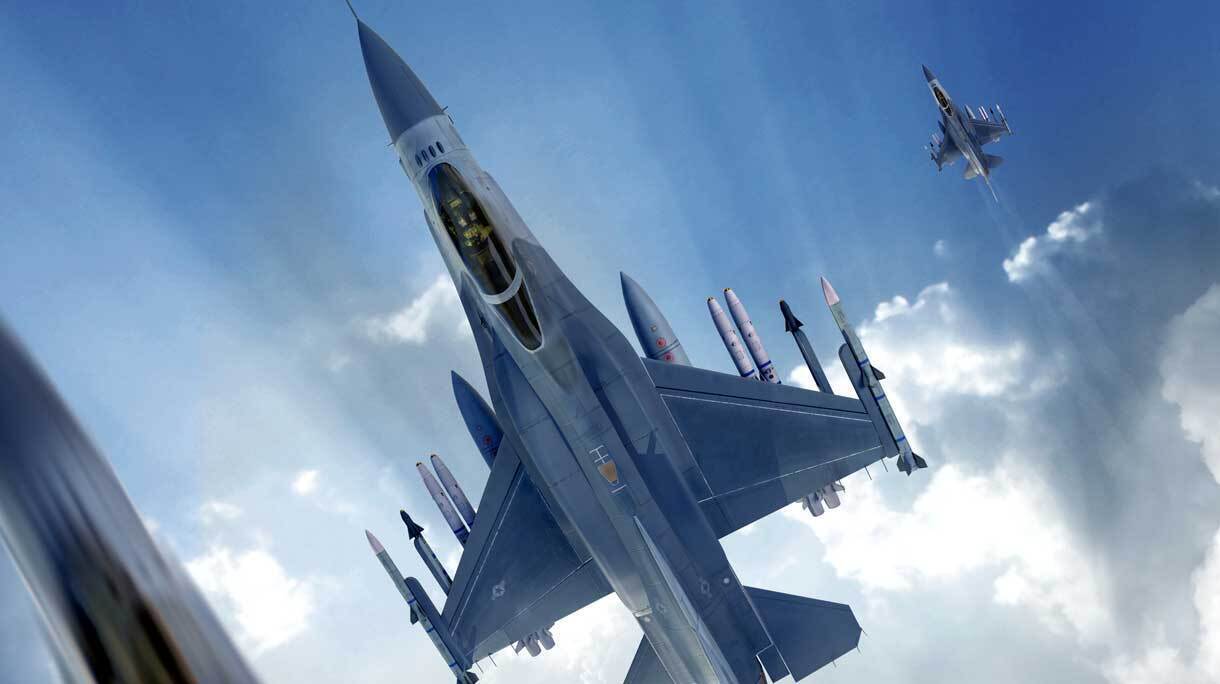 Photo: L3Harris Technologies
The flight test program, conducted under the leadership of the United States Air Force on single-seat and two-seat variants of the F-16 aircraft, is critical to the further refinement of Viper Shield. These flight trials ensure that the global F-16 fleet will be equipped with a state-of-the-art electronic warfare (EW) system whose capabilities significantly exceed those of legacy solutions and competing offerings.
“Our systematic testing strategy, which includes lab-based hardware and software assessments, dense radio frequency environment simulations, and comprehensive ground and flight validations, underscores the unmatched functionality and reliability of Viper Shield,” said Travis Ruhl, Director of International Business Development, L3Harris. “With each test, Viper Shield proves its maturity and quality, reinforcing its position years ahead of the competition.”
L3Harris Technologies has also delivered the first production-representative version of the Viper Shield system software for formal testing. This paves the way for the final phase of the test program and the system’s ultimate fielding, reaffirming the company’s commitment to delivering the most advanced electronic warfare (EW) capabilities to enhance the safety and operational effectiveness of service members.
The flight test program represents the culmination of the process to validate the reliability, resilience, and precision threat-response capabilities of Viper Shield against modern threats. Each test flight provides an opportunity to demonstrate the system’s maturity and readiness for operational use, leverage its software-defined architecture for further development, and eliminate potential issues.
L3Harris has confirmed the capability and maturity of Viper Shield through:
- Accelerated delivery execution: Significant investments in production facility optimization, manufacturing center improvements, and test automation, combined with a fully funded, active production line, position Viper Shield to deliver advanced EW capabilities and enhanced aircrew survivability at a faster pace than competitors.
- Advanced capability delivery: Its fully digital, software-defined architecture enables the development and deployment of the most advanced features without requiring hardware modifications during production.
- Universal compatibility by design: Viper Shield is structurally compatible with both single-seat and two-seat F-16 aircraft.
- Unmatched system performance: The system significantly outperforms legacy EW solutions, delivering substantial improvements in detection, jamming, and survivability in both air-to-air and air-to-ground scenarios.
- Integrated defensive capability: Full integration with other onboard systems allows pilots to focus on mission execution while Viper Shield ensures the highest level of aircraft protection against modern threats.
As part of the extensive test phase, a series of evaluations validated the full integration of Viper Shield with the F-16, including the mission computer, avionics subsystems, and seamless interoperability with the AN/APG-83 SABR radar featuring an active electronically scanned array (AESA).
Viper Shield has been specifically engineered to counter modern radar threats while enabling immediate response through advanced jamming capabilities. The system integrates easily across all F-16 Block variants, requiring only minimal airframe modifications. It can be configured to operate with both currently fielded mission computers and next-generation solutions, underscoring the advanced design of the Viper Shield EW system.
Selected by seven countries for its unmatched ability to deliver proven, advanced capabilities, Viper Shield has become the system of choice for F-16 fleets worldwide. It has been procured by Bahrain, Slovakia, Bulgaria, Morocco, Taiwan, Jordan, and Poland.
On November 7, 2024, L3Harris Technologies announced that Viper Shield had completed Safety of Flight (SOF) qualification. On February 4, 2025, the system conducted its first flight on a Bahraini F-16, and in September a pod variant was unveiled.
In recent flight testing of production hardware and software, Viper Shield demonstrated digital capability and system maturity, and validated its performance. Learn more: https://t.co/W8fPRjtyBy#SingaporeAirshow2026 pic.twitter.com/uTBnh3EI4P
— L3Harris (@L3HarrisTech) February 6, 2026