






















On Tuesday, January 20, 2026, at the UMEX (Unmanned Systems Exhibition) & SimTEX (Simulation and Training Exhibition) exhibition and conference at the Abu Dhabi National Exhibition Centre in the United Arab Emirates, the U.S. company General Atomics Aeronautical Systems (GA-ASI) signed a memorandum of understanding (MoU) with the Emirati company Calidus regarding cooperation toward a potential co-production of MQ-9B SkyGuardian unmanned aerial vehicles and the Gambit family.
 Photo: GA-ASI
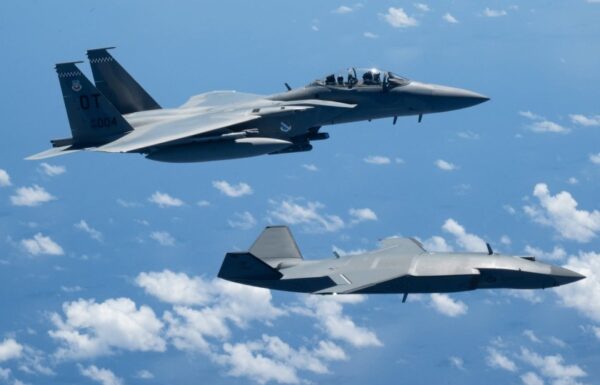
The agreement covers MALE-class (Medium Altitude Long Endurance) unmanned aircraft, specifically MQ-9B RPAS (Remotely Piloted Aircraft) offered in the land-based SkyGuardian and maritime SeaGuardian variants, as well as the Gambit family of unmanned aerial platforms, known as so-called Loyal Wingmen.
The document was signed by GA-ASI President David R. Alexander and Dr. Khalifa Murad Alblooshi, Managing Director and Chief Executive Officer of Calidus Holding Group, on the sidelines of UMEX and SimTEX 2026, scheduled for January 20–22, 2026.
The agreement establishes a framework for cooperation between GA-ASI, GA-Intelligence, and Calidus, under which all parties will seek to collaborate on programs covering airframe manufacturing, final assembly, testing and inspection, as well as operational trials and flight acceptance.
“Working with partners within UAE helps us to connect with key experts and capabilities in the region,” said GA-ASI President David R. Alexander. “For General Atomics, this agreement underscores the shared commitment to long-term cooperation, technological innovation, and the advancement of our aircraft within the UAE.”
Commenting on the agreement, Dr. Khalifa Murad Alblooshi, Managing Director and CEO of Calidus Holding Group, said:
“The signing of this MOU with General Atomics, a global leader in unmanned aircraft, represents a strategic step towards strengthening and enabling the Group’s capabilities in the unmanned systems sector in line with user requirements. This collaboration comes at a time of rapid growth in the sector both regionally and globally, drawing on the trusted expertise and manufacturing capabilities of both parties, opening the door to broader future partnerships in innovation, knowledge transfer, and expanded manufacturing, reinforcing our collective ambitions.”
 MQ-9B SeaGuardian / Images: GA-ASI
MQ-9B Skyguardian/SeaGuardian
It should be recalled that on January 24, 2024, the U.S. defense industry outlet Breaking Defense reported, citing President David R. Alexander, that the administration of then U.S. President Joe Biden had lifted a previous embargo on the delivery of 18 armed MQ-9B SeaGuardian maritime UAVs to the United Arab Emirates, and that negotiations on the matter were underway.
The UAE received approval to purchase 50 F-35A Lightning II multirole aircraft and 18 MQ-9B SeaGuardian unmanned aircraft on November 10, 2020. At the time, the UAVs were valued at up to $2.97 billion. Just before the end of then-President Donald Trump’s first term, on January 20, 2021 (according to reports, one hour before Joe Biden’s inauguration), the U.S. administration was said to have approved the contracts for the F-35A and MQ-9B. However, a week later, on January 27, 2021, the new administration reportedly withdrew from those agreements.
The MQ-9B SkyGuardian (previously known as the Certifiable Predator B) is a NATO-standard–compliant variant of the MQ-9A Reaper, unveiled in February 2016, featuring longer wings with winglets. This modification extended endurance from 27 to 40 hours at altitudes of up to 15,000 meters. The platform features an upgraded mobile control station, and the airframe—built to the STANAG 4671 standard—has been fitted with an anti-icing system and, thanks to the use of composite materials, is resistant to lightning strikes. The variant adapted for maritime operations was designated SeaGuardian.
The prototype of the maritime MQ-9B SkyGuardian variant made its first flight on September 11, 2020. It was integrated with the GA-ASI AN/APY-8T Lynx synthetic aperture radar (SAR) with GMTI/DMTI (Ground/Dismount Moving Target Indication) capability, the Leonardo SAGE 750 electronic intelligence (ELINT) pod, the Seaspray 7500E V2 radar, and the RTX SeaVue radar. An enhanced MWAS (Maritime Wide Area Surveillance) package with the Optix+ function is also offered; it collects data from the aircraft’s sensors as well as other data sources, presenting operators with a comprehensive maritime surveillance picture. This functionality facilitates tasking and real-time intelligence, surveillance, and reconnaissance (ISR) information management. GA-ASI’s Optix+ software package rapidly correlates and exploits collected data into an easily shareable common operational picture. Access to correlated data from multiple sources enables automatic detection of anomalous behavior over maritime areas.
As for further platform development, on June 27, 2024, GA-ASI reported that it was working jointly with Lockheed Martin on the integration of network-enabled weapons (NEW). On March 20, 2024, tests were reported for the integration of the SDS (Sonobuoy Dispensing System) pod carrying satellite-guided sonobuoys for submarine detection. Subsequently, on April 7, 2025, tests were announced of new Quadratix software enabling updates to maritime target tracking data.
To date, the MQ-9B platform has been selected for procurement by the United States, the United Kingdom, Belgium, Poland, Canada, Denmark (with Norway also considering a purchase), Germany, Japan (separately by the Coast Guard and the Air Self-Defense Force), India (for both variants), Taiwan, and Qatar, while Australia has withdrawn from the acquisition.
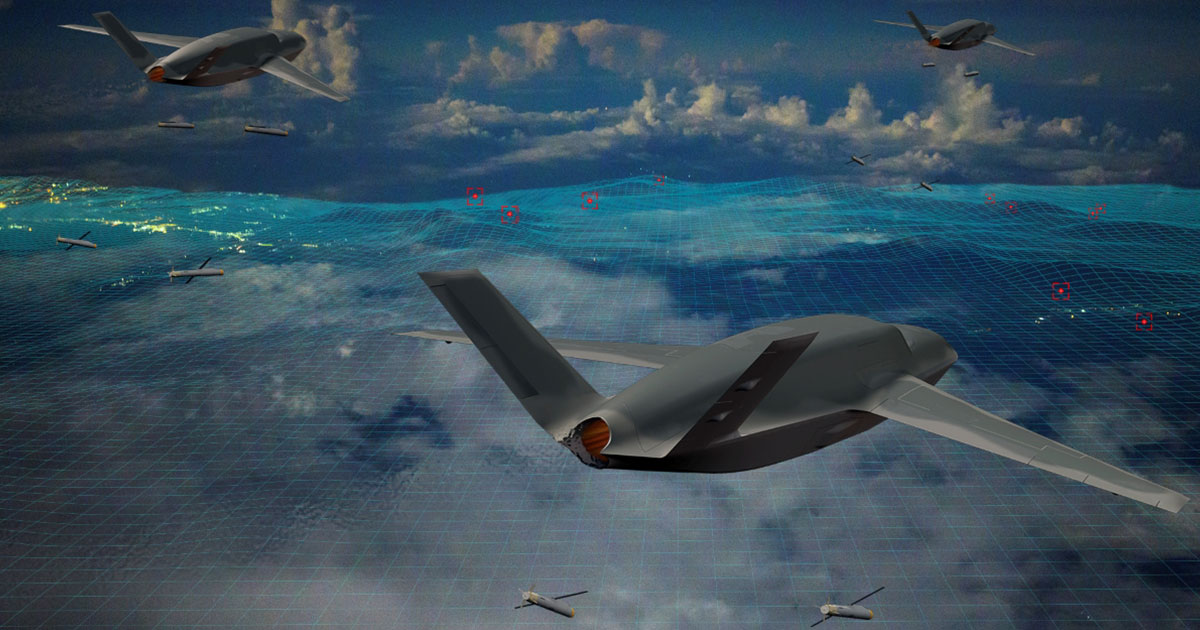 Gambit 6
Gambit
The concept of the Gambit family was unveiled on March 3, 2022 and forms part of the first generation of Autonomous Collaborative Platforms (ACP). It envisions the development of modular aerial platforms for various roles, characterized by a shared core, the so-called Gambit Core, so that the level of commonality among individual models reaches as much as 70% (shared avionics and an artificial intelligence–based flight control system, center fuselage section, landing gear, and engine). Differences are to lie in the airframe, wings, engine air intakes, distinctive features of specific variants, and other payloads (sensors, weapons).
Gambit 1 is intended as a long-range intelligence, surveillance, and reconnaissance (ISR) platform; Gambit 2 as an air-to-air combat platform serving as a CCA; Gambit 3 as a training platform; and Gambit 4 as a low–radar cross-section aircraft for reconnaissance with combat capability. The carrier-based Gambit 5, in turn, is to be directly derived from the Gambit 2 variant but is to receive a reinforced fuselage adapted to maritime conditions (including salinity and humidity) and strengthened landing gear suitable for catapult launches and arrested recoveries, for example using an electric launch system for unmanned aircraft developed by the sister company General Atomics Electromagnetic Systems (GA-EMS). The latest Gambit 6, meanwhile, is intended for air-to-ground strike missions.
One derivative of the Gambit family is the autonomous combat unmanned aircraft YFQ-42A, built for the competing CCA (Collaborative Combat Aircraft) program in Increment 1 (with two prototypes flown to date), which competes with the YFQ-44A from Anduril Industries.
Interestingly, the issue of the MQ-9B in the UAE has also gained momentum following a recent announcement by neighboring Saudi Arabia of plans to acquire 130 SeaGuardian aircraft and 200 Gambit platforms.
The agreement between GA-ASI and @Calidus_ae will support the increasing demand for MQ-9B #RPAS and Gambit #UCAV in the region and the world.
Read the news: #MQ9B #GambitUAS pic.twitter.com/rJxknrVMSa
— General Atomics Aeronautical Systems, Inc (GA-ASI) (@GenAtomics_ASI) January 20, 2026