
















On Tuesday, June 16, 2026, the second day of the 29th edition of Eurosatory 2026, the international defense industry trade show organized by Coges Events, taking place June 15-19 of this year in Paris-Nord Villepinte near Paris, Latvian company Origin Robotics signed a Memorandum of Understanding (MoU) with German company Alpine Eagle regarding the integration of the BLAZE interceptor drone with the Sentinel air defense architecture, creating a layered counter-drone capability combining sensors and effectors.
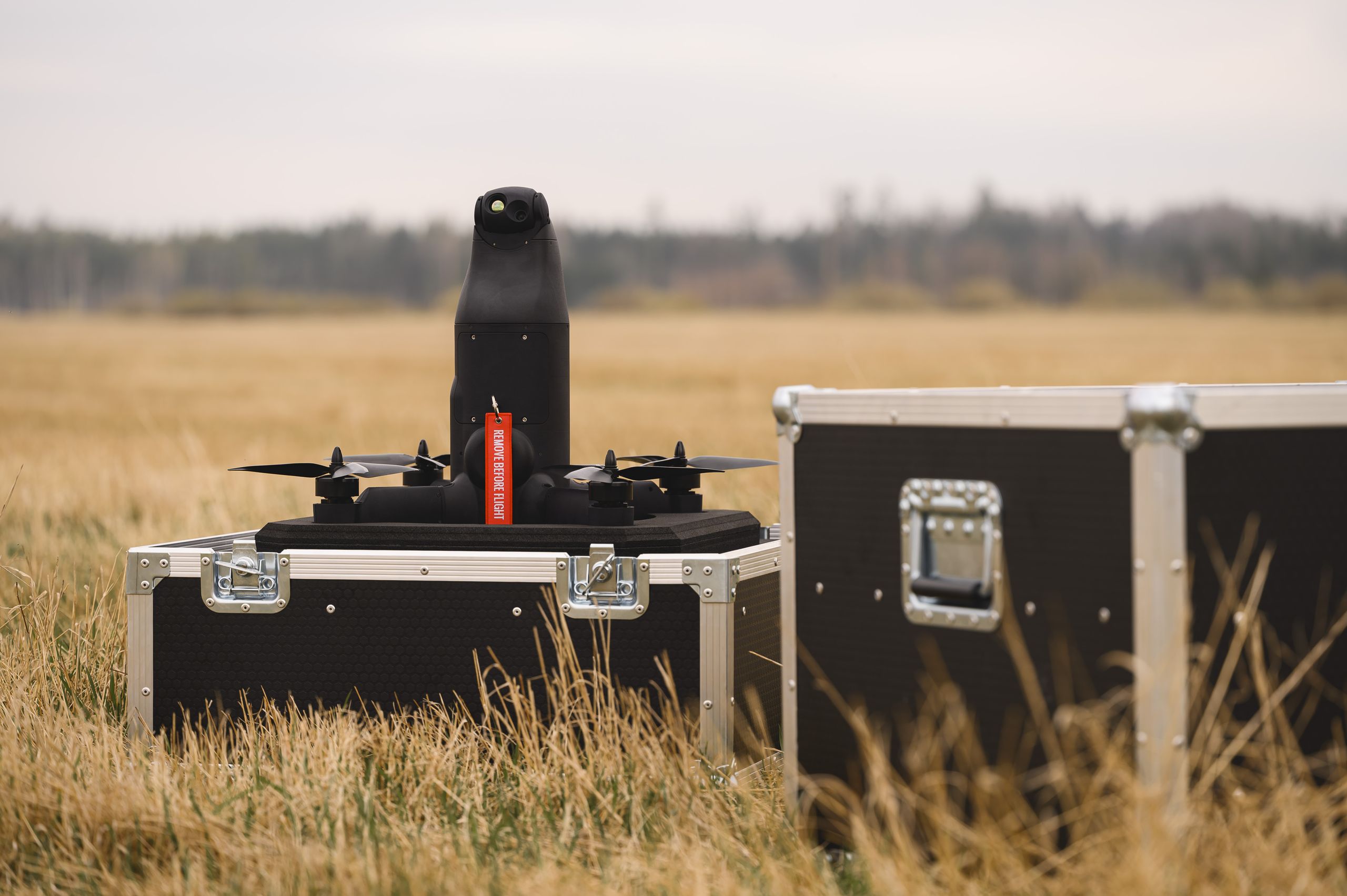 BLAZE / Photos: Origin Robotics
The agreement marks an important step in Alpine Eagle’s strategy to build the next generation of air defense, connecting sensing, decision-making and interception into a single layered network. It also reflects a broader shift toward integrated air defense architectures that combine sensors, command-and-control systems and multiple interception layers into a single operational system.
Alpine Eagle’s Sentinel architecture combines airborne and ground-based radars with distributed sensor networks and Sentinel-OS, the company’s software backbone that connects sensors, platforms and effectors into an integrated network. Together, these capabilities provide earlier detection, improved situational awareness and more time for operators and soldiers to make informed decisions in complex environments. The integration of BLAZE, an autonomous, radar-guided interceptor drone designed to counter drones and loitering munitions, adds another interception layer, strengthening Sentinel’s ability to coordinate detection, decision-making and response through a system-of-systems approach.
European governments are accelerating investment in counter-drone capabilities following lessons from Ukraine and recent conflicts in the Middle East, where large-scale drone attacks have demonstrated the need for earlier detection, layered defense and more cost-effective interception.
Under the agreement, the companies will initially focus on technical integration, customer demonstrations and operational validation, while establishing a pathway toward future local manufacturing of BLAZE drones in Germany.
Jan-Hendrik Boelens, co-founder and CEO of Alpine Eagle, said:
“Drone warfare is forcing militaries to rethink how they protect airspace. The challenge is to bring detection, tracking, and interception together into an integrated system that can respond quickly and scale with the threat. Integrating BLAZE into Sentinel expands our sensor-to-effector architecture and gives customers another effective layer within a broader counter-drone network.”
Agris Kipurs, co-founder and CEO of Origin Robotics, said:
“The future of drone defence depends on combining the right sensors, software and effectors. No single system can solve the challenge alone. By integrating BLAZE into Sentinel, we are bringing together complementary capabilities that help customers detect threats earlier and respond more effectively.”
The partnership builds on successful initial integration activities between the two companies and reflects a growing trend among European defense technology companies to combine specialized capabilities into integrated systems that can be deployed, adapted and scaled more rapidly than traditional programs. By strengthening interoperability between complementary technologies, the cooperation supports the development of a more resilient European defense industrial base and the ability to scale production as demand grows.
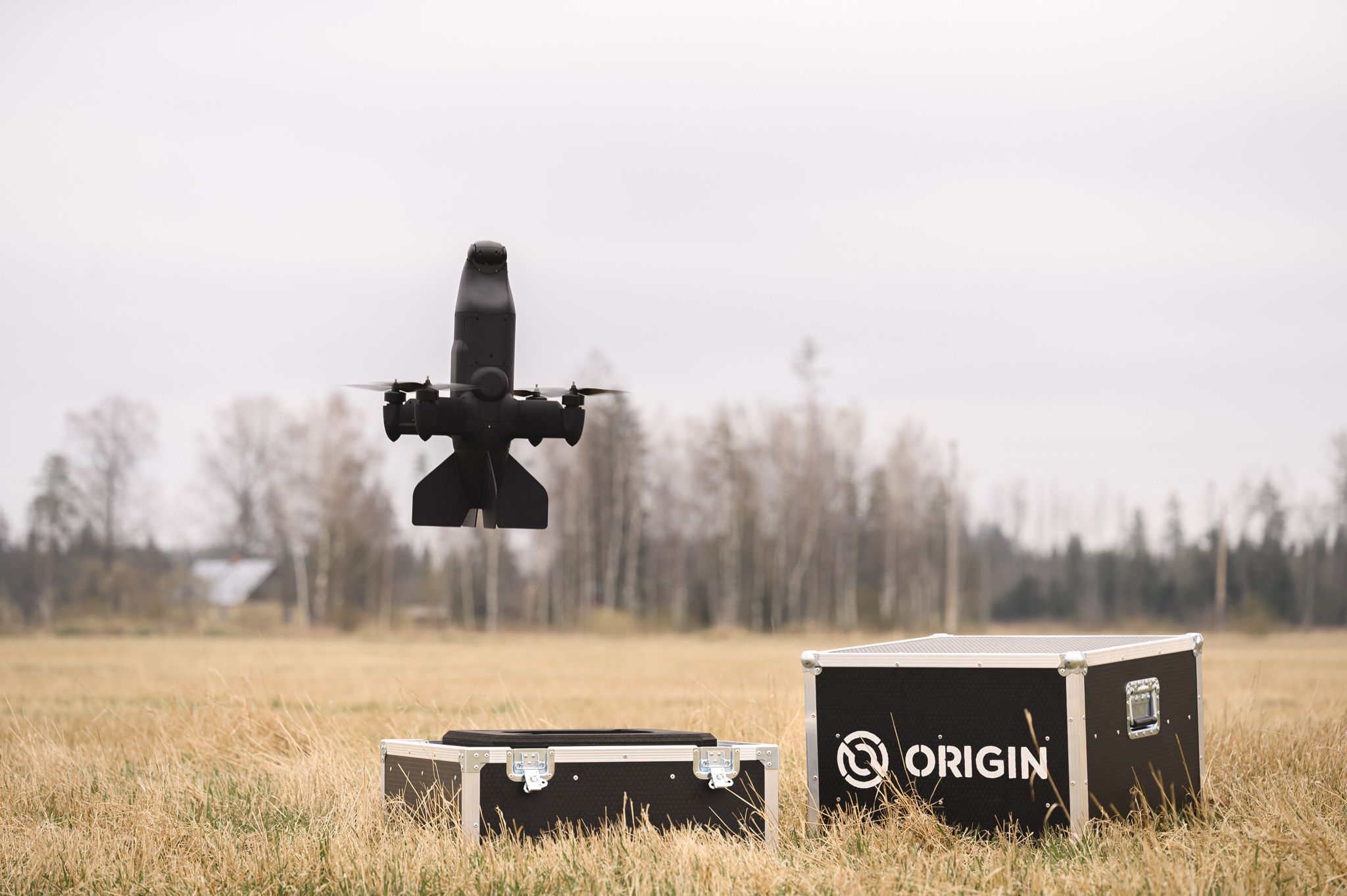
BLAZE
According to the manufacturer, the BLAZE interceptor drone provides autonomous target acquisition and interception by combining radar detection with AI-assisted computer vision.
Radar navigation enables precise target approach. An EO/IR optoelectronic sensor suite and AI-assisted recognition provide real-time identification and targeting. Operator confirmation of attack mode triggers an optimized intercept approach vector, enabling a high probability of target hit.
BLAZE ensures controlled and safe operation through built-in safety protocols and operator-override capabilities. A three-tier safety system ensures controlled arming of the drone and prevents unintended detonation. The Wave-Off feature allows mission abort up until the final approach to the target, and a self-destruct protocol activates in the event of a geofence breach, loss of communications, or a critical failure.
BLAZE is portable and mission-ready within minutes, designed for rapid deployment in dynamic conditions. The transport case also serves as a launch station and docking station. Drone configuration requires no tools; it is ready to fly in less than 10 minutes from unpacking. The first drone launches in under 5 minutes, with subsequent launches less than 1 minute apart.
To date, Latvia, Belgium, Estonia, and France have opted to procure BLAZE.