






















M142 HIMARS
On Wednesday, December 17, 2025, the U.S. Defense Security Cooperation Agency (DSCA) published the U.S. Department of State’s approval for the sale of 82 M142 HIMARS (High Mobility Artillery Rocket System) multiple rocket launchers along with ammunition, in a package valued at up to 4.05 billion USD.
 Photo: Lockheed Martin
According to the published information, the Taipei Economic and Cultural Representative Office in the United States (TECRO), which officially represents the Republic of China, also requested the possibility of acquiring 420 MGM-140 ATACMS M57 ballistic missiles; 757 six-round launch pods with M31A2 GMLRS-U guided rockets; 447 pods with M30A2 GMLRS-AW rockets; 39 M1152A1 HMMWV multipurpose tactical vehicles; and 45 IFATDS information exchange systems.
In addition, the package includes the following items categorized as non-MDE (Major Defense Equipment), among others: M28A2 LCRRPR training rockets, 5.56 mm M249 machine guns, 12.7 mm M2 machine guns, M1084A2 FMTV RSV resupply vehicles with M1095 trailers, and AN/VRC-90E/92E SINCGARS radios.
It is worth noting that on August 10, 2025, the Taiwanese daily Taipei Times, citing military sources, reported that the government in Taipei was interested in increasing the number of M142 HIMARS launchers from the 28 ordered to date to 57 units. This indicates that the plans are significantly larger, as they involve not 29 but as many as 82 additional launchers, bringing the total to 110.
M109A7 Paladin
Also on December 17 last year, Taiwan received approval to purchase 60 M109A7 PIM (Paladin Integrated Management) 155 mm self-propelled howitzers, 60 M992A3 CAT tracked ammunition resupply vehicles, and 13 M88A2 HERCULES armored recovery vehicles, in a package valued at up to 4.03 billion USD.
 Photo: US Army
In addition, a request was made for 4,080 M1156A1 PGK (Precision Guidance Kit) fuze modules for artillery ammunition and 42 IFATDS information exchange systems. The package also includes items categorized as non-MDE, such as 12.7 mm M2A1 machine guns with spare M2A1 barrels, training, GPS DAGR navigation/communication units, 155 mm M795 high-explosive fragmentation projectiles, primers, fuzes, propelling charges, and related items.
It is worth adding that in 2021 Taiwan received approval to purchase 40 older M109A6 Paladin self-propelled howitzers along with 20 M992A2 FAASV ammunition vehicles and 5 M88A2 HERCULES armored recovery vehicles, valued at up to 750 million USD, but this deal was later canceled in 2022. Subsequently, the U.S. side offered the island republic the M109A7 PIM systems discussed above.
In July 2025, Taiwan’s Ministry of National Defense reported that the purchase of as many as 168 M109A7 systems was being considered.
Currently, the Republic of China Army (Zhōnghuá Mínguó Lùjūn) operates 225 older M109A2 and M109A5 self-propelled howitzers, as well as 60 now heavily outdated 203 mm M110A2 self-propelled howitzers and 250 towed 155 mm M114 howitzers.
ALTIUS-700M and ALTIUS-600
The third package includes approval for an undisclosed number of unmanned combat aerial vehicles, so-called loitering munitions, of the ALTIUS-700M and ALTIUS-600 types, valued at up to 1.1 billion USD.
 ALTIUS-600 / Photo: US Army
The ALTIUS-700M, unveiled in March 2024, has a payload capacity of nearly 15 kg (33 lb) and, once launched, can travel a maximum distance of 160 km and remain airborne for up to 75 minutes. It builds on the success of the broader ALTIUS (Air-Launched, Tube-Integrated Unmanned System) family of unmanned systems, originally developed by Area-I.
This is a family of modular, highly configurable, and multi-platform unmanned aerial vehicles designed for intelligence, surveillance, reconnaissance, and targeting (ISR&T) missions, as communications relays, for cyber operations, or for kinetic strikes (target engagement). They are launched from tube or container launchers.
The older and smaller ALTIUS 600 can also be launched from tube or container launchers and can carry various sensors that enhance soldiers’ situational awareness.
It is also worth noting that on June 17, 2024, Taiwan received approval to purchase packages including Switchblade 300 and ALTIUS 600M-V loitering munitions, with a combined maximum value of 360.2 million USD.
FGM-148F Javelin
The fourth package includes 1,050 FGM-148F Javelin anti-tank guided missiles along with 70 LWCLU (Lightweight Command Launch Unit) launchers/command units, valued at up to 375 million USD.
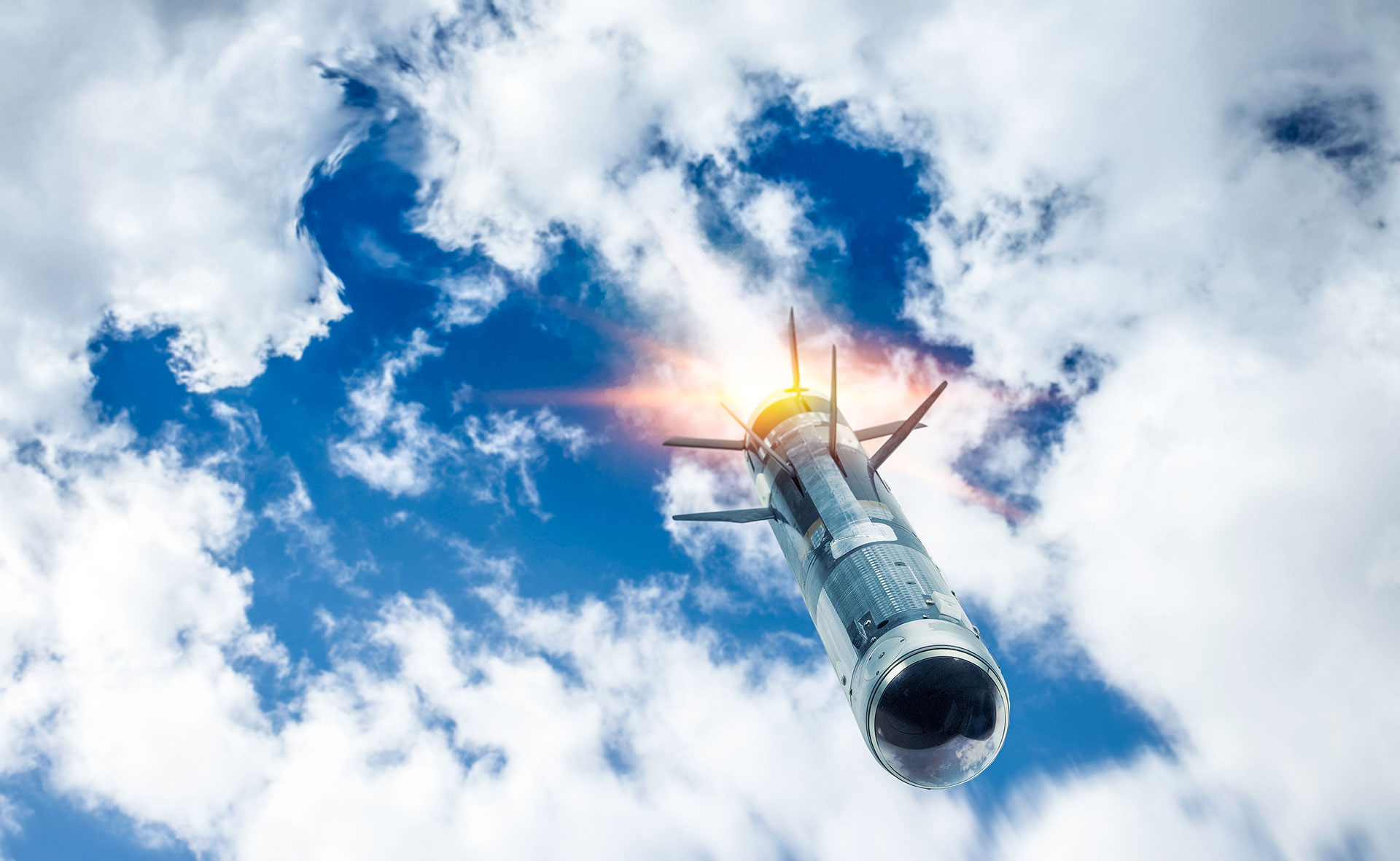 Photo: Lockheed Martin
In the non-MDE package, requests were made for Basic Skill Trainer (BST) sets, training ammunition, launcher cooling batteries (Battery Coolant Units, BCUs), Interactive Electronic Technical Manuals (IETMs), Javelin operator manuals, life-cycle support services, physical security control systems, spare parts, system integration and verification services, tool kits, training, and related items.
The latest variant of the system currently in production is the FGM-148F Javelin discussed here, which is equipped with a new multipurpose MPWH (Multi-Purpose Warhead) featuring an explosively formed shaped charge. Its penetration capability is equivalent to 600–800 mm of rolled homogeneous armor (RHA). The missile is reported to have an engagement range of 65 to 4,750 meters. The total system weight is 22.3 kg. Within the U.S. Army, the FGM-148F is gradually replacing the currently fielded FGM-148E Block I.
Outside the U.S. Army, Poland was the first country to decide on the purchase of this variant, followed by Lithuania, Australia, and the United Kingdom. In 2021, Thailand and Norway also ordered new missiles, although without specifying the variant (likely still the FGM-148E). Approval to purchase the missiles was granted to Romania on December 12, 2023; Kosovo on January 11, 2024; Morocco on March 19, 2024; Bulgaria on September 20, 2024; Tunisia on October 3, 2024; Ireland on April 23, 2025; Estonia on May 22, 2024; and India on November 19, 2025. In the near future, Albania, Brazil, and Latvia are also expected to join this group. Overall, all variants of the system are in service with the armed forces of 24 countries, including Ukraine, where they were delivered as military aid from the United States and the United Kingdom.
BGM-71 TOW 2B
The fifth package includes 1,545 BGM-71F-7-RF TOW 2B heavy anti-tank guided missiles along with 14 flight test missiles, valued at up to 353 million USD.
 Photo: US Army
The request included 24 sets of upgraded target acquisition systems, lithium-ion batteries, ITAS mounting kits for integrating anti-tank guided missile launchers with multipurpose vehicles of the HMMWV family, training missiles, and related items.
The BGM-71 TOW (Tube-launched, Optically tracked, Wire-guided) was introduced into U.S. Army service in 1970 to replace the French MGM-32A ENTAC anti-tank guided missile and the 105 mm M40 recoilless rifle. Since then, it has undergone numerous modifications and upgrades. Initially, the missile was wire-guided, which immobilized soldiers or the vehicle carrying the launcher for the duration of the missile’s flight to the target, exposing them to enemy counterattack. The latest variants, produced by Raytheon since 2006, operate in a fire-and-forget mode.
The BGM-71 TOW system has entered service with the armed forces of more than 40 countries. In total, more than 700,000 missiles have been produced, and since 2003 the system has been used in combat approximately 11,000 times, most recently during the Russia–Ukraine war, in which Kyiv received around 13,000 missiles as part of U.S. military aid packages. It has also been used by Saudi Arabia in connection with its support for the internationally recognized government of Yemen fighting Iran-backed Houthi militants in the western part of the country.
According to the latest declarations by RTX Corporation, it is currently capable of producing 10,000 TOW missiles per year, and the manufacturer continues to refine the design through a modernized fuze and target detection system.
Upgraded fuze enhancements and updates to the target detection system provide soldiers with unmatched capabilities, maintaining the fastest target engagement time in the segment. As a result, TOW can support and excel in complex urban operations against a variety of targets while retaining excellent performance as an anti-tank guided missile.
In addition, improvements to the overall missile and launcher design will help meet the latest military environmental requirements, addressing evolving logistical and terrain challenges.
The TOW system is compatible with a wide range of manned and unmanned vehicles, including the HMMWV and M2 Bradley, as well as the wheeled Stryker ICV in the M1134 Anti-Tank Guided Missile Vehicle variant and others. The latest production contract was signed on September 22, 2025.