















At the same time, the source material released after the two events differs. Following the Trump–Xi summit, a considerable number of detailed official documents appeared in English, whereas after the Putin–Xi talks, the publicly available material was more synthetic, focusing on the joint statement, the extension of the treaty, and the general directions of cooperation. The analysis of Putin’s visit is therefore strong in terms of political meaning and strategic priorities, but weaker when it comes to a full overview of all technical arrangements.
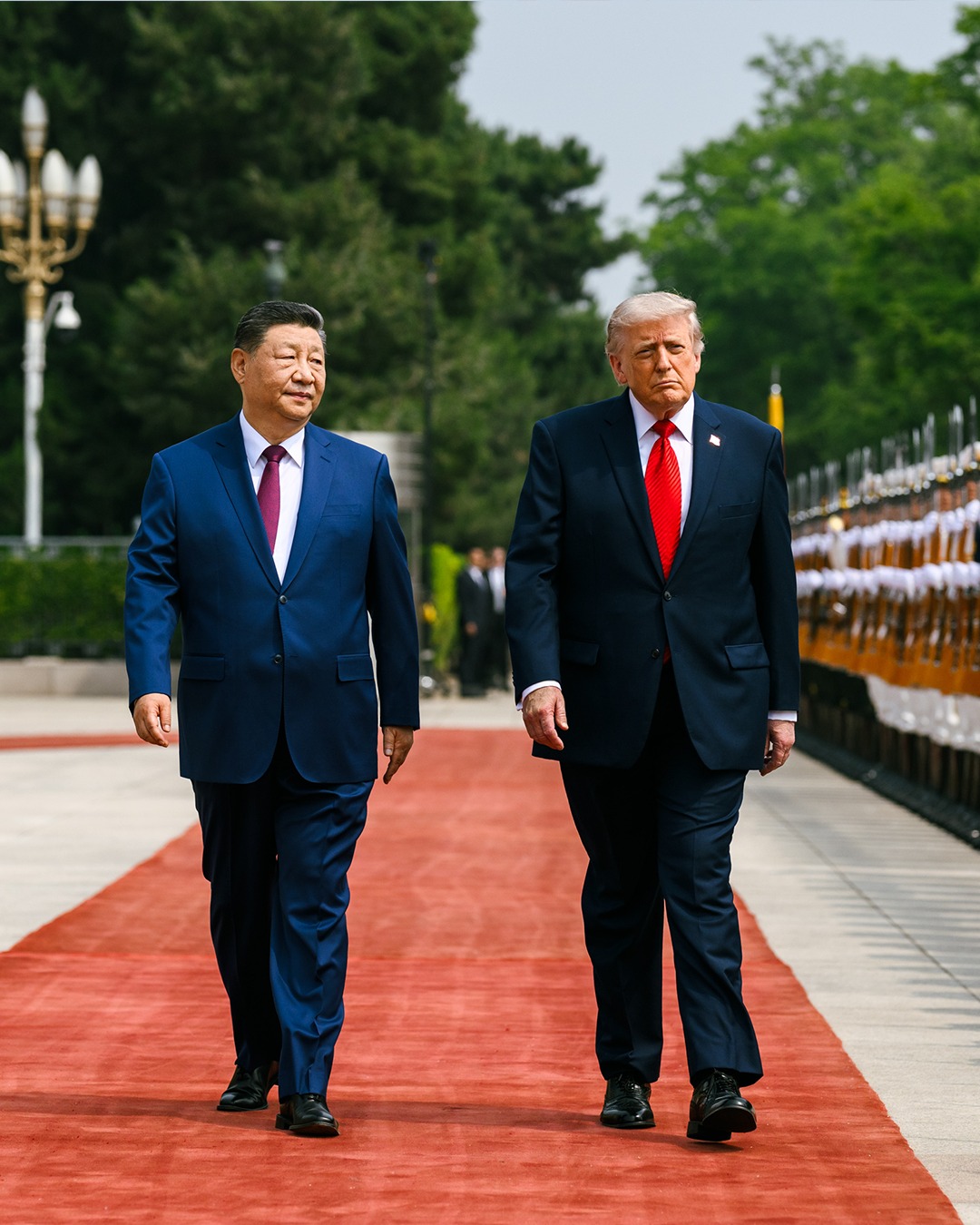
Photo: White House Press Office
U.S.–China–Russia triangle
Relations between the United States, China, and Russia have for years formed an unequal triangle that largely determines the direction of global politics. The United States sees China as its main economic and technological competitor, while at the same time treating it as a key trading partner on which, among other things, critical raw material supply chains depend. Russia, following its full-scale aggression against Ukraine and under Western sanctions, is turning ever more deeply toward Beijing, treating it as a pillar of its energy, trade, and technology policy. China, in turn, is deliberately positioning itself at the center of this triangle, seeking both to stabilize relations with the United States and to strengthen its strategic axis with Moscow.
Analysts describe this arrangement as uneven: the United States and China are the two economic superpowers, while Russia is able to compete with the United States mainly in the military dimension. As a result, Washington pursues a policy of dual containment toward both Russia and China, while at the same time seeking to make use of its alliance networks in Europe and the Indo-Pacific. In this context, the fact that Donald Trump and Vladimir Putin are flying to Beijing within a short period of each other is no coincidence. It is proof that without China, none of these policies can be fully effective.
Trump–Xi summit
Photo: White House Press Office
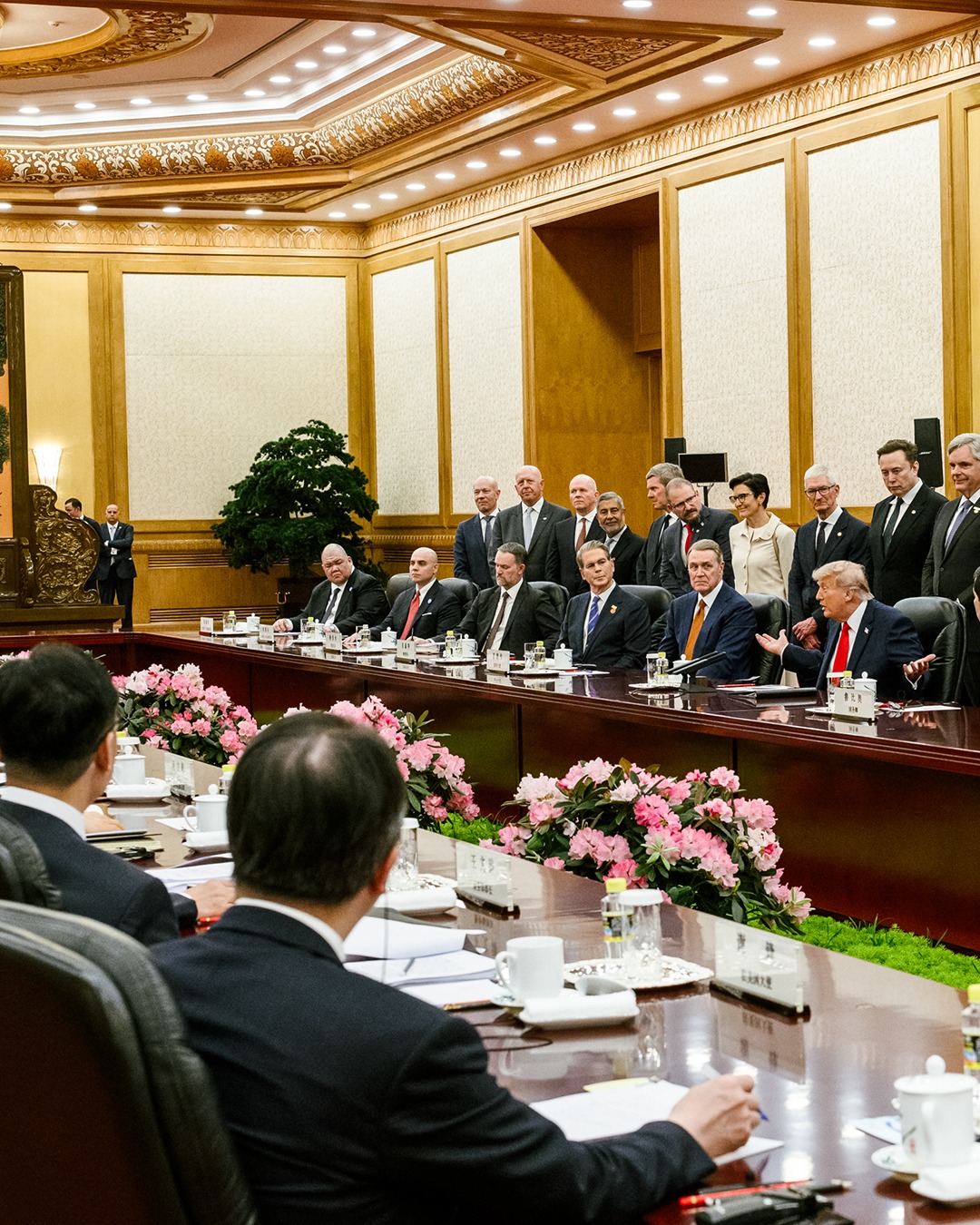
In Chinese readouts, Trump’s visit is presented above all as a moment for giving relations with the United States a new political framework. The Ministry of Foreign Affairs statement of May 14–15 and Xi’s remarks refer to the idea of a constructive relationship based on strategic stability: one in which cooperation is meant to remain the main direction, competition is kept within reasonable limits, and differences are managed through dialogue and risk-control mechanisms. This concept is intended to become China’s point of reference for the coming several years.
Donald Trump’s visit to Beijing was primarily transactional in nature. Washington came seeking tangible results: easing trade tensions, regaining partial control over economic relations with China, and showing the public that a tough policy toward Beijing can bring concrete benefits for U.S. industry, agriculture, and the labor market. In practice, the Trump administration sought to combine two goals that are usually difficult to reconcile: reducing the risk of further economic escalation while avoiding the impression that the United States was abandoning pressure on China.
The talks with Xi Jinping first took place in an official state setting, with a 21-gun salute, an honor guard, and a banquet, followed by a more intimate format in Zhongnanhai. This sequence was not accidental: the formal ceremony gave the meeting political weight, while the private talks created the impression of a direct, personal communication channel between the two leaders. In Chinese diplomacy, such an arrangement is an important signal, showing that Beijing treats the talks not as a one-off gesture, but as part of broader relationship management. For Donald Trump, in turn, it was a way to emphasize that he can achieve historic agreements where his predecessors produced only tensions and deadlock.
The most important outcome of the visit was the set of economic arrangements. China agreed to purchase an initial tranche of 200 Boeing aircraft, which Washington presented as a major success for the U.S. aerospace industry and the thousands of jobs linked to the sector. The second pillar of the arrangements concerned agriculture: Beijing declared it would increase purchases of U.S. agricultural products to at least 17 billion USD annually in 2026–2028. This was particularly important for American farmers, as agriculture had been among the sectors hit hardest by earlier tariff disputes.
Critical raw materials were also an important topic. The U.S. side expected China to reduce the risk of disruptions in supplies of rare earth metals and related processing technologies, which are important for the advanced-technology industry, the defense sector, and energy. This area shows that U.S.–China relations are no longer only about tariffs or the trade balance, but about control over strategic supply chains on which the economic security of both countries depends. From Washington’s perspective, the very opening of talks on this issue was important, because it amounted to an acknowledgment that fully decoupling from China is unrealistic.
Politically, the White House wanted to show that the talks were not limited to the economy. Official statements also mentioned Iran, maritime security in the Strait of Hormuz, and the denuclearization of North Korea. This was meant to underline that Beijing is not only a trade rival, but also a state whose position matters in larger international crises. For Trump, this was useful narratively: he could show that in talks with China he raised not only trade, but also global security issues.
At the same time, the Chinese side very clearly marked its own red lines. Xi Jinping reiterated that Taiwan remains the most sensitive element in relations with the United States for Beijing, and that any move by Washington that China regarded as too far-reaching in support of Taipei could threaten the entire architecture of bilateral relations. This highlights the difference between the two sides’ ways of thinking: for Donald Trump, the key issues were concrete economic results and political success, while for Xi, it was maintaining strategic control over China’s core interests.
In a broader sense, the visit was an attempt to move from open tariff war to a more managed rivalry. It did not mean an end to the dispute between the United States and China, but it gave both sides breathing space and time. For Trump, it was a political and economic tool: he could return home with a list of successes that could be shown to voters, farmers, and industry. For China, it was a way to demonstrate that it can force talks on its own terms and that even the United States must take account of China’s position in the global economic and security system.
Can this visit to Beijing really be called historic? Western analytical centers have toned down such rhetoric. CFR and CSIS assess it as a classic example of tactical stabilization rather than a reset: the two sides are trying to reduce the risk of uncontrolled escalation, but they are not addressing the foundations of the rivalry, from subsidies and production overcapacity to the dispute over technology and Taiwan’s status. The Guardian went so far as to describe it as a stalemate summit: much ceremony and many declarations, but little resolution of the most contentious issues.
Putin's visit
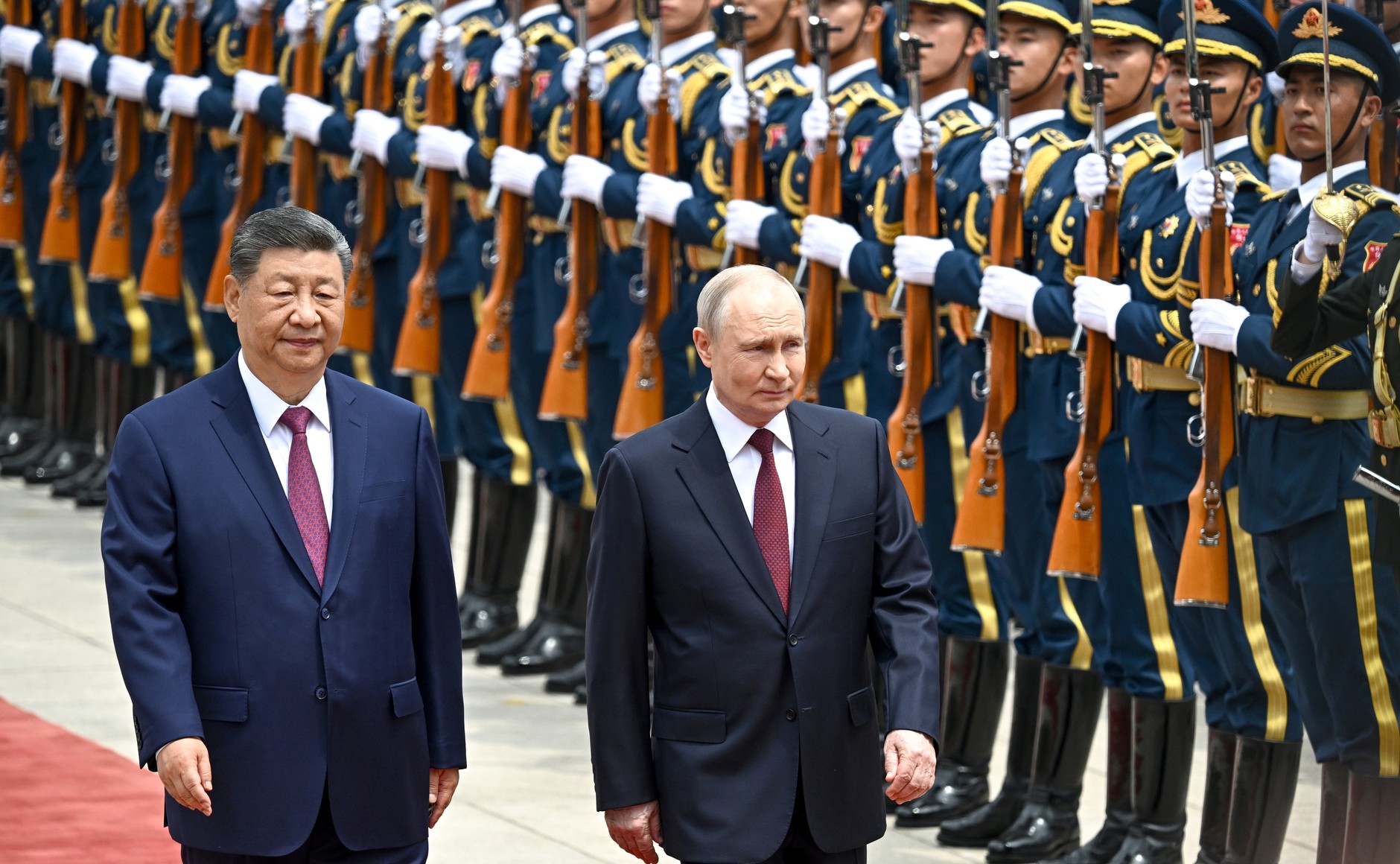
Photo: Kremlin Press Service
Putin’s visit had a different political weight and a different style. Kremlin announcements emphasized that it took place on May 19–20 at Xi Jinping’s invitation, in connection with the 25th anniversary of the Treaty of Good-Neighborliness, Friendship, and Cooperation. Xinhua, China’s state news agency, reported that on May 20, in the Great Hall of the People, the two leaders confirmed the extension of the treaty and signed a joint statement on strengthening comprehensive strategic coordination and deepening good-neighborly friendship.
The symbolism was completed by the joint launch of the China–Russia Years of Education, intended to show that the relationship also has a civilizational dimension, not only a resource-based and military one. In Russian media, Xi is consistently presented as Putin’s indispensable partner and best friend.
Beneath this entire rhetorical layer lies a very concrete interest: energy. China is now one of the largest buyers of Russian oil and gas, while the war in Ukraine and sanctions have accelerated the redirection of Russian exports from Europe to the East. The Power of Siberia pipeline is operating at high capacity, and the key stake of Putin’s visit is the Power of Siberia 2 project, which is intended to become a new lifeline for Russian gas, running through Mongolia to China.
CNBC and other commentators indicate that Moscow came to Beijing primarily seeking three things: further energy contracts, expanded trade cooperation, and continued firm geopolitical support. Economists such as Sergei Guriev emphasize that Russia urgently needs a new gas pipeline after losing the European market, while China, thanks to diversified supplies and reserves, can afford to wait. This asymmetry means that Beijing is negotiating from a position of strength: additional gas from Russia is welcome, but it is not an existential necessity.
The Xi–Putin talks also included global issues. Chinese statements say that Xi described the situation in the Middle East, especially around Iran and the Strait of Hormuz, as a critical moment between war and peace, and called for a halt to military action. From Beijing’s perspective, this is not only a moral appeal, but also an argument for shifting part of the energy burden from unstable maritime routes to more stable overland links with Russia.
On Ukraine, Beijing is sticking to its formula of dialogue and a political solution, without any public signs of pressure on Moscow. Reports by MERICS, Chatham House, and other institutions show that China is an economic lifeline for Russia: it is increasing trade, supplying dual-use goods, and reducing Moscow’s international isolation. This strengthens Russia’s position in the war, but at the same time makes it increasingly dependent on China’s goodwill.
Missile Defense and Arms Control
Growing tensions over the global missile defense system became one of the most important topics of the Beijing summit. Xi Jinping and Vladimir Putin presented a united front against Washington’s policy, and their declarations, framed by an elaborate diplomatic ceremony, had not only symbolic significance, but also very concrete political meaning. The joint communiqué was broad, covering nuclear security, Taiwan, economic cooperation, energy, and the environment, but it was the criticism of the U.S. “Golden Dome” project that gave it a particularly sharp tone.
In Beijing and Moscow’s view, the “Golden Dome” system planned by the Donald Trump administration could undermine the basic logic of strategic balance. The project envisages an extensive, layered missile defense architecture combining ground-based and space-based elements, sensors, command systems, and interceptors capable of engaging missiles at various stages of flight. China and Russia argue that such a system not only increases the United States’ defensive capabilities, but could also weaken the credibility of adversaries’ nuclear deterrence and encourage the development of new means to penetrate the shield.
Xi and Putin stressed that strategic stability is based on the interdependence of offensive and defensive capabilities. In their view, an attempt to create impenetrable defenses leads to the erosion of that balance and, as a result, could trigger a new arms race, including in outer space. In practice, this means that the dispute over “Golden Dome” is not purely technological, but political: it concerns who sets the rules of global deterrence and whether a state with a technological advantage can try to build a system that reduces the risk of retaliation.
The joint statement also criticized the United States for allowing the New START treaty to expire without working out a successor. For Moscow and Beijing, this is proof that Washington is dismantling the existing arms-control mechanisms while simultaneously developing its own defensive and offensive capabilities in a way that deepens strategic uncertainty. In their narrative, therefore, this is not merely a dispute over a single system, but part of a broader process of erosion affecting the entire architecture of nuclear security.
Moscow also supported China’s position, which consistently rejects participation in trilateral disarmament negotiations. Beijing does not want to enter an arms-control regime designed by others, especially if that would mean accepting rules created with the U.S.–Russia relationship in mind rather than China’s own strategic status. The declaration also included warnings against the deployment of intermediate-range missiles and doctrines based on preemptive strikes, which Xi and Putin described as highly destabilizing.
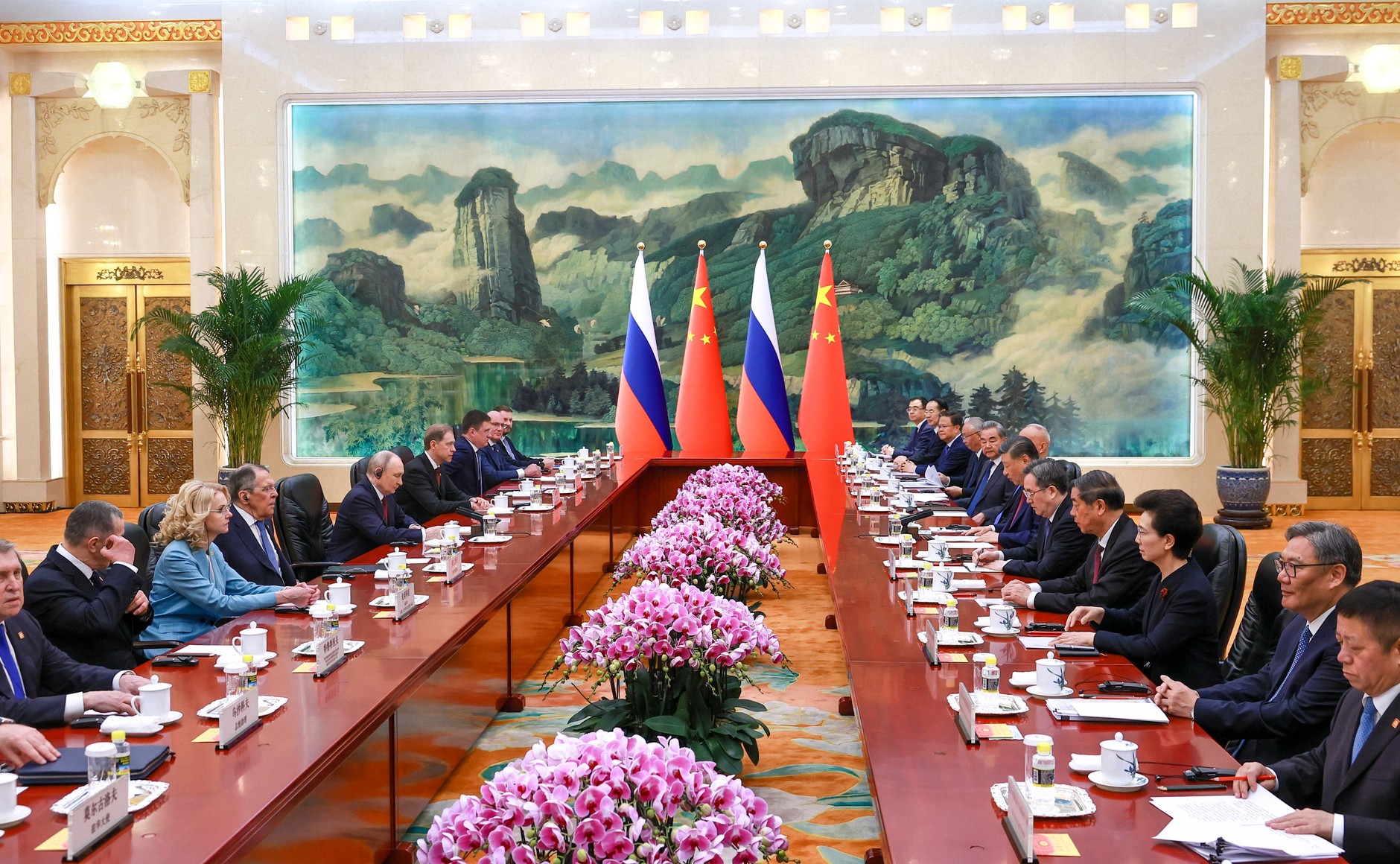
Photo: Kremlin Press Service
Strategic-Level Partnership
Despite the absence of a single spectacular breakthrough, the scale of the agreements and declarations signed confirmed that Chinese-Russian cooperation is entering a phase of increasingly deep institutionalization. It covers energy, technology, trade, media, and political coordination on international security issues. Of particular importance are the talks on the Power of Siberia 2 gas pipeline, which could tie Russian raw material exports even more closely to the Chinese market and thereby increase Moscow’s dependence on Beijing.
Putin described relations with China as having reached an unprecedented level, while both sides declared mutual support on issues of sovereignty and territorial integrity. This narrative fits into a broader vision of building a multipolar world in which U.S. dominance gradually loses significance and strategic security is no longer defined solely by American military capabilities and U.S. alliances. In this sense, Beijing and Moscow are not only reacting to specific Washington initiatives, but are also trying to impose their own interpretation of what stability in the 21st century should mean.
Military Signals
The symbolic dimension of these declarations was further reinforced by military activity. On the same day, the Russian Ministry of Defense released footage from exercises involving the loading of nuclear warheads onto Iskander-M systems as part of maneuvers conducted jointly with Belarus. This timing was no coincidence: it was intended to show that the dispute over missile defense systems is not merely a rhetorical clash, but part of a broader strategic rivalry in which political declarations and demonstrations of force complement each other.
In practice, this means that both Beijing and Moscow are trying to send Washington a dual signal. On the one hand, they declare their readiness for dialogue and economic cooperation. On the other, they remind the United States that the development of American defense systems and strategic pressure have limits, because they may trigger a response in the form of new offensive capabilities and deeper cooperation between states that do not want to accept U.S. superiority in the global security system
Comparison of the two visits: two ways of courting Beijing
A comparison of the two visits reveals a fundamental difference in the final outcome. Donald Trump’s visit produced a package of detailed economic arrangements and several declarations in the security sphere: trade and investment boards, Boeing contracts, agreed volumes of agricultural purchases, and signals concerning rare earth metals, the Strait of Hormuz, and North Korea. Putin’s visit, by contrast, resulted primarily in the political strengthening of the Beijing–Moscow axis: the extension of the treaty, a joint strategic statement, symbolism emphasizing the unprecedented level of relations, and strong declarations of joint opposition to Western hegemony.
The United States came to China needing to show hard results and partially calm the markets. Russia came needing confirmation that it is still treated in Beijing as a partner, not a petitioner. Beijing made use of both directions: on the one hand, it agreed to contracts beneficial to the U.S. economy; on the other, it made sure to simultaneously strengthen the political dimension of its relationship with Russia.
The language Beijing uses toward the two partners also differs. In relation to the United States, the dominant vocabulary is one of stability, managing differences, and preventing conflict, accompanied by constant reminders of the central importance of Taiwan. Toward Russia, the emphasis falls on terms such as comprehensive strategic coordination, good-neighborliness, friendship, and shared responsibility for a fairer international order. In practice, this means that with the United States, China is stabilizing rivalry, while with Russia it is institutionalizing cooperation against Western dominance.
In both cases, however, it is Beijing that defines the room for maneuver. Trump arrives as the leader of a state that still possesses enormous economic, military, and institutional advantages, but is no longer able to treat China as a subordinate partner. What Washington needs today above all is stabilization: preserving the trade truce, reducing risks in supply chains, protecting markets from sudden escalation, and obtaining political proof that a hard line toward Beijing can produce concrete results, not only costs. Trump therefore travels to China seeking agreements that can be presented as success: in aviation, agriculture, critical raw materials, and security, where he needs at least partial Chinese co-responsibility for issues such as Iran, the Strait of Hormuz, and North Korea.
Putin arrives from an even weaker position. Russia is a state at war, under sanctions, cut off from most Western financial markets, and increasingly dependent on Chinese demand for raw materials, Chinese technologies, and China’s willingness to maintain trade despite Western pressure. In practice, this means that Moscow does not come to Beijing as an equal partner, but as a player that needs a political umbrella, economic oxygen, and confirmation that it remains an important element of a broader anti-Western configuration. Xi can therefore speak with Putin from the position of a state that does not need to hurry: Russia needs China more than China needs Russia, and it is precisely this asymmetry that gives the entire meeting its real weight.
Consequences for Europe and the Global South
For Europe, China’s rapprochement with Russia, while Beijing simultaneously maintains dialogue with Washington, means an increasingly difficult situation. The European Union must at the same time reduce its own economic dependence on China, support Ukraine, and maintain a common front against Russian aggression. In practice, this forces it to constantly balance economic interests against political security, without easy solutions and without the comfort of full coherence. Analysts from Bruegel and MERICS note that Europe increasingly finds itself in a position where it must choose not between comfort and risk, but between different types of risk.
The same problem is visible in relations with the Global South, although the stakes there are different. Countries in Africa, Asia, and Latin America increasingly regard China as a development partner, investor, and source of an alternative to the West. For Beijing, this is an opportunity to build influence without having to use hard power, while for many developing countries it offers a chance to obtain capital, infrastructure, and technology without the political conditions imposed by Washington or Brussels. DIIS and Asia Society emphasize, however, that Europe currently has a problem presenting a convincing offer to these regions, because it too often speaks the language of caution, while China speaks the language of concrete action and immediate benefits.
As a result, China’s importance is growing as a state capable of combining economics, diplomacy, and the narrative of “common development” in a way that is more attractive to many governments than Western appeals to principles and values. This does not mean that Europe and the United States are losing influence overnight, but it does show that in a world increasingly divided between competing centers of power, the advantage goes to those who can offer something tangible, quickly and without excessive preconditions.
Conclusions and Possible Scenarios
The May visits by Trump and Putin to Beijing showed that China has become one of the key centers where the future balance of power among the great powers is being shaped. The United States came to stabilize economic relations, obtain tangible trade and technology concessions, and build a political narrative of success after years of tariff war. Russia came to confirm its strategic alliance, extend the good-neighborliness treaty, strengthen energy cooperation, and show the world that despite sanctions, it is not isolated.
Washington’s approach is one of selective cooperation with a rival. The United States is offering China stabilization, access to selected market segments, and the possibility of continuing its role as a key link in global supply chains, expecting in return restraint from Beijing on issues such as the Strait of Hormuz, Iran, North Korea, and, indirectly, Taiwan. However, this cooperation is taking place against the backdrop of ongoing technological and geopolitical rivalry.
Moscow’s approach, by contrast, is one of deepening dependence on a partner with greater economic potential and a wider network of global connections. Russia offers China oil, gas, political support at the UN, and readiness to co-create a “more multipolar” world, while expecting in return an open market, investment, technology, and political cover. In practice, Moscow has increasingly fewer alternatives than Beijing, and this is the essence of the asymmetry in this relationship.
Who emerges strongest from this game? From the perspective of the current moment, the answer is Beijing. China was the only state able, within just a few days, to host both the leader of the world’s largest economy and the leader of a country under massive sanctions, extracting something different from each. From the United States, it gained economic concessions, consultation mechanisms, and confirmation that Washington cannot fully decouple from the Chinese economy. From Russia, it gained further tightening of a political and energy axis that strengthens Beijing’s argument that Western isolation does not work on its terms.
For many observers, this is a signal that modern great-power rivalry is increasingly less often taking the form of a clear confrontation between blocs, and more often resembles a complex contest for the favor of the actor with the greatest margin of strategic autonomy. The United States is seeking to ensure that China shares responsibility for global stability and does not push relations toward open conflict. Russia is seeking survival and influence through China’s economy and policy. Beijing, at least for now, is able to exploit both directions, maintaining the balance long enough to turn it step by step into a growing strategic advantage.
Source:
Al Jazeera — Trump-Xi summit updates: US, China leaders hold talks on trade, tech, Iran
https://www.aljazeera.com/news/liveblog/2026/5/14/trump-xi-summit-live-us-china-leaders-to-hold-talks-on-trade-tech-iran
BBC — relacja live o rozmowach Xi–Putin i planach gazociągu
https://www.bbc.com/news/live/c86d7yqyyz6t
Bruegel — The European Union-Russia-China energy triangle
https://www.bruegel.org/policy-brief/european-union-russia-china-energy-triangle
Center for Strategic and International Studies — Trump-Xi Summit in Beijing: Managing the World’s Most Important Relationship
https://www.csis.org/analysis/trump-xi-summit-beijing-managing-worlds-most-important-relationship
Center for Strategic and International Studies — What did the Trump-Xi Summit Achieve?
https://www.csis.org/analysis/what-did-trump-xi-summit-achieve
CNBC — Five takeaways from the Trump-Xi summit in Beijing so far
https://www.cnbc.com/2026/05/14/trump-xi-summit-beijing-takeaway-taiwan-trade-iran-war-strategic-relations-.html
CNBC — Putin in Beijing: 3 things Russia needs from China
https://www.cnbc.com/2026/05/19/putin-russia-visit-china-beijing-trump-summit-ukraine-war-energy-shock-.html
Council on Foreign Relations — China and the U.S. Agreed to ‘Strategic Stability’ in Beijing. They Don’t Define It the Same Way.
https://www.cfr.org/articles/china-and-the-u-s-agreed-to-strategic-stability-in-beijing-they-dont-define-it-the-same-way
Council on Foreign Relations — At the Trump-Xi Summit, China Will Have the Upper Hand
https://www.cfr.org/articles/at-the-trump-xi-summit-china-will-have-the-upper-hand
Council on Foreign Relations — Beyond Taiwan, a ‘Decent Peace’ at the Trump-Xi Summit
https://www.cfr.org/articles/beyond-taiwan-a-decent-peace-at-the-trump-xi-summit
The Guardian — What was actually achieved at Trump and Xi’s ‘stalemate summit’ in Beijing?
https://www.theguardian.com/us-news/2026/may/15/what-was-achieved-trump-xi-summit-beijing
MERICS — China-Russia alignment: a threat to Europe’s security
https://merics.org/en/report/china-russia-alignment-threat-europes-security
Ministry of Foreign Affairs of the PRC — Briefing by Foreign Minister Wang Yi on China-U.S. Summit and Common Understandings
https://www.mfa.gov.cn/eng/wjbzhd/202605/t20260516_11911719.html
Ministry of Foreign Affairs of the PRC — President Xi Jinping Holds a Private Meeting with U.S. President Donald J. Trump at Zhongnanhai
https://www.mfa.gov.cn/eng/xw/zyxw/202605/t20260515_11911448.html
Ministry of Foreign Affairs of the PRC — President Xi Jinping Holds Talks with U.S. President Donald J. Trump
https://www.mfa.gov.cn/eng/xw/zyxw/202605/t20260514_11910330.html
Reuters — China’s Xi, Russia’s Putin praise ties at Beijing talks; energy in focus
https://www.reuters.com/world/china/xi-putin-meet-beijing-tea-diplomacy-after-trump-visit-2026-05-19/
Reuters — Nuclear energy, Taiwan and Trump’s ‘Golden Dome’: key points from the Xi-Putin talks
https://www.reuters.com/business/finance/nuclear-energy-taiwan-trumps-golden-dome-key-points-xi-putin-talks-2026-05-20/
Reuters — Russia and China scold the United States over ‘Golden Dome’ plans
https://www.reuters.com/business/aerospace-defense/russia-china-scold-united-states-over-golden-dome-plans-2026-05-20/
Reuters — Xi and Putin praise ties between China and Russia at Beijing talks
https://www.reuters.com/video/watch/idRW209920052026RP1/?chan=politics
The White House — Fact Sheet: President Donald J. Trump Secures Historic Deals with China, Delivering for American Workers, Farmers, and Industry
https://www.whitehouse.gov/fact-sheets/2026/05/fact-sheet-president-donald-j-trump-secures-historic-deals-with-china-delivering-for-american-workers-farmers-and-industry/
The White House — materiały z wizyty Trumpa w Zhongnanhai i wyjazdu z Chin
https://www.whitehouse.gov/gallery/president-donald-j-trump-visits-zhongnanhai-and-departs-china-may-15th-2026/
The White House — bankiet państwowy dla Trumpa i Xi
https://www.whitehouse.gov/gallery/president-donald-j-trump-attends-a-state-banquet-with-president-xi-jinping-of-the-peoples-republic-of-china/
Xinhua — China to purchase 200 Boeing aircraft in accordance with commercial principles
https://english.news.cn/20260520/2ee4bc07370a41b7858de5f04908857a/c.html
Xinhua — China-Russia treaty of good-neighborliness and friendly cooperation further extended
https://english.news.cn/20260520/d79badd8d2d64e819e97a91fd7a42f82/c.html
Xinhua — Putin arrives in Beijing for state visit to China
https://english.news.cn/20260519/9efb04d948304d23868ceb834edbbea4/c.html
Xinhua — Xi holds talks with Putin in Beijing
https://english.news.cn/20260520/9f9ce12755d3418093e5874d39961f2f/c.html
Xinhua — Xi, Putin attend opening ceremony of China-Russia Years of Education
https://english.news.cn/20260520/19cb918fb90c4842a72b5e56b8297d18/c.html
Xinhua — Xi, Putin sign joint statement on enhancing comprehensive strategic coordination, deepening good-neighborliness and friendly cooperation
https://english.news.cn/20260520/8aa2f9e4618640a7a05a670963425a35/c.html
Xinhua — Putin says Russian-Chinese ties reach “truly unprecedented level”
https://english.news.cn/20260519/c2f2989ab64f422da6a603d01ba35fa6/c.html