

















The global theater of warfare underwent an irreversible transformation between 2023 and 2026. The latest operational data show that strike drones, FPV drones, and loitering munitions are no longer confined to the Russia-Ukraine war, but have become core weapons for armed forces and irregular formations across nearly every continent. In response to this surge in threats, the counter-UAS market is experiencing historic growth, expanding at an annual rate of 26.5%.
“The boundary between conventional conflict and asymmetric warfare is disappearing. Precision strike capabilities, once reserved for regular armed forces, are now available to insurgent and irregular formations from Myanmar to South America. Traditional air-defense systems were not designed to counter a threat that is both so widespread and so inexpensive. Without an advanced counter-drone shield, anything from a single vehicle to any element of critical infrastructure can become a target,” emphasized Łukasz Gmys, President of the Management Board of Defence.Hub.
 Image: Defence.Hub
Battlefield evolution in numbers
An analysis of armed conflicts between 2023 and 2026 clearly disproves the claim that drone warfare is confined to Ukraine. Tactics have changed radically on a global scale:
- Collapse of cost barriers (cost per strike): The average cost of a single attack has fallen to just USD 300–900 for an FPV strike drone. The budget required for one conventional tank can now fund tens of thousands of precision strikes.
- Shift from reconnaissance to attack: In 2023, more than 70% of drones used in local conflicts served exclusively for observation. Today, more than 80% of the aircraft operating in combat zones are strike drones, FPV kamikaze drones, and bomb-dropping platforms.
- Massive increase in drone use: The number of drone attacks increased 115-fold, or by 11,500%, between 2018 and 2025. During that period, as many as 565 different armed groups carried out at least one drone attack, according to the Global Peace Index 2026 prepared by the Institute for Economics & Peace.
- Dramatic reduction in target-to-fire time: Artificial intelligence has radically accelerated combat operations. The time between identifying a target and engaging it has fallen from approximately one day for cruise missiles in the 1990s to just five seconds when autonomous systems currently used in countries including Ukraine and Iran are employed, according to the authors of the Global Peace Index 2026.
Global overview of theaters of operation: the context and scale of conflicts beyond Ukraine and Iran
1. Africa
The African continent has become one of the most advanced operational testing grounds for unmanned systems, where the technology is redefining conflicts with diverse political backgrounds:
- Sudan (the war between the Sudanese Armed Forces and the Rapid Support Forces): The bloody power struggle that erupted in April 2023 between the regular armed forces led by Gen. Abdel Fattah al-Burhan and the paramilitary Rapid Support Forces developed into one of the most severe humanitarian conflicts of the 21st century. Drones have become a key means of breaking deadlocks around defensive positions. Annual consumption of tactical drones is estimated at 1,000–3,000 aircraft. In addition, both sides operate developed fleets of between 30 and 60 heavy MALE-class combat drones, including Turkish Bayraktar TB2s, Iranian Mohajer-6s, and Chinese Wing Loongs.
- The Sahel region (Mali, Burkina Faso, Niger) and Azawad: Following a series of military coups and the forced withdrawal of Western troops, local military juntas began fighting jihadist groups and Tuareg rebels from Azawad organized within the FLA. The conflict demonstrates direct technological asymmetry: government forces operate fleets of dozens of TB2s for airstrikes, while the Tuaregs have responded by deploying hundreds of FPV drones and advanced fiber-optic-controlled drones. The latter provide complete resistance to the Russian radio-frequency jamming systems used by the juntas.
- Democratic Republic of the Congo: The current phase of the long-running conflict in the resource-rich province of North Kivu centers on fighting between the government in Kinshasa and the M23 rebellion, which is directly supported by neighboring Rwanda. Government forces have introduced heavy Chinese CH-4 strike drones into combat operations. M23 rebels, meanwhile, have adopted hundreds of inexpensive commercial drones on a large scale, using them as advanced digital observation and targeting posts for their artillery.
2. Asia
- Afghanistan-Pakistan border region: The area along the disputed Durand Line is the scene of persistent political and military tensions involving the regular Pakistani Army, the Afghan Taliban, and fighters from Tehrik-i-Taliban Pakistan. The scale of air operations is currently estimated at more than 800 strikes annually. Pakistan actively uses its advanced Shahpar-class military drones to protect the border and eliminate targets. In response, TTP fighters carry out hundreds of coordinated FPV drone attacks directly targeting Pakistani border posts and military infrastructure.
- India-Pakistan border: The decades-long territorial dispute between the two nuclear powers over Kashmir has shifted competition into the so-called gray zone along the Line of Control to reduce the risk of open nuclear escalation. Thousands of operational drone flights are recorded there annually. Drones are used for “tactical smuggling,” including weapons and ammunition drops for militants, as well as to map gaps in the opponent’s air defenses. India’s fleet is centered on Israeli systems, including the IAI Searcher, Heron, Harpy, and Harop. Significantly, Indian special forces have successfully used Polish Warmate loitering munitions produced by WB Group, which have reportedly remained fully effective despite intensive Pakistani GPS jamming. Pakistan bases its capabilities on more than 1,000 aircraft acquired from China and Turkey.
- Myanmar: During the country’s bloody civil war, opposition People’s Defence Forces have created an “air force for the poor,” conducting more than 14,000 strike missions annually using modified agricultural hexacopters and FPV drones against the military junta.
Middle East
- Yemen: The scale of drone use in Yemen, primarily by the Iran-backed Houthi movement, also known as Ansar Allah, is unique worldwide. It is an example of a local armed group that, through the mass transfer of foreign technology, has built an unmanned arsenal of strategic and global significance, capable of disrupting international trade. In 2026, drone use in Yemen can be divided into three main categories and is measured in thousands of systems: long-range loitering munitions for strategic attacks, unmanned surface vessels, and tactical bomb-dropping and FPV drones used in the internal conflict.
South America
- Powerful drug-trafficking organizations, including Primeiro Comando da Capital and Tren de Aragua, as well as FARC dissident groups, have deployed thousands of drones for smuggling and surveillance of law-enforcement forces. In Colombia alone, the number of bomb-dropping attacks involving explosive devices has increased to more than 300 incidents annually.
Shield against the sword: the C-UAS market response
With the introduction of fiber-optic-controlled drones and platforms equipped with AI-based autonomous visual guidance, conventional electronic warfare solutions are no longer sufficient. The market priority has shifted toward low-cost, multilayered systems combining multisensor detection with kinetic effectors. Directed-energy weapons, including lasers and high-power microwave systems, are also increasingly discussed in this context.
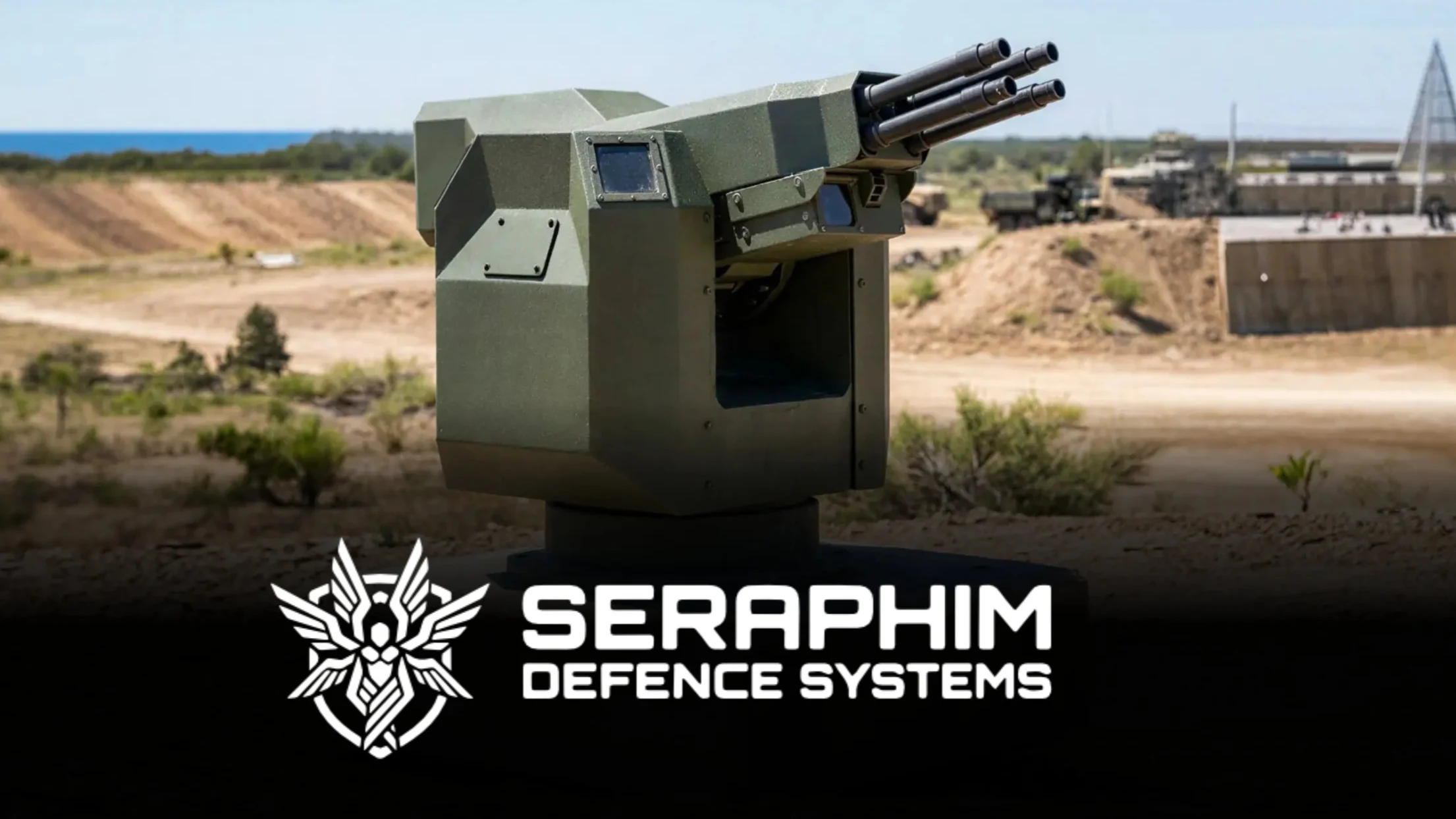
“The greatest technological challenge of 2026 is breaking the dominance of drones. When hostile systems no longer rely on GPS signals or radio communications, traditional jamming methods cease to be effective. The starting point must therefore be the reliable detection and classification of a target, regardless of its control channel. At Defence.Hub, we are developing MACS, an autonomous counter-drone system that detects targets using multiple sensors and neutralizes them either autonomously or under operator supervision. At the same time, we are developing additional layers of the system. Our objective is to create an ‘economical shield’ in which the cost of neutralizing a threat is lower than the cost of the drone itself,” said Łukasz Grzybowski, Management Board Member and Chief Technology Officer at Defence.Hub.
About the company
Defence.Hub is a company listed on the NewConnect market. It specializes in the development and commercialization of defense and dual-use technologies, acting as an integrator of solutions from Polish and international defense-technology companies.
Seraphim Defence Systems P.S.A. is a Poznań-based technology company developing MACS, a modular counter-UAS platform designed to detect and neutralize advanced FPV drones. The company was a finalist in the NATO Innovation Challenge 2025 and is a member of NVIDIA Inception and the EUDIS Matchmaking Programme.
Press release
See also: