


















On Thursday, January 15, 2026, the European Commission approved the national defense plans of eight member states under the SAFE (Security Action for Europe) procedure, an EU loan program for defense investments. The approved plans include those submitted by eight member states, including Belgium, Denmark, Spain, Cyprus, and Portugal. Additional plans, among them Poland’s, are still awaiting approval. Interest in funding to strengthen defense capabilities is, however, so strong that the European Commission is considering the launch of a second SAFE program.
 Photo: Newseria
“The scale of interest in the SAFE fund surprised the President of the European Commission, as well as the entire Commission. This idea, which originated during Poland’s presidency of the Council of the European Union, has turned out to be an absolute hit and a response to the needs of the moment. As a result, both the number of applications and the level of demand for allocations are significantly higher than the funds available at the level of 150 billion EUR,” Michał Szczerba, a Member of the European Parliament from the Civic Coalition, told the Newseria news agency.
The SAFE program was approved by the Council of the European Union in May 2025. It is intended to provide financial support to EU member states for large-scale armament investments and thus accelerate their defense readiness. The SAFE pool amounts to 150 billion EUR, which will be disbursed in the form of low-interest, long-term loans.
“During the Politico gala, the President of the European Commission, Ursula von der Leyen, suggested that given the fact that some EU member states want to continue strengthening their armed forces, developing their industries, and jointly implementing projects as well as common public procurement, the time has come to consider a new edition of the SAFE program once these funds have been allocated,” Michał Szczerba noted.
So far, the European Commission has approved the national defense plans of eight member states: Belgium, Bulgaria, Denmark, Spain, Croatia, Cyprus, Portugal, and Romania. Funding levels for each country were preliminarily determined in September. Within this group, Romania is to receive approximately 16.7 billion EUR in loans, while Cyprus will receive 1.18 billion EUR. In total, 38 billion EUR will be allocated to these eight countries. The Commission has submitted a proposal to the Council for approval of this financial assistance. The President of the European Commission emphasized that additional countries will soon join this group (European Commission: 18 countries initially interested in loans under the SAFE instrument).
“Everything indicates that the agreement with the Polish government will be signed as early as March, which will result in the mechanical, direct, and automatic transfer of 15 percent of the funds corresponding to our declared needs,” the Civic Coalition MEP stressed.
Poland is the largest beneficiary of the SAFE program. From the available pool, it is expected to receive nearly 44 billion EUR. The application submitted by Poland covers 139 projects, with the decisive role in drawing up the list played by the General Staff of the Polish Armed Forces, which identified specific needs and requirements (the Ministry of National Defence submitted the applications to the European Commission under the SAFE program).
“Our projects will be subject to evaluation, but it can be said that we have prepared them with a surplus. They exceed the 44 billion EUR allocation – we proposed an additional 20 billion EUR and projects in this area. We want the vast majority of these funds to remain in Poland, meaning that the contracts we implement will be co-led or directly carried out by the Polish defense industry,” Michał Szczerba explained.
Nearly 90 percent of the funds are expected to go to companies from the Polish defense industry, both state-owned and private.
“I am also pleased with the initiative to cooperate with the Ukrainian industry. We want to benefit from new technologies and solutions in the field of counter-drone systems as well as drone production, which Ukraine tests every day on the battlefield,” the Civic Coalition politician said.
Under the SAFE program’s assumptions, Ukraine, as well as countries from the EFTA/EEA area, may participate in joint procurement. In its submitted application, Poland declared cooperation with Ukraine. Among other things, Poland aims to acquire Ukrainian technologies and launch their production at domestic facilities.
“When we look at the 2025 calendar, moving from the idea to the implementation of SAFE happened in a very short time by Brussels standards. I am absolutely convinced that if today the President of the Commission and the prime ministers of the eastern flank countries are talking about such a need, the European Union will take responsibility for its own security. The U.S. strategy clearly shows that we will have to assume responsibility for Europe, for the entire continent and its security,” the MEP added.
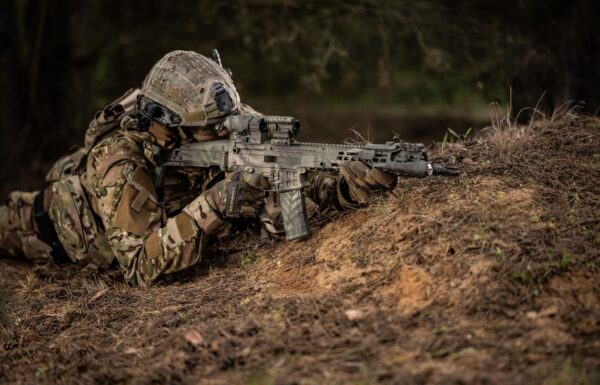
Funds in the form of loans from the first SAFE program may be allocated to finance priority defense products divided into two categories. The first includes, among others, ammunition and missiles, artillery systems, soldier equipment and infantry weapons, small drones (NATO Class 1) and related counter-drone systems, as well as critical infrastructure protection. The second category includes, among others, air and missile defense systems, NATO Class 2 and 3 drones and related counter-drone systems, strategic airlift, air-to-air refueling, C4ISTAR systems, as well as space-based assets and services.
“Let us also remember that in addition to SAFE funds, we have at our disposal the European Defence Investment Programme, EDIP – 1.5 billion EUR, also with a Ukrainian cooperation component. These funds must also be used by combining industry, research, and development,” Michał Szczerba explained.
Duże zainteresowanie państw unijnych finansowaniem obronności z programu #SAFE. Może powstać jego druga edycja. @grupaepl https://t.co/PWafWRTgfc
— Michał Szczerba (@MichalSzczerba) January 19, 2026