




















On Wednesday, February 4, 2026, the American corporation RTX announced that its subsidiary Raytheon had entered into framework agreements with the U.S. Department of Defense to significantly increase production capacity for RGM-109 Tomahawk cruise missiles in the Land Attack and Maritime Strike variants, as well as AMRAAM surface-to-air/air-to-air missiles and interceptor missiles from the Standard Missile family: SM-3 IB, SM-3 IIA, and SM-6.
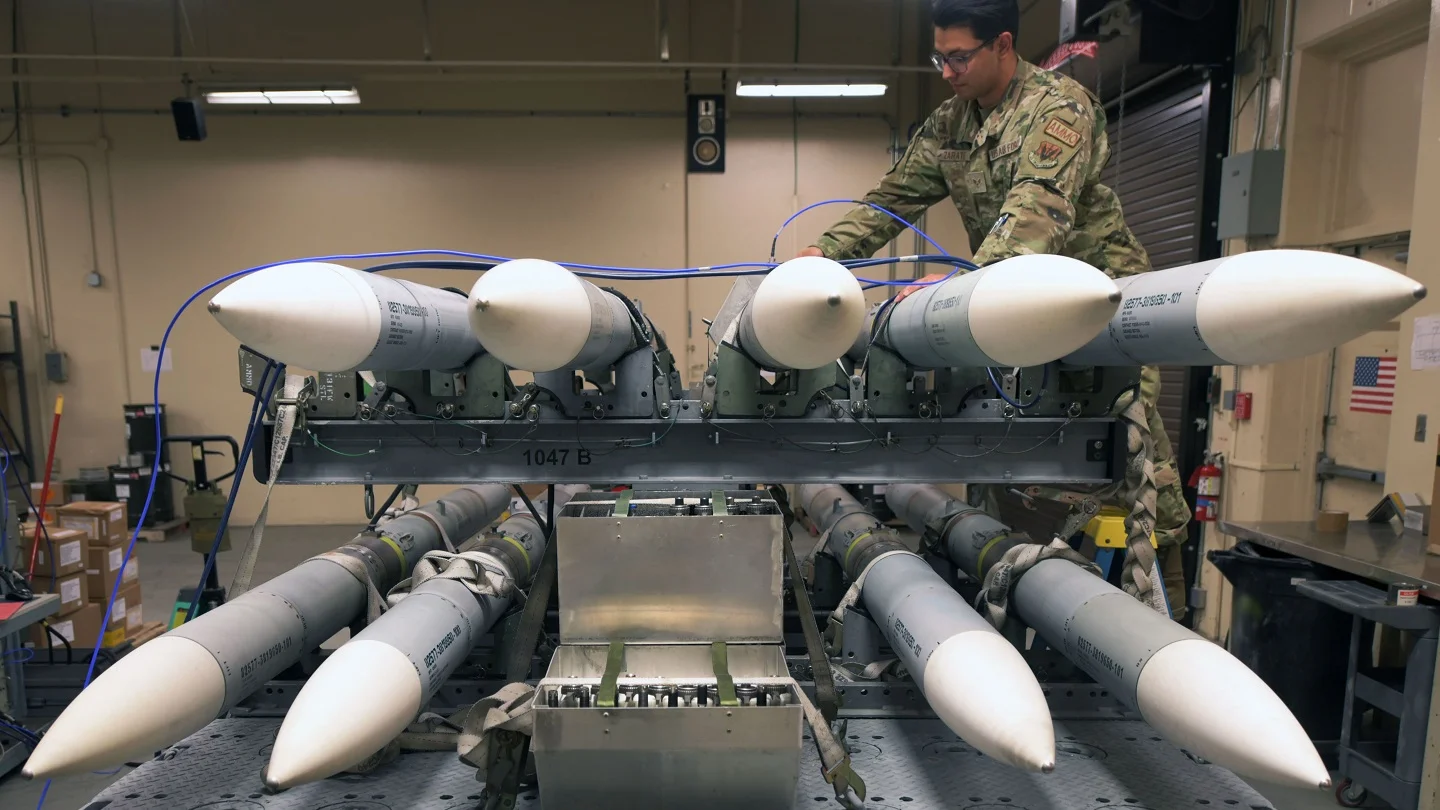 AMRAAM / Zdjęcie: USAF
In response to continued growth in global demand for this precision munitions, the agreements—concluded for a period of up to seven years—establish a framework that will allow the corporation to leverage earlier investments in expanding production. Under their terms, RTX will increase annual production of Tomahawk cruise missiles to more than 1,000 units, AMRAAM missiles to at least 1,900 units, and SM-6 missiles to over 500 units. RTX will also increase production of SM-3 IIA missiles and accelerate production of SM-3 IB missiles. Many of these missiles will be produced two to four times faster than before.
Thanks to the strong commitment of the U.S. Department of Defense to strengthening the domestic defense industrial base and creating jobs at home, RTX will continue to invest in technology, facilities, and its workforce to achieve and sustain this historically high level of production.
“These agreements redefine how government and industry can partner to speed the delivery of critical technologies and are a direct result of the administration’s Acquisition Transformation Strategy and commitment to deliver the best technologies faster,” said RTX CEO and Chairman Chris Calio. “We are proud to support the department’s Arsenal of Freedom to ensure the United States and its allies and partners have the decisive edge — now and in the future.”
RTX has invested significant resources in expanding its production capacity to accelerate deliveries of several key types of munitions and will continue to invest in expansion and acceleration initiatives. Production under these framework agreements will be carried out at Raytheon facilities in Tucson, Arizona; Huntsville, Alabama; and Andover, Massachusetts.
The corporation’s investments related to these framework agreements have been incorporated into RTX’s recently announced financial outlook for 2026. The long-term agreements include a shared funding approach designed to preserve initial free cash flow, enabling RTX to invest with confidence to meet long-term demand.
 Tomahawk / Photo: RTX
Tomahawk Cruise Missiles
Precision-guided cruise missiles launched primarily from surface ships (RGM-109) and submarines (UGM-109), capable of striking land or maritime targets at ranges of approximately 1,600–1,850 km, even within heavily defended airspace. U.S. and allied armed forces have flight-tested the Tomahawk more than 550 times and employed it operationally over 2,300 times. It is routinely the U.S. military’s first-choice weapon for engaging enemy forces anywhere in the world.
AMRAAM
The most widely used medium-range air-to-air missile in the world. Since 2024, Raytheon has been producing fifth-generation AMRAAMs (currently the latest variants AIM-120C-8 and AIM-120D-3), featuring advanced guidance, software-defined capabilities, and enhanced electronic protection, designed for operations in high-intensity conflict environments. In service with more than 40 allies and partners, AMRAAM is integrated with fourth- and fifth-generation aircraft and serves as the primary interceptor missile for NASAMS air defense systems, supporting both air and ground-based air defense. Production in 2025 nearly doubled compared to 2024, and its effectiveness has been validated by more than 6,000 test firings and 13 air-to-air combat victories.
 SM-3 Block IB / Photo: US Navy
RIM-161C SM-3 Block IB
A combat-proven interceptor missile designed specifically to engage short- and medium-range ballistic missiles outside the atmosphere, using hypersonic hit-to-kill precision. It can be launched from both naval vessels and land-based sites. In April 2024, the SM-3 IB was used in combat for the first time to intercept Iranian ballistic missiles heading toward Israeli targets.
 SM-3 Block IIA / Photo: US Navy
RIM-161D SM-3 Block IIA
An interceptor missile developed under a joint program between the Missile Defense Agency (MDA), Japan’s Ministry of Defense, and their industrial partners. Compared to earlier variants, the interceptor is equipped with larger rocket motors and an improved kinetic warhead, enabling it to engage threats more rapidly and protect larger areas against short- and medium-range ballistic missiles.
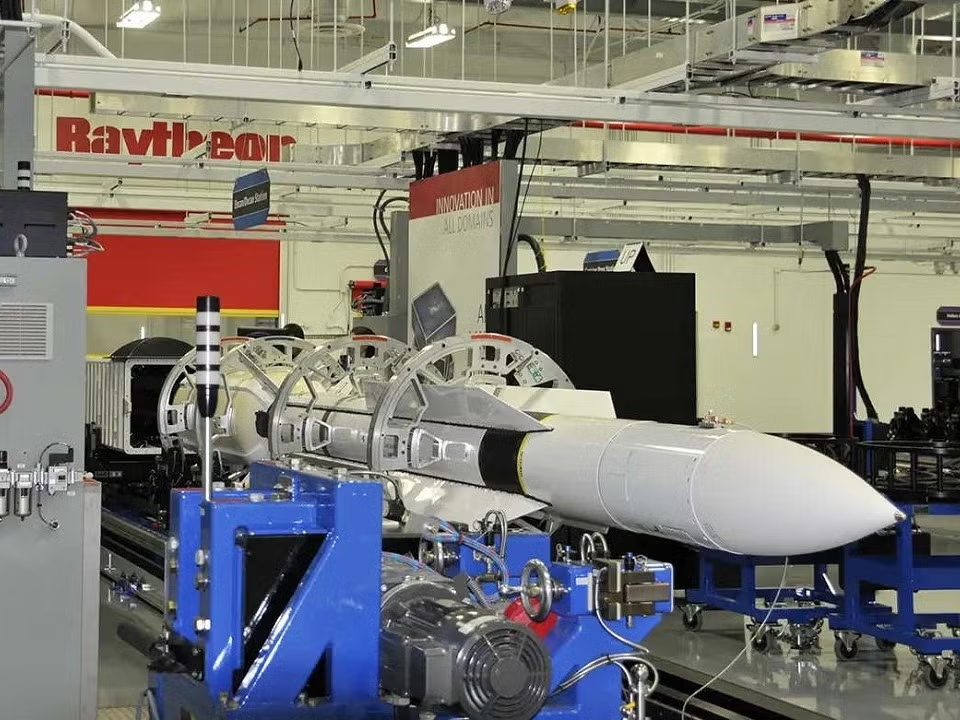 SM-6 / Photo: RTX
RIM-174 SM-6 ERAM
The SM-6 is the only missile that supports anti-air warfare, surface warfare, and maritime ballistic missile defense in a single solution, enabling the United States and its allies and partners to cost-effectively enhance their combat capabilities. The SM-6 has been successfully launched from Mk 21 Mod 3 canisterized vertical launchers of the Mark 41 Vertical Launch System (VLS), both from surface ships and from U.S. Navy land-based launchers.
📰#NEWS: Raytheon partners with @DeptofWar on landmark multiyear agreements to increase annual production and delivery of Tomahawk and AMRAAM missiles, as well as SM-3 and SM-6 interceptors.
Details: https://t.co/1XYlJxMx1L pic.twitter.com/WLOYML7gbf
— RTX (@RTX_News) February 4, 2026
See also: