

























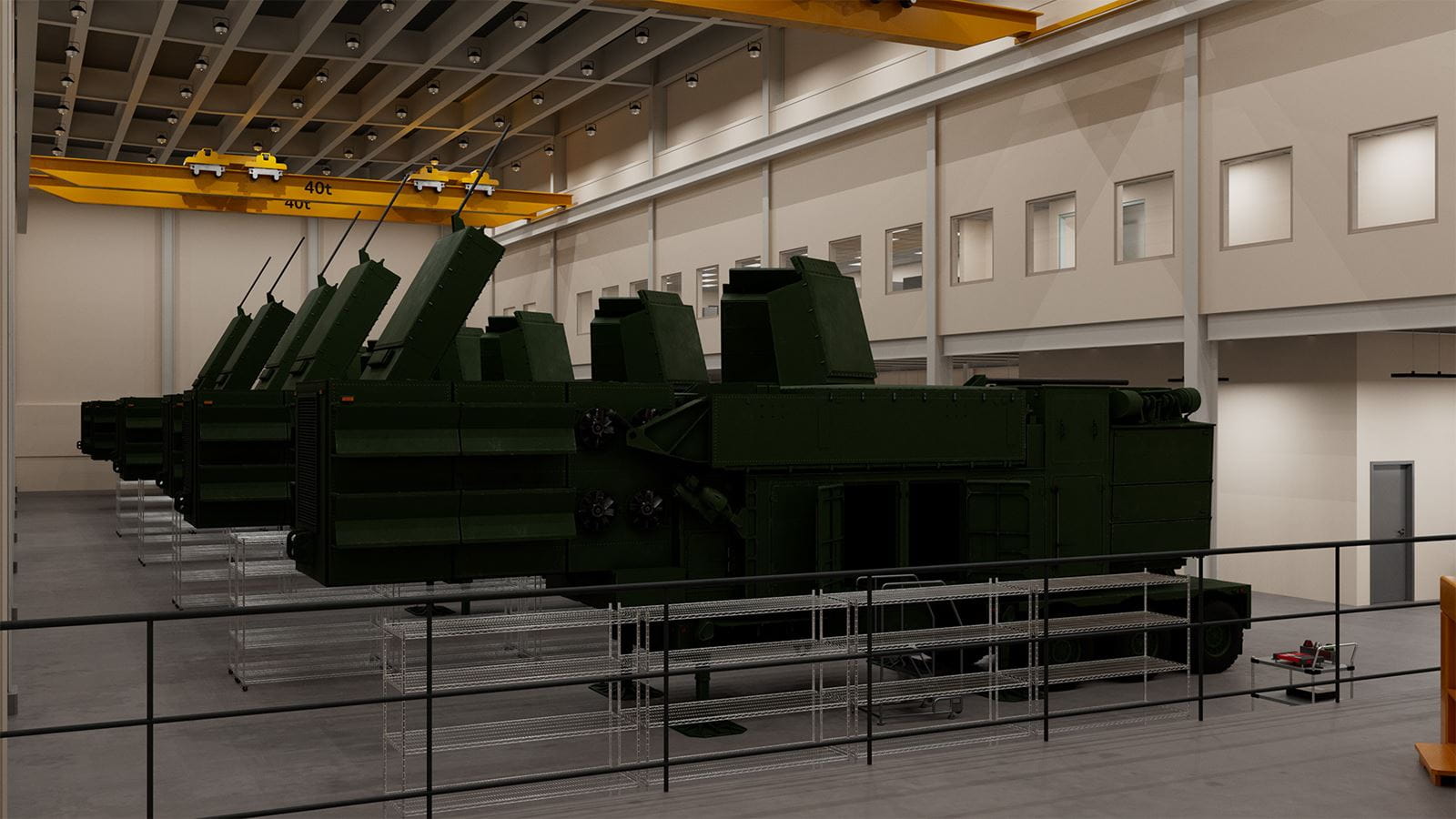
On Monday, June 8, 2026, Raytheon, a U.S. company and part of RTX, announced that it is investing 100 million USD to begin expanding its facilities in Portsmouth, Rhode Island, where tests of LTAMDS medium-range radars will be conducted and components for PAC-2 GEM-T interceptor missiles for MIM-104 Patriot air and missile defense systems will be produced.
 Photo: RTX
„This investment strengthens our ability to deliver critical air and missile defense capabilities to customers around the world,” said Tom Laliberty, president of Land & Air Defense Systems at Raytheon. „Expanding in Portsmouth allows us to scale production, advance LTAMDS testing, and ensure the U.S. Army and our international partners receive these systems as quickly as possible.”
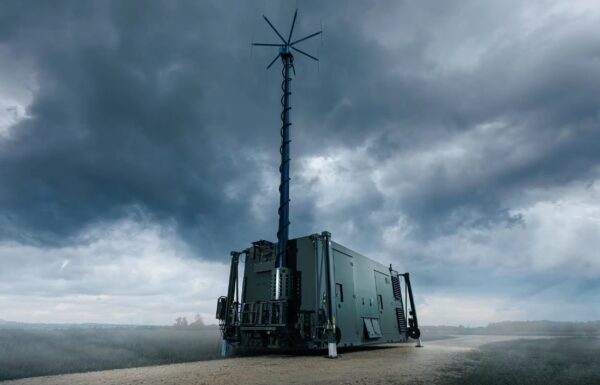
The ceremonial groundbreaking in Portsmouth, Rhode Island, took place eight months after the company began a 53 million USD expansion of its radar production facility in Andover, Massachusetts, adding 2,140 m² of space on October 15, 2025. LTAMDS (Lower Tier Air and Missile Defense Sensor), known as GhostEye, is a radar designed to detect advanced threats, including hypersonic missiles.
Raytheon has signed a contract to deliver multiple LTAMDS radars to the U.S. Army, at least 60 units and probably 15 more, and to Poland, with 12 units. The U.S. State Department has also approved their sale to Kuwait, for eight units. The test program also recently completed its ninth successful trial, using multiple radar arrays to track and intercept a target simulating an enemy missile.
LTAMDS is a three-array fixed radar providing 360-degree coverage and using AESA (Active Electronically Scanned Array) antennas based on gallium nitride (GaN) technology. These features enable much more effective protection against a full range of threats, from manned and unmanned aircraft to cruise, ballistic, and hypersonic missiles. It is the successor to the sector-scanning AN/MPQ-65 fire-control radars used in Patriot system batteries. Compared with the AN/MPQ-65 radar, the antenna of the new system is 2,130 mm longer and 280 mm narrower. It does not require side stabilizers, which means it takes up less space in the cargo hold of a C-17A Globemaster III.
The PAC-2 GEM-T interceptor missile, also designated TBM, or Theater Ballistic Missile, entered service with the U.S. Army in 2006, although deliveries of 230 of the initially ordered 376 missiles began a year earlier. As the TBM designation indicates, the missile is intended primarily to defeat medium-range ballistic missiles, or tactical-operational ballistic missiles, such as the Iskander-M. In the PAC-2 GEM-C variant, it is also designed to counter cruise missiles and aircraft.
The GEM-T/C is a deeply modernized missile for the MIM-104C/D, or PAC-2, system. It received a proximity fuze, a new radar receiver with improved accuracy, and new solid-state electronics. In 2018, the missiles were fitted with a more durable digital transmitter using gallium nitride, or GaN, technology, intended to reduce the missiles’ operating costs (Half a Thousand Missiles for Qatar’s Patriot Systems, RTX to Urgently Supply PAC-2 GEM-T Missiles to the U.S. Army).
The investment will accelerate LTAMDS testing for the @USArmy, expand Patriot GEM-T production capacity, support growing global demand and create 150 highly skilled jobs. Learn more: https://t.co/h0yilhNiE4
— RTX (@RTX_News) June 8, 2026
See also: