











On Monday, May 11, 2026, German defense group Rheinmetall AG announced that, together with telecommunications group Deutsche Telekom AG, it had begun cooperation to build a protective architecture for cities and critical infrastructure across Germany against unmanned aerial vehicles and acts of sabotage. The agreement was reached ahead of the upcoming 39th AFCEA security technology trade fair at the World Conference Center Bonn, scheduled for May 12–13 this year.
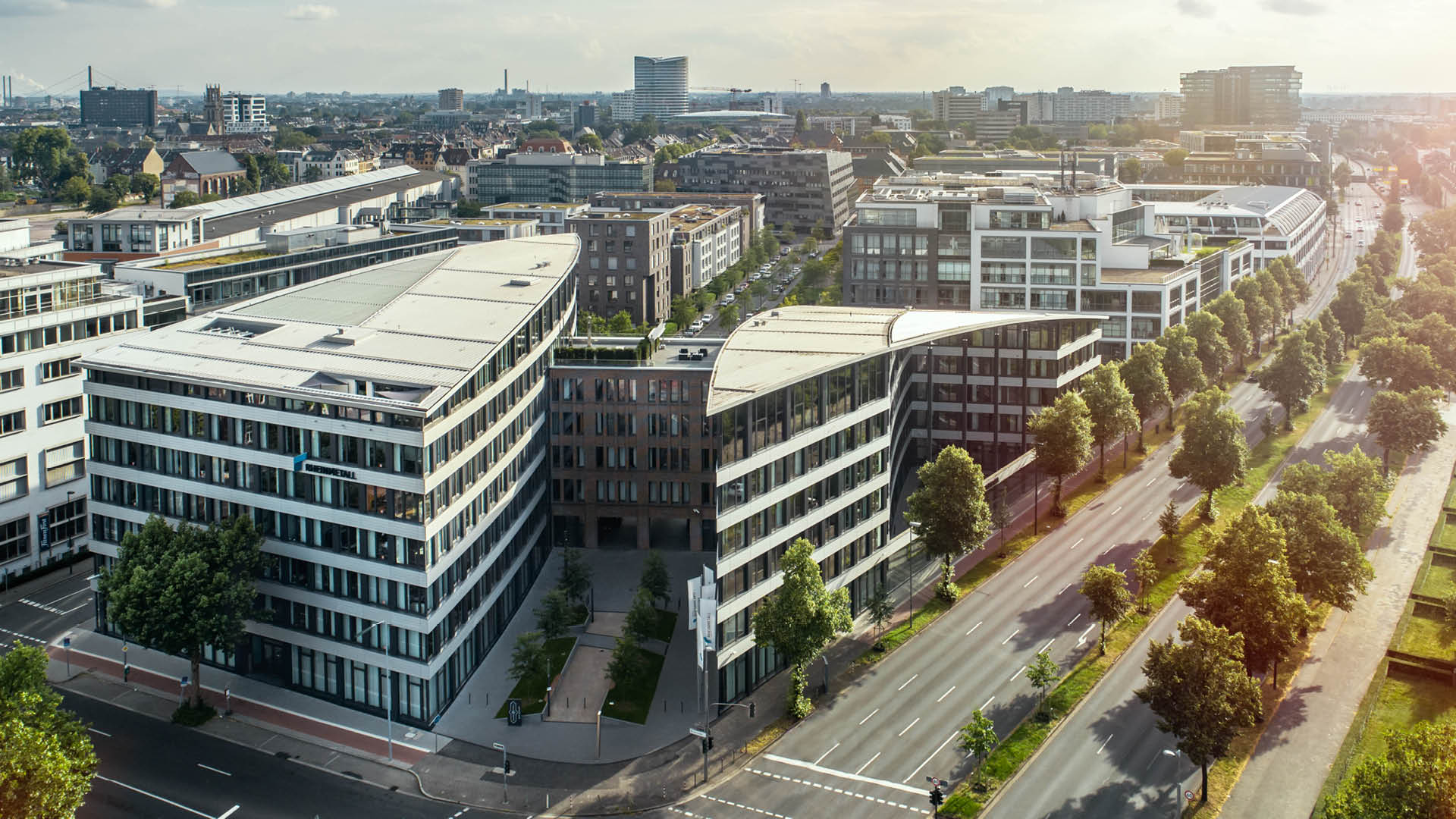 Photo: Rheinmetall AG
As Rheinmetall AG emphasized in a press release, the current geopolitical situation has brought the protection of critical infrastructure into sharp focus. Hybrid threats, such as sabotage and drone activity, are steadily increasing. In response, companies from the defense and telecommunications sectors are combining their expertise.
The partners aim to develop capabilities and technologies to counter a broad spectrum of potential attacks on critical infrastructure facilities ‒ a multi-threat approach to protection. This includes cybersecurity technologies as well as the physical protection of facilities, commonly referred to as perimeter security. Further details on the cooperation will be announced at a later date.
Armin Papperger, CEO of Rheinmetall AG, said:
“The threat posed by drones is highly digital. This is why effective defence requires a combination of sensors, effectors, and secure communication networks. Rheinmetall and Deutsche Telekom bring together precisely these capabilities.”
Tim Höttges, CEO of Deutsche Telekom AG, noted:
“Sovereignty is achieved not only through discussion but through action. Telekom is taking responsibility: With our expertise in connectivity, cloud, and data analytics, we are elevating drone defence to a new level. Together with Rheinmetall, we are strengthening sovereignty and helping to alleviate public concerns.”
Telekom detected drone flights during UEFA EURO 2024
Since 2017, Deutsche Telekom AG has been a system partner for government agencies and companies in the field of counter-drone security. The group has already protected critical infrastructure, facilities, and major events against drones both in Germany and abroad. For example, Telekom successfully and reliably detected illegal drone flights on behalf of the police during the 2024 UEFA European Football Championship.
Drone detection and defense are technically demanding. Depending on the location and terrain, different sensors are more suitable. Since 2017, the group has tested a range of sensors from international manufacturers in customer projects and field trials at international and regional airports, such as Tannheim in Baden-Württemberg, integrating them into its product portfolio. Telekom is continuously developing its technical counter-drone capabilities and its sensor suite. Current customer deployments use video, audio, radio-frequency (RF), Remote ID, and counter-drone radar sensors.
RF detection proven in customer deployments
Most commercially available drones are controlled within visual line of sight using a radio controller. Drones and controllers communicate via radio frequency. RF sensors can detect these signals and thereby determine the position of both the drone and the controller. RF is considered one of the most common methods of drone detection. RF sensors currently make it possible to detect more than 90% of all drones in low-altitude airspace.
The RF sensors used by Telekom operate passively and do not transmit an active search signal. This allows them to be installed on cell towers without interfering with sensitive mobile communications technologies. According to Telekom’s customer experience, RF sensors mounted high on cell towers have proven particularly effective in densely built-up urban areas.
Rheinmetall: Specialist in counter-drone defense and autonomous systems
Rheinmetall is one of the world’s leading suppliers of air defense systems, including very-short- and short-range systems. Effectors from the Düsseldorf-based technology group are currently being used in Ukraine and the Middle East. Rheinmetall also specializes in autonomous systems across all domains ‒ land, sea, and air ‒ including drones and aerial reconnaissance systems. The group is also developing sensor and data-processing technologies used in both civilian and security-related applications.
In December 2025, Rheinmetall AG, the Hamburg Police, and the Hamburg Port Authority entered into a strategic partnership to further develop concepts for drone detection and defense in the Port of Hamburg. The partnership focuses on developing future-oriented technologies for protecting maritime, civilian, and critical infrastructure.
From a technical point of view, the Port of Hamburg is regarded as a particularly demanding environment: diverse radio sources, maritime conditions, and dense infrastructure place high demands on detection systems. As a leading industry partner, Rheinmetall is contributing its expertise to this alliance to develop solutions tailored to complex threat scenarios as part of a broader regional security strategy.
More and more drones are flying via cellular networks
Drones controlled via cellular networks are becoming a new challenge. While the vast majority of operators use radio links and remote control, the number of drones controlled via cellular networks is growing. Practical applications in Germany and abroad show that both commercially available and homemade drones are increasingly being controlled via cellular networks. Telekom is working with the Bundeswehr University Munich, officially Helmut Schmidt University, to investigate ways of locating such drones.
The cellular network becomes a large-scale radar system
In the future, the cellular network itself will act as a sensor ‒ a large-scale radar system ‒ detecting changes and anomalies in data traffic that indicate drone control or communication. This will make drones visible to emergency services, for example in temporary no-fly zones. The basis for this is an autonomous, high-performance 5G network installed by Telekom on the campus of the Bundeswehr University, based on Ericsson technology.
Violations of drone regulations cause serious disruption to air traffic
Controlling drones via cellular networks is not yet common in Germany. Under the law, operators must keep the drone within visual line of sight at all times. Those who operate drones beyond visual line of sight often do so for commercial purposes, such as inspecting power lines or pipelines. Operators must apply for authorization for such a flight. Anyone who fails to apply but still controls a drone via a cellular network is committing an offense.
Drone flights in restricted zones are by no means a minor violation comparable to speeding, but a dangerous disruption to air traffic. Despite repeated police warnings, many people continue to fly drones beyond visual line of sight, risking unexpectedly severe penalties. Large-scale telecommunications systems are already locating drone flights at customers’ request, enabling emergency services to quickly locate operators.
#Rheinmetall and @deutschetelekom plan to jointly develop a #defenceshield against #drones and acts of #sabotage.https://t.co/IPr1eABmyy pic.twitter.com/gPXBWJUWlZ
— Rheinmetall (@RheinmetallAG) May 11, 2026