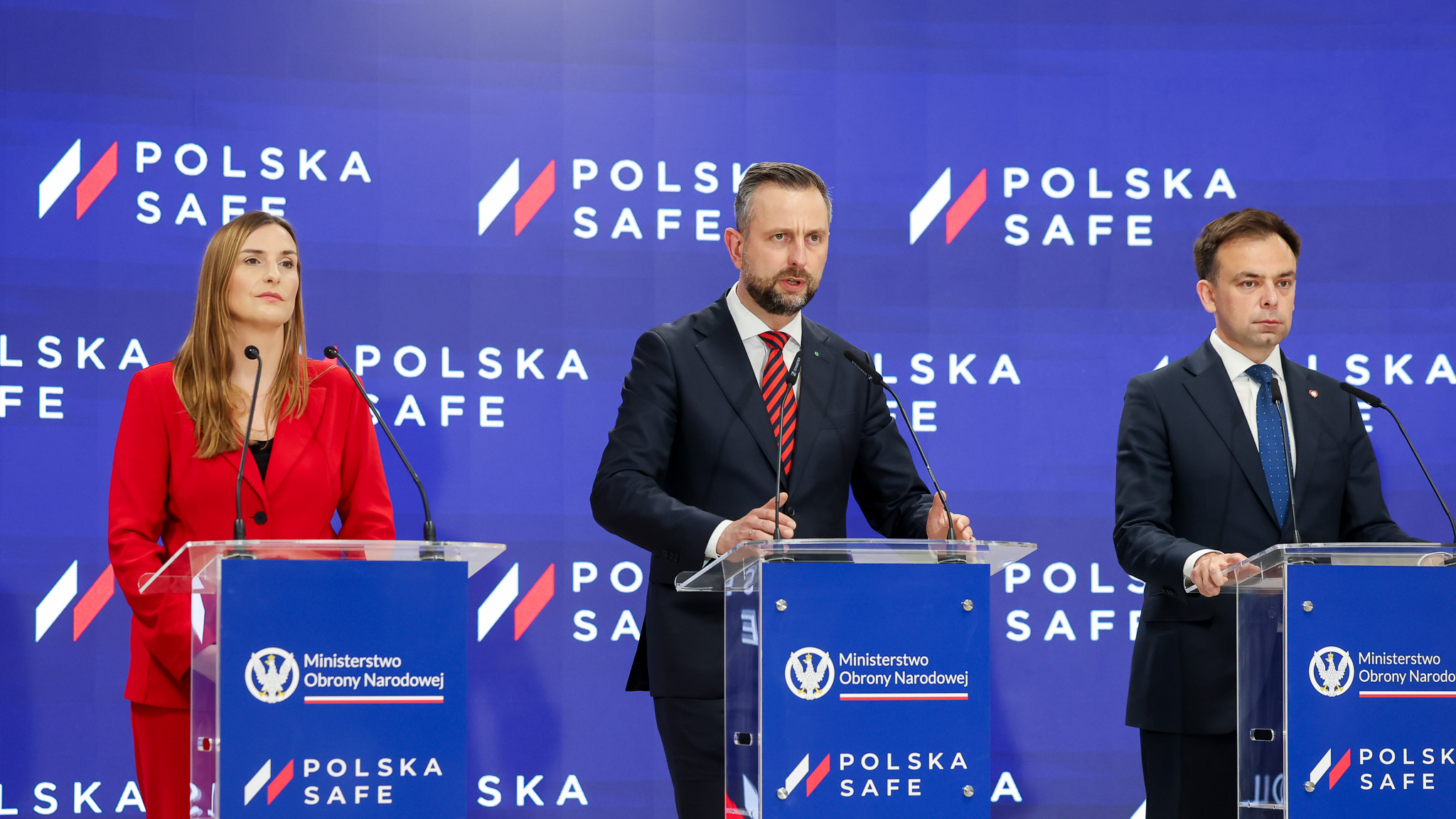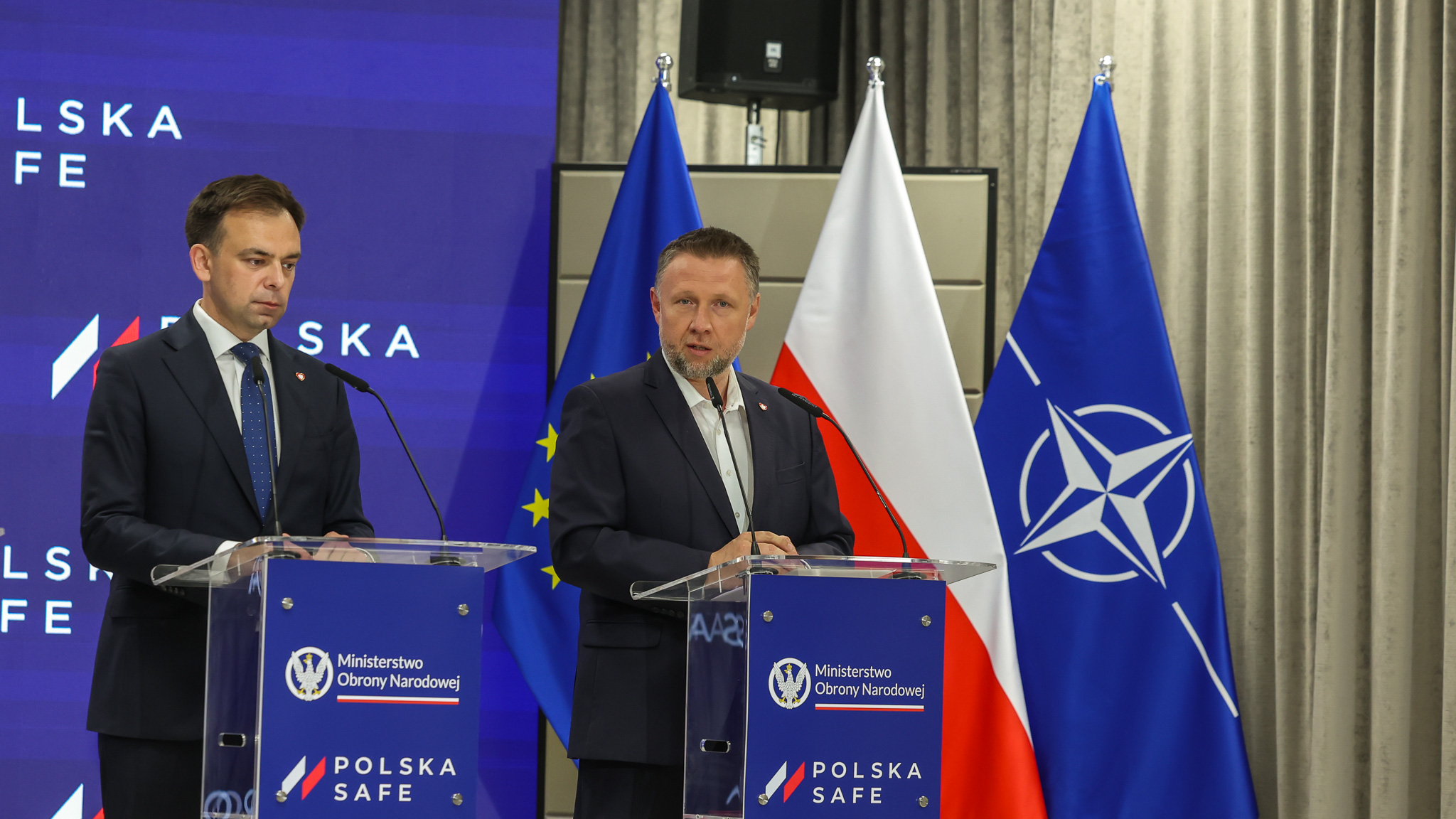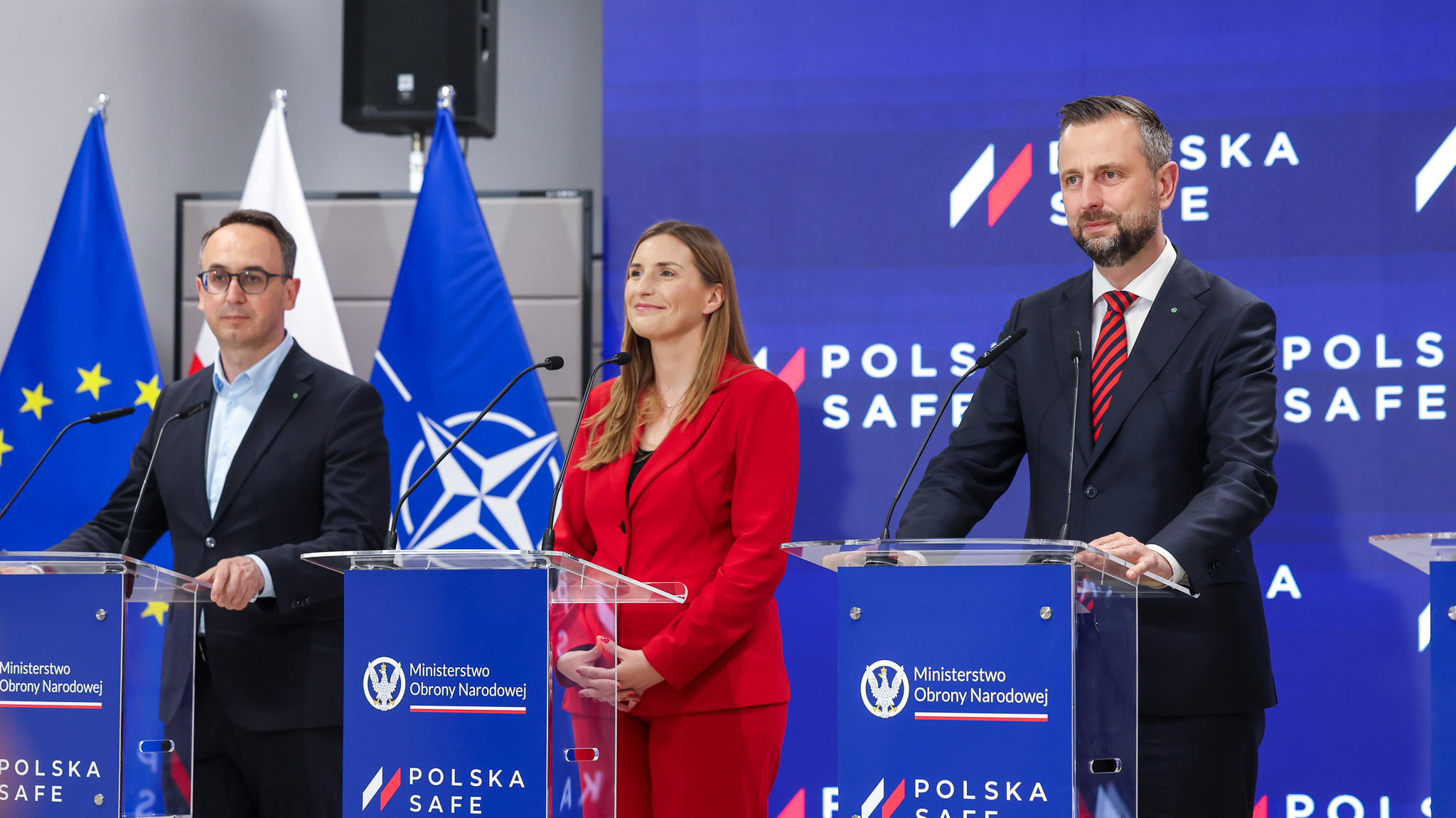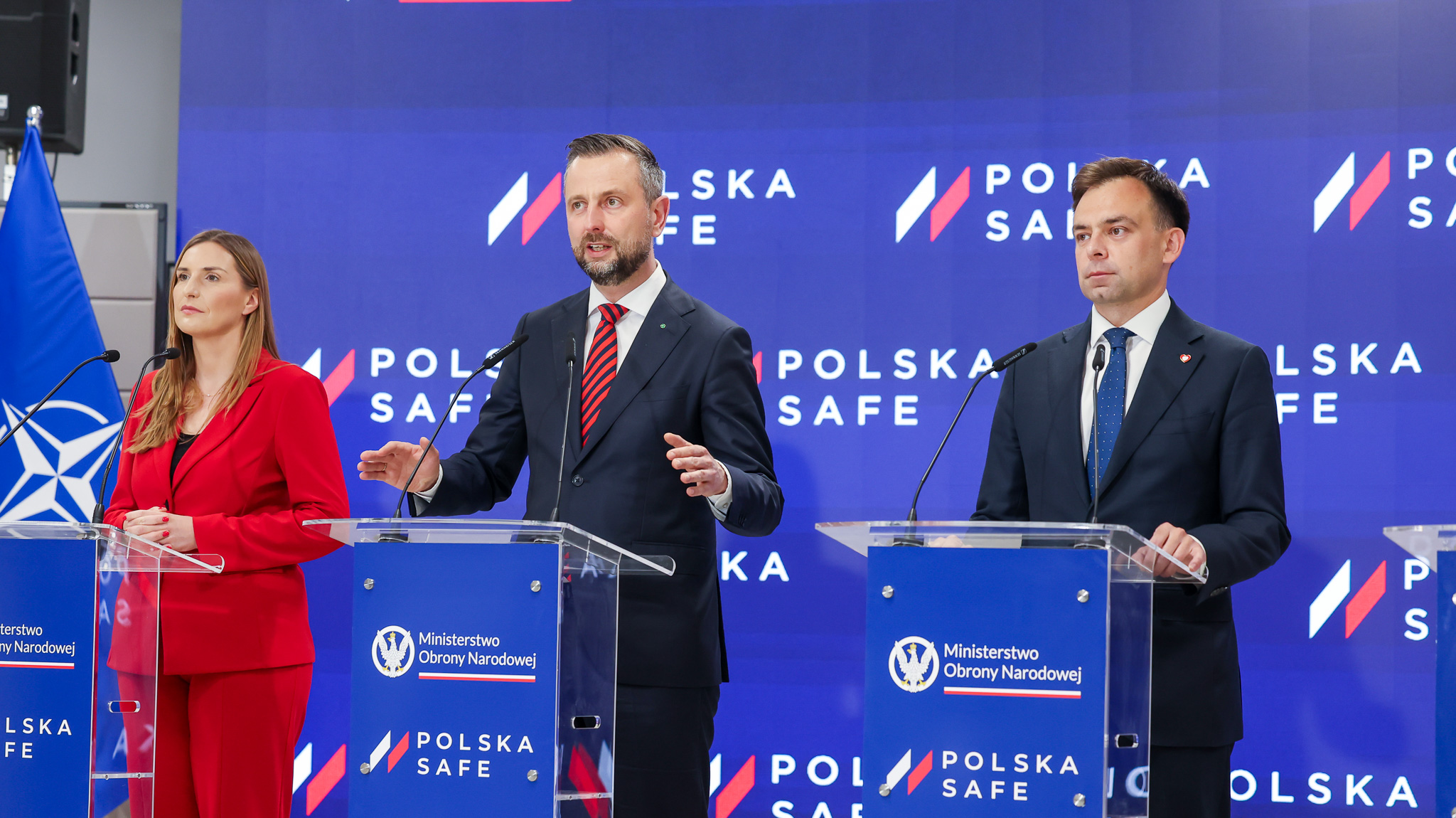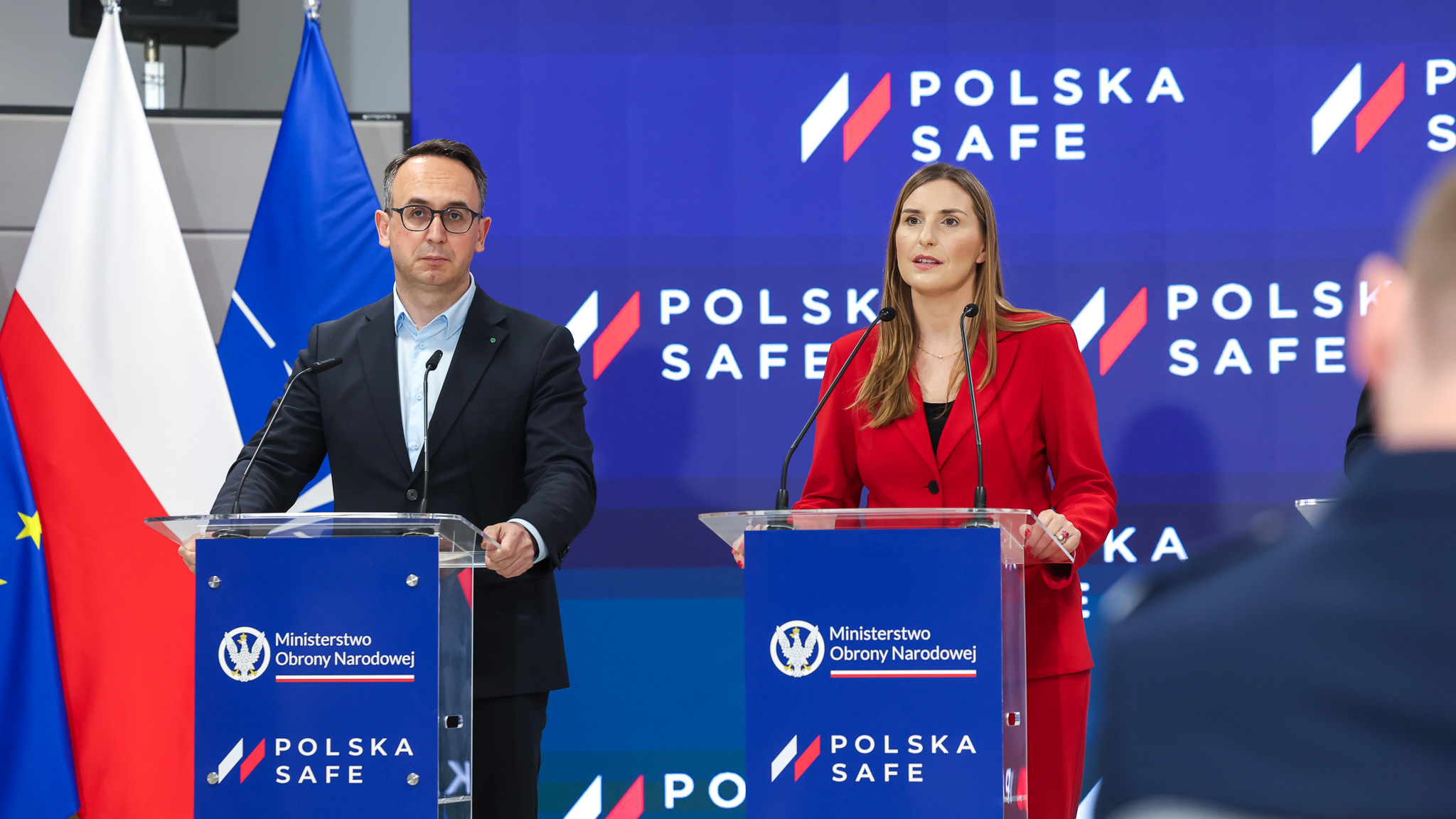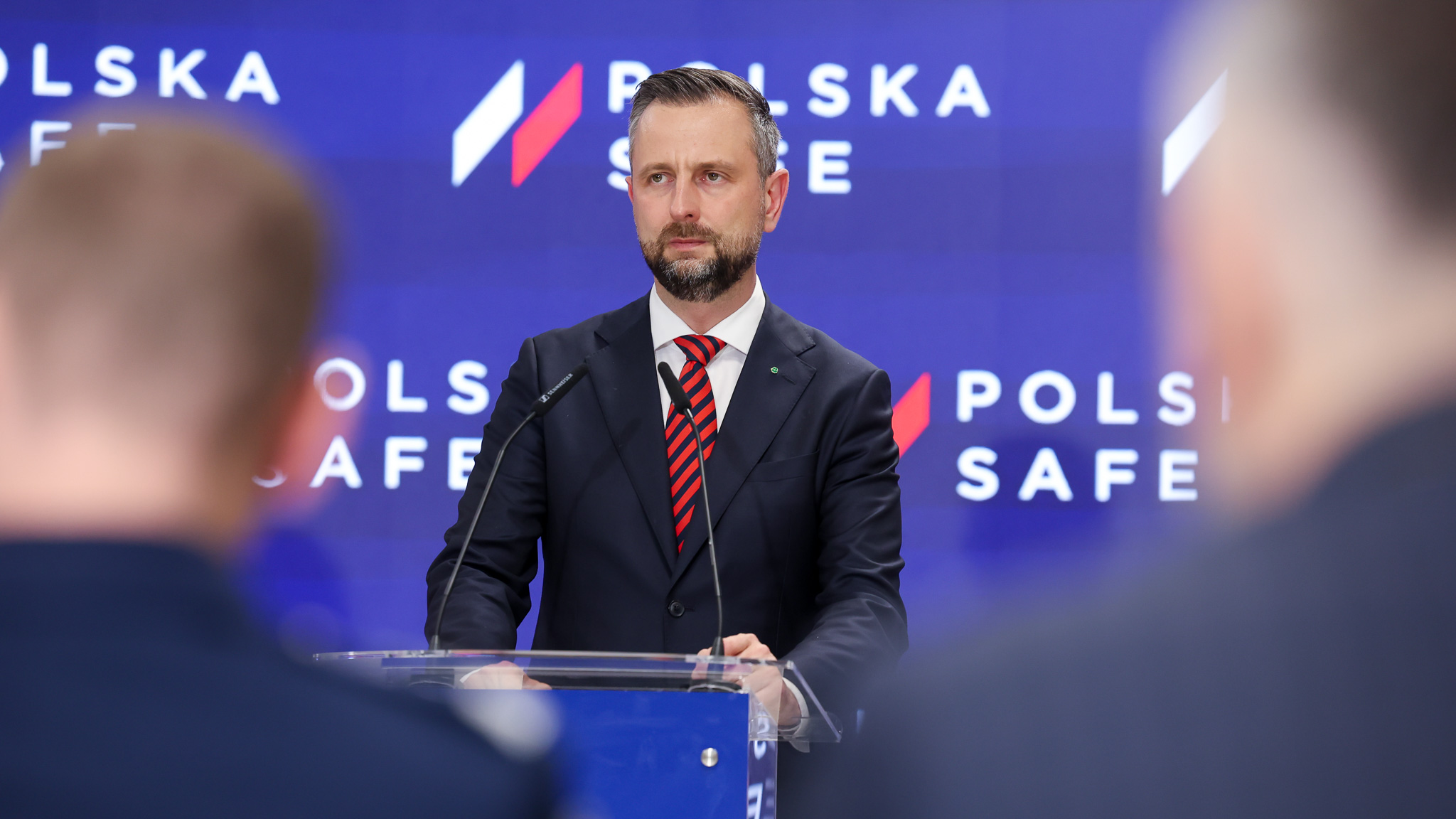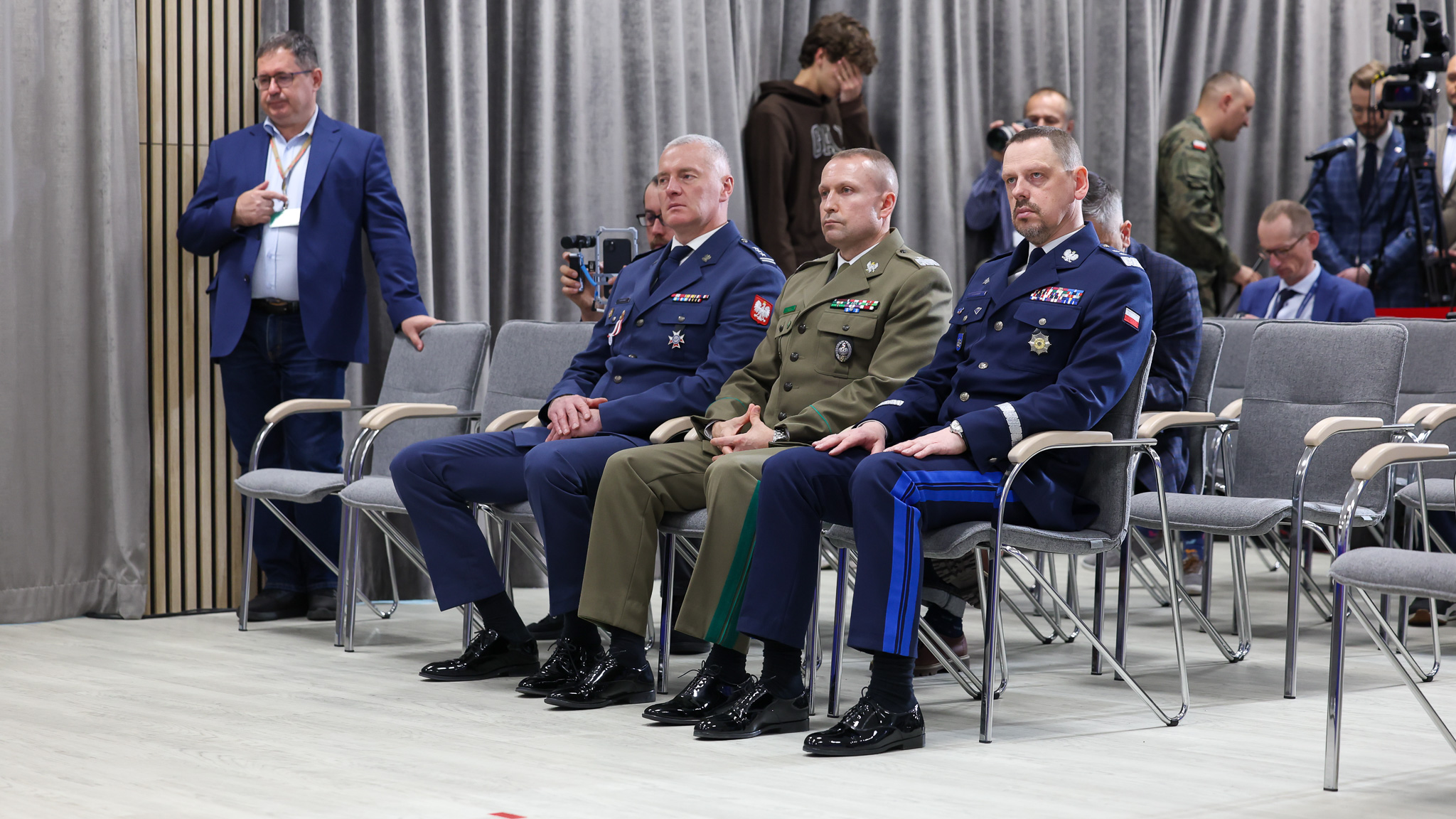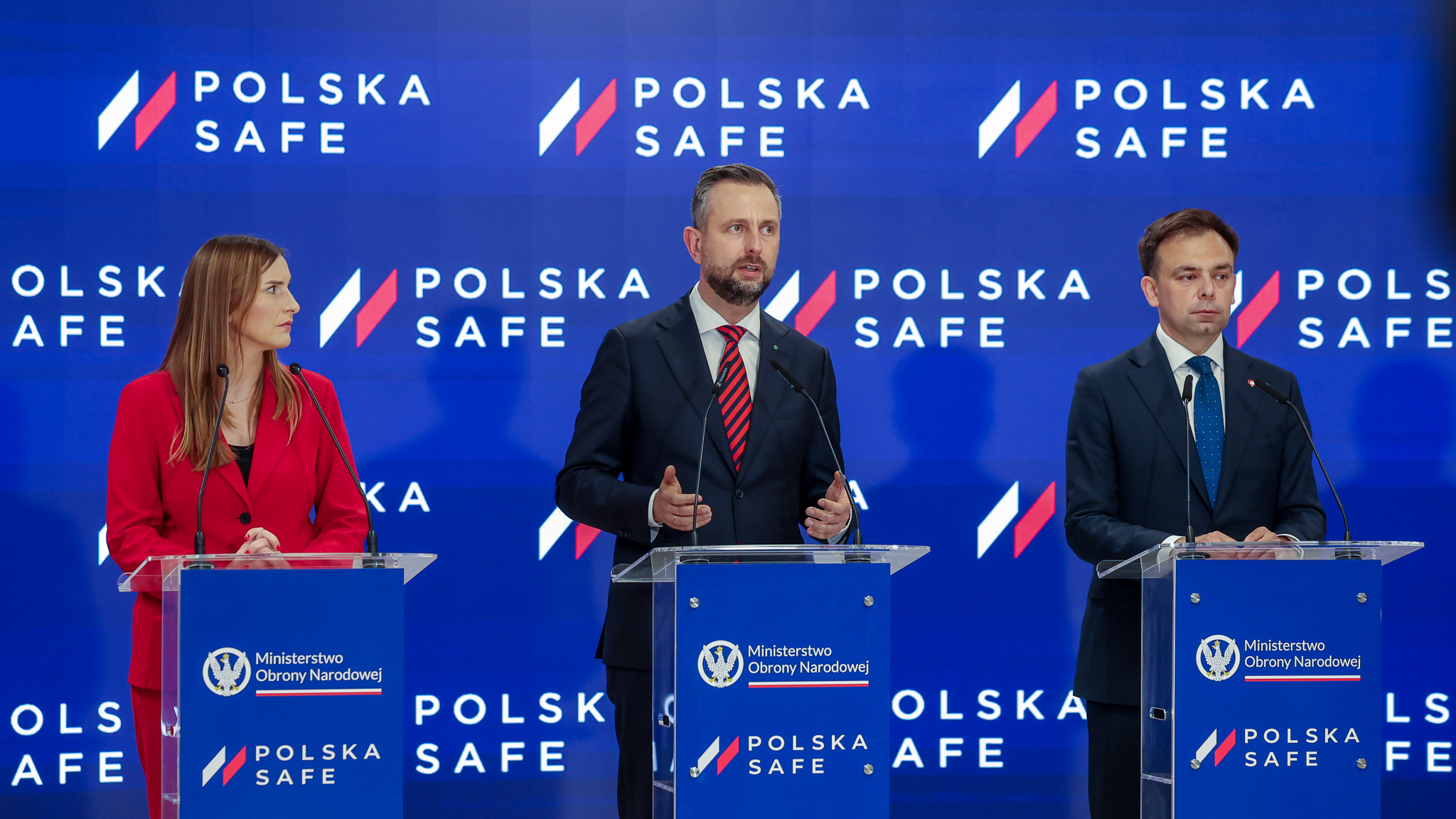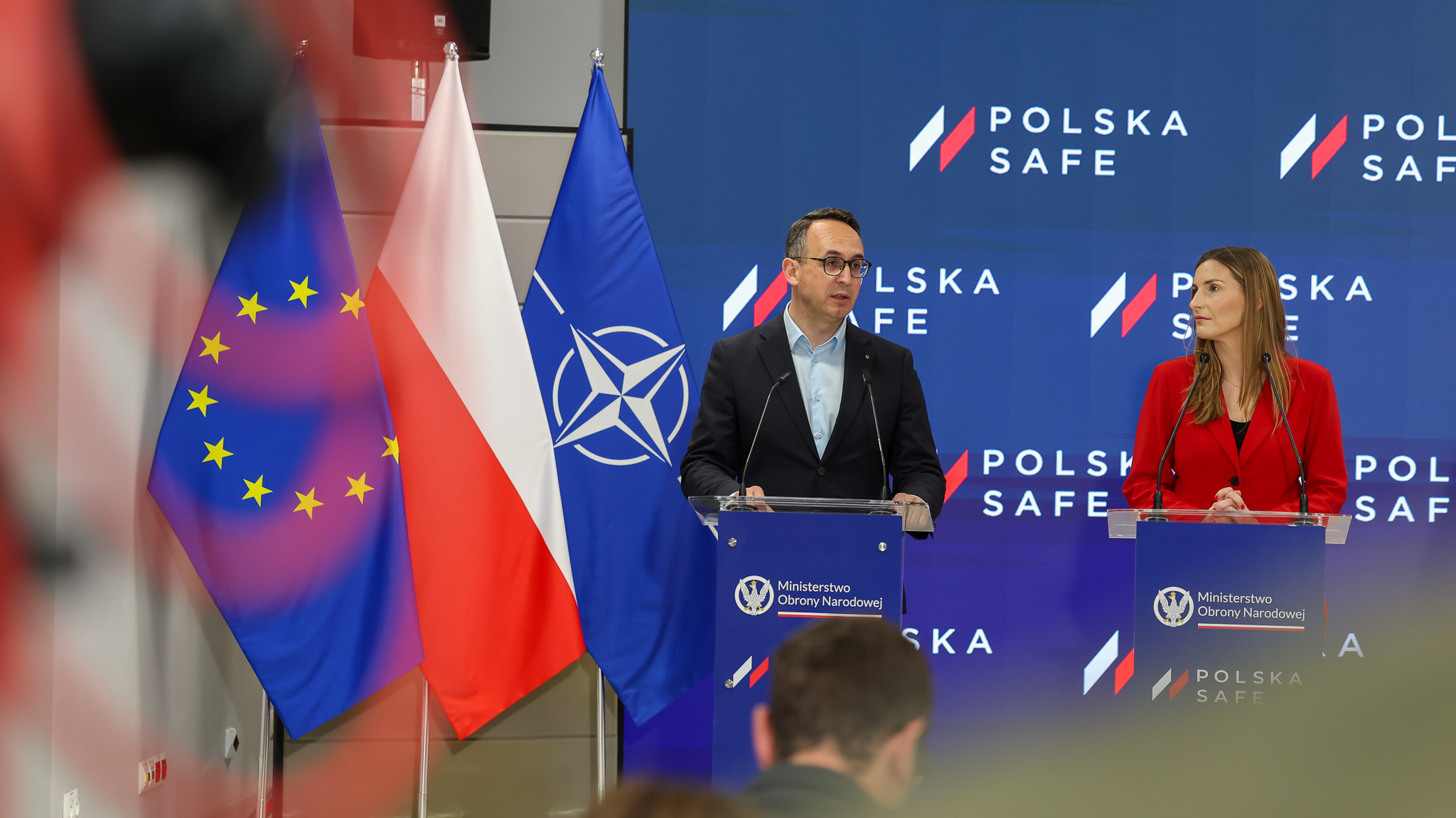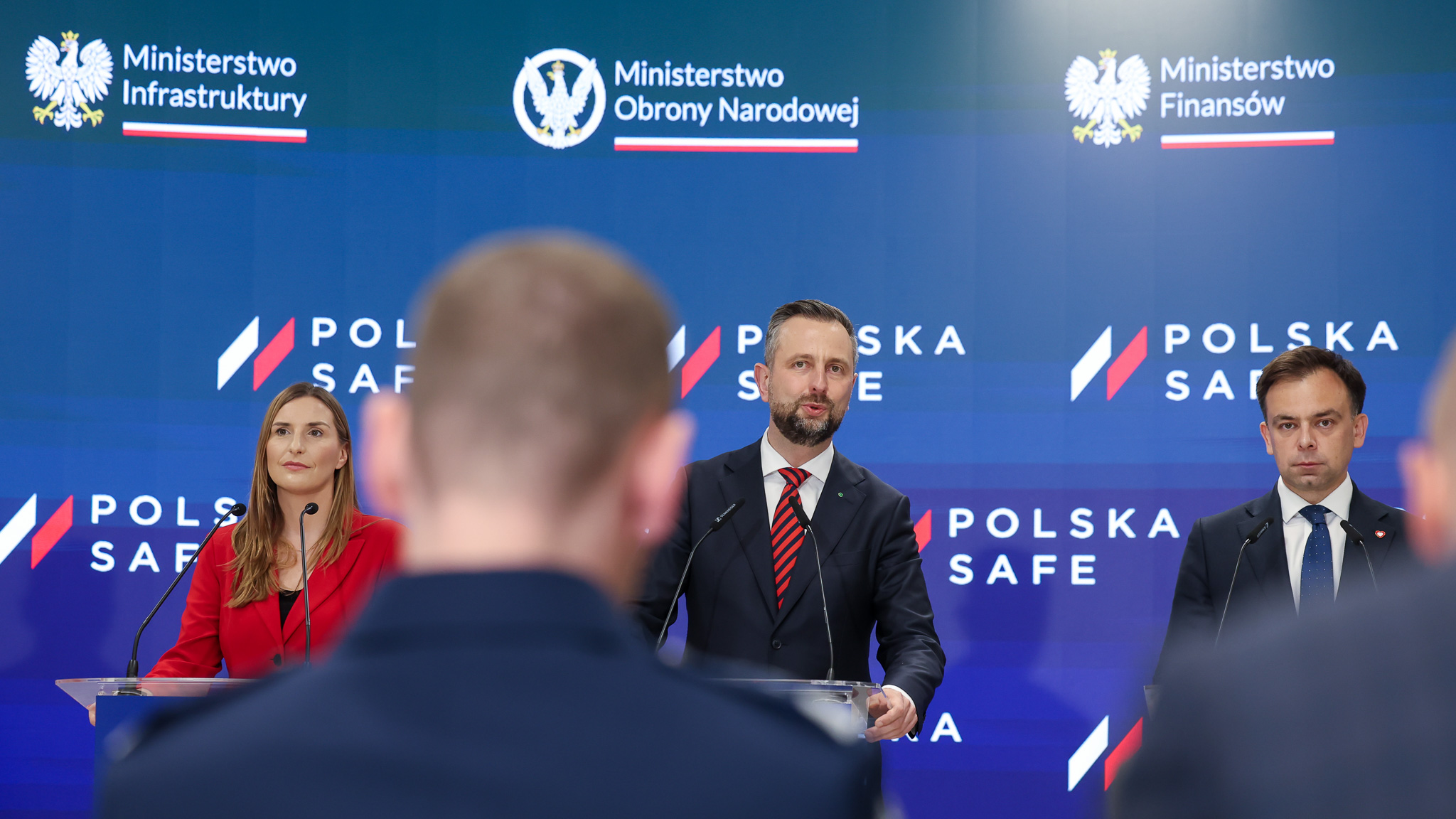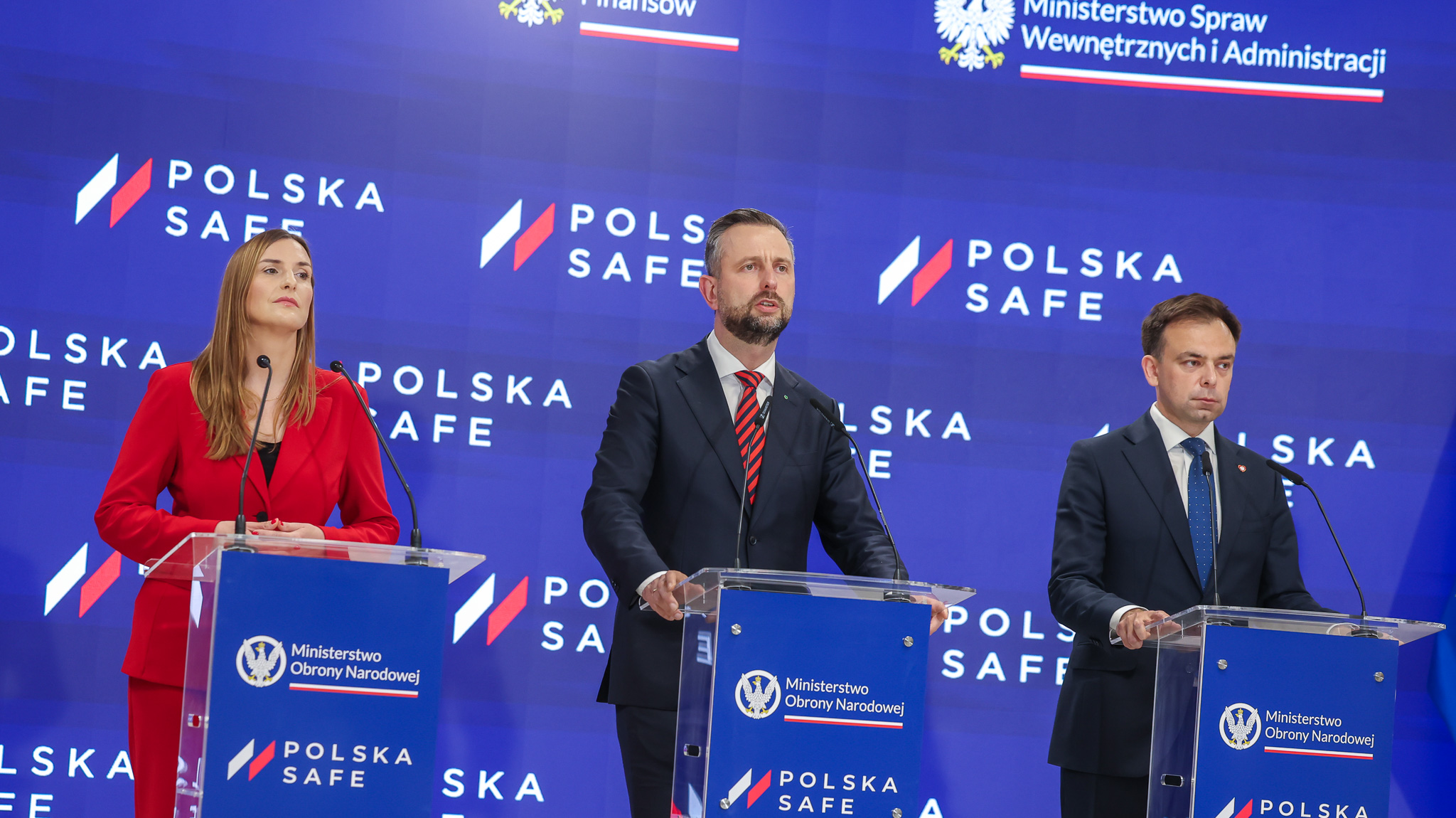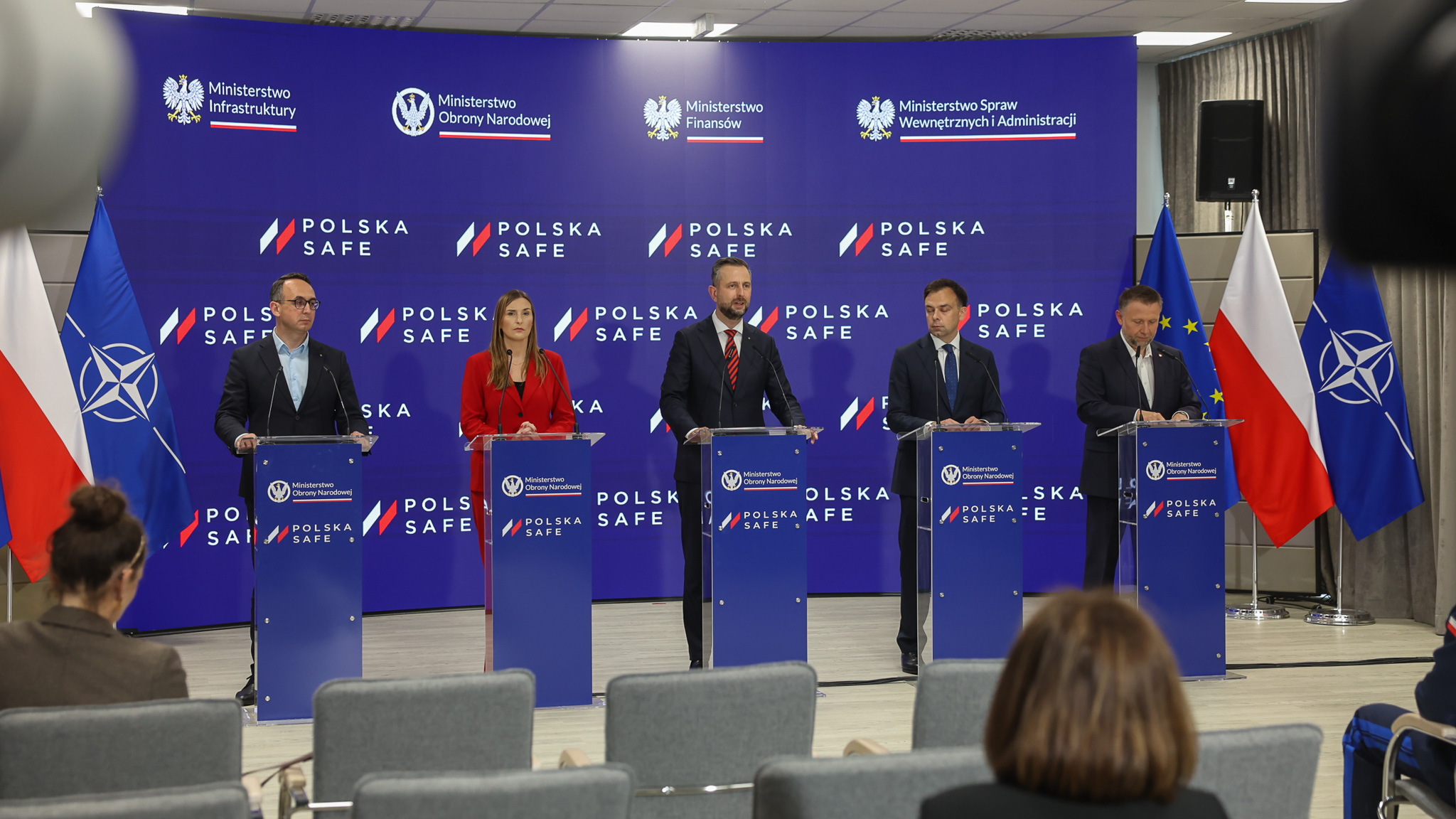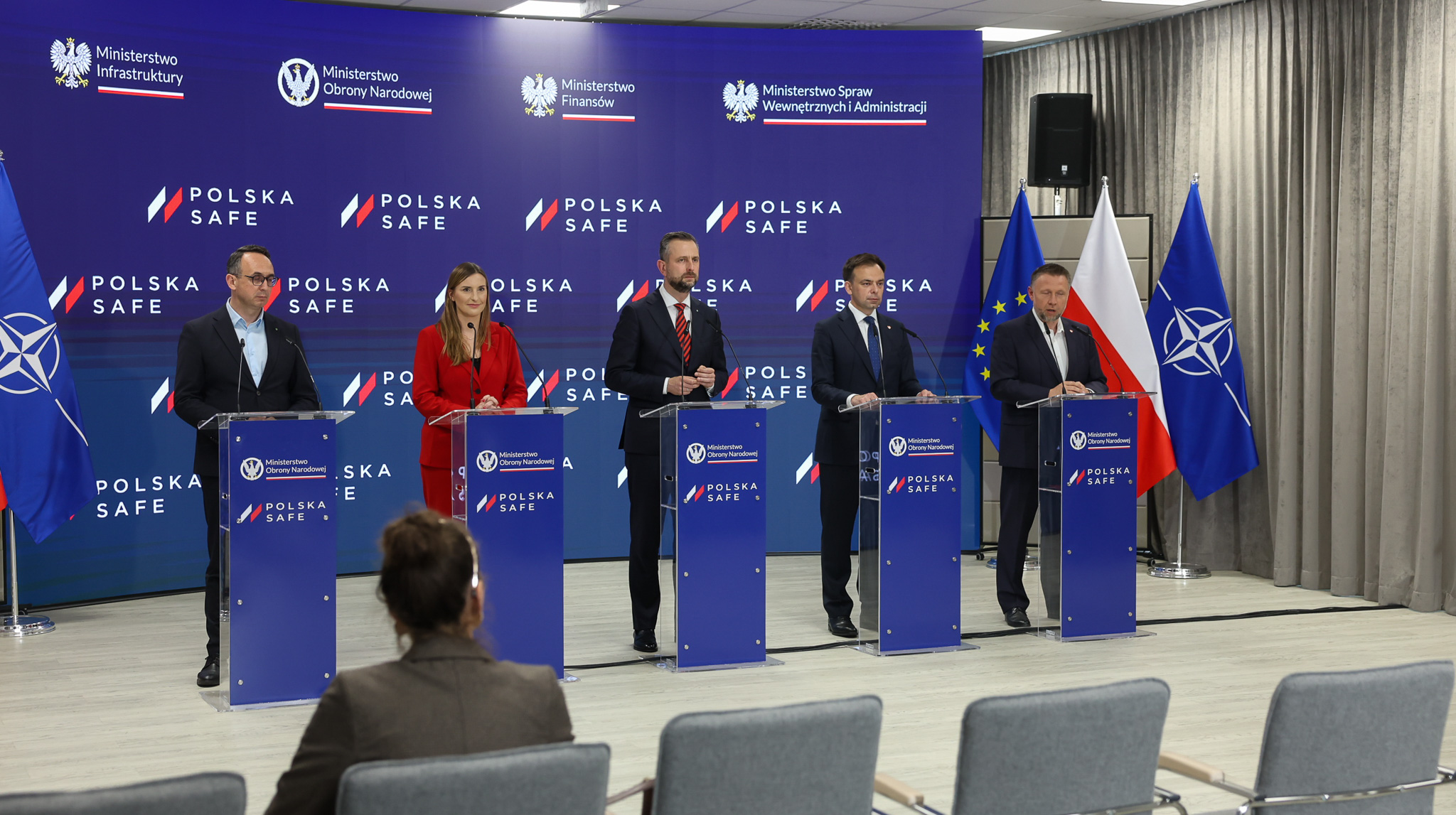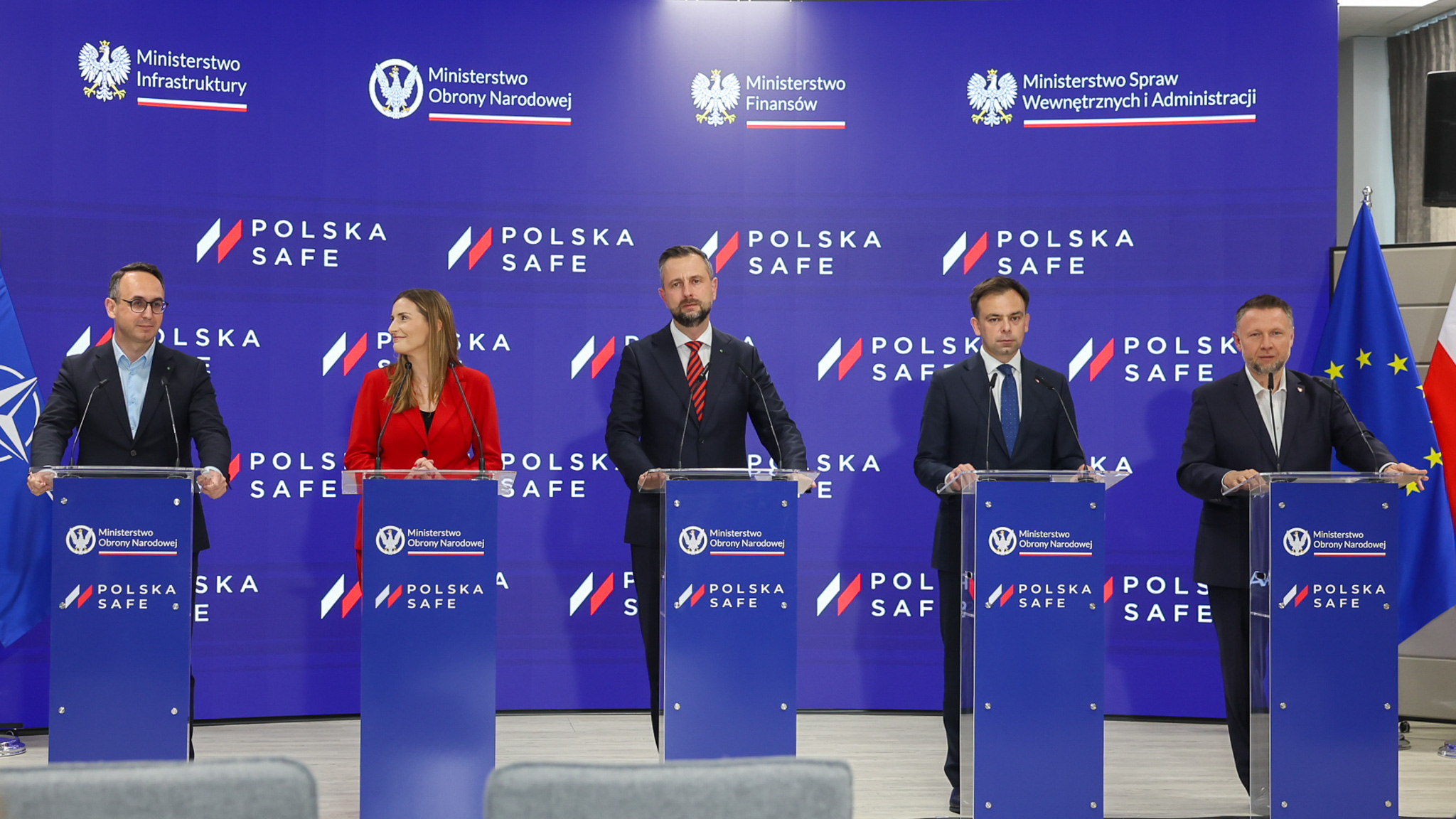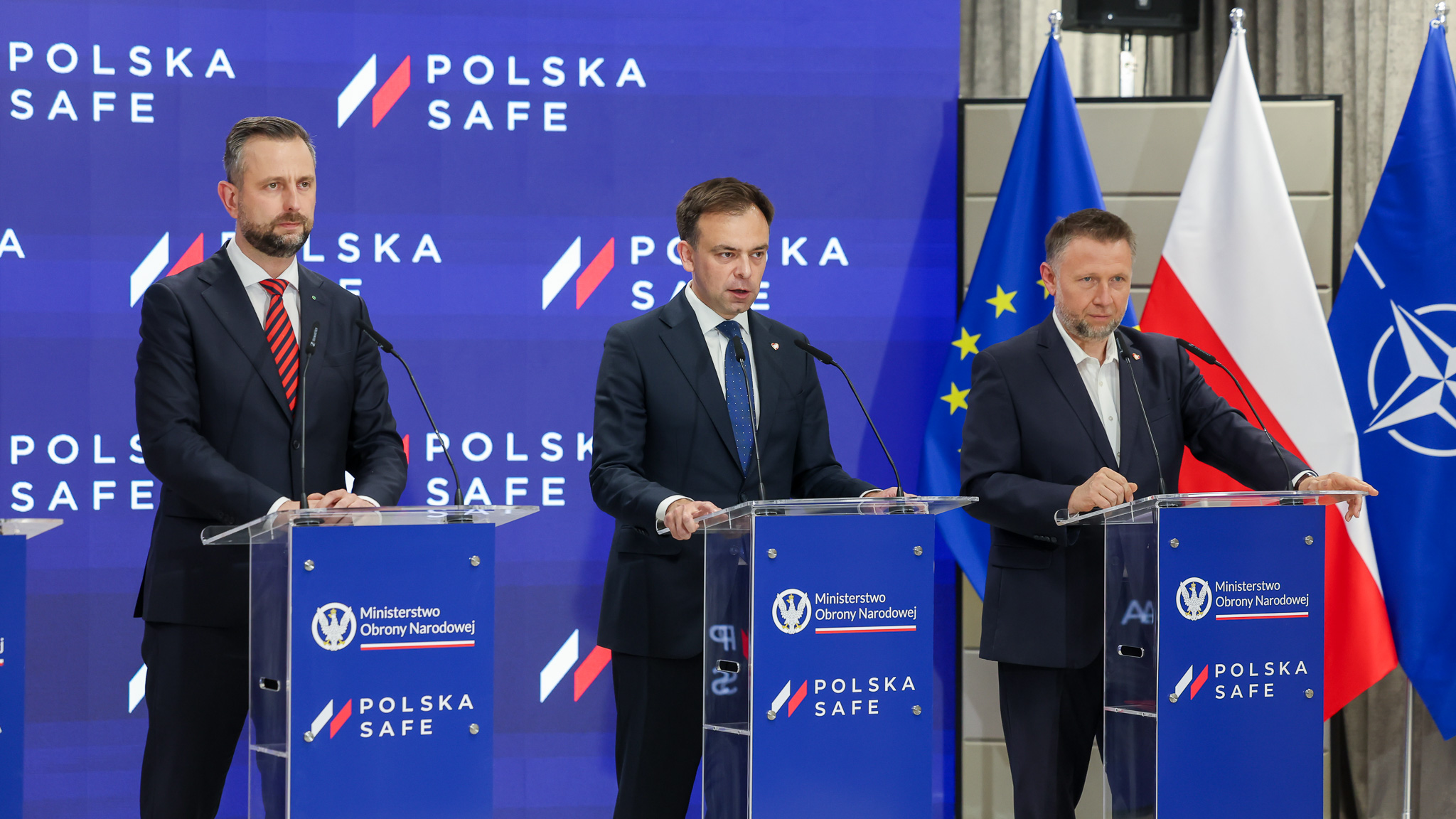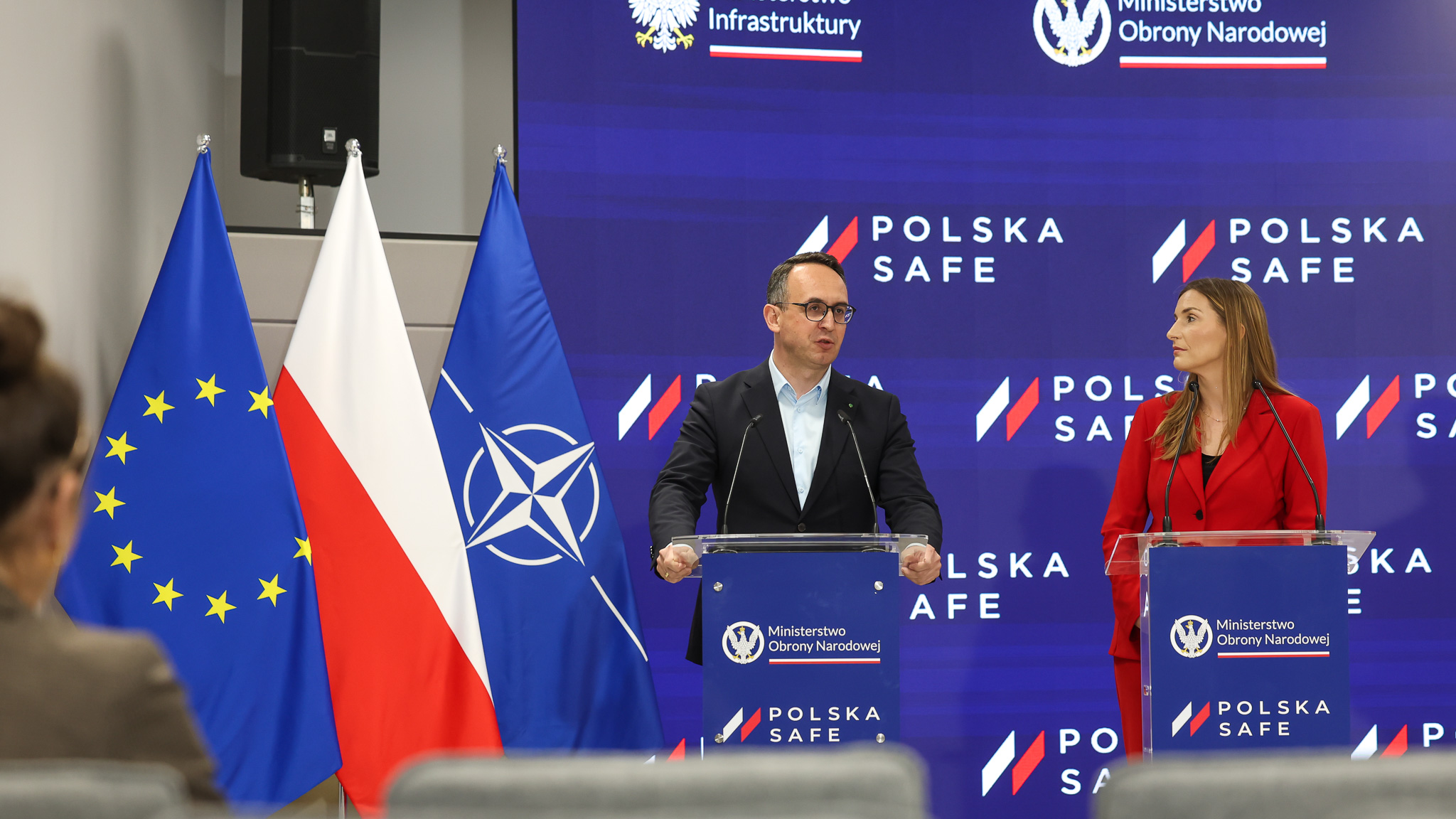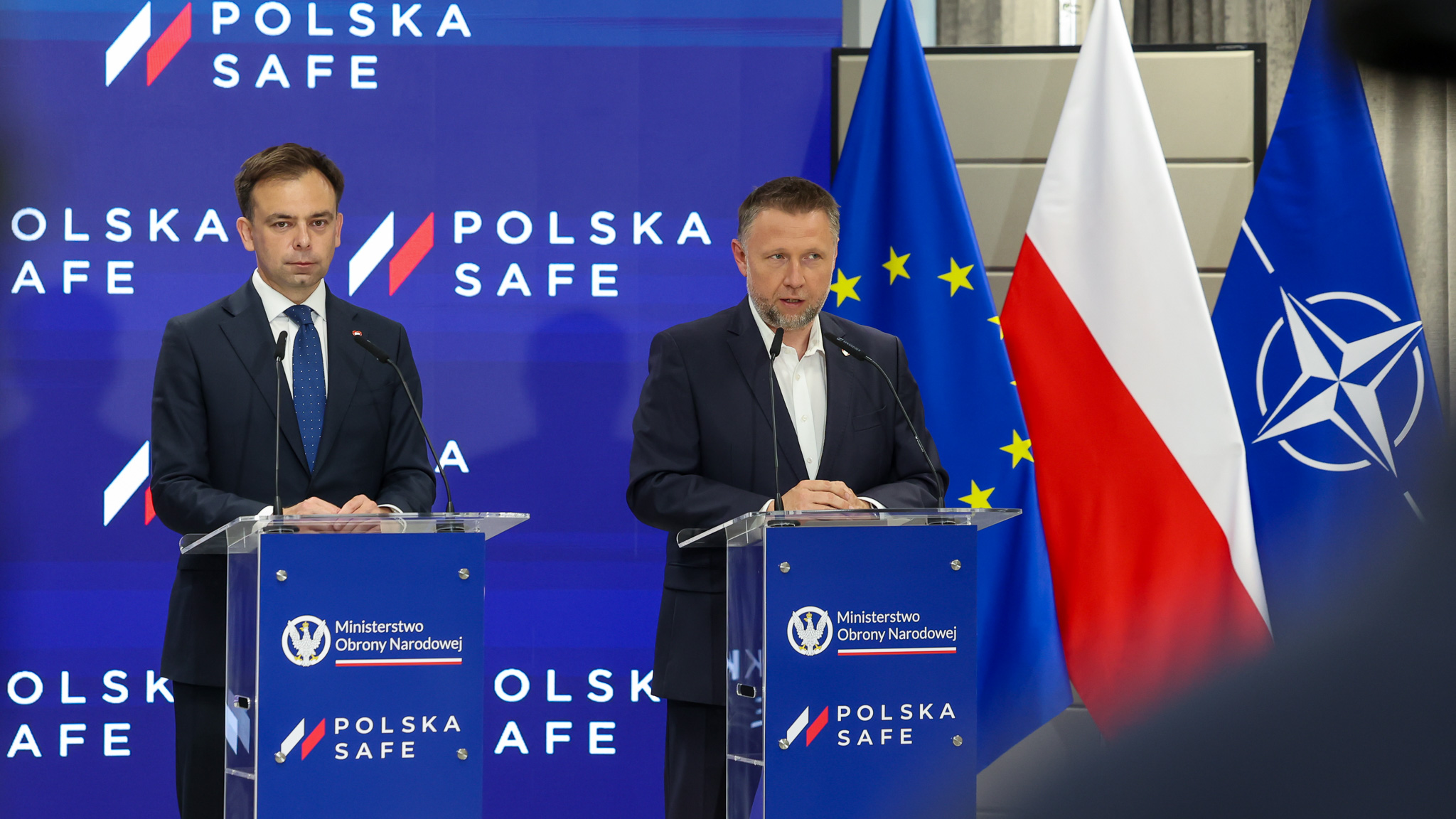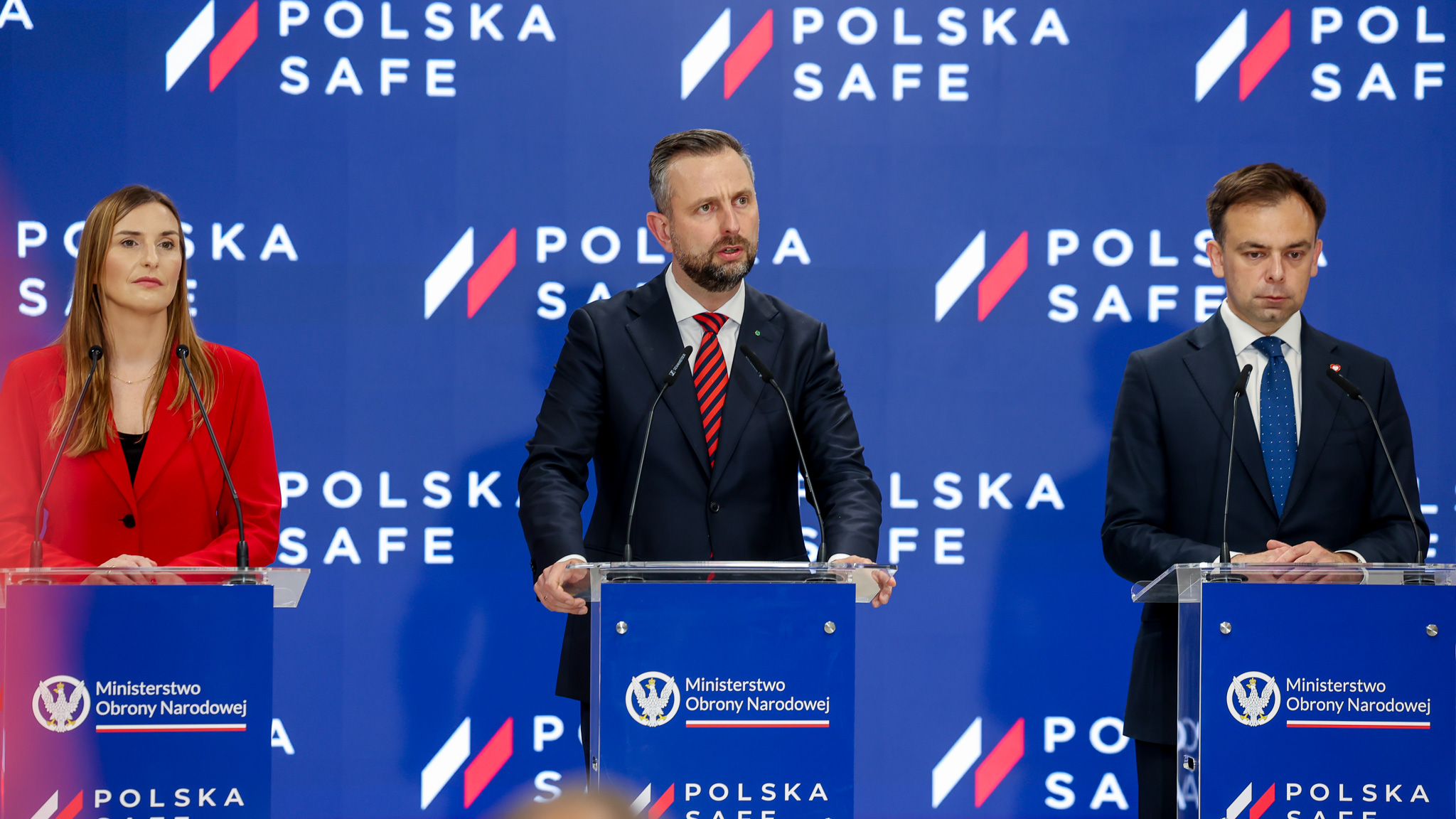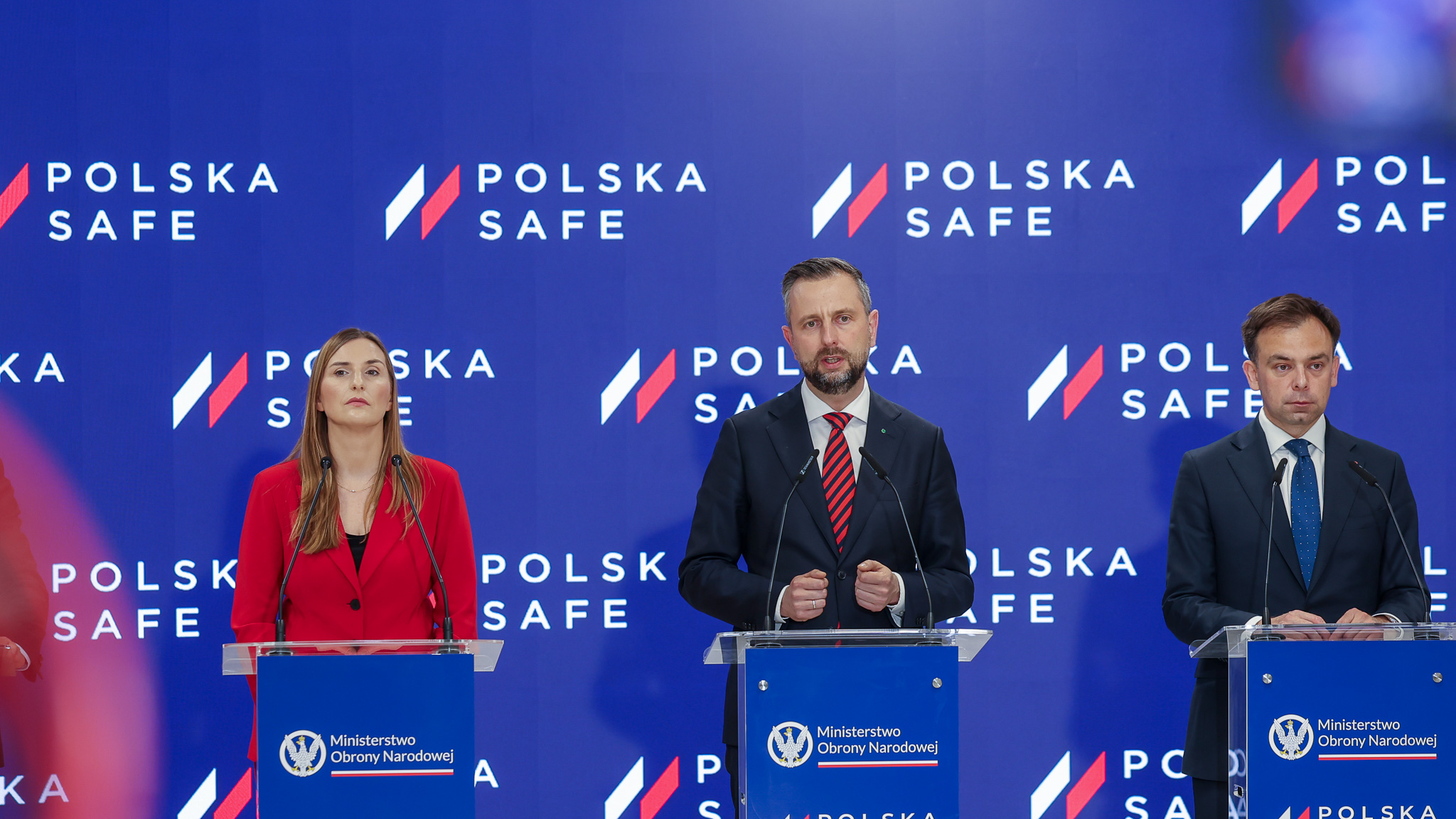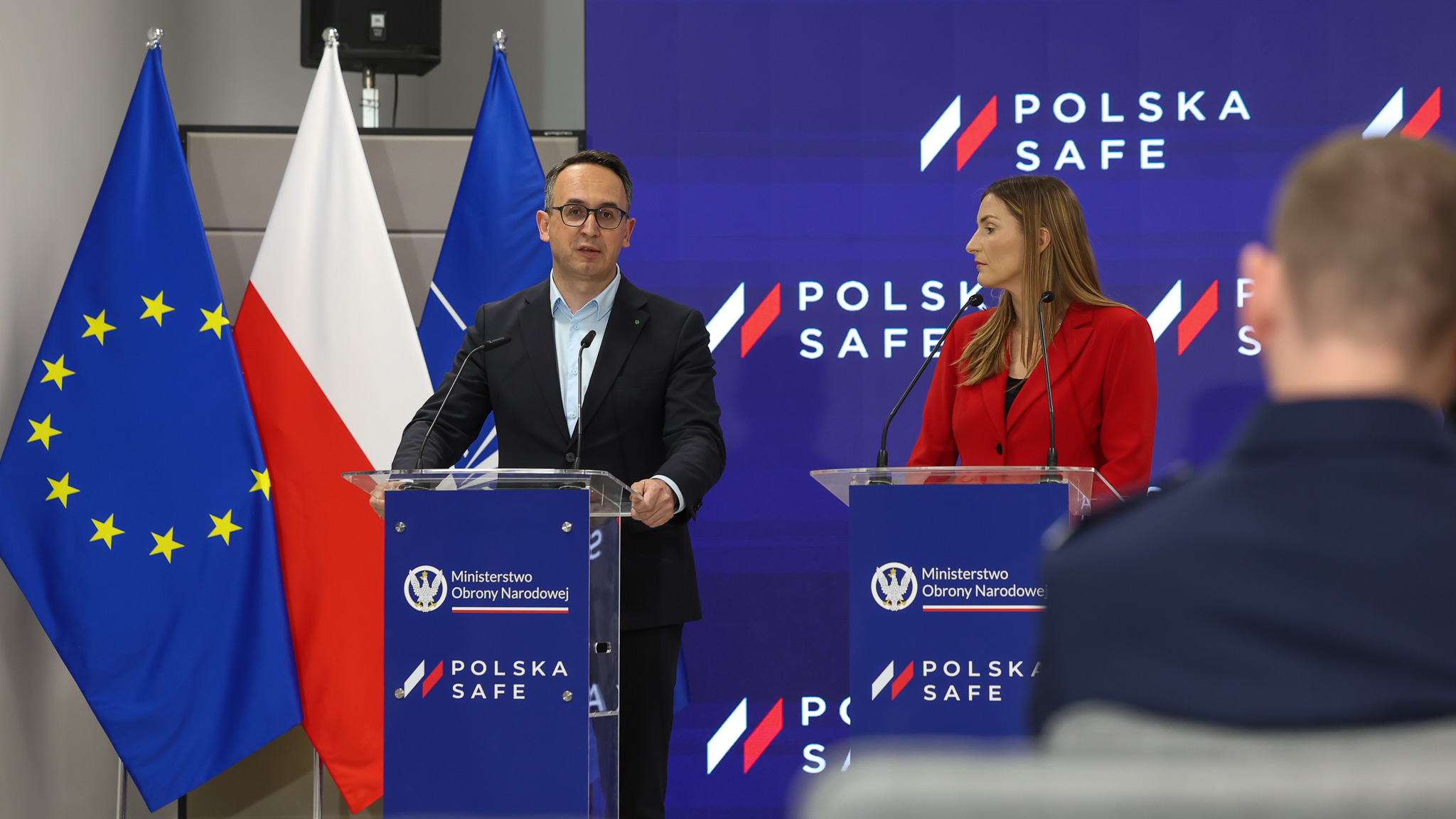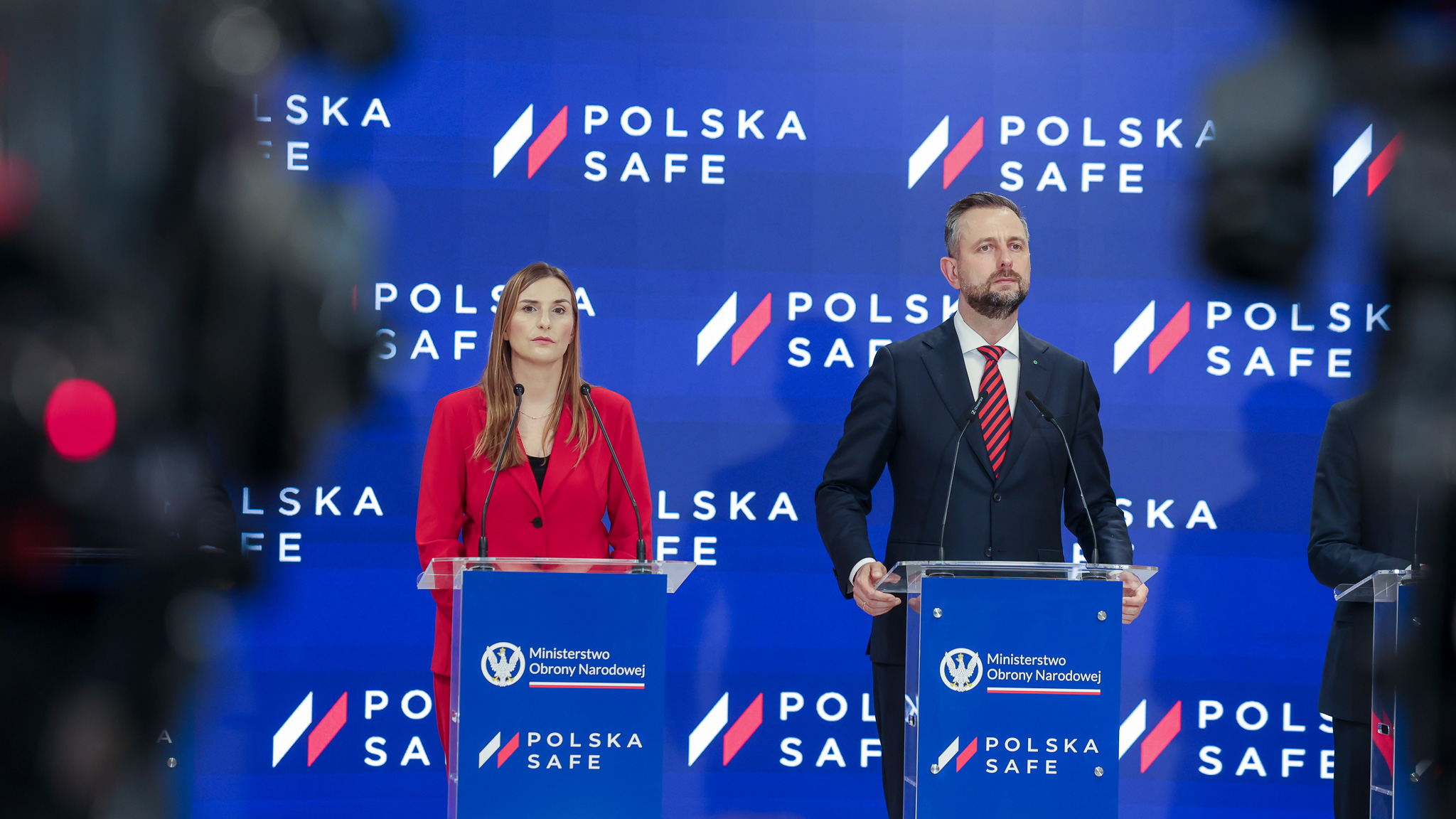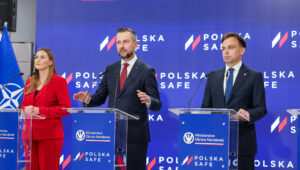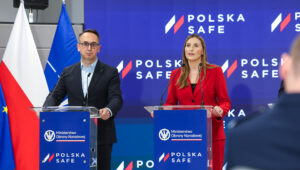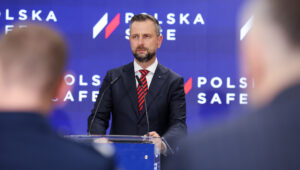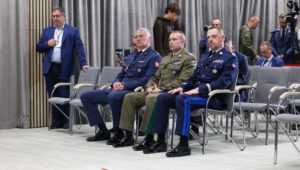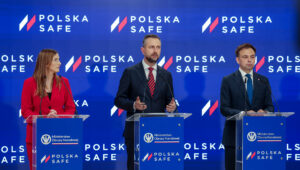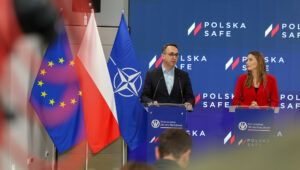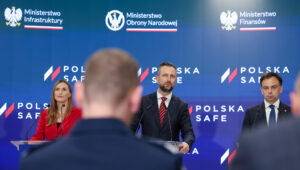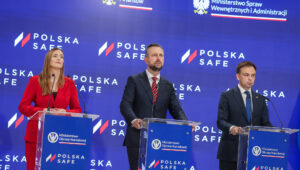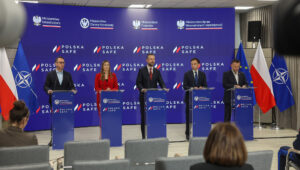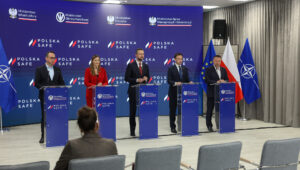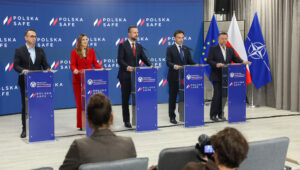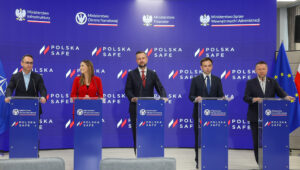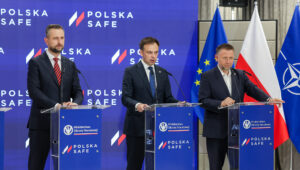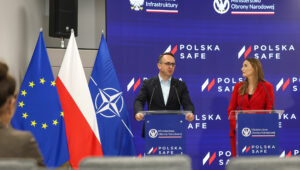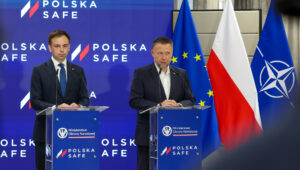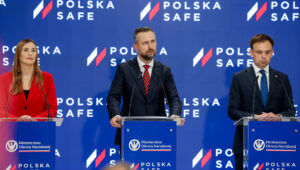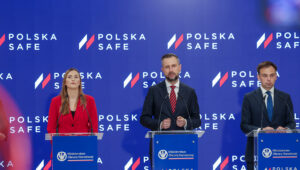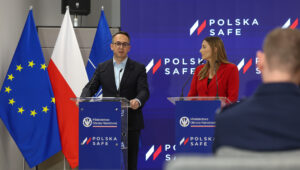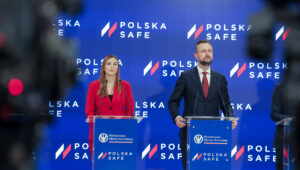



















On Friday, May 15, 2026, a conference devoted to the financing of the Border Guard, the Police, and military mobility, including dual-use investments, was held in Warsaw. The event was attended by Deputy Prime Minister and Minister of National Defence Władysław Kosiniak-Kamysz, Minister of the Interior and Administration Marcin Kierwiński, Minister of Infrastructure Dariusz Klimczak, Minister of Finance and Economy Andrzej Domański, and Magdalena Sobkowiak-Czarnecka, the government plenipotentiary for the SAFE (Security Action for Europe) instrument.
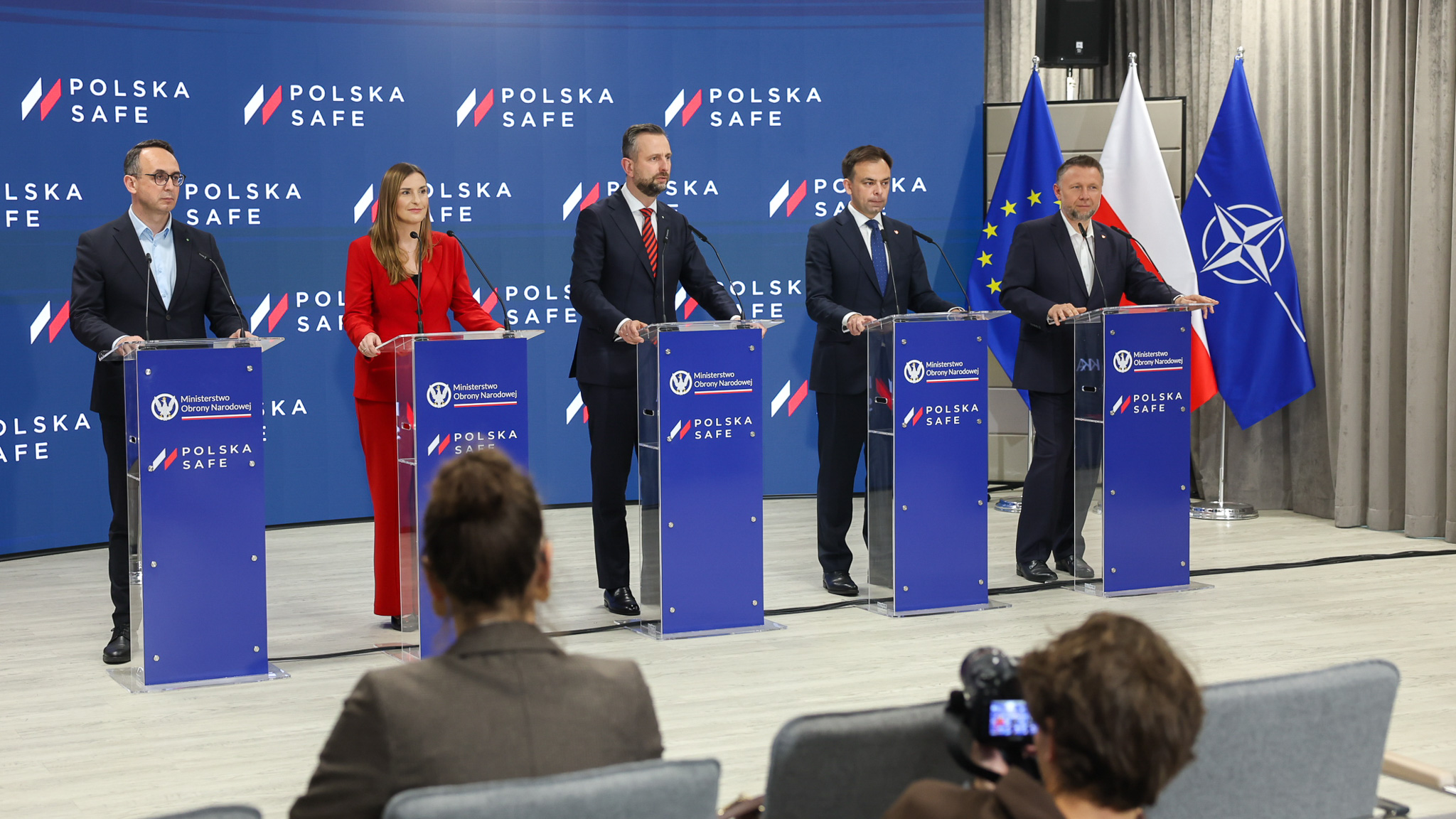 Photos: Monika Dwulatek/WCEO
“After consultations, I have decided to expand the non-military defense preparations program, which will serve to finance activities related to the needs of the Border Guard, the Police, the State Protection Service, and the Ministry of Infrastructure. The non-military defense preparations program exists and is functioning, but we will broaden the catalog of possibilities to include the needs of the above-mentioned formations. This guarantees that we will gain a security umbrella,” Deputy Prime Minister Władysław Kosiniak-Kamysz said during the press conference.
“Responsibility for security is not only responsibility for the best army in the world, which is the Polish Armed Forces. It is the responsibility of all of us, for building the strength and structure of the state. In a moment of threat, the state defends itself with all its forces and the capabilities of all institutions, with the skills of all officers, soldiers, and in fact all citizens. Each of us is called upon to defend the homeland. In preparing this program, we will amend the regulation, which should be ready by May 22. We are expanding the catalog of activities that will enable us to finance all tasks within a specified timeframe. We will begin this next year, and in the following years the Ministry of National Defense will co-finance, from its defense budget for the non-military defense preparations of the Polish state, activities carried out by the Ministry of the Interior and Administration and the Ministry of Infrastructure,” the head of the Ministry of National Defence noted during the conference.
“I thank everyone for this cooperation, because today, standing here together, we are showing one great, strong team that is responsible for Poland’s security, for which this is an absolutely paramount issue. And no difficulties, no vetoes, no actions aimed at hindering us in building a strong and secure Poland will stop us. For us, this is genuinely a priority, and I sincerely thank all the ministers, our colleagues, commanders, officers, and commandants, because this guarantees the building of a strong and secure Poland,” the deputy prime minister added.
“I thank Prime Minister Kosiniak-Kamysz for his courageous decision, for a decision that says security, and investment in security, is not only investment in a strong army, but also in other formations and, above all, in infrastructure. (…) The mechanism is simple. We are expanding the non-military defense preparations program. But if anyone has any doubt as to whether this will entail any losses for the Polish army, I want to say immediately that it will not, because Poland’s application under the SAFE program will be updated,” emphasized Magdalena Sobkowiak-Czarnecka, government plenipotentiary for the SAFE instrument, Security Action for Europe.
The Poland SAFE program serves three purposes: strengthening the combat potential and deterrence capabilities of the Polish Armed Forces, supporting the domestic defense industry, and increasing internal security. It was created in response to the ongoing war in Ukraine and the radical change in the security situation in Europe. Poland, as a country bordering Ukraine, Belarus, and Russia through the Kaliningrad Oblast, is in a particularly exposed geopolitical position. Defense investments are deterrent in nature: a strengthened army reduces the risk of conflict and increases Poland’s allied credibility within NATO.
Photo Gallery