
















On Thursday, March 12, 2026, in Ozierany Wielkie on the border with Belarus, the Border Guard launched the first module of an anti-drone system designed for the detection, identification, and countering of aerial objects. The value of the investment exceeded 60 million PLN. During the ceremony, Minister of the Interior and Administration Marcin Kierwiński appealed to the President to sign the legislation implementing the SAFE (Security Action for Europe) program. This would enable the Border Guard to deploy several additional modules of the system to protect the airspace over the border.
 Photos: Ministry Of The Interior
Polish technology serving security
Ministers Marcin Kierwiński and Czesław Mroczek presented in Podlasie, near the Polish–Belarusian border, the anti-drone system operating there, which has been integrated with the existing border barrier. The system can track aerial objects at distances of up to several hundred kilometers. Ultimately, thanks to funding from SAFE, the entire eastern and maritime borders are to be equipped with this type of system.
“We want to deploy several modules for detecting drones over the next dozen or so months. Stable financing from the SAFE program is necessary for this. It is important that these funds serve Poland’s security as quickly as possible. From this place, where the first anti-drone system on the Polish border is operating, I would like to once again appeal to the President: the Polish border and Polish officers need modern equipment. The funds from the SAFE program are intended precisely to build systems of this kind,” said Minister of the Interior and Administration Marcin Kierwiński.

The 60 million PLN investment goes hand in hand with new powers granted to the Border Guard: since August 1, 2025, officers have been authorized to neutralize unmanned aerial vehicles. System operators have already completed training and monitor the airspace around the clock.
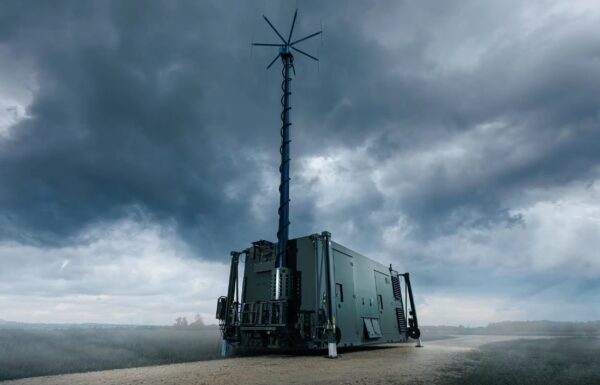
“This system consists of two components: radars that detect aircraft and radio scanners that enable their identification and, if necessary, interception or neutralization,” emphasized Minister of the Interior and Administration Marcin Kierwiński.
Under the SAFE program, more than 7 billion PLN is to be allocated to services subordinated to the Ministry of the Interior and Administration, including 3.2 billion PLN for the Border Guard alone for radars, armed helicopters, vessels, and modern personal equipment.

Billion-zloty investments in the east
Actions carried out so far on the border with Belarus have consumed nearly 3 billion PLN from the state budget. These funds were used to modernize the physical and electronic barrier and to build observation towers. The new anti-drone system is another step in a strategy aimed at creating the most advanced protection system in this part of Europe over Poland’s territory.
“The first element of the system is already operating within the Podlaskie Border Guard Unit. We want to extend this solution to the entire eastern section of the border and to the maritime border, but this will require very substantial funding,” emphasized Deputy Minister of the Interior and Administration Czesław Mroczek.

SAFE
List of 11 items (worth 3.2 billion PLN, of which 81% involves the participation of the Polish defense industry) to be implemented by the Ministry of the Interior and Administration in 2026–2030:
- Systems for the land and maritime sections of the state border used for surveillance, detection, and neutralization of UAVs:
- Passive and active radars and radio scanners installed on existing observation towers intended for UAV detection;
- Electronic countermeasure neutralizers (stationary) designed for radio-frequency neutralization of UAVs;
- Kinetic neutralizers in the form of interceptor drones for the physical neutralization of UAVs;
- Long-range optoelectronic observation devices;
- Communication and data transmission equipment.
- Devices and systems for the protection of critical infrastructure:
- Kinetic neutralizers in the form of heavy machine guns mounted on off-road armored vehicles, intended for the physical neutralization of UAVs and the protection of critical infrastructure;
- Ammunition for heavy machine guns;
- Day-night cameras using artificial intelligence for object detection;
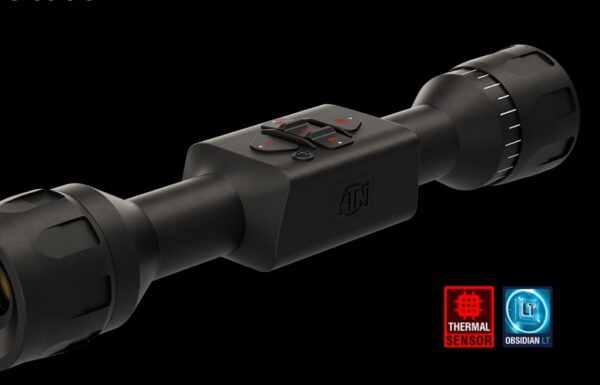
- Thermal imaging cameras using artificial intelligence for object detection.

- Aircraft and watercraft – the task includes, in particular, the procurement of:
- modern multi-role helicopters powered by multi-engine turbine propulsion, intended for defensive operations, together with onboard armament and technical equipment;
- watercraft (including patrol and pursuit craft) along with onboard armament and technical equipment.
- Weapons, personal equipment, and protective gear:
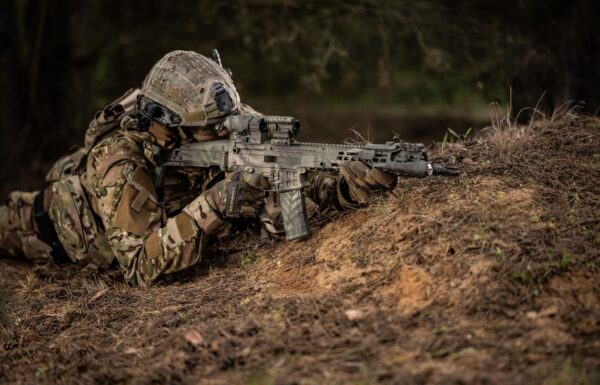
- The task includes, in particular, the procurement of machine guns, rifles, grenade launchers, ballistic helmets, bulletproof vests, ballistic plates, gas masks, protective clothing, thermal imaging cameras, thermal monoculars, and night-vision goggles.
Dziś na Podlasiu, na 🇵🇱 granicy sprawdziliśmy działanie pierwszego klastra systemu antydronowego @Straz_Graniczna
Pierwszy moduł już działa, a dzięki SAFE będziemy mogli uruchomić kolejne. Dlatego pieniądze z SAFE są tak ważne. To inwestycja w nasze bezpieczeństwo. pic.twitter.com/V7l2XI1moD— Marcin Kierwiński (@MKierwinski) March 12, 2026