







MH-60R Seahawk
On Friday, June 5, 2026, the U.S. Department of State approved the sale of five Lockheed Martin/Sikorsky MH-60R Seahawk maritime multirole helicopters in a package worth up to 1.5 billion USD.
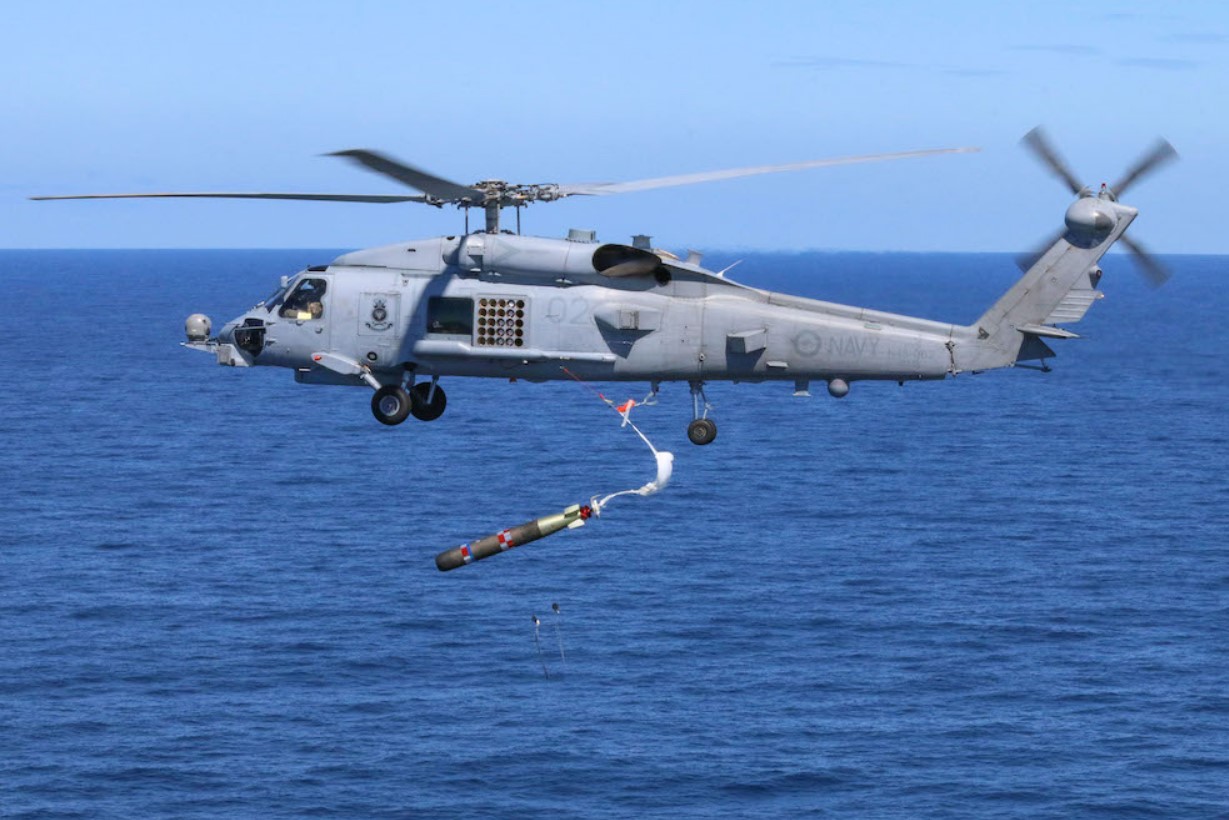
Photo: Lockheed Martin
The package requested by the government in Wellington also includes seven MIDS JTRS radios in the Link 16 standard, 14 GPS/GNSS satellite and INS inertial navigation sets with SAASM cryptographic modules, five low-frequency sonars, and five digital magnetic anomaly detectors.
The package also includes a basic weapons suite: 225 WGU-59A/B APKWS II laser guidance kits for 70-mm Hydra 70 unguided rockets; 65 AGM-114R2 Hellfire anti-tank guided missiles, also known as AGM-114R Hellfire II or Romeo Hellfire, along with four M36E8 Hellfire CATM training missiles; and five 7.62-mm M240D machine guns.
The request also included the following non-MDE (Major Defense Equipment) items: T700-GE-401D engines; M514 flare dispensers with MJ20 cartridges; WB53 fire-extinguishing systems; CCU-136A/A impulse cartridges; 12.7-mm FN M3M machine guns, also known as GAU-21; M299 LGMA weapon pylons; LAU-61 19-tube rocket launchers; AN/ARC-210 RT-2036 encrypted radios; AN/AAR-47 Missile Warning Systems; AN/APX-123 Identification Friend or Foe transponders; AN/ALE-47 Countermeasures Dispensing Systems; advanced data transfer systems; AN/AAS-44C(V) Multi-Spectral Targeting System FLIR electro-optical/infrared turrets; KIV-78 Mode 4/5 cryptographic devices; Joint Mission Planning Systems; AN/ARQ-59 Hawklink radio terminals; AN/SSQ-53 DIFAR, AN/SSQ-62 DICASS, and AN/SSQ-36B BT-AN bathythermograph sonobuoys; training simulators; a weapons loading trainer; a flight simulator; AN/ALQ-210 Electronic Support Measures pods; AN/APS-153(V) multimode radars; spare engine transport containers; spare and repair parts; support and test equipment; communications equipment; supply support; publications and technical documentation; personnel training and training equipment; U.S. government and contractor technical, engineering, and logistics support services, provided by Lockheed Martin Rotary and Mission Systems; engineering, integration, and testing activities to ensure the helicopters are production-ready; studies and surveys; and other related elements of logistics and program support.
Mark 54 MAKO Mod 0
The second package covers the potential sale of 20 Mark 54 MAKO 324-mm lightweight anti-submarine torpedoes for up to 69 million USD.
The non-MDE package also includes construction of an ammunition storage and issuing facility; Recoverable Exercise Torpedoes, or REXTORPs; helicopter torpedo-release accessories; classified and unclassified torpedo spare parts; torpedo containers; torpedo support equipment, including test equipment and tools; weapon system support services; unclassified documentation and other publications; other technical assistance, including technical support; technical program management; infrastructure support; test equipment maintenance; exercise firing support; contract management and initial follow-on technical support; in-country torpedo training; and other related elements of logistics and program support.
No contractor was named, which indicates that the torpedoes will likely come from U.S. Navy stocks. The original manufacturer is RTX Corporation.
The Mark 54 MAKO entered U.S. Navy service in 2004 as the successor to the Mk 46 and Mk 50 torpedoes. It has a diameter of 324 mm, a weight of 276 kg, including a 43.9-kg PBXN-103 warhead, and a length of 2.72 m. The torpedo has also been purchased by Australia, Brazil, India, Canada, Mexico, the Kingdom of the Netherlands, the United Kingdom, and, more recently, Germany, Saudi Arabia, Norway, and Singapore. Meanwhile, work has begun in the United States on its successor, the Advanced Lightweight Torpedo, or ALWT.
MILMAG Commentary
It should be noted that on August 21, 2025, New Zealand’s Ministry of Defence, through Minister Judith Collins, announced the decision of Prime Minister Christopher Luxon’s government under which five shipborne Kaman SH-2G(I) Super Seasprite maritime helicopters will be replaced by the same number of Lockheed Martin/Sikorsky MH-60R Seahawk multirole helicopters, while two Boeing 757-200 passenger-transport aircraft will be replaced by two Airbus A321XLR (eXtra Long Range) aircraft.
The new MH-60R Seahawk helicopters, acquired under the Maritime Helicopter Replacement program, will be interoperable with allied Australia, which operates 23 examples, has lost one, and has ordered another 12, as well as with the armed forces of partner countries. They will also be able to take part in multinational coalition missions. The helicopter is used by the United States and eight other countries.
More than NZD 2 billion will be allocated for the purchase, increasing the defensive and offensive capabilities and surveillance range of New Zealand’s two Anzac-class frigates of the MEKO 200 ANZ design: HMNZS Te Kaha (F77) and HMNZS Te Mana (F111). The program’s costs will be disclosed after final decisions are made.
The program is expected to be implemented in three phases. The first will cover the helicopter replacement, the second will focus on infrastructure and training systems at RNZAF Base Auckland in Whenuapai, on the outskirts of Auckland, and the third will involve investment in vertical takeoff and landing unmanned systems to complement the helicopter fleet.
