



























On Friday, March 6, 2026, the European company Airbus Defence and Space published a satellite image of Jordan’s Muwaffak Salti Air Base, located near Al-Azraq al-Shamali in Zarqa Governorate, which revealed a hit on the U.S. AN/TPY-2 radar supporting the advanced THAAD (Terminal High Altitude Area Defense) missile defense system. Today, that was further confirmed by photographs.
 Photo: X
The satellite image, dated March 2, is said to show the effects of the missile attack carried out on March 1 or during the night of February 28.
In the meantime, there were reports of possible hits on radars of this type belonging to the armed forces of Saudi Arabia (at Prince Sultan Air Base) and the United Arab Emirates (at Al Ruwais), both THAAD operators, but this has not been officially confirmed.
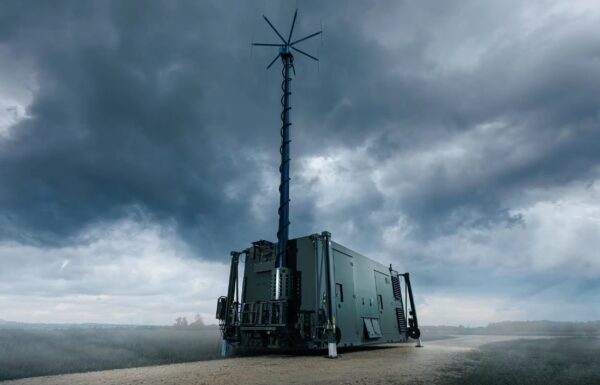
The mobile AN/TPY-2 X-band phased-array ballistic missile defense radar (Army/Navy Transportable Radar Surveillance and Control-Series 2) can more effectively detect targets and distinguish real threats to the defended area from non-threatening objects such as decoys. When operating in terminal mode, the AN/TPY-2 is directly integrated into the THAAD missile defense system’s fire control loop through direct communication with the system’s interceptor missile.
The system, valued at about 500 million USD, is manufactured by Raytheon, a company within RTX Corporation. It is currently delivering upgraded radars that use gallium nitride (GaN) transmit/receive modules, a technology that increases the antenna’s instrumented range and accuracy. Compared with other semiconductors, it offers key advantages in terms of energy efficiency, weight, and output power. As RTX emphasizes, the new technology also enables the detection of hypersonic threats.
The destruction of the radar by Iran is a serious blow to the Americans, as most of these stations are components of eight THAAD batteries in the U.S. Army, out of a total of thirteen delivered.
Update: https://t.co/7Q05nXXFR3
— OSINTdefender (@sentdefender) March 7, 2026