































On Thursday, July 30, 2026, UK Prime Minister Andy Burnham announced 8.4 billion GBP in funding for Delivery Phase 4 of the Successor program for the procurement of Dreadnought-class nuclear-powered ballistic missile submarines during a visit to the BAE Systems shipyard in Barrow-in-Furness. Of this amount, 5.9 billion GBP will go directly to the prime contractor for ongoing construction, integration, and testing, while the remaining 2.5 billion GBP will fund long-lead components, naval nuclear propulsion, and structural assemblies.
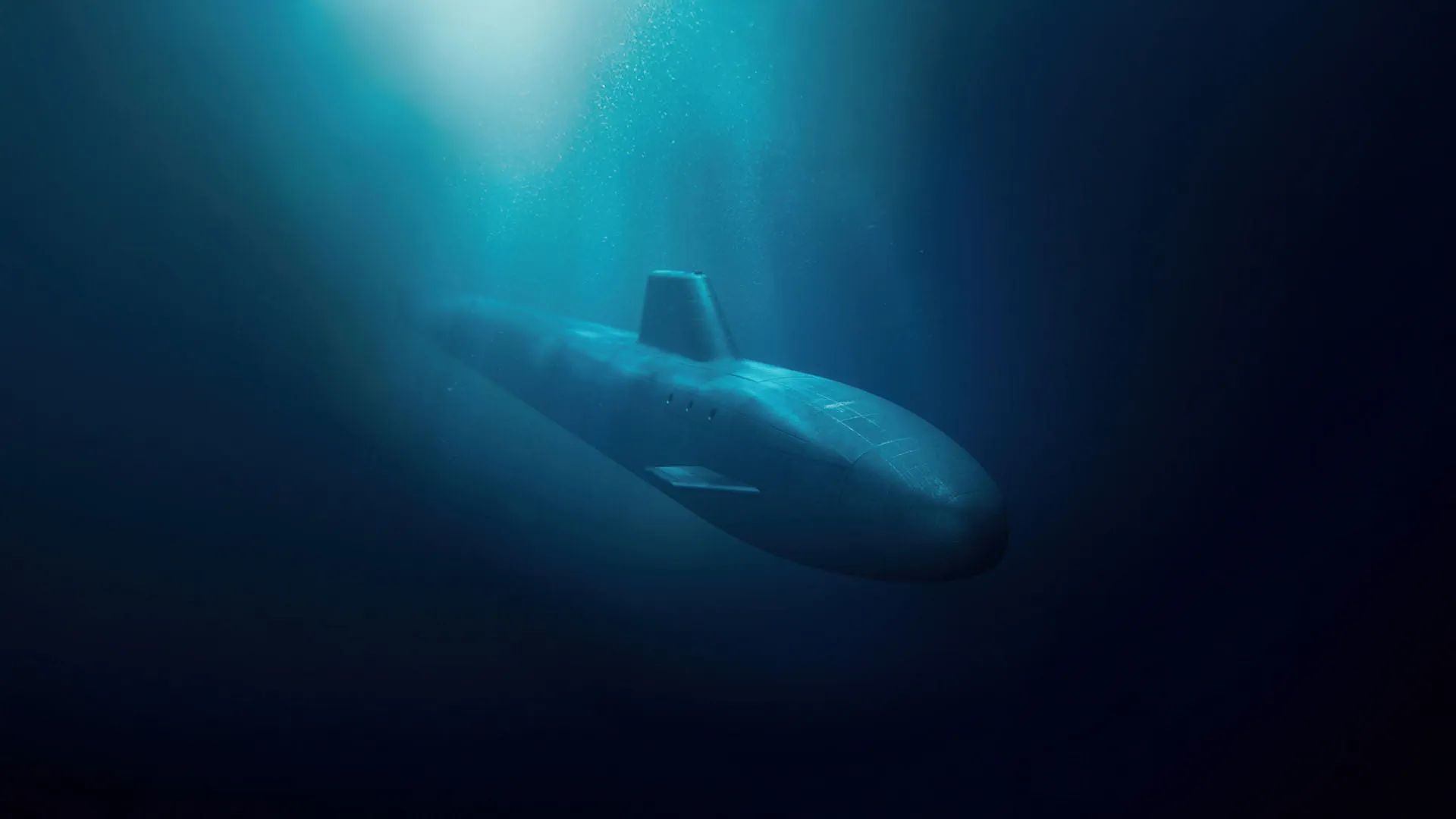 Image: BAE Systems
Investment in the program supports tens of thousands of jobs and thousands of companies across the UK supply chain, including 22,000 apprenticeships by 2035. The Prime Minister also announced a new apprenticeship program aimed at helping young people in northwest England gain access to employment, delivering on the commitment to technical skills made earlier this week.
The announced funding covers the construction of four 17,200-tonne Dreadnought-class submarines powered by Rolls-Royce PWR3 reactors, which will replace the aging Vanguard-class fleet: HMS Vanguard (S28), Victorious (S29), Vigilant (S30), and Vengeance (S31). By March 2024, expenditure on the program had reached approximately 17.4 billion GBP, while the planned acquisition budget was set at 31 billion GBP, with a 10 billion GBP contingency reserve. The government drew 2 billion GBP from the reserve in 2023 to accelerate spending and reduce schedule risk, indicating that the reserve is being used not only for unforeseen problems, but also to fund advance orders and infrastructure work. The latest funding should therefore be understood as part of a sequence of financed production phases rather than as a separate purchase of the four submarines. The program continues to carry an Amber rating, meaning that successful delivery is considered achievable, but depends on addressing significant cost, schedule, and industrial constraints.
The newly announced phase of the Successor program is intended to take the lead submarine, HMS Dreadnought, through sea trials and prepare it to enter service with the Royal Navy in the early 2030s. Steel was cut for the vessel on October 6, 2016, and its keel was laid on March 20, 2025. The phase will also cover sea trials for the second submarine, HMS Valiant, for which steel was cut in September 2019, and accelerate construction of HMS Warspite, for which steel was cut on February 9, 2023, and HMS King George VI, for which steel was cut on September 22, 2025. The nominal construction phase for the entire class will span approximately 20 years.
Construction of a Dreadnought-class submarine involves 16 large structural blocks, which are subsequently joined into three main sections known as the aft, central, and forward megablocks. This allows pressure-hull production, equipment installation, and cable and pipe fitting to proceed in parallel before the sections are joined inside the Devonshire Dock Hall in Barrow.
The submarines will each be 153.6 m long, 12.8 m wide, and 12 m high, with a displacement of 17,200 tonnes. They will be the largest submarines in British history. By comparison, the Vanguard-class submarines currently in service are 149.9 m long, also 12.8 m wide and 12 m high, and displace 15,900 tonnes.
Each Dreadnought-class submarine will have a crew of 120 officers and enlisted personnel. Its primary armament will comprise 12 upgraded UGM-133 Trident II D5LE submarine-launched ballistic missiles and four 533 mm torpedo tubes for Spearfish Mod 1 heavyweight torpedoes. The Holbrook Mk4/A thermonuclear warheads currently used on the ballistic missiles, with a yield of 100 kilotons and based on the US 90-kiloton W76 design, will be replaced by the domestically developed Astraea A21/Mk7 warhead. The work will be carried out at the Atomic Weapons Establishment (AWE) facilities in Aldermaston, in the ceremonial county of Berkshire.
Delivery of the submarines is overseen by the Dreadnought Alliance, a dedicated organization comprising representatives of the Ministry of Defence, BAE Systems, and Rolls-Royce.
In the future, the Dreadnought-class submarines will be complemented by new-generation British-Australian submarines developed under the SSN-AUKUS program as replacements for the Astute-class attack submarines. These vessels will displace more than 10,000 tonnes. As reported on June 1, 2025, His Majesty’s Government plans to acquire up to 12 nuclear-powered attack submarines.
The Dreadnought Class will be the most advanced submarines ever operated by the @RoyalNavy — designed and built in Britain, to protect the UK and our @NATO allies for decades to come.
Here are some key Dreadnought facts. 👇 pic.twitter.com/FERLZx43YE
— Ministry of Defence 🇬🇧 (@DefenceHQ) July 30, 2026
The Dreadnought programme will strengthen our deterrence to keep our country safe, as well as support good, well paid, skilled jobs and opportunities for young people.
Defence Secretary @wesstreeting from Barrow-in-Furness this morning.👇
Video credit: @SkyNews pic.twitter.com/YjvjaUDg1c
— Ministry of Defence 🇬🇧 (@DefenceHQ) July 30, 2026
We asked Georgia and Aidan, two apprentices in the Dreadnought programme to explain in their own words what it means to work on such an important national endeavour.
Hear about how they made it into their apprenticeships and Dreadnought’s impact on local communities.👇 pic.twitter.com/PZ0rm3SGUM
— Ministry of Defence 🇬🇧 (@DefenceHQ) July 30, 2026
We’ve been awarded a new £5.9bn contract to progress the Dreadnought Class submarines.
These four submarines will replace the Vanguard fleet and maintain the UK’s Continuous At Sea Deterrent, an unbroken nuclear deterrence capability that has helped protect national security for… pic.twitter.com/WrSHj8auJT
— BAE Systems (@BAESystemsplc) July 30, 2026