























On Thursday, May 14, 2026, Denys Shtilerman, chief designer and co-founder of Ukrainian company Fire Point, announced a new project on social media. The FP-7.x interceptor missile is being developed as part of the pan-European Freya missile defense system project, designed to counter threats from ballistic missiles.
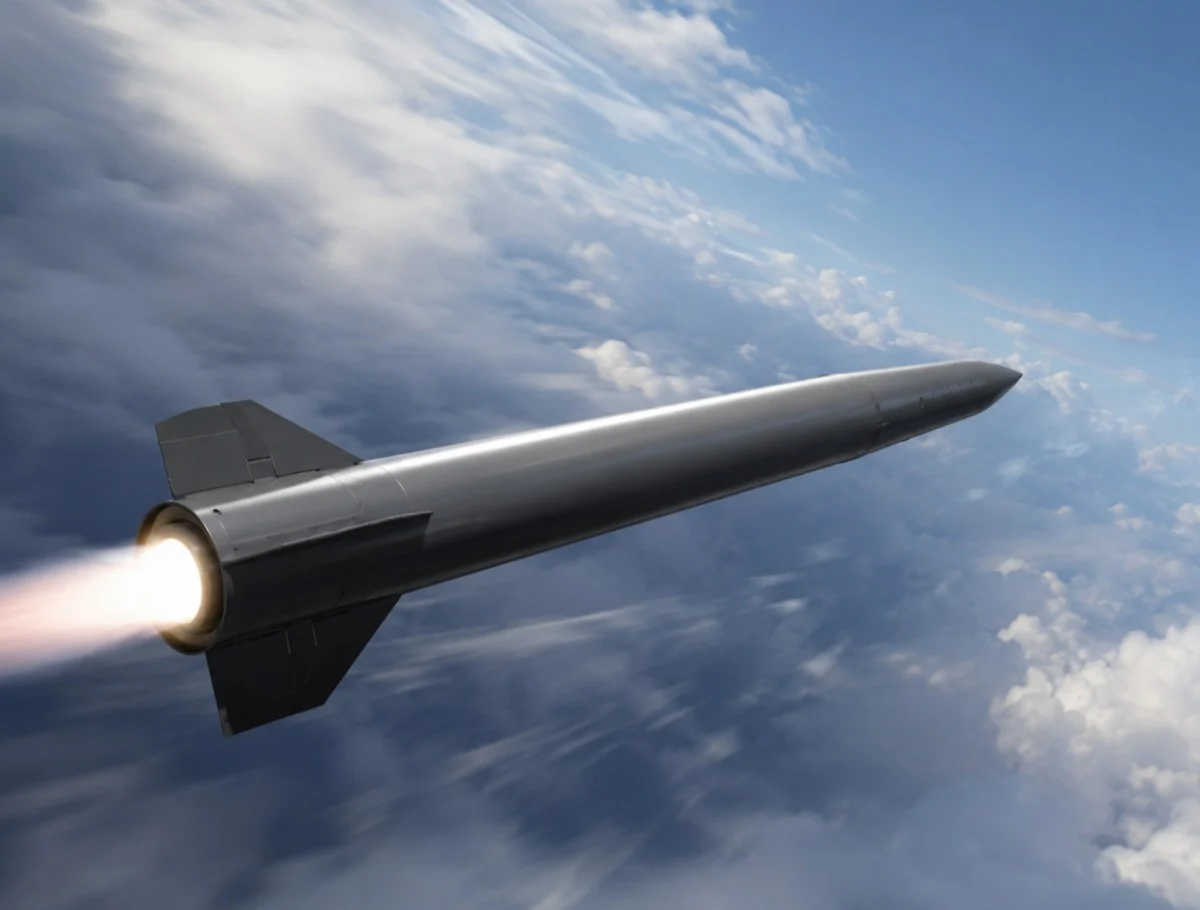 Image: Fire Point
The company is responsible for developing the FP-1 long-range strike drone series with a range of 1,600 km, the FP-2 medium-range drone with a range of 200 km, the FP-5 Flamingo long-range cruise missile with a range of 3,000 km, and, most recently, ballistic missiles: the FP-7 tactical missile with a range of 200 km and the FP-9 operational missile with a range of 855 km.
Work has now been announced on the FP-7.x interceptor missile under the pan-European Freya project, unveiled last month. The project aims to build a new missile defense system compatible with both NATO and Ukrainian armed forces.
“Despite attempts to hinder us and many distractions, our caravan moves on. Fire Point is joining the anti-ballistic coalition. Soon, interceptor missiles will be in the skies not only over Ukraine, but across Europe. More details are available in the presentation I have attached in the screenshots,” ‒ Denys Shtilerman wrote on his X profile, attaching images explaining the role of Fire Point in the project.
According to the presentation, the company will develop the FP-7.x interceptor missile, measuring 7.25 m in length and 0.53 m in fuselage diameter, or 1.15 m including the tail surfaces. The lightweight airframe is to be made entirely of composite materials. The missile is expected to reach speeds of up to 1,500 m/s, or Mach 4.4, enabling it to intercept ballistic missiles. It is to be launched from a self-propelled launcher currently under development. An infrared seeker for the missile is to be developed jointly with Germany’s Diehl Defence.
The architecture of the Freya system is to be based on Link 16-class data exchange protocols under NATO STANAG 5516 and ASTERIX data exchange protocols, the Fire Distribution Center (FDC) command center from Norway’s Kongsberg Defence & Aerospace, and optional radar systems such as Saab Defence and Security’s Giraffe 8A/4A and Thales Group’s Ground Master GF300/400 as detection radars, as well as Weibel Scientific A/S’s GFTR-2100/48 or Leonardo Group’s Kronos Land as tracking radars.
Fire Point recalls that on May 29, 2025, Ukraine received a license agreement to use NATO non-commercial software: CRC System Interface and CSI, which enable the use of Link 16-class data exchange protocols. These protocols are already in use in the Armed Forces of Ukraine, in the Delta operational-tactical situational awareness system. It was emphasized that the FDC command center has an open software architecture, enabling the integration of the new components mentioned above.
The aim of the Freya project is to create a unified air and missile defense system focused on intercepting ballistic missiles, independent of any specific component manufacturer. The main design assumptions are protection against ballistic threats as the primary goal, the use of open-source technologies to minimize dependence on suppliers, horizontal and vertical scalability, and a significant reduction in the cost of interception, particularly against ballistic threats. This cost-reduction objective addresses one of the most serious operational problems Ukraine has faced during the war: the asymmetric economics of using expensive interceptors against ballistic threats, but above all against cheaper drones, given the large scale of their use by Russia.
Незважаючи на спроби завадити та багато відволікаючих факторів, наш караван іде. Компанія Fire Point приєднується до антибалістичної коаліції.
Скоро ракети-перехоплювачі будуть у небі не лише України, а й усієї Європи.
Докладніше — у презентації, яку я прикріпив у скріншотах. pic.twitter.com/RaqPVKqNbl
— Denys Shtilierman (@DenShtilierman) May 14, 2026