















The BSDA 2026 (Black Sea Defense, Aerospace and Security) defense industry exhibition is being held in Bucharest on May 13–15 this year. South Korean company Hyundai Rotem presented autonomous HR-Sherpa MPUGV (Multi-Purpose Unmanned Ground Vehicle) unmanned robotic platforms in two versions: an armed variant for the military and a firefighting variant for public services.
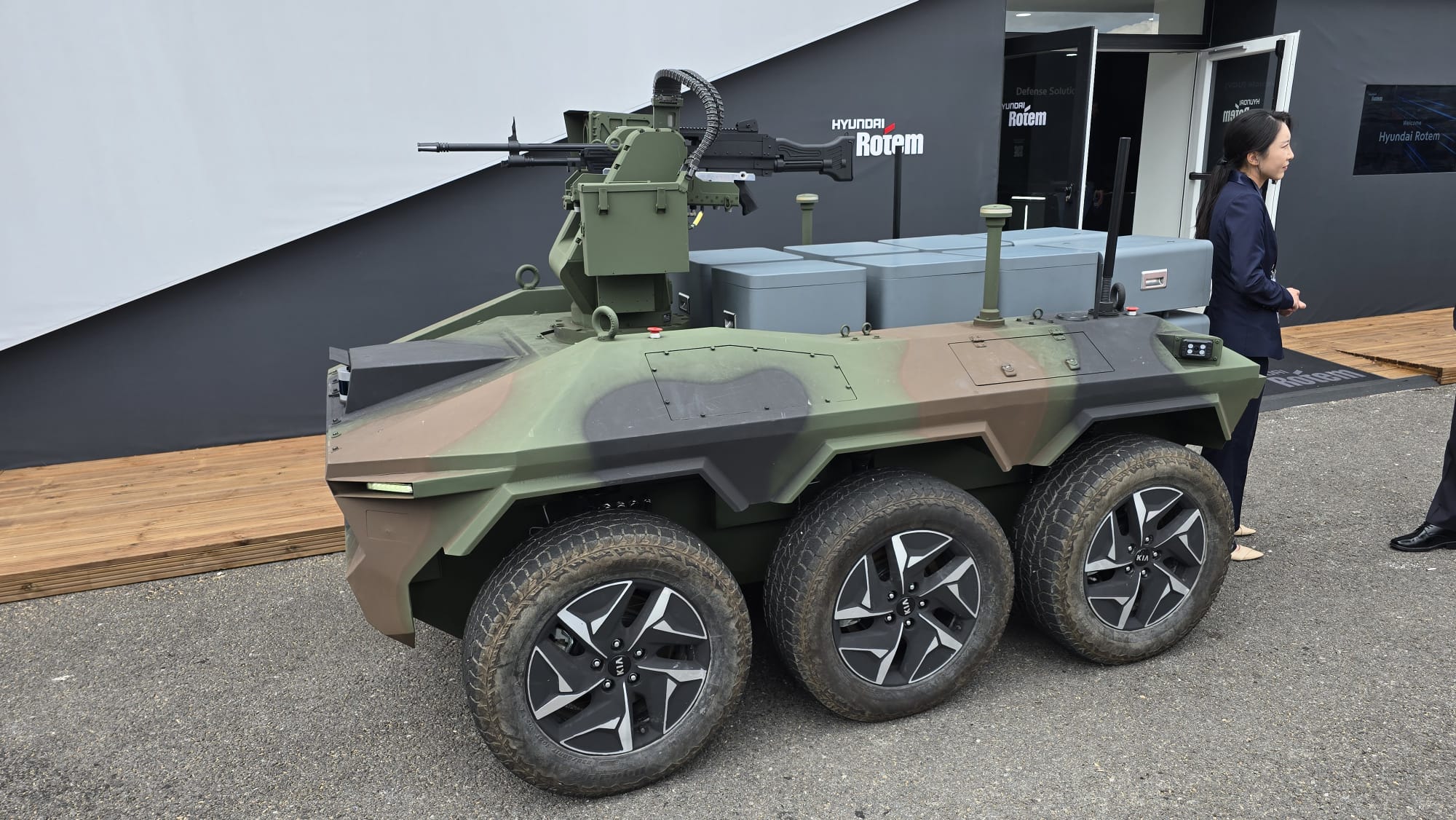 Photo: Jakub Link-Lenczowski, MILMAG
Work on the HR-Sherpa began in 2018 at the request of the Defense Acquisition Program Administration (DAPA), under the Ministry of National Defense of the Republic of Korea. A technology demonstrator was presented that same year. In November 2020, two prototypes were ordered for testing, which began in July 2021 and was conducted under various conditions. Currently, the fourth version of the platform is competing with Hanwha Aerospace’s Arion-SMET vehicle under the Army TIGER 4.0 robotics program.
The HR-Sherpa is 2.4 m long, 1.5 m wide and 0.9 m high, with a ground clearance of 300 mm and a weight of less than 1,800 kg, including a payload capacity of 600 kg. Cargo is carried in a cargo bed at the rear. The vehicles are equipped with an electric drive system powered by water-cooled lithium-ion batteries. An electric motor is mounted in each airless wheel. This provides a speed of up to 30 km/h on roads or 10 km/h off-road, and an operating time of 6 to 12 hours, depending on driving speed. The vehicle can overcome terrain obstacles with a longitudinal gradient of 60% and a side slope of 30%.
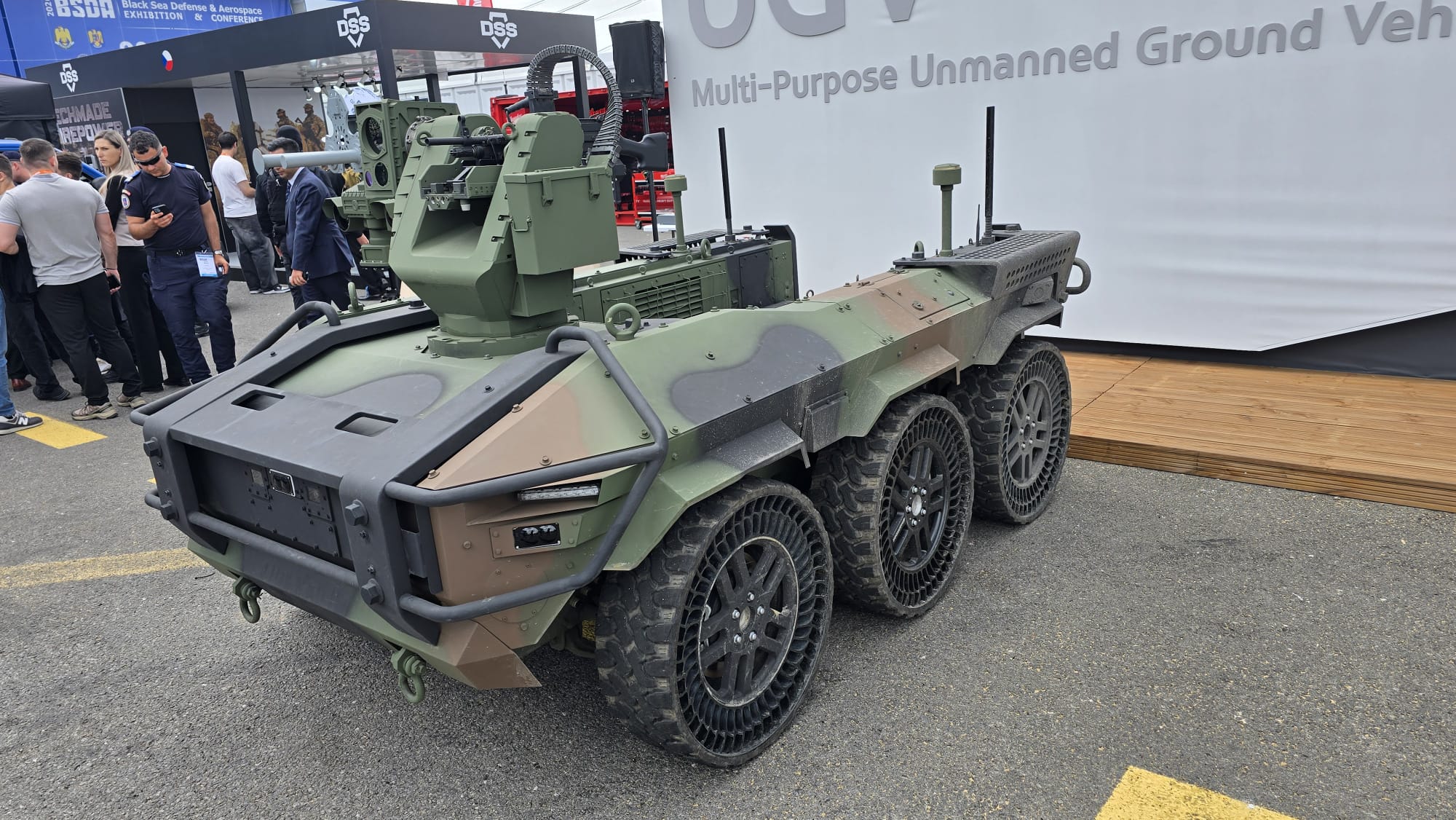
The vehicle is equipped with day and night driving cameras and a Hyundai Wia RCWS remote-controlled weapon station. Imagery from the vehicle’s cameras is transmitted via a two-way real-time data link to the operator control station. The control system offers several driving modes, including remote control, following another vehicle or a person, convoy movement, and autonomous driving along designated waypoints. The vehicle can perform patrol, reconnaissance, fire support, logistics and medical evacuation (MEDEVAC) tasks, as well as broader missions related to infrastructure and border security.
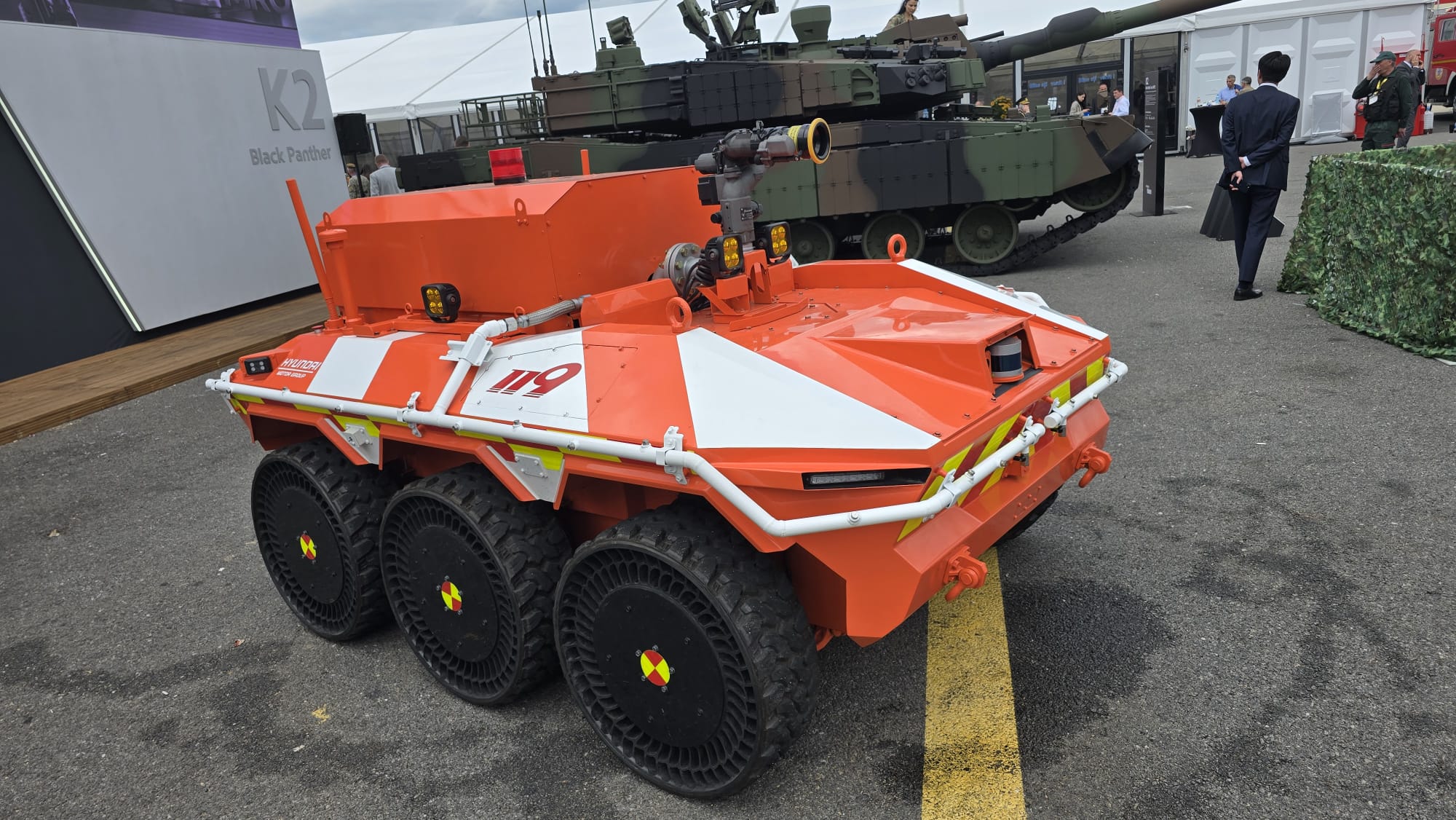
In Bucharest, a variant fitted with a remote-controlled weapon station armed with a 7.62-mm machine gun and intended for the armed forces was presented, along with a firefighting variant equipped with a high-pressure cannon and a tank for extinguishing agent.
