





















The BSDA 2026 defense industry exhibition (Black Sea Defense, Aerospace and Security) is taking place in Bucharest on May 13–15 this year. Turkish company Aselsan presented the KORAL 200 electronic reconnaissance and warfare system and the PUHU 3-LT communications electronic support system.
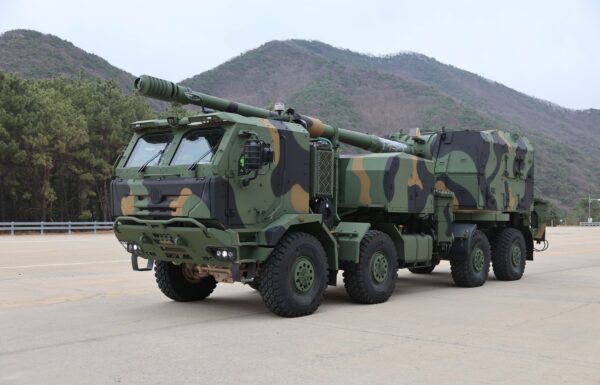
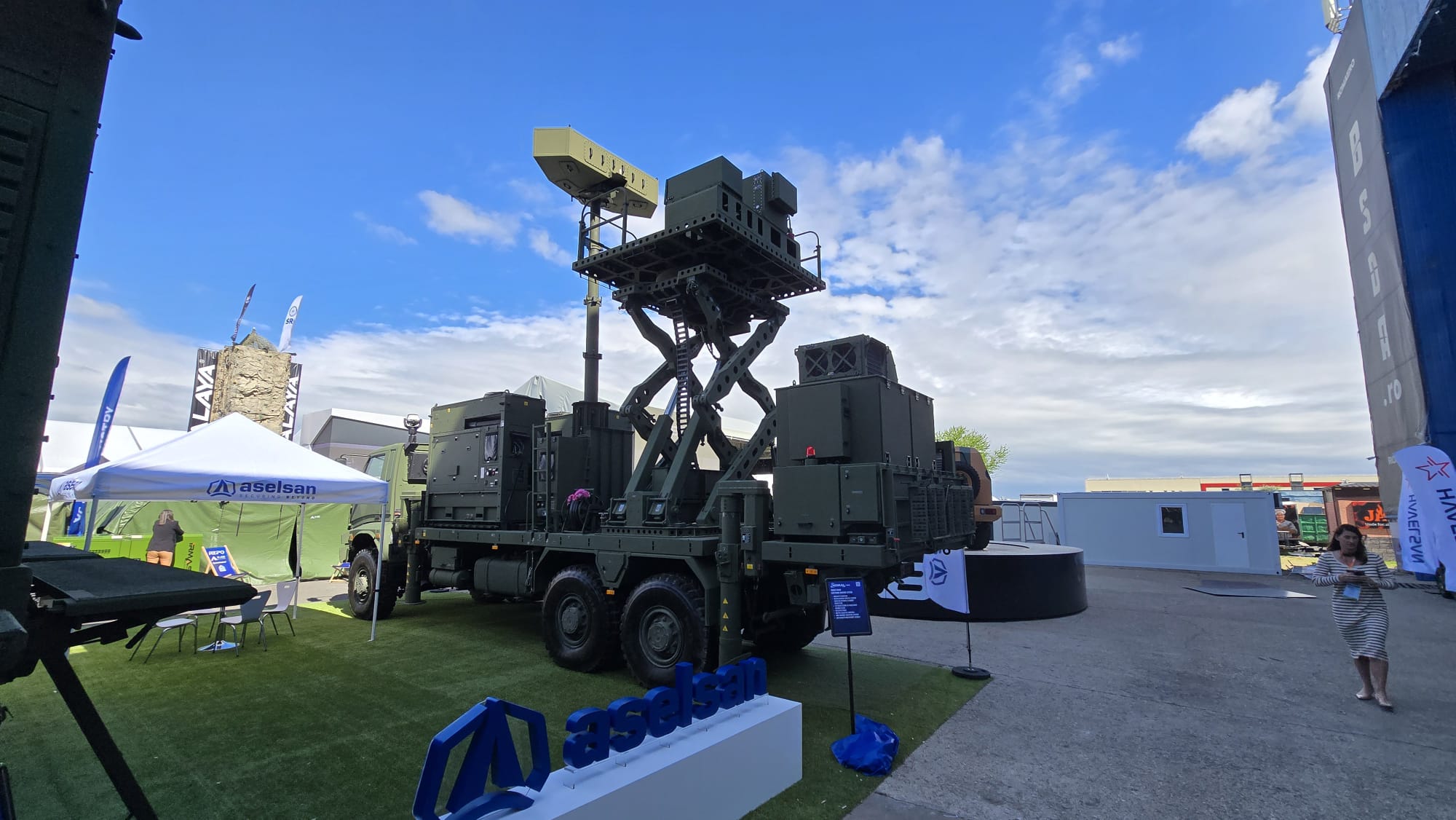 Electronic reconnaissance system forming part of KORAL 200 / Photos: Jakub Link-Lenczowski, MILMAG
The KORAL 200 system consists of two elements: an electronic reconnaissance system, which was displayed in Romania, and an electronic jamming system, both mounted on Rheinmetall MAN Military Vehicles 8×8 wheeled chassis. The system’s main task is to support Suppression of Enemy Air Defenses (SEAD) operations.
The set is operated by two primary operators in the Operation Control Unit (OCU): an electronic reconnaissance system operator responsible for detection, analysis, and search, and an electronic jamming system operator responsible for electronic warfare and signal-source allocation. In addition, a third supervising operator is responsible for coordination and communication with other KORAL system units.
The electronic reconnaissance system has a modular design with a multi-beam architecture offering wide frequency and spatial coverage and high sensitivity, high accuracy in measuring parameters such as RF, PRI, PW, and DOA in the frequency and time domains, as well as automatic threat identification based on an internal library. The system can operate in a dense environment with high-PRF and CW signals, precisely locate sources of electromagnetic emissions using the amplitude-comparison method, and determine their position with high accuracy using multiple platforms. Additional functionalities include a mission-planning and data-generation tool, as well as a post-mission recorded-data analysis tool.
The electronic jamming system, in turn, features an integrated architecture comprising a digital receiver and a beam generator with a high-output-power solid-state phased-array antenna, rapid beam steering, and a Digital Radio Frequency Memory (DRFM) electronic warfare system. The system offers wide frequency and spatial coverage, high accuracy in measuring electromagnetic-wave parameters, the ability to handle multiple signal threats, and automatic, simultaneous jamming using an internal library of techniques.
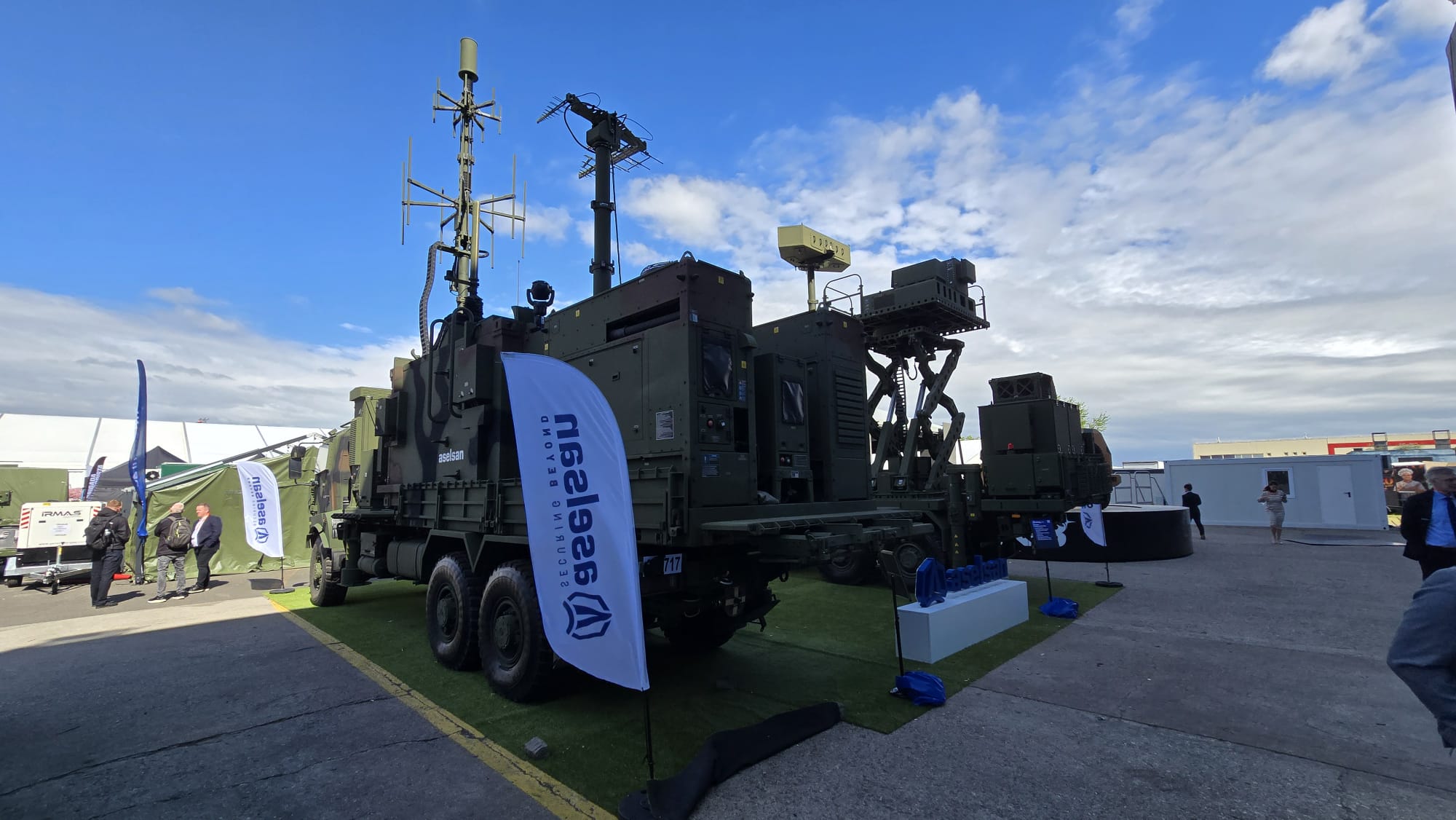 PUHU 3-LT
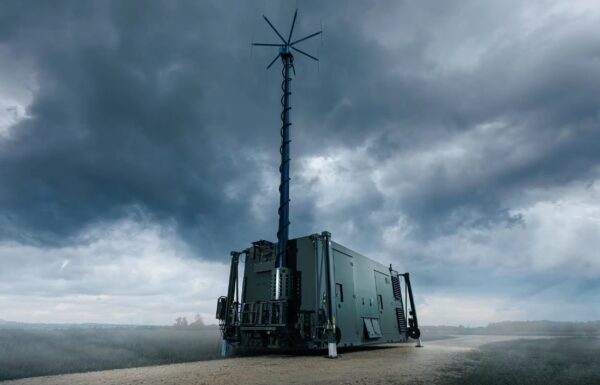
The main task of the PUHU 3-LT mobile electronic support system is to conduct electronic reconnaissance against communications systems in the V/UHF band, including the detection, tracking, analysis, direction-finding, and location of the enemy’s radio-emission sources.
Unlike KORAL 200, the entire system is integrated on a single platform, in accordance with customer requirements. The antenna system is deployed and stowed automatically and rapidly. If necessary, it can be controlled remotely, but it is nominally operated by one or two operators.
The system monitors the electromagnetic spectrum in the V/UHF band, detecting and analyzing signals, with the ability to automatically recognize modulation and demodulation, as well as protocols, including their decoding, while providing high direction-finding accuracy.
The system offers advanced techniques for locating emission sources, including angles of arrival, time differences, audio recording with speech and speaker recognition and automatic translation, analysis of wideband and narrowband signals, frequency-hopping spread spectrum (FHSS), and direct-sequence spread spectrum (DSSS). Additional functionalities include cooperation with other C2 command and electronic reconnaissance systems, as well as countermeasures against GPS/GNSS signal jamming.
On December 19, 2025, the Polish Armament Agency signed a contract worth approximately 2 billion PLN gross with Aselsan for the delivery of the Kaktus Automated Reconnaissance and Jamming System, intended for electronic warfare operations, including electronic surveillance, defense, and attack, by Electronic Warfare subunits at the tactical level. The details are classified, but it is probably KORAL 200.