


























The company has invested approximately 100 million USD of its own funds in developing this variant, making the project one of Boeing’s most significant privately funded air-launched weapons initiatives in recent years.
The JDAM LR variant has received the military designation GBU-75. Its primary objective is to enable engagement of surface targets at ranges of approximately 320 km from the release point, more than four times farther than conventional JDAM. This means that standard 226 kg bombs can be transformed into cost-effective, long-range precision-guided munitions capable of operating in environments with a significant air-defense threat.
The new BSU-111/B module incorporates, among other features, an improved navigation system, optimized aerodynamic surfaces, and propulsion that extends glide performance. In practical terms, JDAM LR bridges the gap between conventional guided bombs and full-scale cruise missiles while offering significantly lower unit costs. The JDAM LR program is being carried out in cooperation with the US Navy’s naval aviation command. Initial production batches are expected to support further operational testing and integration with additional combat aircraft. Testing to date has involved F/A-18E/F Super Hornets, which form the backbone of US carrier aviation. Subsequent phases are expected to include integration with other platforms, including strike and multirole aircraft, increasing the operational flexibility of the broader JDAM family.
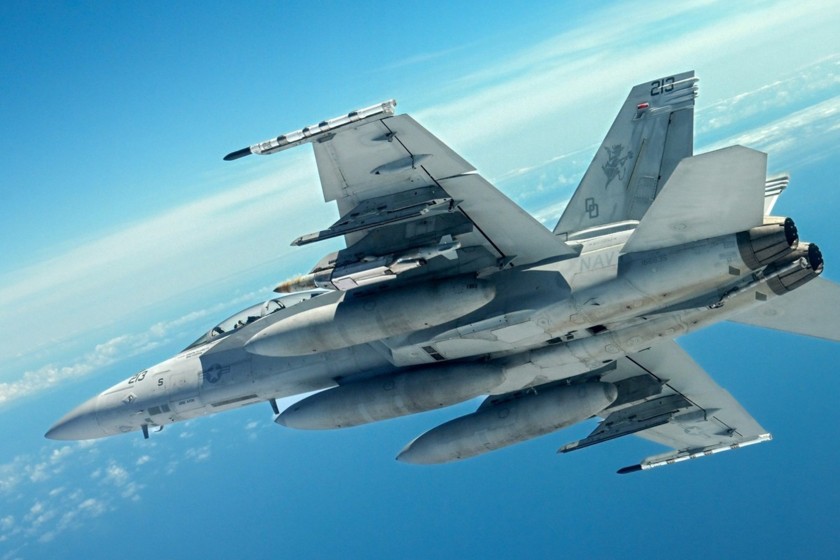
Photo: Being
The introduction of JDAM LR could significantly change the way air forces approach long-range precision strikes. Instead of relying on costly cruise missiles, users would gain a more affordable alternative offering considerable operational flexibility. For Boeing, the program also demonstrates the effectiveness of internally funded investment in military technologies and signals that the precision-guided munitions market continues to grow rapidly.
Boeing-produced JDAM kits are one of the mainstays of the air-launched weapons inventories of the United States and NATO countries. More than 400,000 kits have been delivered to date, many of which have been used in combat operations around the world, from strikes against Russian forces in Ukraine and campaigns against Houthi forces to attacks on targets linked to Iran.