




















The Skeldar V-200 has a maximum takeoff weight of 245 kg, of which 40 kg can be allocated for carrying various types of sensors. The rotorcraft has a fuselage length of 4 m and a main rotor diameter of 4.6 m. The UAV can reach speeds of up to 140 km/h and has a ceiling of 3,000 m, with an endurance of over 6 hours. The data link range exceeds 100 km.

The Swedish unmanned rotorcraft can carry various types of sensors depending on the mission. This may include an electro-optical payload providing video or infrared imagery. Another option is a radar and LiDAR suite, comprising a synthetic aperture radar (SAR) and a laser bathymetric sensor. A third configuration includes electronic warfare equipment, consisting of a COMINT (communications intelligence) system and a RADINT (radar intelligence) sensor.
The Skeldar V-200 is capable of automatic takeoff and landing on a ship deck, including operations on dynamically moving platforms subject to both roll and pitch. Takeoff and landing operations can be conducted in sea states 3 to 4 according to NATO standards (with winds of up to 25 knots).
The V-200 has been designed to occupy as little space as possible, facilitating not only storage aboard ships but also transport. Its modular design and easily removable access panels simplify maintenance. Redundant onboard systems allow the UAV to remain airborne even in the event of certain failures. The helicopter is powered by twin two-stroke inline engines running on aviation fuel, including widely used Jet A-1 as well as military fuels such as JP-5 and JP-8.
 Photos: Grzegorz Sobczak, MILMAG
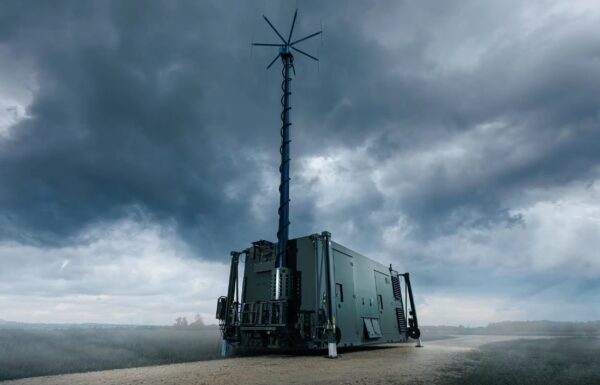
The electronic warfare system integrated into the Skeldar V-200 is capable of operating in highly complex electromagnetic environments. The rotorcraft can intercept, locate, detect, and jam radio emissions from potential targets. The system enhances situational awareness and reduces response time to threats from the air, sea, and land.
The Skeldar V-200 can also be used for the detection of submarines and naval mines. Thanks to its dedicated sensors and long endurance, the UAV is a highly effective tool for the classification, localization, and tracking of underwater targets.