


















On Thursday, July 23, 2026, US company Anduril Industries announced that, during the Lanternfish exercise, it had demonstrated the ability of an integrated solution comprising Seabed Sentry and the Lattice platform to automatically process information on underwater threats and transmit operational data to US Navy command-and-control systems.
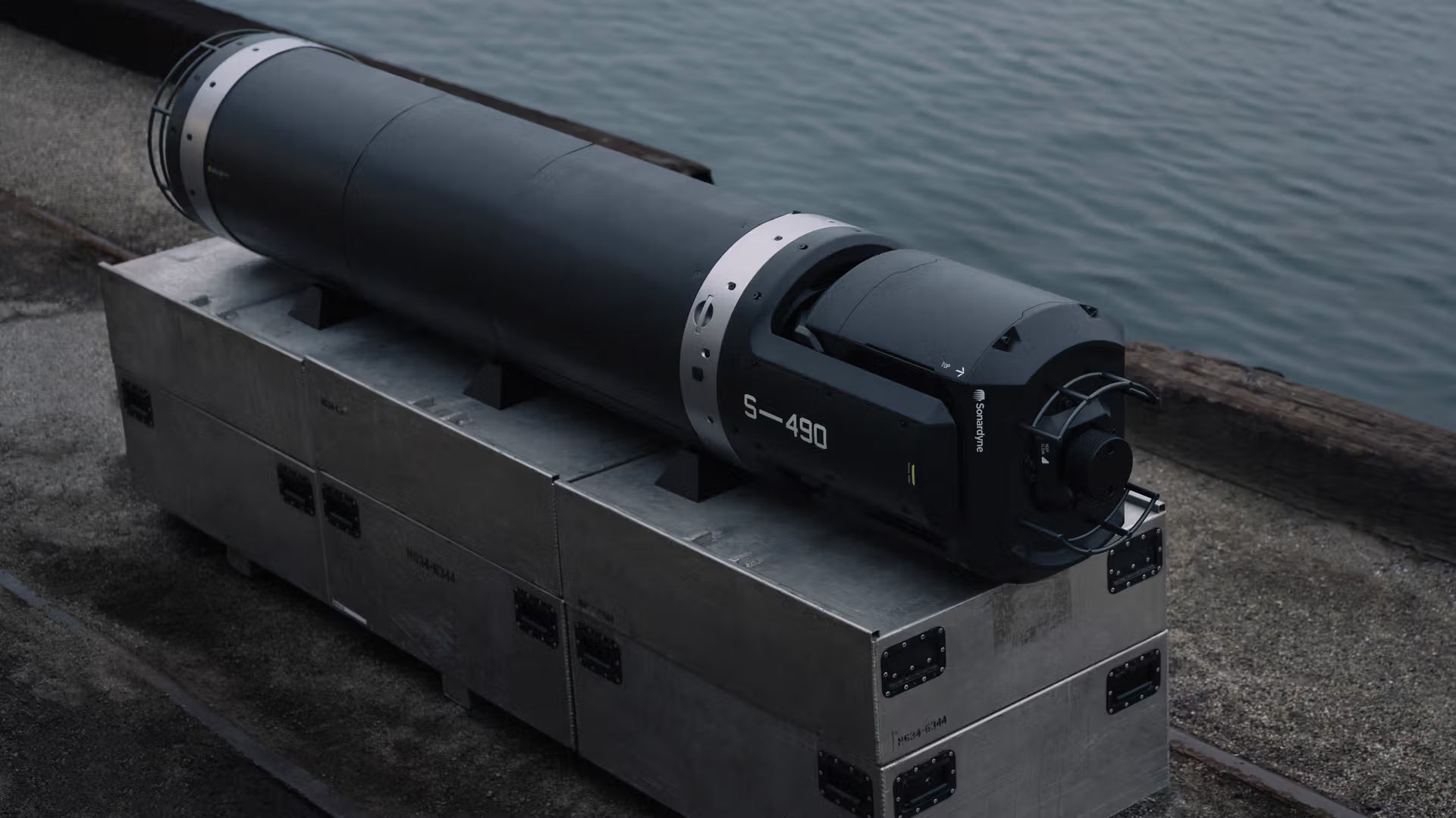 Photo: Anduril Industries
Complete underwater threat engagement chain
Lanternfish was a multinational demonstration exercise showcasing autonomous underwater vehicles and undersea technologies developed in Australia, the United Kingdom, and the United States. During the event, Anduril demonstrated a complete engagement chain against autonomous underwater vehicles (AUVs), from threat detection and tracking to the automatic transmission of information to a command-and-control system.
During the demonstration, an autonomous underwater vehicle was detected by the Sea Spear sonar system operating in conjunction with Seabed Sentry. Data on the detected object was then automatically transmitted to the Lattice platform, which integrated it into the operational picture and forwarded it to a US Navy command-and-control (C2) system. This enabled operators at the Unmanned Operations Center (UOC) to identify the threat in real time and take action to neutralize it.
The sequence was repeated multiple times during the exercise, confirming the solution’s ability to automatically detect and track underwater threats and transmit information about them without operator involvement in the data-exchange process.
Full integration with US Navy command systems
Anduril integrated Seabed Sentry, an artificial intelligence-enabled network of underwater sensors designed for continuous seabed monitoring, with Ultra Maritime’s Sea Spear sonar system. Sea Spear detected, tracked, and classified medium- and large-diameter autonomous underwater vehicles. Data on the detected objects was automatically transmitted to Seabed Sentry and then to the Lattice battlespace management platform, which integrated it into the operational picture and forwarded it to the US Navy’s cUxV system.
As a result, Navy operators received a real-time common operational picture covering all underwater and surface objects within the exercise area.
Two elements were critical during the exercise: an automated alerting system requiring no operator involvement and full integration with the Navy’s cUxV architecture. In practice, this meant that Seabed Sentry could detect an autonomous underwater vehicle and automatically transmit threat information to a US Navy command-and-control (C2) system, eliminating the need for manual data transfer. The demonstration also confirmed the solution’s interoperability with the US Navy architecture. The integration was completed without the need to develop dedicated software on either side.
More effective protection of ports and maritime infrastructure
Modern threats to ports, harbors, and coastal infrastructure increasingly come not from large submarines, but from small autonomous underwater vehicles. Such systems can be used to conduct operations against ports, pipelines, undersea cables, and other critical infrastructure.
Effective protection against these threats requires not only suitable sensors, but also rapid data processing, automated analysis, and the ability to transmit information to command systems in real time. The Lanternfish exercise demonstrated that combining Seabed Sentry with the Lattice platform makes it possible to detect small autonomous underwater threats, create a common operational picture, and transmit it to command systems before the threat reaches the shoreline.