

























On Wednesday, March 25, 2026, the European Commission introduced a pilot funding instrument worth 115 million EUR, called AGILE, aimed at rapidly transferring breakthrough military technologies from laboratories to the battlefield. The pilot instrument is intended to accelerate the development and testing of disruptive defense innovations, such as artificial intelligence, quantum technologies, and drones, and bring them to market, with a focus on supporting small and medium-sized enterprises (SMEs), including startups and scale-ups.
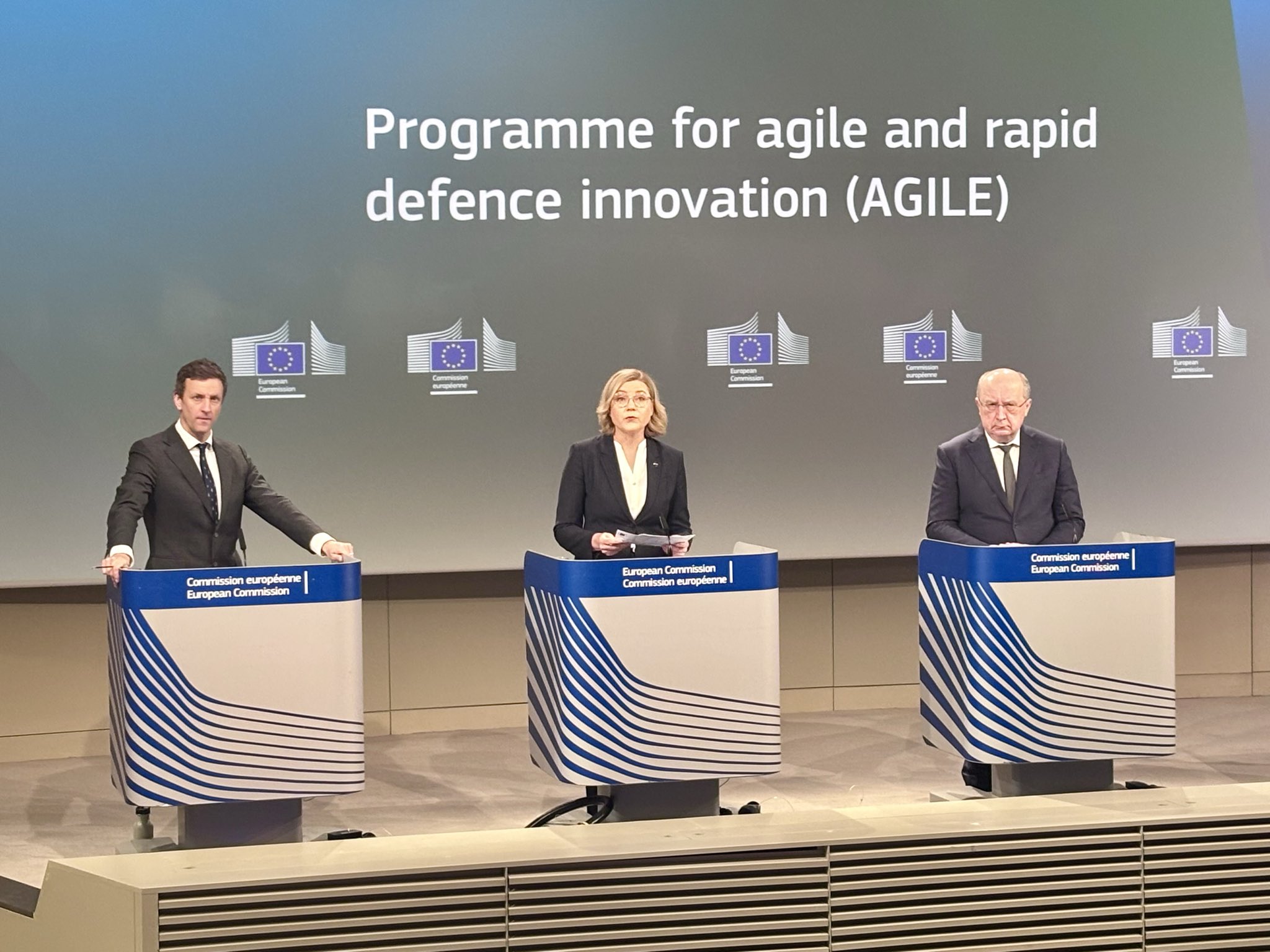 Photos and images: European Comission
As emphasized by the European Commission, Russia’s full-scale aggression against Ukraine in 2022 demonstrated that success on the battlefield now depends on short innovation cycles – the ability to develop, test, and deploy new technologies and cost-effective solutions within weeks or months, rather than years. In the face of the rapid digital and technological transformation of modern warfare, the AGILE program has been designed with new defense players, startups, and technology innovators in mind, who operate at a fast pace.
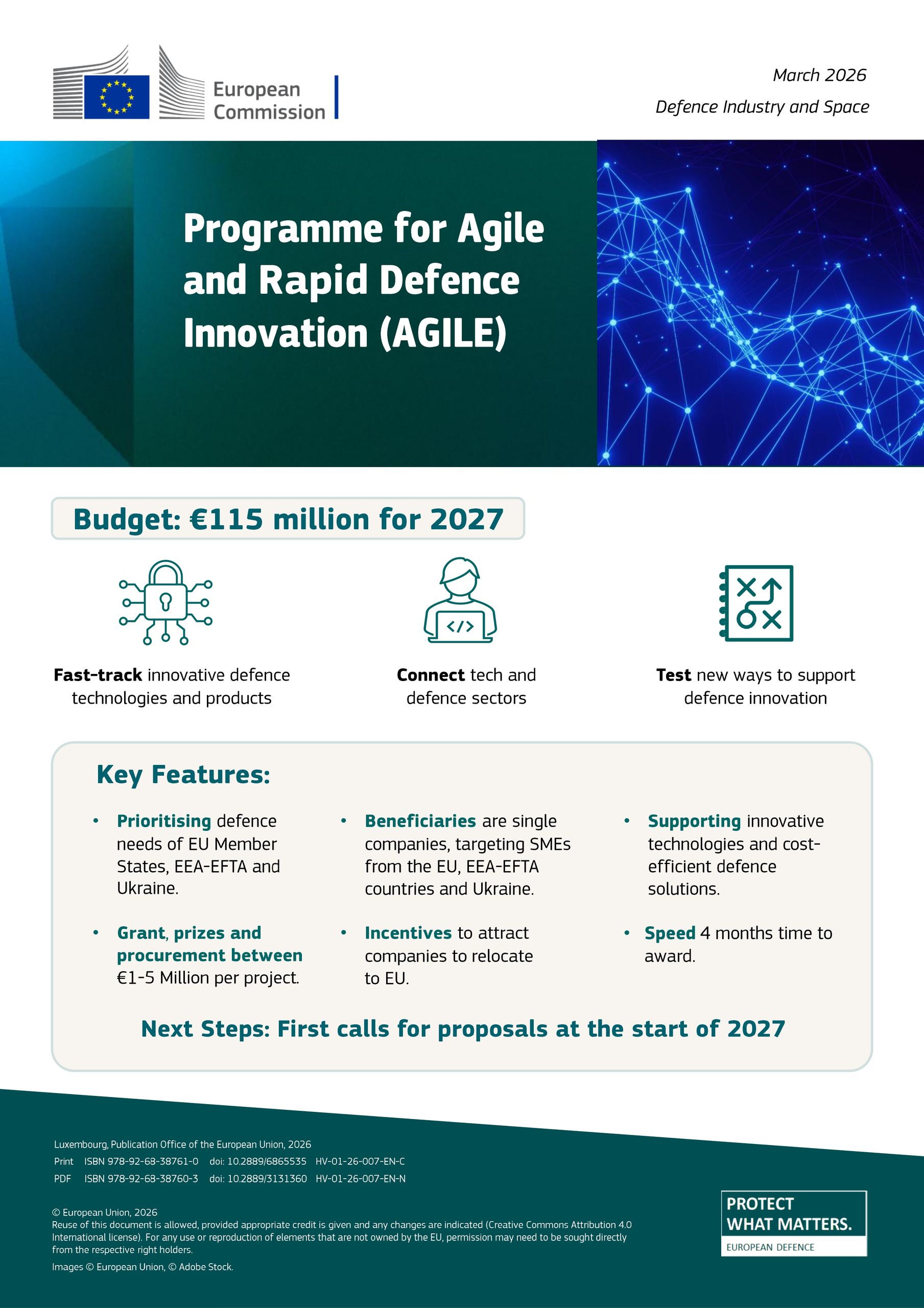
To support them, AGILE will provide faster and more flexible funding for individual companies and enable the rapid deployment of innovations. The program aims to ensure an unprecedented grant award timeline of just four months and to deliver technologies to armed forces within a period of one to three years.
AGILE will support between 20 and 30 projects, providing up to 100% funding of all eligible costs. It will also include a retroactive clause, allowing companies to apply for reimbursement of costs incurred up to three months prior to the application deadline, facilitating the rapid rollout of innovations.
The work program will cover two main types of activities: mission-oriented development of breakthrough military products and technologies, and bringing solutions to market by supporting their market uptake.
The program will be fully aligned with the most urgent needs of EU Member States and will ensure that European defense is not only innovative but also ready to respond to any threats at any time.
Next steps
The European Commission will submit a proposal to the European Parliament and the Council of the European Union for a new regulation establishing AGILE, to be adopted under the ordinary legislative procedure.
The instrument is expected to become operational from the beginning of 2027, enabling the rapid deployment of new technologies within European armed forces.
Context
In recent years, the European Union has intensified efforts to strengthen research and development in the field of defense, particularly through the European Defence Fund (EDF), which promotes cooperation on cross-border projects. In this context, the EU Defence Innovation Scheme (EUDIS) supports startups and SMEs, while the Hub for European Union Defence Innovation (HEDI), launched by the European Defence Agency (EDA), strengthens cooperation among Member States and stakeholders. Together, these instruments provide a solid foundation for joint defense innovation in Europe.
At the same time, additional efforts are needed to complement existing tools with more flexible mechanisms. Recent initiatives, including the ReArm Europe/Readiness 2030 plan and the European Defence White Paper, highlight the need to accelerate innovation and the deployment of new technologies.
In this context, the EU’s defense industrial transformation plan calls for increased speed, flexibility, and risk-taking across the European defense ecosystem, while also emphasizing the need for new, more flexible support instruments, paving the way for the AGILE program.
Henna Virkkunen, Executive Vice-President of the European Commission for Tech Sovereignty, Security and Democracy, said:
“With AGILE, we are breaking down the barriers that have kept our most creative tech companies out of defence. We want to create a culture of rapid doing, making sure that Europe´s SME´s and start-ups can foster European deterrence and safety by delivering innovative solutions.”
Dzięki AGILE przełamujemy bariery, które uniemożliwiały naszym najbardziej kreatywnym firmom technologicznym wejście do sektora obronnego. Chcemy stworzyć kulturę szybkiego działania, zapewniając europejskim MŚP i start-upom możliwość wspierania europejskiego odstraszania i bezpieczeństwa poprzez dostarczanie innowacyjnych rozwiązań.
Andrius Kubilius, Commissioner for Defence and Space, added:
“These changes are reshaping battlefield dynamics, where the added value of small players is clear. They can bring innovation, flexibility, and cost-efficient solutions, along with new operational ideas. It is therefore key that we rapidly test, validate, and integrate these technologies into our defence capabilities, ensuring that Europe’s defence industry can keep pace with the rapidly changing nature of modern warfare.”
>>>Proposal for a Regulation establishing AGILE [ENG]<<<
Today we propose a “booster” for innovative SMEs & scale-ups —#AGILE:
✅€115M to scale up innovation
✅Faster funding
✅Grants in just 4 months
✅High-risk, high-impact projects
✅Full integration of Ukraine 🇺🇦Our militaries need more disruptive low-cost solutions! pic.twitter.com/XPFF9AUYGW
— Andrius Kubilius (@KubiliusA) March 25, 2026
Learn more: Programme for agile and rapid defence innovation #AGILE @EU_Commission
🔗 https://t.co/wCrilkqzeKPress conference together with EVP @HennaVirkkunen
📹 https://t.co/WPMtnhtmYqMy remarks on #AGILE:
🔗 https://t.co/RaLn1BriFF— Andrius Kubilius (@KubiliusA) March 25, 2026
