






























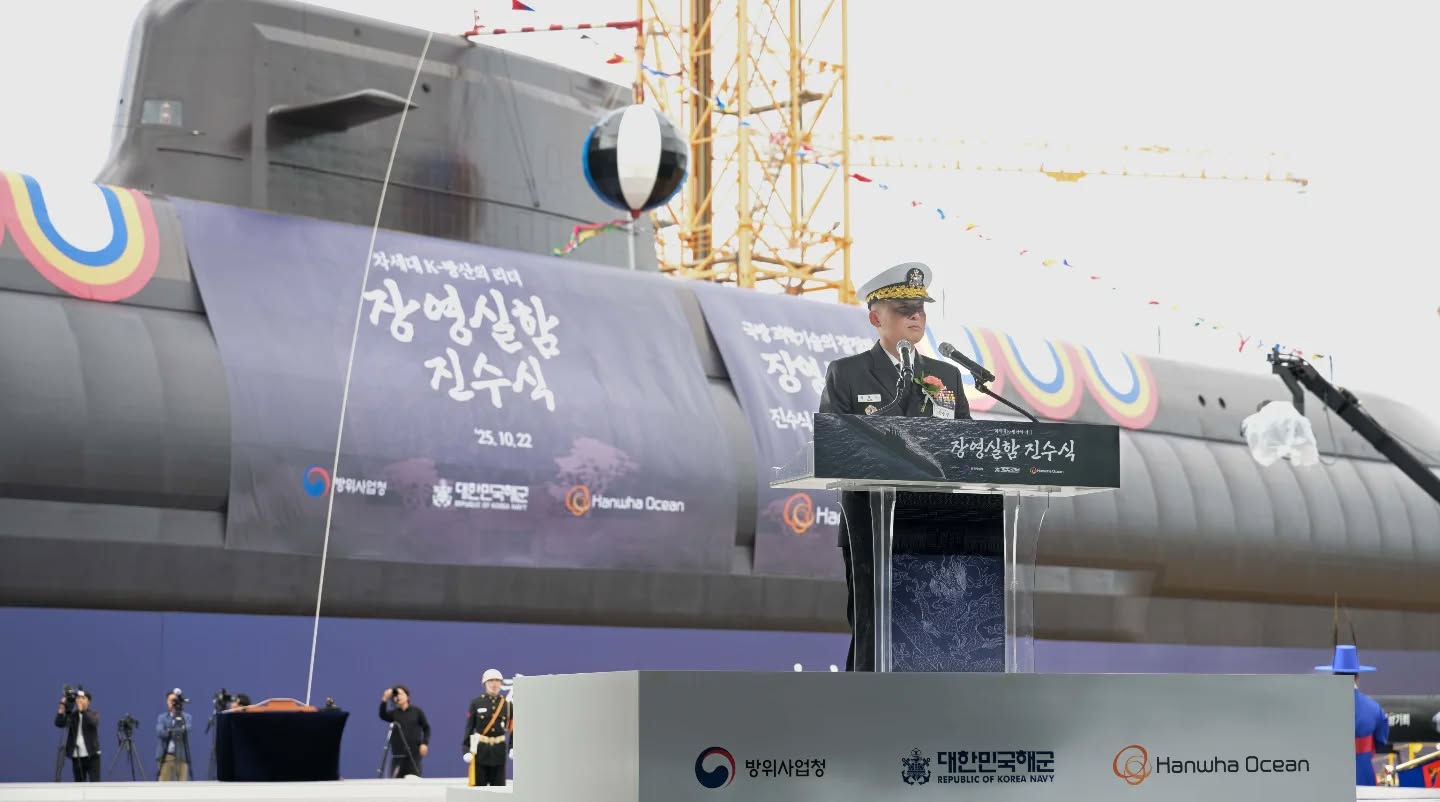
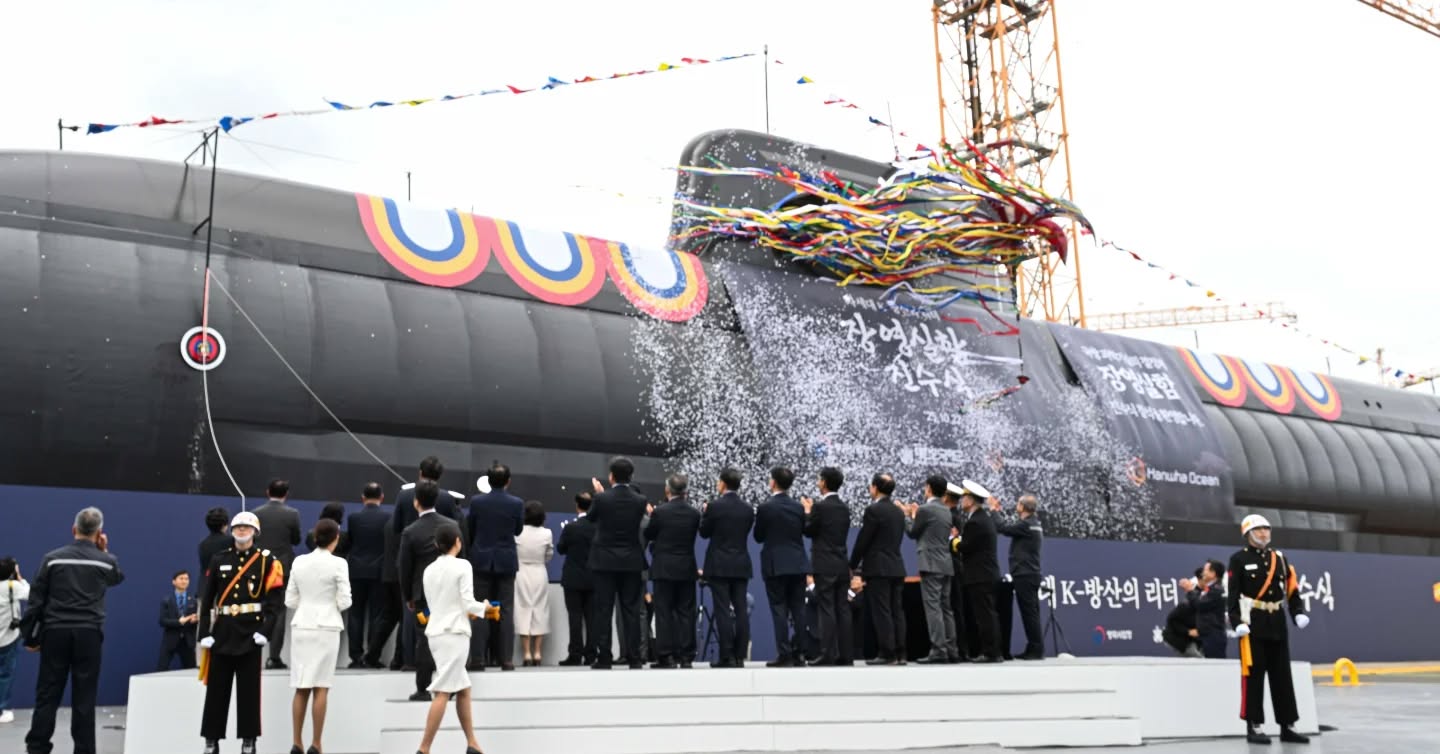
On Wednesday, October 22, 2025, at the shipyard of the South Korean company Hanwha Ocean in Geoje, on the island of the same name in South Gyeongsang Province, a launching ceremony was held for the first conventional submarine of the KSS-III/Jangbogo-III class, second batch (Batch II), the future ROKS Jang Yeong-sil (SS-087).
 Photos: Republic of Korea Navy
The ceremony was attended by representatives of the Republic of Korea Navy (Daehan-minguk Haegun), the Defense Acquisition Program Administration (DAPA) under the Ministry of National Defense, and the Agency for Defense Development (ADD).
In his congratulatory message, Chief of Naval Operations Admiral Yang Yong-mo said:
“I am confident that the Jang Yeong-sil, built using our own technology, will mark a step forward toward an intelligent and elite naval force and will fulfill its mission as a key asset in safeguarding the maritime security of the Republic of Korea.”
The submarine will now undergo testing and evaluation, be delivered to the Navy at the end of 2027, and then enter operational service after completing its combat readiness process.

The submarine was named in honor of Jang Yeong-sil (born circa 1390, died after 1442), who lived during the period of the Korean state of Great Joseon, ruled by the Yi dynasty. He was an outstanding engineer, scientist, and inventor who served at the court of King Sejong the Great. His inventions contributed to the advancement of science, astronomy, meteorology, and agriculture. He worked mainly between 1430 and 1442, creating instruments inspired by Chinese and Arab designs but featuring original improvements, such as the world’s first rain gauge, a water-driven pendulum clock, a simplified armillary sphere (celestial globe), a portable celestial globe, a movable-type printing press, and a water-level measuring device. He also conducted research on weaponry (including cannons and war machines), portable astronomical models, and prototypes of automation mechanisms powered by water.
The contract for the construction of three submarines of the second batch was signed on September 10, 2021, between the DAPA agency and the then Daewoo Shipbuilding & Marine Engineering (DSME), now Hanwha Ocean. On March 30, 2023, the keel of the first submarine, 89 meters in length and provisionally named Lee Bong-chang, was laid at the Geoje shipyard. The keel of the second, yet unnamed submarine was laid on July 12, 2024.
They will join the three submarines of the first batch, the first two of which were delivered by the then Daewoo Shipbuilding & Marine Engineering (DSME), and the third by HD Hyundai Heavy Industries (HD HHI), under a contract signed on December 26, 2012, valued at USD 1.56 billion. These are, respectively: ROKS Dosan Ahn Changho (SS-083), delivered on August 13, 2021; ROKS Ahn Mu (SS-085), originally named Son Byong-hi, delivered on April 20, 2023; and ROKS Shin Chae-ho (SS-086), delivered on April 4, 2024.
Compared to the first three, the new submarines will be 5.5 meters longer and capable of launching ten Hyunmu-4-4 submarine-launched ballistic missiles (K-SLBM, Korean Submarine-Launched Ballistic Missile) with a range of 500 kilometers and conventional warheads (instead of six). They will also be equipped with lithium-ion (Li-Ion) batteries, allowing for long-duration underwater operations over extended distances.
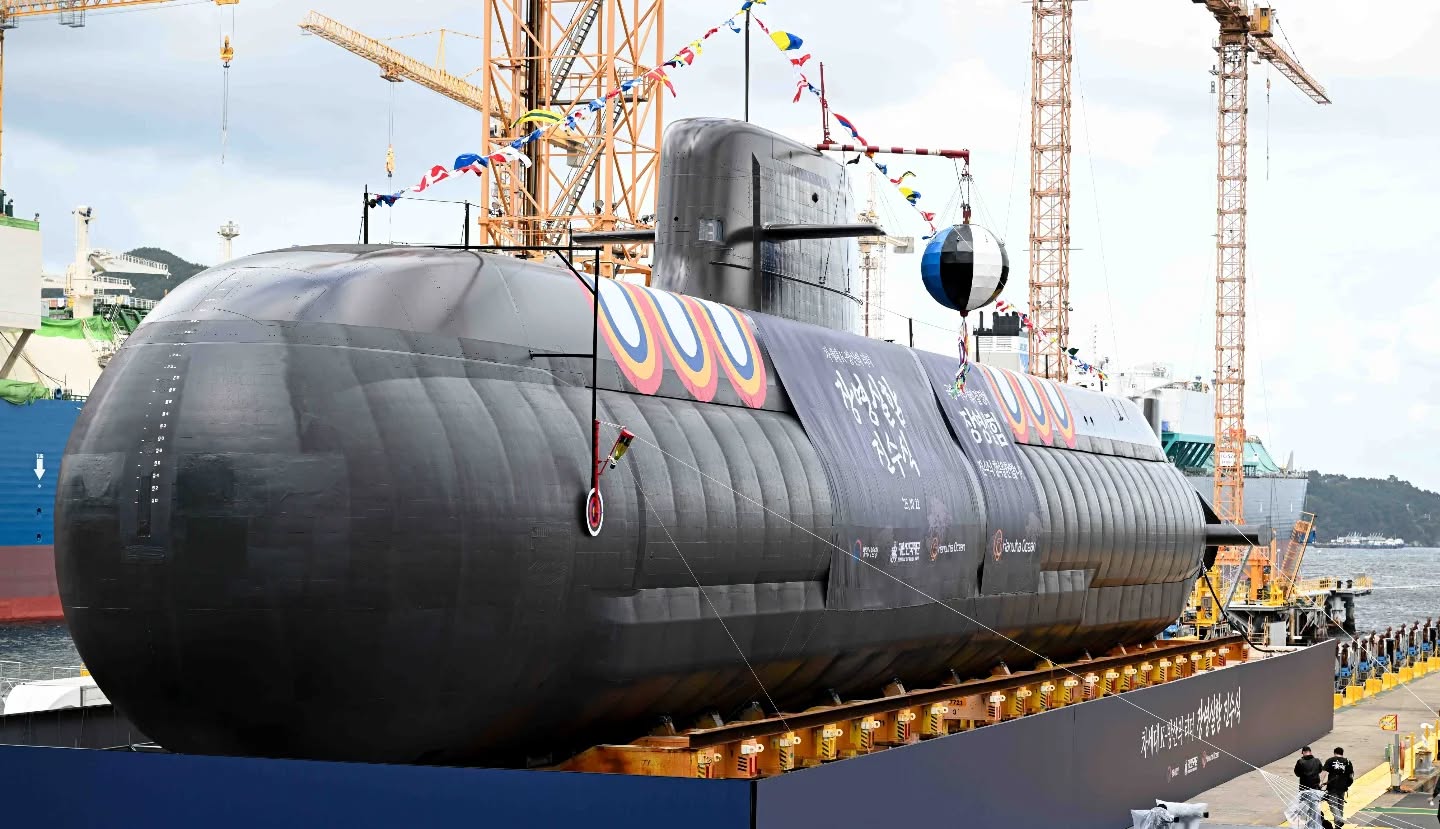
The second batch displaces 3,600 tons (compared to 3,358 tons for the first), and is highly automated, allowing it to be operated by a crew of as few as 33 officers and sailors (compared to 50). The KSS-III Batch II will be equipped with a variety of armaments and will be capable of launching anti-ship missiles, land-attack missiles, 533.4 mm K744 Baek Sang Eo heavy torpedoes, and deploying naval mines. Its hull design minimizes noise, enabling stealthy underwater operations. The submarine features an air-independent propulsion (AIP) system based on fuel cells, as well as state-of-the-art lithium-ion batteries, allowing it to remain submerged for more than three weeks without surfacing.
In addition, the KSS-III is equipped with advanced integrated combat management and sonar systems, as well as communications and allied data link systems (Link), ensuring interoperability with allied nations. The KSS-III is designed for multirole operations and can operate effectively both in the shallow coastal waters of the Yellow Sea and in the deeper oceanic environments of the East Sea surrounding the Korean Peninsula. The second batch also features a higher proportion of domestically produced components.
Interestingly, the KSS-III Batch II serves as the basis for South Korea’s offer to Poland under the Orka submarine program (Korean offerings at BaltExpo 2025).
See also: