























On Thursday, July 30, 2026, the Armed Forces Operational Command reported that, during a large-scale Russian missile and drone attack on Ukraine, an unidentified object violated Polish airspace and crashed near the village of Tarnawa-Kolonia in the Lublin region. Available evidence indicates that it was a Russian air-launched Raduga Kh-101 cruise missile (Izdeliye 504A; DIA/NATO reporting name: AS-23A Kodiak).
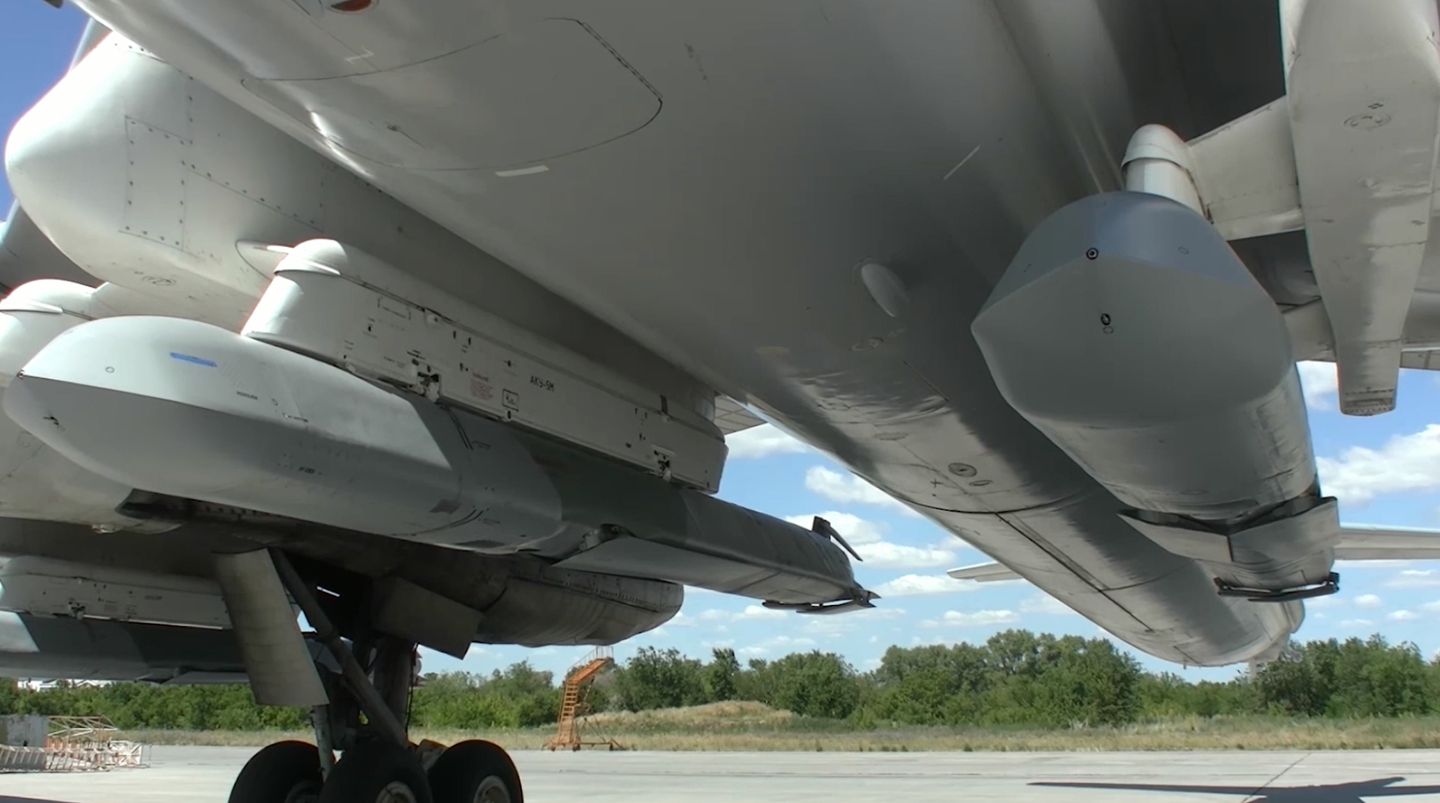 Kh-101 cruise missiles carried by a Tu-95MS strategic bomber / File photo: Ministry of Defence of the Russian Federation
At 2:16 a.m., the Armed Forces Operational Command issued the following statement:
“Attention. Due to the activity of the Russian Federation’s long-range aviation, which is carrying out strikes against targets in Ukraine, military aircraft have begun operating in Polish airspace.
In accordance with established procedures, the Armed Forces Operational Command has activated the necessary forces and assets at its disposal. Fighter aircraft and an airborne early warning aircraft have begun operations, while ground-based air-defense and radar surveillance systems have been placed on alert.
These measures are preventive and are intended to secure and protect Polish airspace, particularly in areas adjacent to those under threat.
The Armed Forces Operational Command is monitoring the current situation, while its subordinate forces and assets remain ready to respond immediately.”
❗️ Uwaga. W związku z aktywnością lotnictwa dalekiego zasięgu Federacji Rosyjskiej, wykonującego uderzenia na terytorium Ukrainy, rozpoczęło się operowanie lotnictwa wojskowego w polskiej przestrzeni powietrznej.
Zgodnie z obowiązującymi procedurami Dowództwo Operacyjne RSZ… pic.twitter.com/uyUywk460b
— Dowództwo Operacyjne RSZ (@DowOperSZ) July 30, 2026
At approximately 3:50 a.m., air-raid sirens were activated in Lublin and Krasnystaw.
At the same time, Russia was carrying out attacks using Kh-101 cruise missiles against targets including Lviv and Ternopil.
Map of attacks (source):
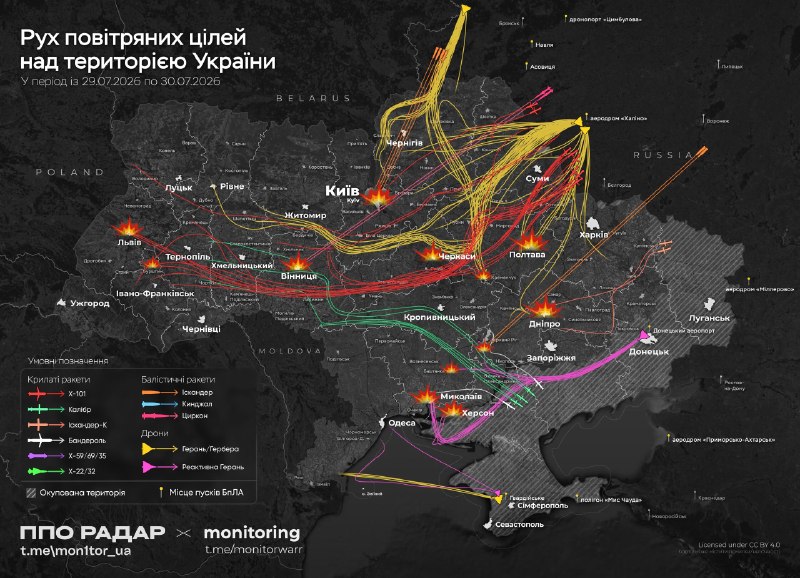 The marked flight path of one of the air-attack weapons, identified as a Kh-101, can be seen ending near the Polish border at the level of the Lublin region / Map: mon1tor_ua via Telegram
The first reports suggesting a possible violation of Polish airspace then began to emerge.
I just received this video, apparently filmed in Otrocz, Poland, although I cannot verify it at this time. Earlier reports indicated the missile was tracked near Chełm, so if this video is genuine, it would suggest the missile traveled significantly farther into Poland. pic.twitter.com/2IdSPxIMIY
— GeoInsider (@InsiderGeo) July 30, 2026
In the early morning, local news outlet lublin112.pl reported that residents near Tarnawa-Kolonia, including those in the nearby village of Targowisko, had heard a powerful explosion. A crater resulting from the blast was subsequently discovered in a field between wooded areas. Fire crews, police officers, and a military helicopter were dispatched to the scene.
Potężny huk obudził nad ranem mieszkańców Targowiska w powiecie lubelskim. Świadkowie mówią o drżących szybach i wstrząsie odczuwalnym w budynkach. Na polu pomiędzy lasami odkryto krater. Teren zabezpieczają policjanci i strażacy.https://t.co/eTw56OW9Nx
— lublin112.pl (@lublin112) July 30, 2026
Last night and this morning, Russia launched another large-scale, combined missile and drone attack on Ukraine.
Missiles launched:
~8 Iskander-M/S-400 ballistic missiles launched from OTRK installations near Klintsy, Bryansk Oblast.
~6 Kn-23 ballistic missiles launched from 3… https://t.co/kCJdKXSi8y pic.twitter.com/OtKGmEKVNK
— AMK Mapping 🇳🇿 (@AMK_Mapping_) July 30, 2026
Map showing the approximate flight route of the Russian Kh-101 cruise missile that entered Polish airspace this morning, and impacted a field near the village of Targowisko, eastern Poland, around 95 km from the border with Ukraine. https://t.co/XBwp6zIi8c pic.twitter.com/xaDsoKggno
— AMK Mapping 🇳🇿 (@AMK_Mapping_) July 30, 2026
At 7:07 a.m., the Armed Forces Operational Command confirmed the violation of Polish airspace:
“Attention. During the night, national and allied surveillance systems detected intense combat activity by the Russian Federation’s long-range aviation. To ensure the security of Polish airspace, the combat readiness of air-defense assets was raised, including fighter aircraft on quick-reaction alert and an airborne early warning aircraft.
The Armed Forces Operational Command continuously provided information about the potential threat to the relevant services and appropriate centers responsible for security and crisis management. A constant exchange of information was maintained, enabling a coordinated response to the developing situation.
Radar assets of the national air-defense system monitored the activity of at least a dozen missiles operating over western Ukraine which, due to their direction of flight, could have posed a potential threat to Polish airspace.
One of the objects came closest to the border of the Republic of Poland. At 3:29 a.m., it approached to within approximately 5 km before changing course and heading east.
At 3:40 a.m., an unidentified object traveling westward was detected in Polish airspace. An F-16 fighter aircraft on quick-reaction alert was dispatched to identify and intercept it. At 3:46 a.m., before the object could be conclusively identified, it disappeared from radar. To verify and ultimately confirm the technical indications from the radar systems, a Mi-24 helicopter was sent to the area of the object’s last known position. The helicopter crew located the probable crash site in an uninhabited area near Tarnawa-Kolonia in the Lublin region. A Ground Search and Rescue Team and the relevant services were dispatched to the scene. Operational and security activities are ongoing at the site.
The Armed Forces Operational Command remains in constant contact with the services involved in the operation.”
❗️ Uwaga. W godzinach nocnych narodowe i sojusznicze systemy rozpoznania wykryły intensywną aktywność bojową lotnictwa dalekiego zasięgu Federacji Rosyjskiej. W celu zapewnienia bezpieczeństwa polskiej przestrzeni powietrznej podwyższono gotowość bojową środków systemu obrony… pic.twitter.com/gP28zkKTkx
— Dowództwo Operacyjne RSZ (@DowOperSZ) July 30, 2026
The Police also issued a statement:
“Early this morning, we received a report from the Emergency Notification Center that a powerful explosion had been heard in Biłgoraj County, between the villages of Tarnawa-Kolonia and Biskupice.
The duty officer dispatched police patrols to the area. Shortly after 5:00 a.m., officers discovered a crater and scattered fragments of an unidentified object in a field between Tarnawa-Kolonia and Tokary, approximately 2 km from the nearest buildings. The area was secured by police. The relevant services were notified, including the Military Police, the Internal Security Agency, the Military Counterintelligence Service, and the Regional Prosecutor’s Office in Lublin. Police counterterrorism officers were also dispatched to the scene. Operations are ongoing.”
Dziś nad ranem otrzymaliśmy zgłoszenie z WCPR że w powiecie biłgorajskim pomiędzy miejscowościami Tarnawa Kolonia a Biskupice słychać było potężny huk.
Na miejsce dyżurny wysłał policyjne patrole. Po godz. 5.00 policjanci pomiędzy m. Tarnawa Kolonia a m. Tokary na polu w… pic.twitter.com/IbUvBdPHyy— Policja Lubelska 🇵🇱 (@PolicjaLubelska) July 30, 2026
New footage from the reported crater site shows a military helicopter conducting patrols over the area. pic.twitter.com/UXEQse9Ngy
— GeoInsider (@InsiderGeo) July 30, 2026
Prime Minister Donald Tusk:
“During Russia’s large-scale missile attack on western Ukraine, Polish airspace was violated. In response, I convened a coordination team involving the Minister of National Defence and the relevant services, which have been working at the scene for several hours and are providing me with regular updates on all the circumstances of the incident.”
W trakcie rosyjskiego zmasowanego ataku rakietowego na zachodnią Ukrainę doszło do naruszenia polskiej przestrzeni powietrznej. Zwołałem w związku z tym zespół koordynacyjny z udziałem Ministra Obrony i odpowiednich służb, które od wielu godzin pracują na miejscu zdarzenia i…
— Donald Tusk (@donaldtusk) July 30, 2026
Deputy Prime Minister and Minister of National Defence Władysław Kosiniak-Kamysz:
“It was an extremely difficult night for our air-defense, surveillance, and threat-detection systems. I would like to thank Lt. Gen. Ireneusz Nowak and the Armed Forces Operational Command, as well as everyone who coordinated, monitored, analyzed, and responded to the events over Ukraine and in Polish airspace today. Information was continuously shared and coordinated by the relevant services and was also provided to the country’s highest authorities. Efforts are now underway to determine what type of object crashed near Tarnawa-Kolonia.”
Niezwykle ciężka noc dla naszej obrony powietrznej, systemów obserwacji i wykrywania zagrożeń. Dziękuję gen. I. Nowakowi i @DowOperSZ, wszystkim, którzy dziś koordynowali, obserwowali, analizowali i reagowali na wydarzenia nad Ukrainą i w naszej przestrzeni powietrznej.… https://t.co/RssjKTKAec
— Władysław Kosiniak-Kamysz (@KosiniakKamysz) July 30, 2026
Head of the National Security Bureau Bartosz Grodecki:
“President of the Republic of Poland Karol Nawrocki is receiving continuous updates on the overnight violation of Polish airspace. Since the early morning hours, the President has been in contact with Prime Minister Donald Tusk and Deputy Prime Minister and Minister of National Defence Władysław Kosiniak-Kamysz.
The National Security Bureau remains in constant contact with the relevant commands of the Polish Armed Forces and the services involved. The Bureau’s Operations Duty Service is receiving reports from, among others, the Armed Forces Operational Command and the Government Security Center.
We are awaiting precise and detailed information on the entire course of the incident.
A representative of the National Security Bureau is on the way to the scene.”
Prezydent RP Karol Nawrocki na bieżąco otrzymuje informacje o nocnym naruszeniu polskiej przestrzeni powietrznej. Od wczesnych godzin porannych Pan Prezydent jest w kontakcie z premierem Donaldem Tuskiem i wicepremierem, ministrem obrony narodowej Władysławem…
— Bartosz Grodecki (@BartoszGrodecki) July 30, 2026
Prime Minister Donald Tusk:
“I am in contact with the leaders of European countries regarding the violation of Polish airspace. All have expressed their full solidarity and readiness to provide any assistance required.”
Jestem w kontakcie z liderami państw europejskich w sprawie naruszenia polskiej przestrzeni powietrznej. Wszyscy deklarują pełną solidarność i gotowość wszelkiej pomocy.
— Donald Tusk (@donaldtusk) July 30, 2026
W związku z ujawnieniem niezidentyfikowanego obiektu, który spadł w pobliżu wsi Tarnawa-Kolonia w województwie lubelskim Wydział ds Wojskowych Prokuratury Okręgowej w Lublinie prowadzi na miejscu czynności w ramach śledztwa w niezbędnym zakresie.
— Prokuratura Okręgowa w Lublinie (@Prok_Okreg_Lub) July 30, 2026
US Ambassador to Poland Tom Rose:
“We are in constant contact with the Government of Poland — including @KosiniakKamysz @sikorskiradek @marcin_przydacz @CTomczyk and @POTUS @usambnato Matt Whitaker following this morning’s violation of Polish airspace by a Russian fired projectile that impacted deep inside Polish territory.
Any breach of a NATO ally’s territory is a matter we take extremely seriously. We were lucky and grateful there were no casualties.
The United States stands firmly with Poland. We are coordinating closely with Polish authorities as the investigation proceeds and remain committed to defending Allied territory and upholding NATO’s collective security.”
We are in constant contact with the Government of Poland —including @KosiniakKamysz @sikorskiradek @marcin_przydacz @CTomczyk and @POTUS @usambnato Matt Whitaker following this morning’s violation of Polish airspace by a Russian fired projectile that impacted deep inside Polish…
— Ambassador Tom Rose (@USAmbPoland) July 30, 2026
UPDATE
Press release from the Polish Ministry of National Defence:
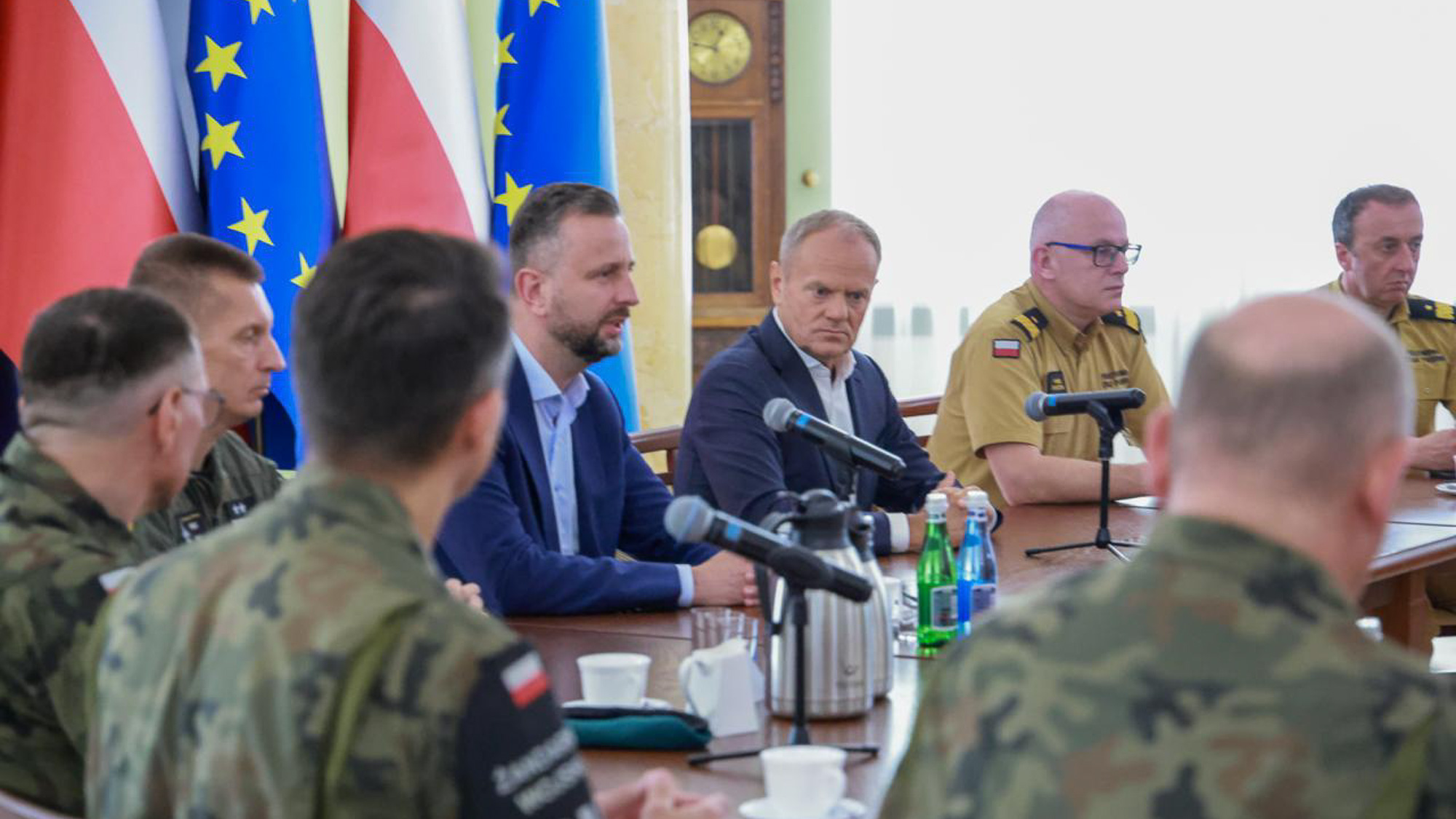
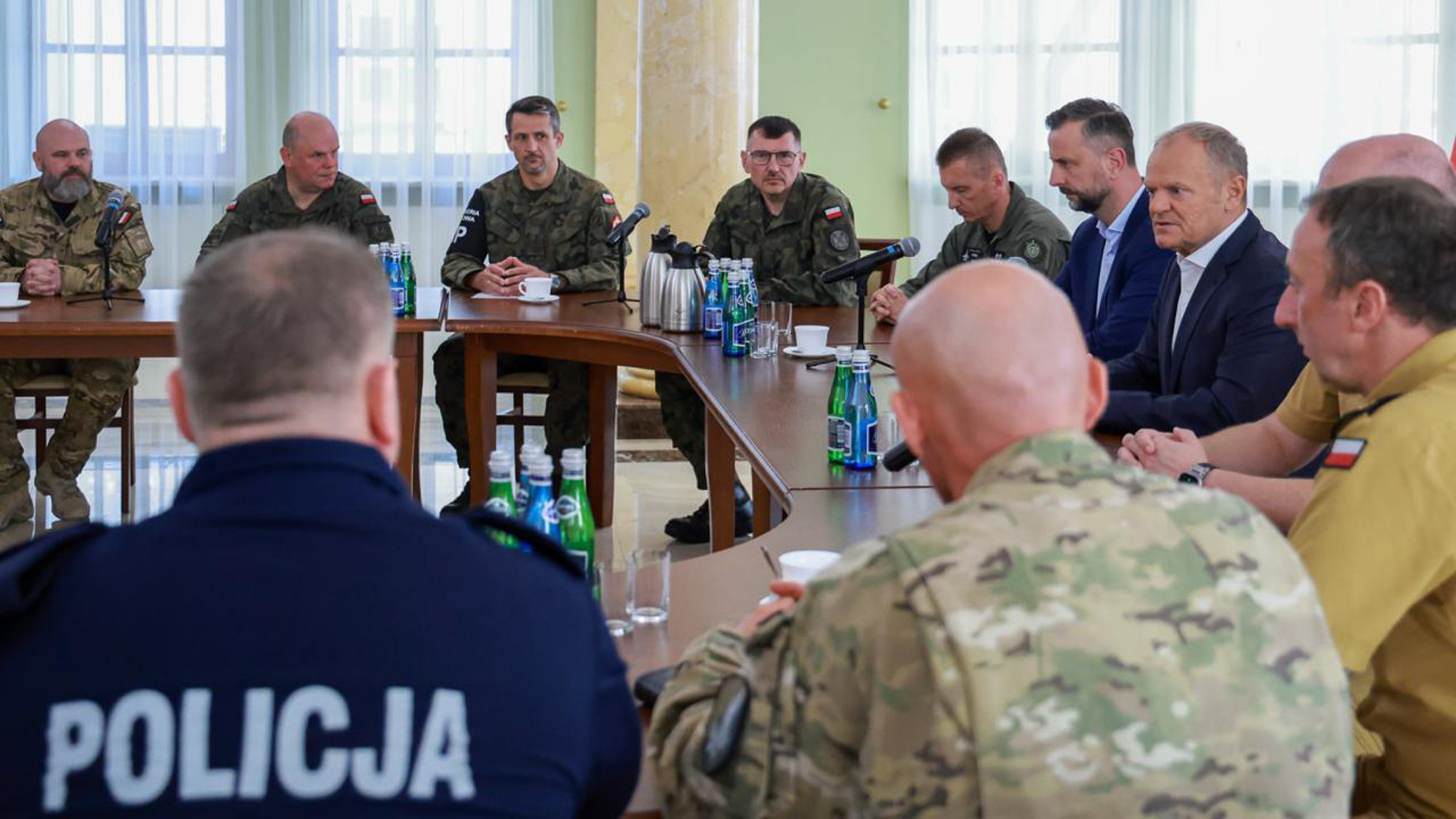
On July 30, a coordination team meeting was held in Lublin with the participation of Prime Minister of the Republic of Poland Donald Tusk, Deputy Prime Minister and Minister of National Defence Władysław Kosiniak-Kamysz, military commanders, and the heads of services responsible for national security. The meeting reviewed the overnight operation to protect Polish airspace in connection with the Russian Federation’s large-scale missile and drone attack against Ukraine.