























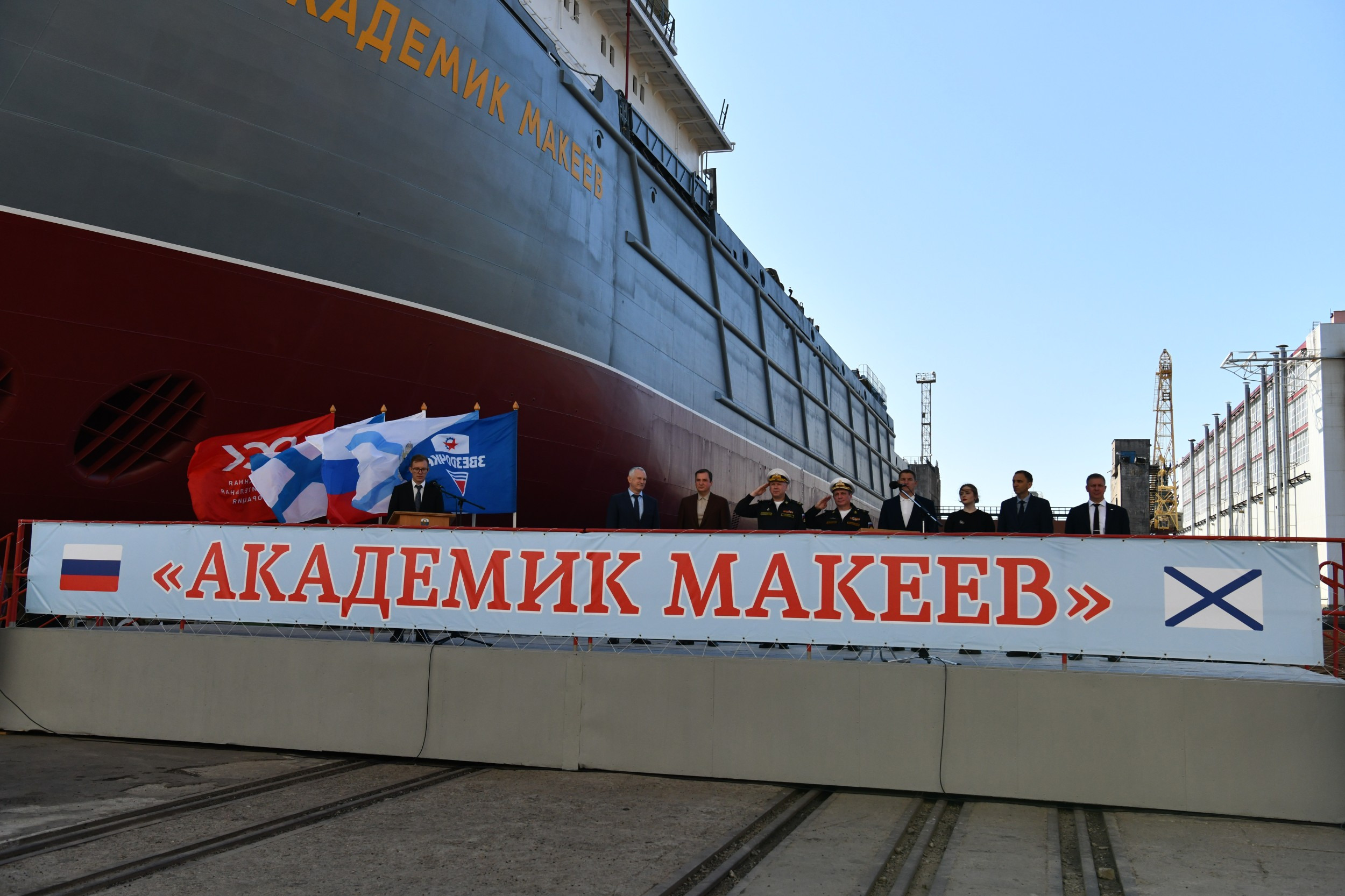
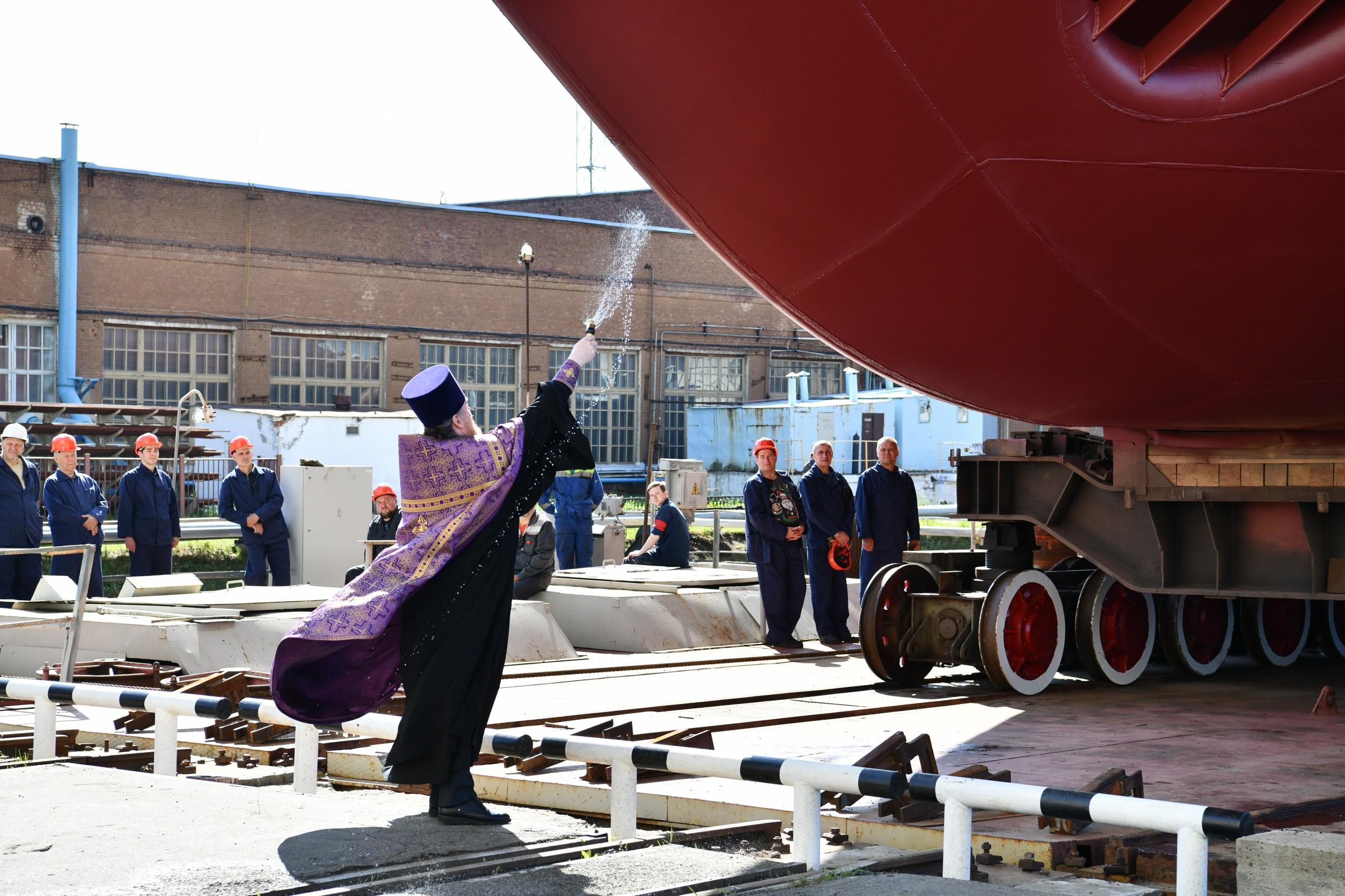
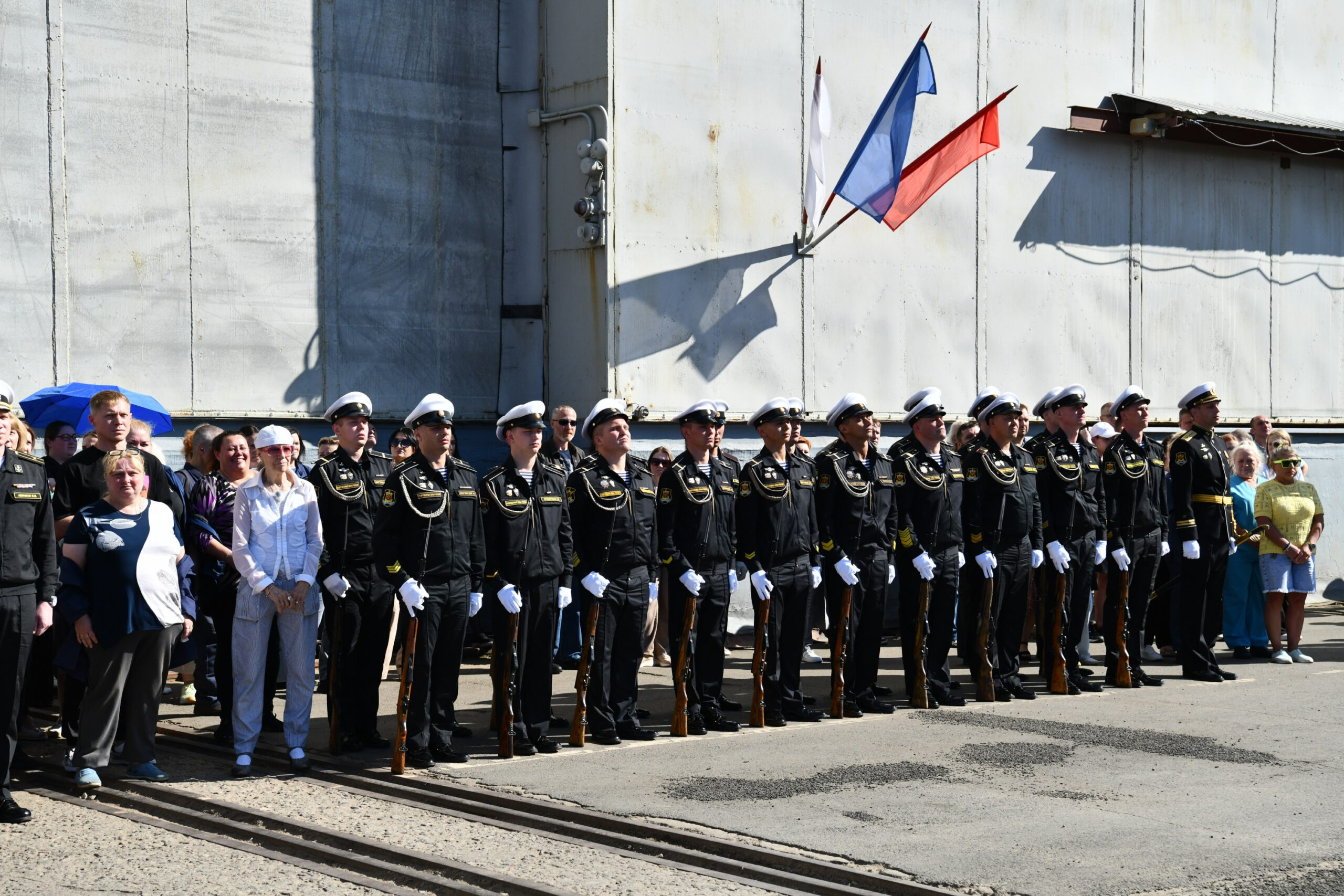
On Thursday, August 14, 2025, the press service of the SRZ-35 Zvezdochka shipyard in Severodvinsk, part of the United Shipbuilding Corporation (USC), announced the christening and launch ceremony of the hull of the new missile armament transport ship RFS Akademik Makeyev, Project 20181.
 Photos: SRZ-35 Zvezdochka
The ceremony was attended by: Sergey Marichev, General Director of SRZ-35 Zvezdochka; Alexander Tsybulski, Governor of the Arkhangelsk Region; and Konstantin Golubev, General Director of the Central Marine Design Bureau (CMDB) OAO Almaz.
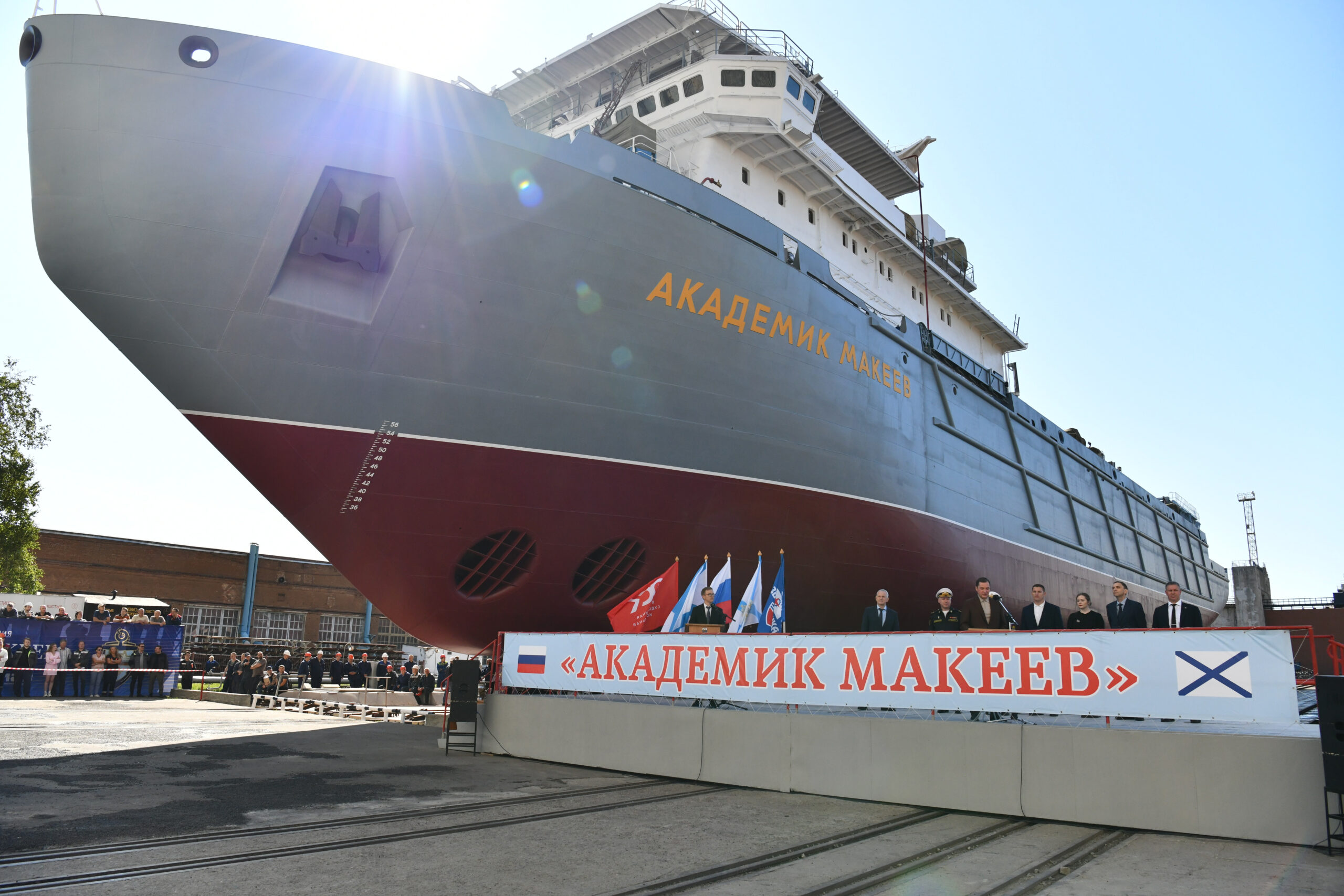
The vessel, designed by the aforementioned CMDB OAO Almaz as a development of Project 201800, features a reinforced hull capable of breaking through ice cover (similar to icebreakers), as its mission will be to load, deliver, and unload sea-based ballistic missiles for strategic nuclear-powered submarines operating in the Arctic.
The ship is 107.6 meters long, 17.8 meters wide, with a draft of 9.3 meters. Its full displacement is 6,300 tons. The crew consists of 60 officers and sailors. It is equipped with a stern deck for one Ka-27 helicopter.
RFS Akademik Makeyev will be capable of carrying up to eight such ballistic missiles simultaneously, with loading and unloading carried out using a large onboard crane with a lifting capacity of 90–120 tons. For the Russian Navy (VMF), these will include:
- R-30 Bulava / RSM-56 – 12.1 m in length, 2 m in diameter, and weighing 36.8 tons. Its maximum estimated range is 9,300 km. It can carry six nuclear warheads with a yield of 150 kT each, plus an unspecified number of decoys. These missiles are deployed on Project 955 Borei-class submarines (NATO reporting name: Borey).
- R-29RMU Sineva / RSM-54 and the modernized R-29RMU2.1 Liner (DIA/NATO: SS-N-23A Skiff, GRAU index 3M27) – 14.8 m in length, 1.9 m in diameter, and weighing 40.3 tons. The maximum estimated range is between 8,300 and 11,000 km. These missiles can carry either four nuclear warheads with a yield of 500 kT each or ten warheads with a yield of 100 kT each, as well as decoys. They are deployed on Project 667BDRM Delfin-class submarines (NATO reporting name: Delta IV), a class being phased out and set to be fully replaced in the future by the Borei-class.
The keel of the vessel, under construction number 01283, was laid down on July 23, 2015. It was initially scheduled for delivery to the Northern Fleet in 2018. The delay occurred because the designers had to redesign the hull after sanctions were imposed on Russia, which made it impossible to procure high-power azimuth thrusters and other onboard systems from Western suppliers.
Following the launch, outfitting work will continue, including interior finishing, completion of installation works, electrical systems, painting, and mooring trials. After completing harbor and sea trials, the ship will be handed over to the customer at the end of 2026. The total delay will therefore amount to 8 years.
Akademik Makeyev will join Akademik Kovalev, originally handed over to the Pacific Fleet on December 18, 2015, and delivered in September 2016. In 2021, it was temporarily transferred to the Northern Fleet due to delays in the construction of the second vessel.
The ship is named after Viktor Petrovich Makeyev (1924–1985), a Soviet scientist and engineer, who was the head of the SKB-385 Machine-Building Design Bureau in Miass, Chelyabinsk Oblast. This bureau is now known as the State Rocket Center, named after Academician V. P. Makeyev. He was the chief designer of Soviet sea-based ballistic missiles, including the first generation (R-11FM, R-13, and R-21), second generation (R-27, R-27K, and R-29), and third generation (R-29R, R-39 Grom, and R-29RM).
Interestingly, in addition to Akademik Makeyev and Akademik Kovalev, the rescue tug Zvezdochka and the oceanographic research vessel Akademik Aleksandrov are also derived from the baseline Project 201800.
See Also: