
















On Friday, February 20, 2026, in Kraków, Deputy Prime Minister and Minister of National Defence Władysław Kosiniak-Kamysz hosted the defense ministers of France, Germany, Italy, and the United Kingdom in the E5 Group format. The meeting, the seventh in this format since 2024, was also attended by the EU High Representative for Foreign Affairs and Security Policy, Kaja Kallas, and NATO Deputy Secretary General Radmila Shekerinska. Ukraine’s Minister of Defense, Mykhailo Fedorov, also took part in the talks via videoconference.
 Photo: Tomasz Radziwiński/2KP
“First of all, we have all confirmed our allied relations and willingness to continue as the E5 Group: to support each other, pursue military and defence industry cooperation and fulfil the obligations undertaken in the Hague, including reaching 5% spending on defence. We have also confirmed the fulfilment of our Armed Forces’ declared capabilities within the NATO programmes and national deterrence and defence systems. Our main task is to be strong enough that no one ever thins about attacking the countries of the European Union, including the E5 countries. We approach all obligations in a solidary manner. In Poland, the word “Solidarity” has a special meaning – it’s a value that led us to freedom. Solidarity means two-way actions: helping those who need it, and supporting each other. We are giving support, but we also know that we can count on the support of our allies if the need arises. I am grateful for this declaration” emphasized Deputy Prime Minister and Minister of National Defense Władysław Kosiniak-Kamysz after the seventh meeting of E5 defense ministers.
“Every country present here has increased defence spending. Europe has launched the SAFE programme. For the first time, the European Union has begun actions aimed at financing the defence industries and strengthening the capabilities of national armies at this scale. We are grateful for that. We have received the signal from across the ocean – we are in favour of great trans-atlantic relations and relations with the United States, but we are convinced that Europe, which is doing much more today than it has been doing a year ago, has to adopt this strategy for years in order to be a real military partner for the US. The countries gathered here are doing more than over the last 30 years – since the end of the Cold War. There hasn’t been armament and building a strong, independent defence industry in Europe on this scale for over three decades. This is a breakthrough in responsibility for our own security, while maintaining the best possible relationship with and keeping the soldiers from the United States in Europe. Our strengthening of capabilities is an action for the cooperation with the United States, not against them.” Deputy Prime Minister Kosiniak-Kamysz stressed.
During the working sessions, the delegations focused on strengthening deterrence and defense within NATO structures, as well as countering the growing hybrid threats. A key item on the agenda was the continuation of comprehensive support for Ukraine, in the military, political, and industrial dimensions, as a prerequisite for building a lasting and just peace in Europe.
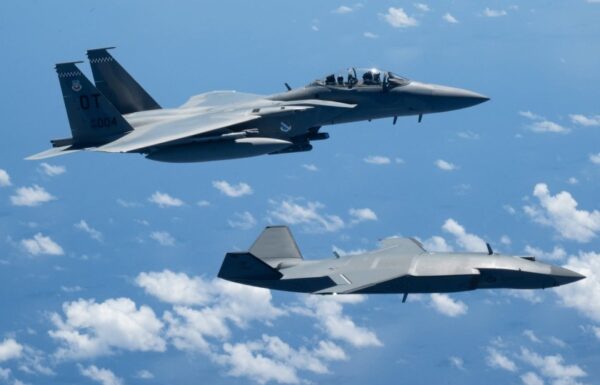
During the event, a statement was signed launching strategic cooperation on Low-Cost Effectors and Autonomous Platforms (LEAP). The initiative envisages the development of modern, scalable, and cost-effective weapons systems in response to the rapidly evolving nature of contemporary armed conflicts.
“We have also signed a very important obligation to jointly develop drone strike capabilities, low-cost shared production and joint procurement of drone effectors – combat missiles, using Artificial Intelligence. Technologies and combat techniques change rapidly – we have to react quickly and accurately.” – noted the Polish minister of national defence.

“Increasing the scale of defence investments is an important obligation. The stronger member states are, the stronger the Alliance is. European allies increase spending and take greater responsibility for NATO, and countries of the #E5 Group are a good example of this. Poland is also a leader of spending increases, and a strong ally,” – said the deputy Secretary General of NATO, Radmila Shekerinska.
“We have a shared responsibility for security. We continue our mission collectively and develop our defence capabilities. I wish to stress here, in Cracow, how important the possibility to use Polish infrastructure is, for example in Rzeszów, which is a key logistical hub used by allied countries to support Ukraine. We all know that we must strengthen the European dimension of security, especially with the coming summit in Ankara,” – stressed the minister of defence of France, Catherine Vautrin.
“We discussed starting an initiative for low-cost weapons production. Another matter on the agenda was the Ukraine and implementing conclusions from the ongoing war into the operation and development of the Armed Forces of the allied nations,” – noted the deputy minister of defence of Great Britain, Luke Pollard
Previous E5 Group meetings were held in Berlin (November 25, 2024), Warsaw (January 13, 2025), Paris (March 12, 2025), Rome (May 16, 2025), and again in Berlin (November 14, 2025).


