

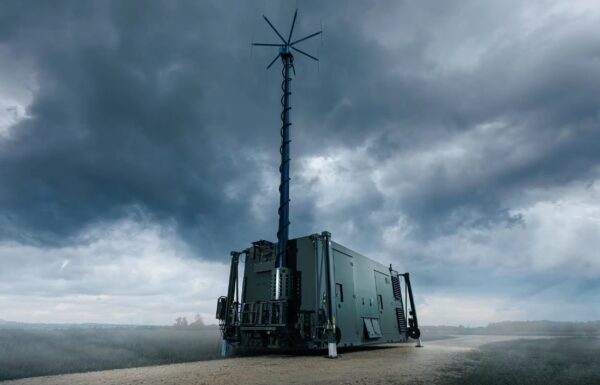












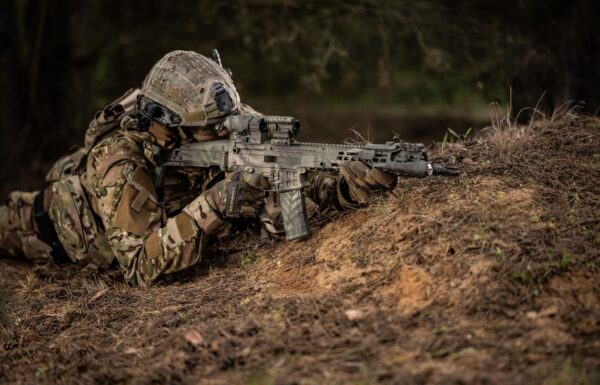











According to information released on Friday, March 13, 2026, as part of this process a training cycle for operators has been launched, covering both theoretical preparation and intensive practical exercises under training-range conditions. The first sessions were conducted at training grounds in Lipa and Ustka, where procedures, team coordination, and the use of the system in realistic operations were tested.
 Photo: General Staff of the Polish Armed Forces
The training program has been structured in phases to enable a gradual progression from basic operation to full combat readiness for operators. The next stage will involve certification live-fire exercises, scheduled for May and June of this year, also at the Central Air Force Training Range in Ustka. Their purpose will be to confirm personnel readiness to perform tasks under near-real conditions and to verify the adopted procedures for system employment.
The acquisition of this capability is based on an analysis of lessons learned from ongoing armed conflicts, particularly those in Ukraine and the Middle East. The implementation process has incorporated both observations from the modern battlefield and input from operators with practical experience, as well as technical and operational data provided by the manufacturer of the MEROPS system. This allows for adapting the system’s use to real threats and rapidly evolving operational conditions.
Operational experience to date confirms the high combat potential of the MEROPS system and its usefulness in a modern operational environment. It constitutes an important element in expanding defense capabilities, particularly in responding to hard-to-detect and asymmetric threats, while also remaining cost-effective.
Achieving this capability is of key importance for building an effective, layered, and flexible air defense system. It encompasses both the protection of combat platforms and military units, as well as the direct safeguarding of critical infrastructure, airfields, and command facilities. The development of such capabilities forms part of a broader process of adapting the Polish Armed Forces to contemporary security challenges and strengthening deterrence.
MEROPS
It is worth recalling that on November 7, 2025, Deputy Prime Minister and Minister of National Defence Władysław Kosiniak-Kamysz announced the deployment of systems of this previously little-known counter-drone solution on NATO’s eastern flank – in Poland, as well as in Romania and Denmark. This followed a November 6 statement in an interview with the Associated Press by Col. Mark McLellan, Deputy Chief of Staff for Operations at NATO Allied Land Command, who indicated that such steps would be taken by the Alliance.
However, plans for the deployment had already been reported on September 20, 2025, by the German news agency dpa. At the time, it was presented as a response to recent airspace violations in Poland (September 9–10) and Romania (September 13) by Russian drones during attacks on Ukraine. The plans were later expanded to include Denmark, which had repeatedly experienced the presence of unidentified drones near its airports.
On November 18, 2025, the General Command of the Armed Forces reported that a demonstration of countering unmanned aerial vehicles using the MEROPS system had been conducted at the Dęba Training Range.
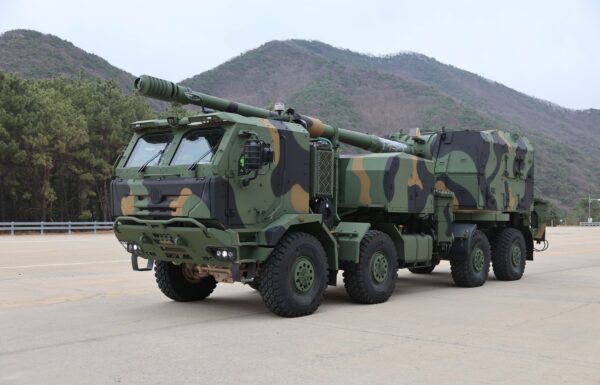
The AS-3 MEROPS will also form part of 18 battery modules (BMO) of the San air defense program, designed with the capability to counter unmanned aerial systems. A total of 54 launchers, along with guidance antennas, will be mounted on KIA KLTV Cab Chassis Truck 4P platforms.
Wg danych otrzymanych z Ukrainy ta produkowana min. w Polsce platforma zniszczyła warte około 200 milionów dolarów drony Federacji Rosyjskiej przy łączym koszcie własnym zużytych interceptorów na poziomie 15 milionów dolarów. https://t.co/LZ1IPdCWkg
— Wiesław Kukuła (@wieslawkukula) March 13, 2026