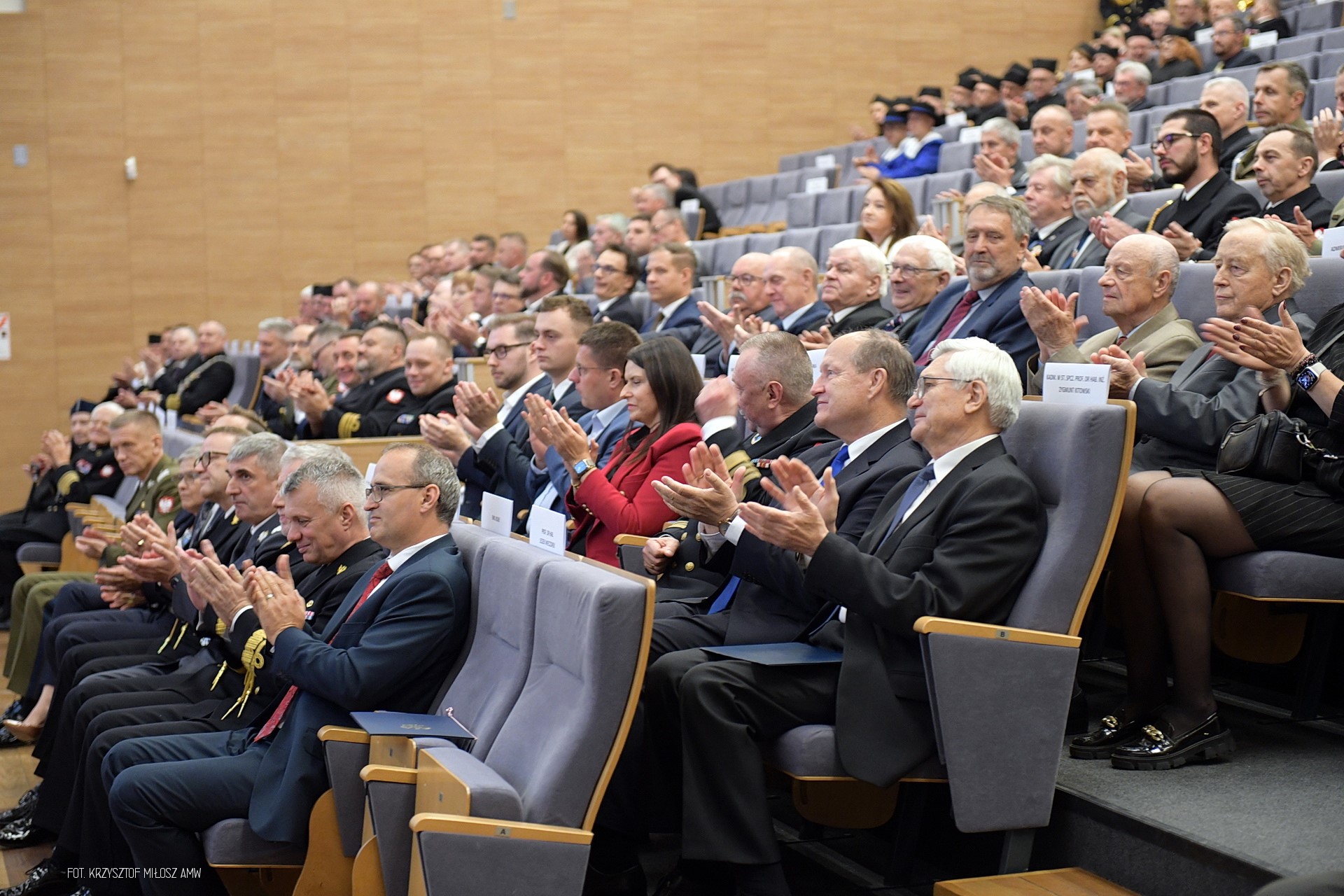






























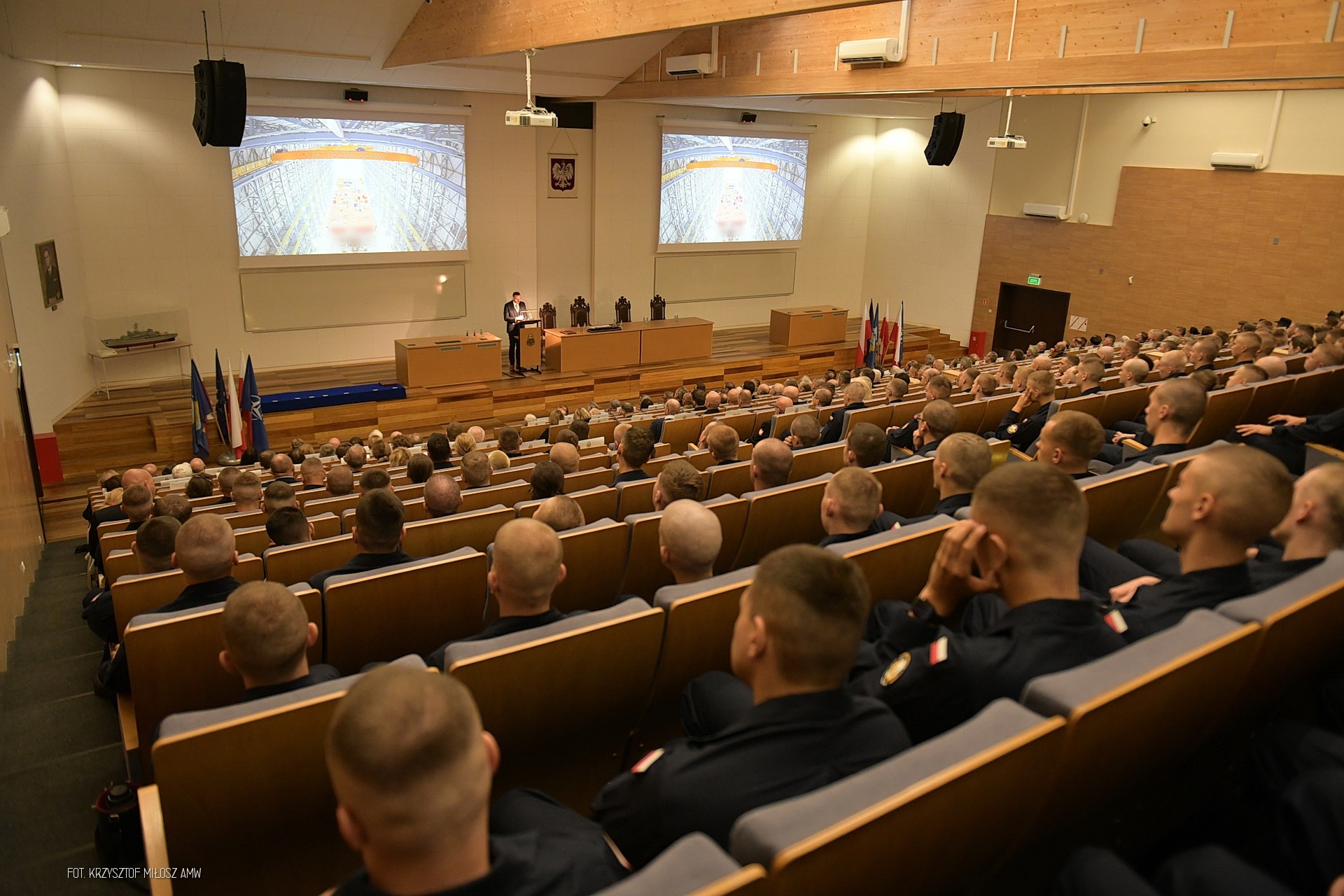
On Tuesday, 30 September 2025, the inauguration of the 2025/2026 academic year was held at the Naval Academy of the Heroes of Westerplatte (AMW) in Gdynia. In addition to the university’s academic staff, the ceremony was attended by members of parliament, representatives of the clergy, state and local authorities, as well as admirals and generals. After the matriculation and the oath of the newly admitted first-year students, Rector-Commandant Rear Admiral Prof. Tomasz Szubrycht, D.Sc., presented awards to distinguished academic teachers for their research, publication, scientific, and organizational achievements. Awards were also given to the top students from each faculty.
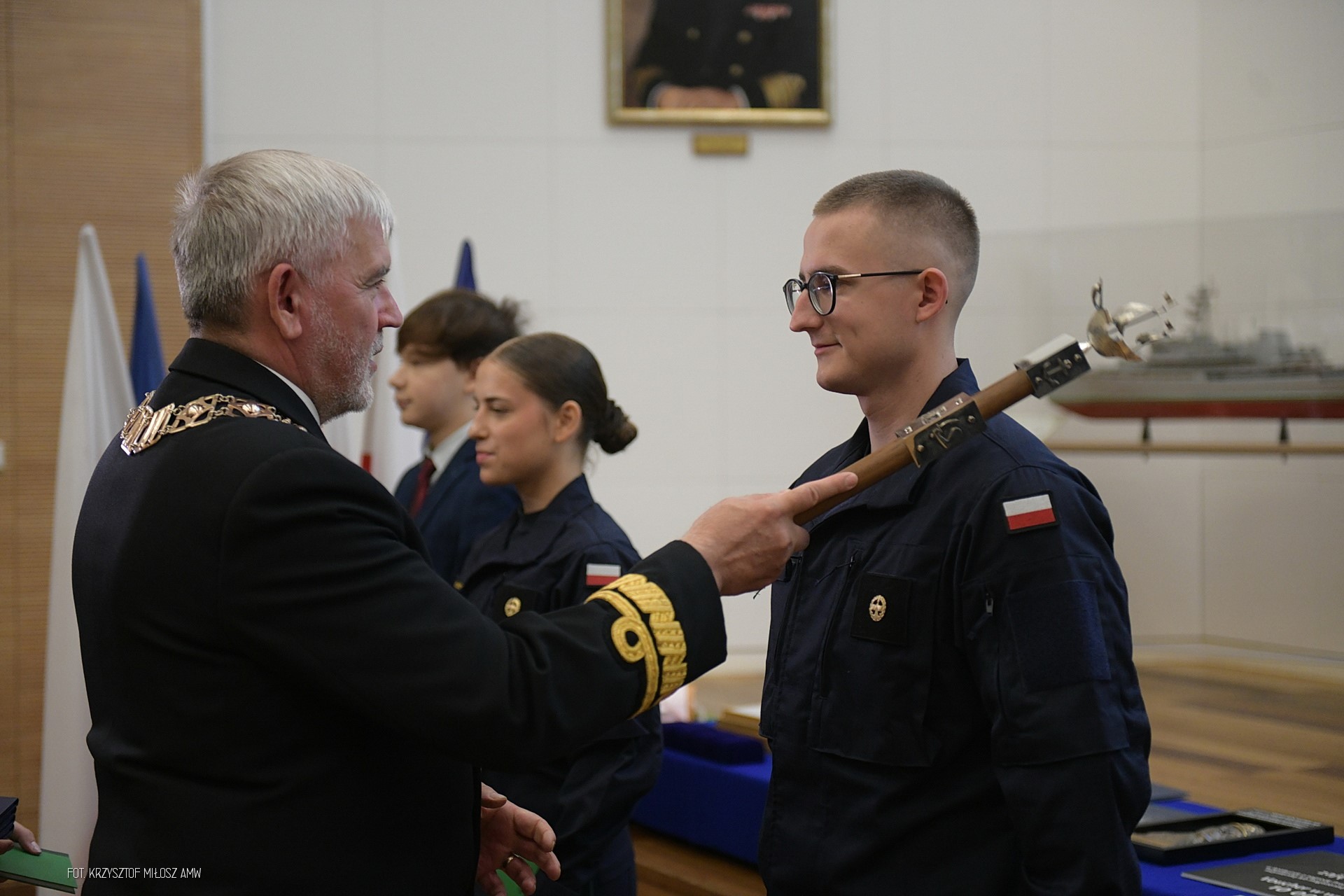 Photo: Krzysztof Miłosz, AMW
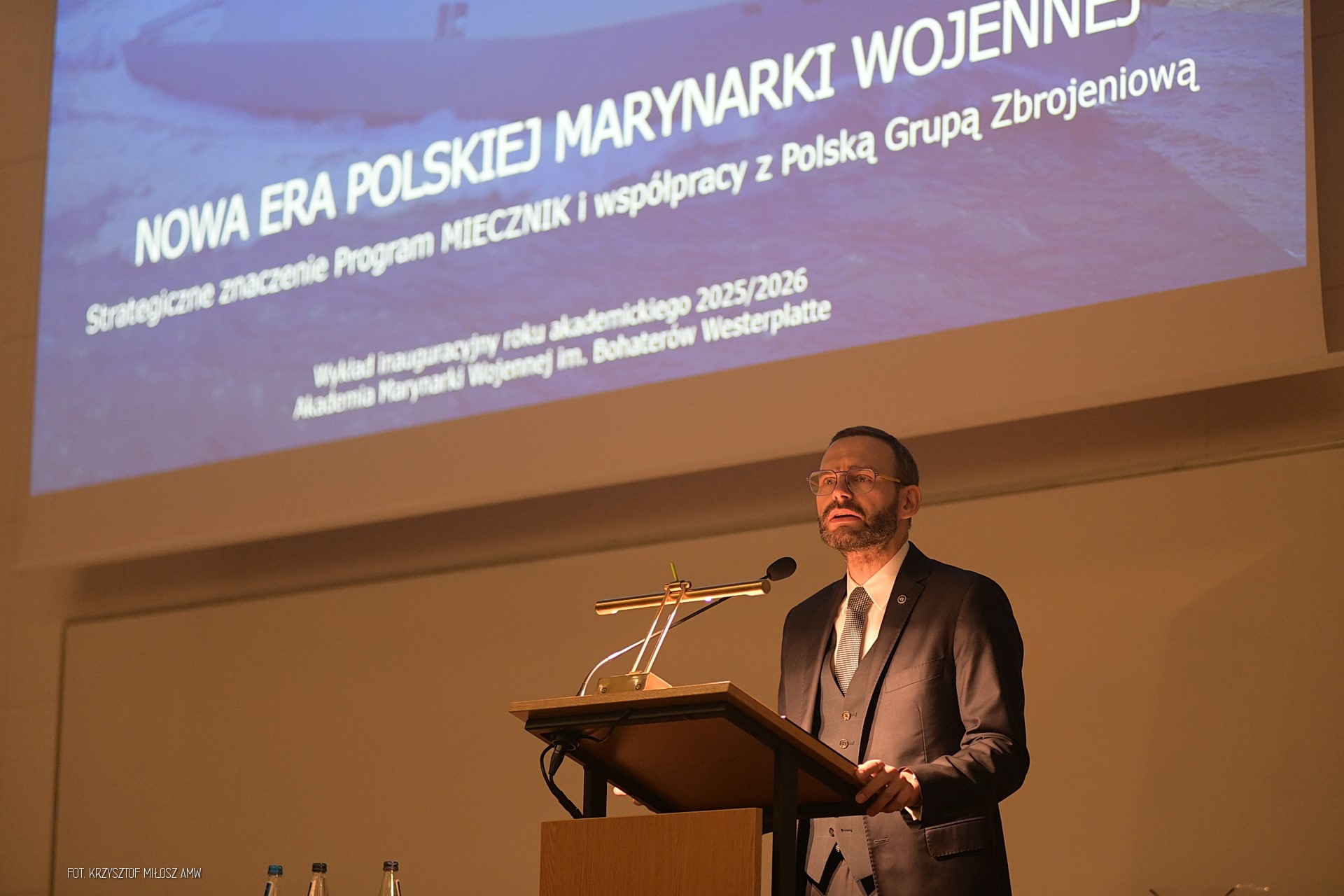
The honor of delivering the inaugural lecture fell to Jan Grabowski, Vice President of the Management Board of the Polish Armaments Group. Addressing the audience, he emphasized the importance of the Naval Academy for Poland’s security.
“Here, within the walls of this outstanding institution, successive generations of Navy officers, commanders, navigators, and engineers are educated. Not only specialists in their fields, but also leaders. The graduates of the Academy shoulder the responsibility for the security of our Homeland,” Jan Grabowski stressed. “The Naval Academy is not only a maritime military university. It is a forge of competence, values, and character,” he added.
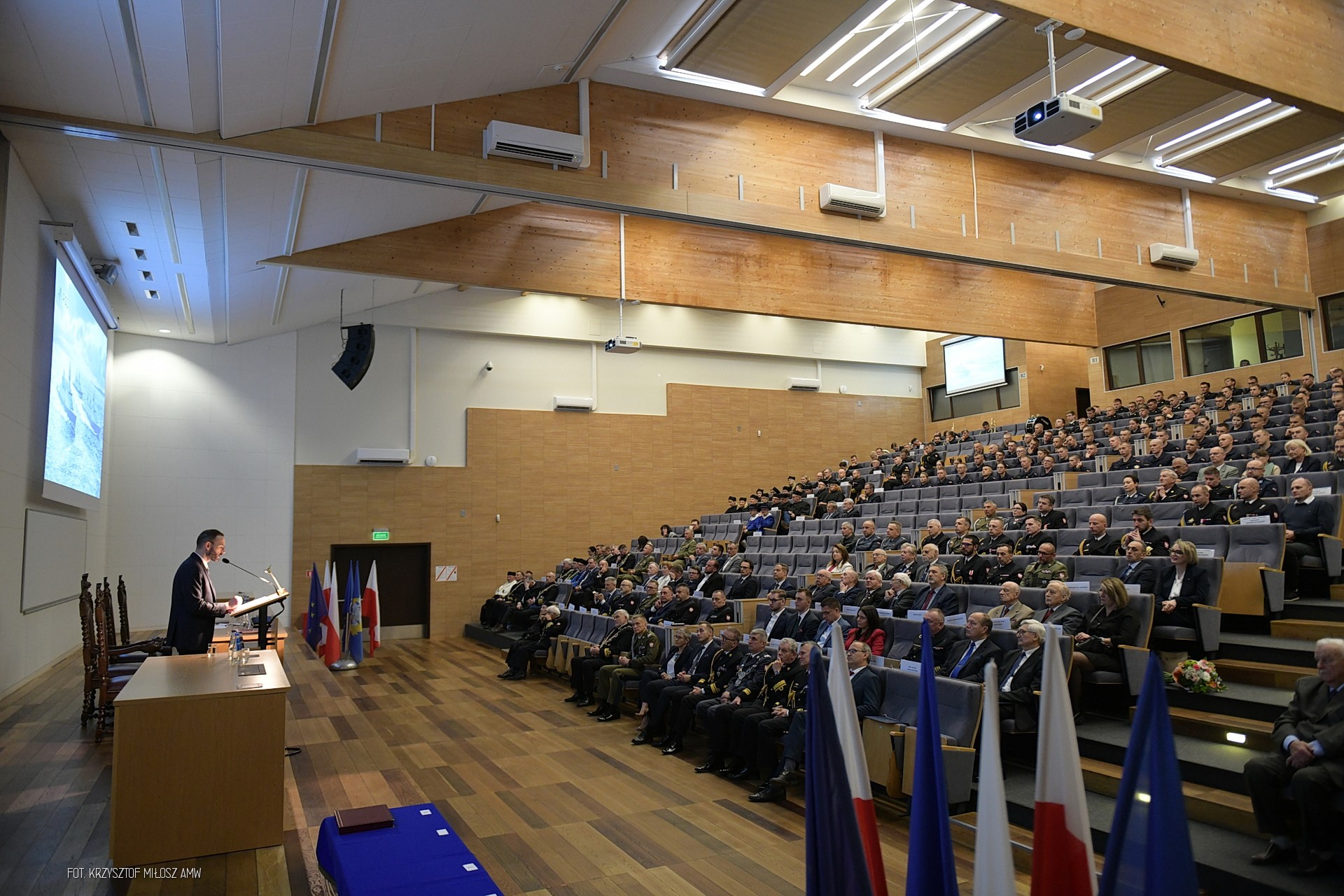
The PGZ Vice President also highlighted the importance of the Baltic Sea for Poland’s economic development throughout history and today.
“Today, the significance of the Baltic Sea is even greater, as it is crucial to every aspect of the Republic’s security – military, economic, and energy,” said Jan Grabowski.
The main part of the inaugural lecture was devoted to the Miecznik frigates, which are being built for the Polish Navy at PGZ Stocznia Wojenna. As the PGZ executive responsible for the naval domain, Jan Grabowski discussed the current construction schedule of the vessels, the comprehensive modernization of PGZ Stocznia Wojenna’s infrastructure, and the transfer of knowledge and technology resulting from cooperation with key international partners – Babcock, Thales, and MBDA. Addressing the students of the Naval Academy, he emphasized the opportunities that service aboard such modern and technologically advanced ships will provide (Start of construction of Burza, the second Miecznik-class frigate).
“You will serve aboard vessels that, at the moment they enter service, will be the most modern in Europe. You will operate the most advanced combat systems, and you will be given tools that not only the commanders of other Polish Navy ships, but even our allies, will envy. You will form the vanguard of the Navy. You will not only witness the transformation of the Navy – you will be its creators,” he said.
The Miecznik program envisions the acquisition of three modern frigates for the Polish Navy. These multi-mission vessels will significantly enhance the capabilities of the Polish Navy and enable the execution of a wide spectrum of maritime tasks, including the protection of sea lines of communication and critical infrastructure. The ships will increase the combat potential of the Polish Armed Forces and will also represent a significant contribution of the Republic of Poland to the North Atlantic Alliance, for example through participation in NATO Standing Naval Forces. According to the schedule, the first frigate (ORP Wicher) will be delivered for qualification trials in 2029, and the serial units will enter service in 2030 and 2031, respectively.