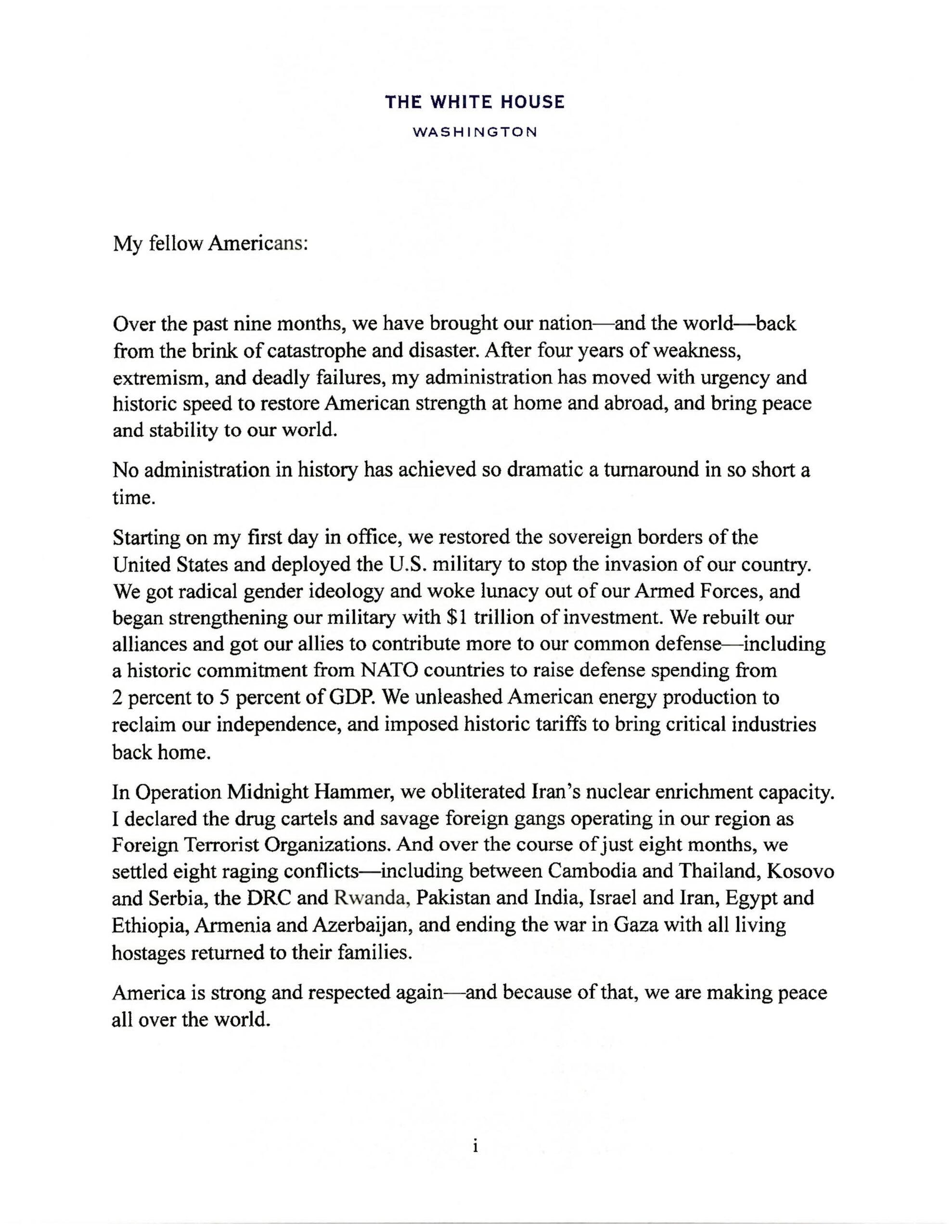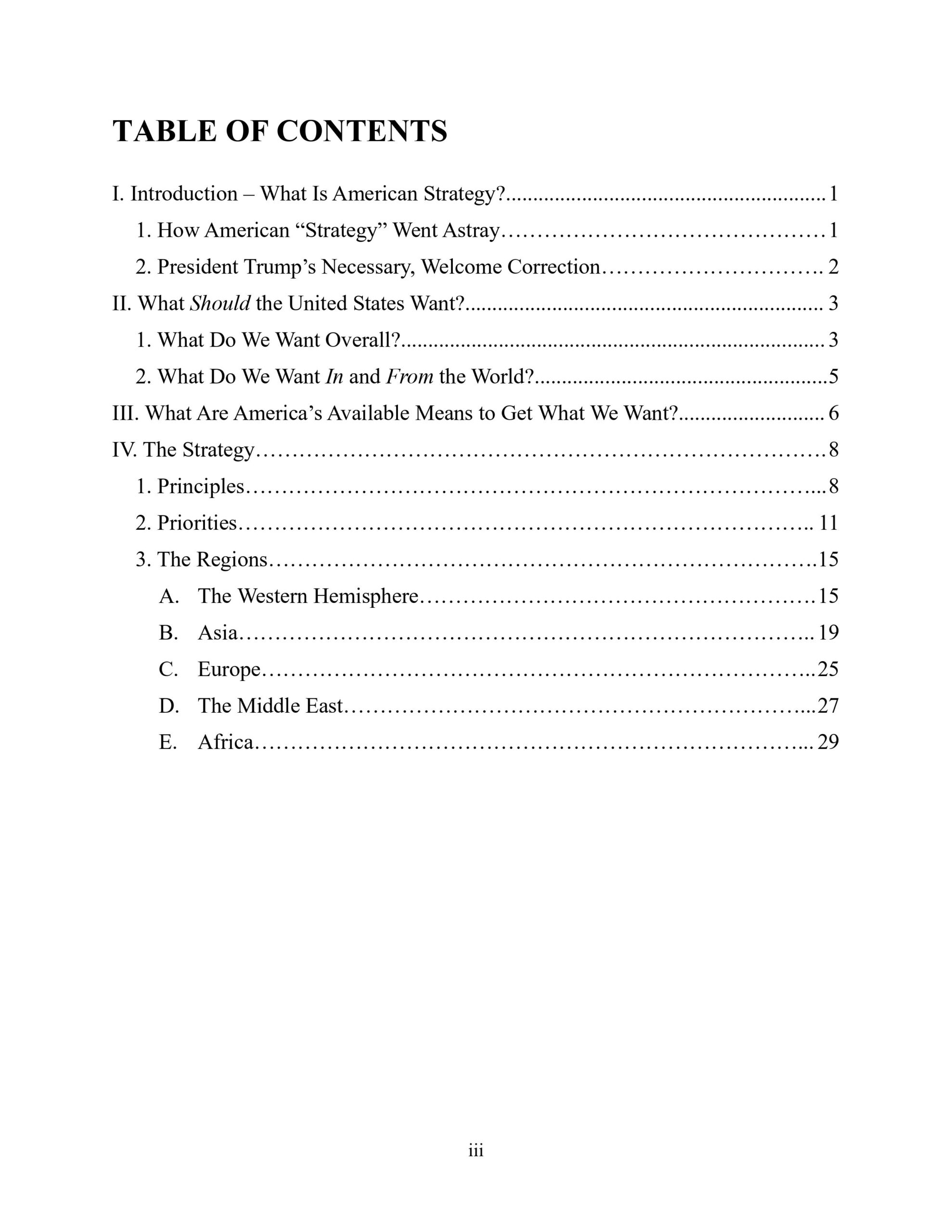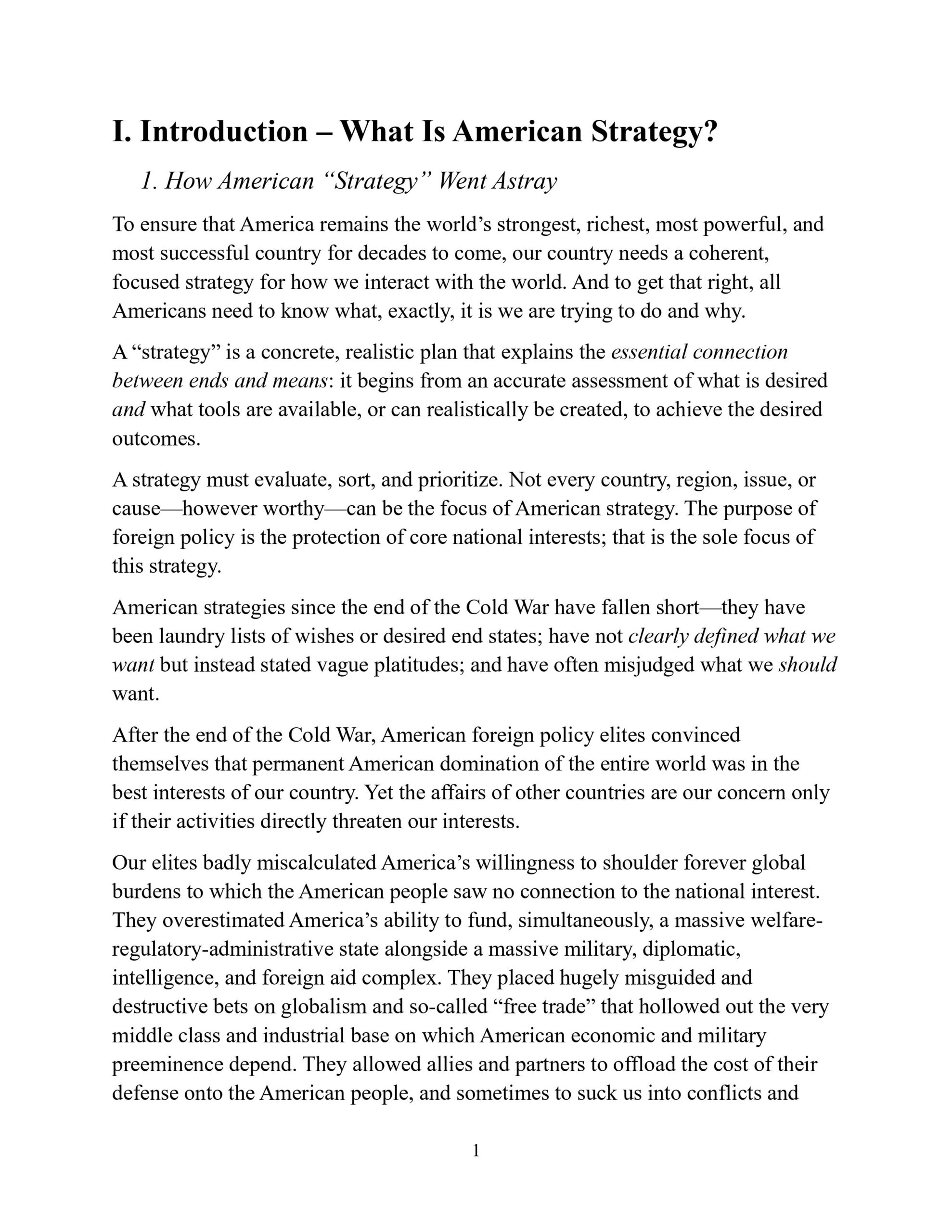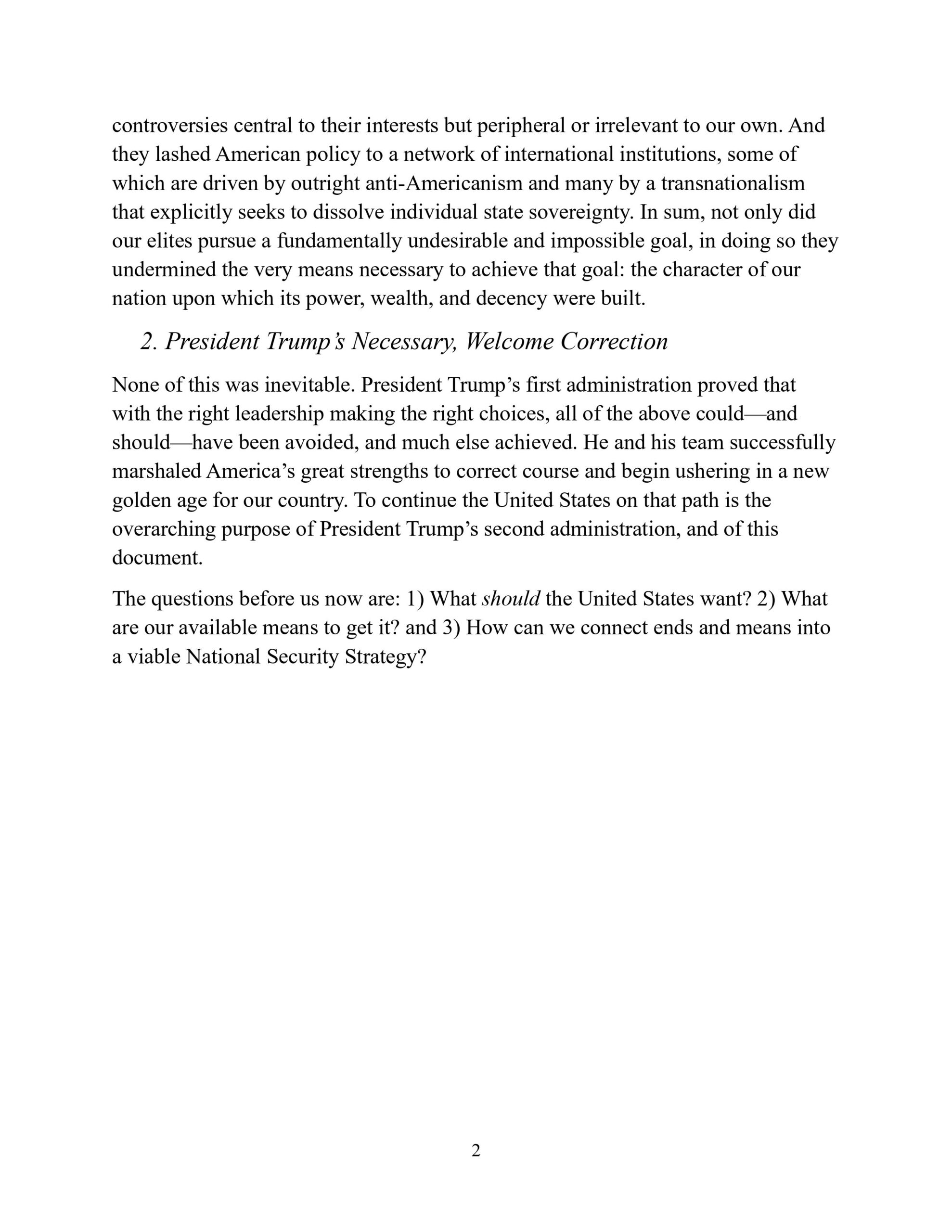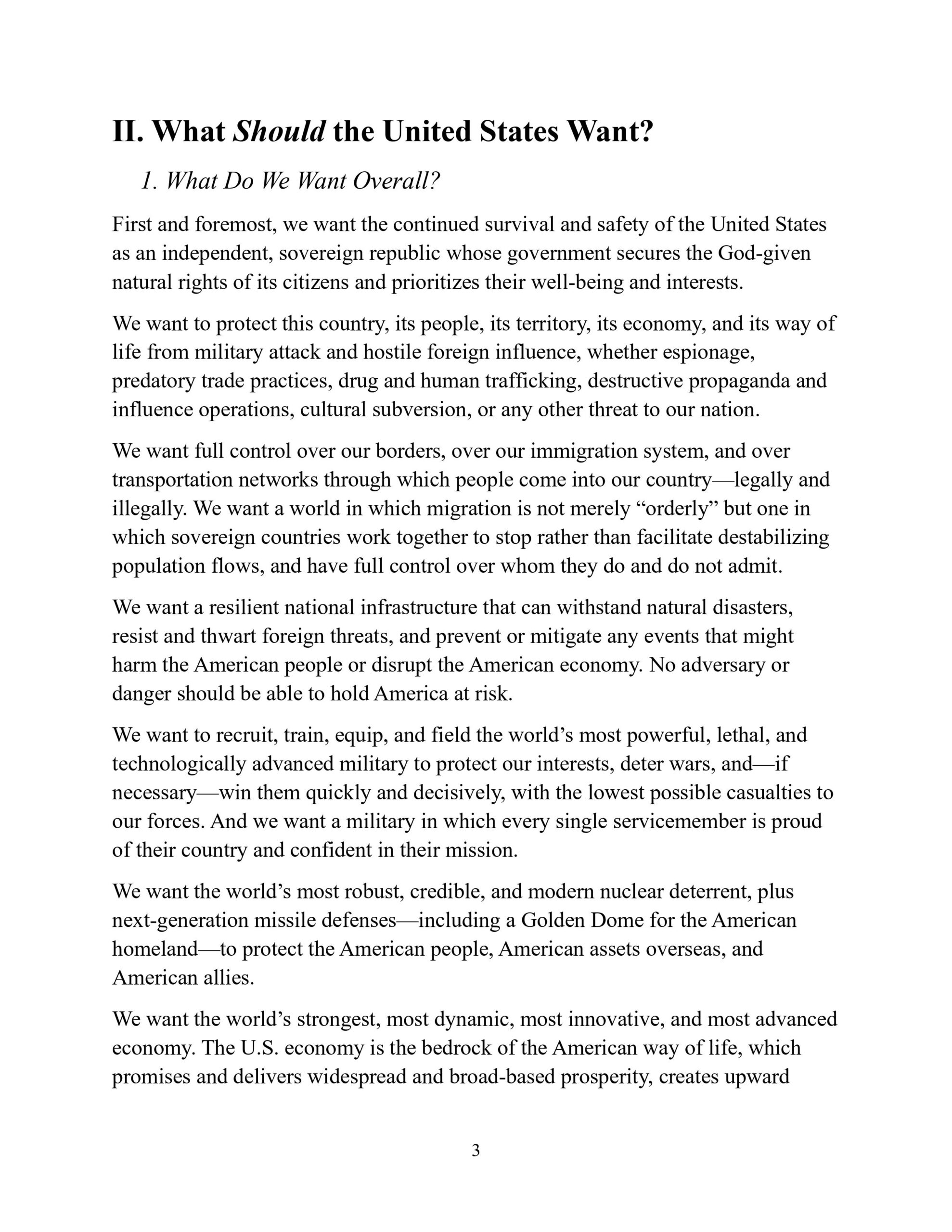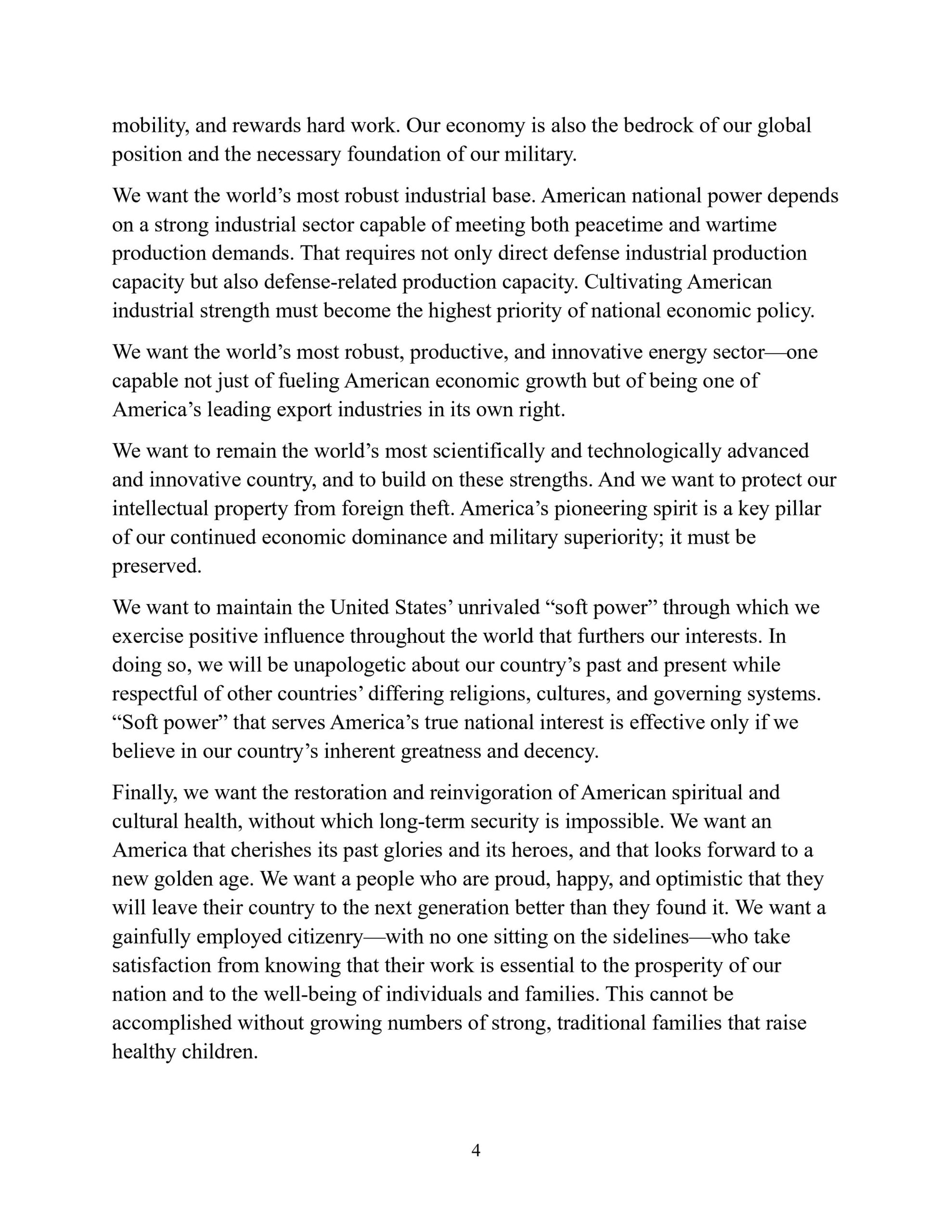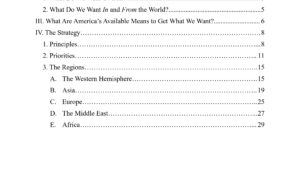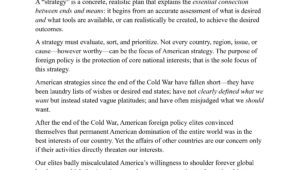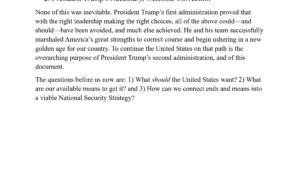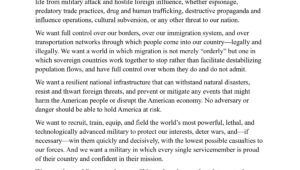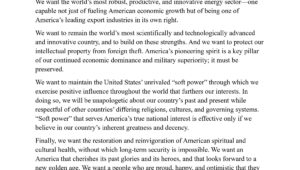






























On Friday, December 5, 2025, the White House published the new National Security Strategy of the United States, signed by President Donald Trump (dated November 2025). The document announces a fundamental overhaul of the United States’ approach to the world.
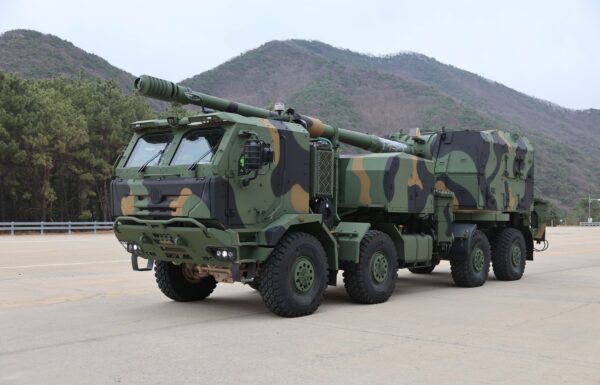
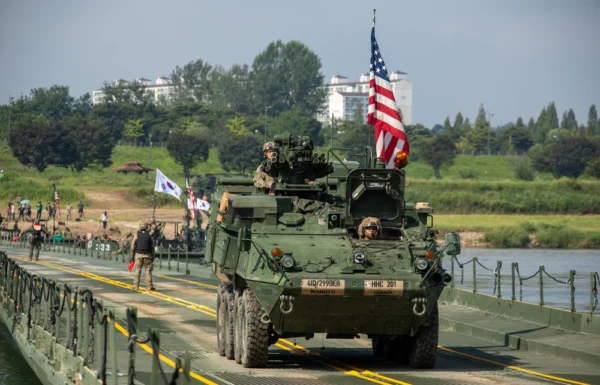
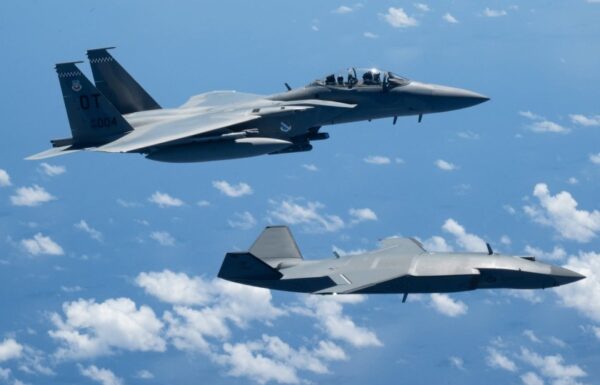
 Photo: Staff Sgt. Brittany A. Chase, USAF
In connection with this, the National Security Bureau presented a concise briefing prepared by its analysts, although the American document will remain the subject of further analysis by the NSB.
The Strategy redefines the U.S. national interest by shifting emphasis from global engagement to the protection of sovereignty, the rebuilding of internal strength, and a focus on great-power competition—primarily with China. It rejects the assumptions of the liberal international order, placing emphasis on realism, selective engagement, and compelling allies to assume responsibility for their own security. It also introduces a geo-economic revolution based, among other things, on reindustrialization, energy dominance, and the rebuilding of the U.S. military base. The document has far-reaching implications for Europe and Poland: it shifts the burden of security onto the countries of the region, increases the strategic importance of our part of Europe, and opens new opportunities for Poland, while also requiring greater defense self-reliance.
The 2025 U.S. National Security Strategy is one of the most significant strategic documents of recent decades. It rejects the assumptions that have dominated U.S. policy since the end of the Cold War—above all the idea that the United States serves as the guarantor of a global liberal order and the guardian of stability understood in universalist terms.
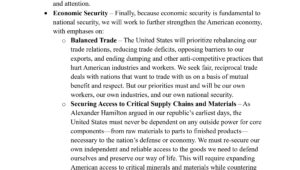
The Strategy is based on several key principles and priorities. The principles include: narrowing the definition of the national interest; enforcing peace through strength; a tendency toward strategic restraint in matters concerning other nations; flexible realism regarding what is possible and desirable in relations with other states; the primacy of nation-states in international relations; the protection of sovereignty; maintaining a balance of power globally and regionally; prioritizing American workers; fair treatment of the United States; and developing and promoting competencies. The strategic priorities listed include: ending the era of mass migration on a global scale; protecting fundamental U.S. rights and freedoms; a fair distribution of the burdens and costs associated with maintaining world order; pursuing peace agreements; and developing economic security.
A New Perspective on the U.S. National Interest
At the core of the Strategy lies the assumption that for decades America has engaged in too broad a range of activities that did not yield strategic benefits. The document therefore introduces a fundamental reduction: the U.S. national interest is narrowed and defined in a more instrumental manner. It encompasses, above all, the protection of sovereignty, territorial security, internal stability, migration control, and the preservation of economic and technological superiority.
In this view, the world is not seen as a community of states bound by a common ‘democratic project,’ but as a mosaic of sovereign actors, each entitled to its own interests and its own path of development. The United States openly states that it will not attempt to impose social or political models on other countries. This marks a departure from the interventionist policy in defense of values that has defined the actions of successive U.S. administrations.
The Strategy places emphasis on the renewal of America itself—both as a state and as a national community. The security and strength of the United States are to be rooted not in a global institutional framework but in the country’s internal condition. Central to this are the rebuilding of the middle class, reindustrialization, energy dominance, and the restoration of cultural cohesion.
Peace Through Strength and the New U.S. Diplomacy
One of the most characteristic aspects of the Strategy is the return to the doctrine of ‘Peace through Strength,’ but in a much more dynamic form than in the past. The United States declares that it will maintain the strongest military in the world—not, however, to conduct costly expeditionary wars, but to prevent conflicts from breaking out in places where they could harm American interests.
U.S. military power is to serve not only as a tool of deterrence but also as an instrument of political influence. The Strategy outlines a vision of America as a state capable of de-escalating conflicts through active diplomacy backed by military superiority. This is transactional diplomacy: the United States does not seek to administer the world, but it seeks the ability to tip the scales wherever excessive instability could threaten its security or economic position.
Unlike in earlier eras, the United States does not see its role as waging ‘long wars,’ does not aim to reconstruct states after regime collapses, and does not seek global-scale social engineering. The world, according to the Strategy’s authors, is too complex, and such a policy too costly.
The U.S. vs. the Global Economic System
One of the most groundbreaking elements of the Strategy is its economic dimension. The United States declares that maintaining its global position requires a fundamental reconstruction of both its own economy and the global economic system. The document outlines several key pillars of this transformation:
- Reindustrialization of the United States – America no longer wants to rely on globalization in its current form. Production is to return to the country, and economic security is to become a pillar of national security.
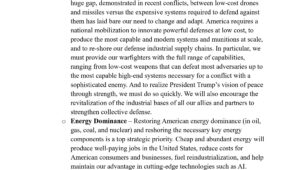
- Energy dominance – The U.S. announces the end of climate policies centered on emissions reduction as a strategic priority. Energy is to be cheap, abundant, and a tool of influence. The export of American energy is to be a source of U.S. power. In this context, the U.S. becomes a competitor rather than a promoter of the EU’s climate policy.
- Rebuilding the defense industrial base – The document states that U.S. military superiority requires a massive restoration of defense manufacturing capabilities. This signals the largest strengthening of the defense industry since the Cold War.
- A new role for the dollar and finance – The Strategy suggests that U.S. financial hegemony is not guaranteed. The United States intends to preserve it by integrating the capital markets of developing countries with the American system and by dominating financial technologies. In this context, the Indo-Pacific region is of decisive importance to the U.S. The U.S. aims not so much to contain China in the classical sense, but to maintain technological superiority and control over key segments of global supply chains. Taiwan becomes not only a strategic issue, but a civilizational one—the microprocessors produced there are the foundation of the world economy.
Hierarchy of World Regions
The Strategy establishes a clear hierarchy of regions, indicating where the United States intends to concentrate its attention, resources, and political power. This marks a departure from the earlier approach in which the U.S. sought to maintain a balanced global presence. The document identifies five key regions, each playing a different role in America’s vision of the international order:
- The Indo-Pacific — the highest-priority region – is the strategic center of global competition between the United States and China. The authors point to the Indo-Pacific as the area where the future global balance of power will be determined. The U.S. is focusing its military, economic, and technological efforts there, seeking to maintain freedom of navigation, support allies, and contain China’s expansion. Taiwan is highlighted as a key flashpoint, and the first island chain as the geostrategic foundation of deterrence.
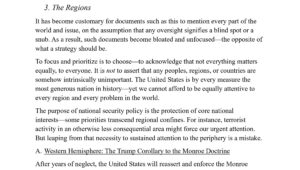
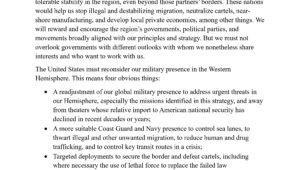
- The Western Hemisphere – America declares the renewal and strengthening of the Monroe Doctrine, recognizing the hemisphere as an area in which no external power can be allowed to gain influence. Priorities include eliminating Chinese and Russian interference, combating cartels, and controlling migration. The region is also intended to become a site for relocating production and building secure supply chains. The U.S. seeks full dominance here, treating both Americas as part of its strategic depth.
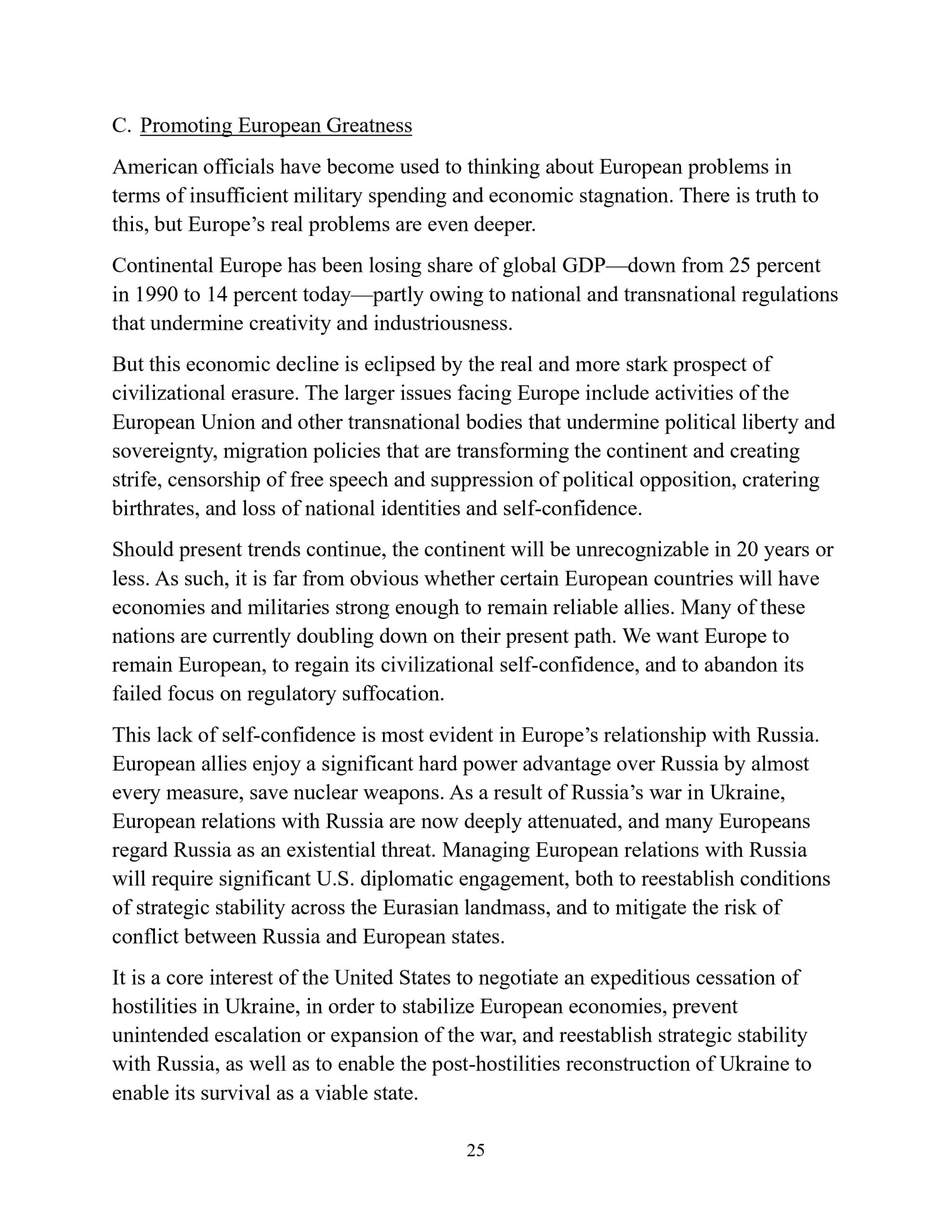
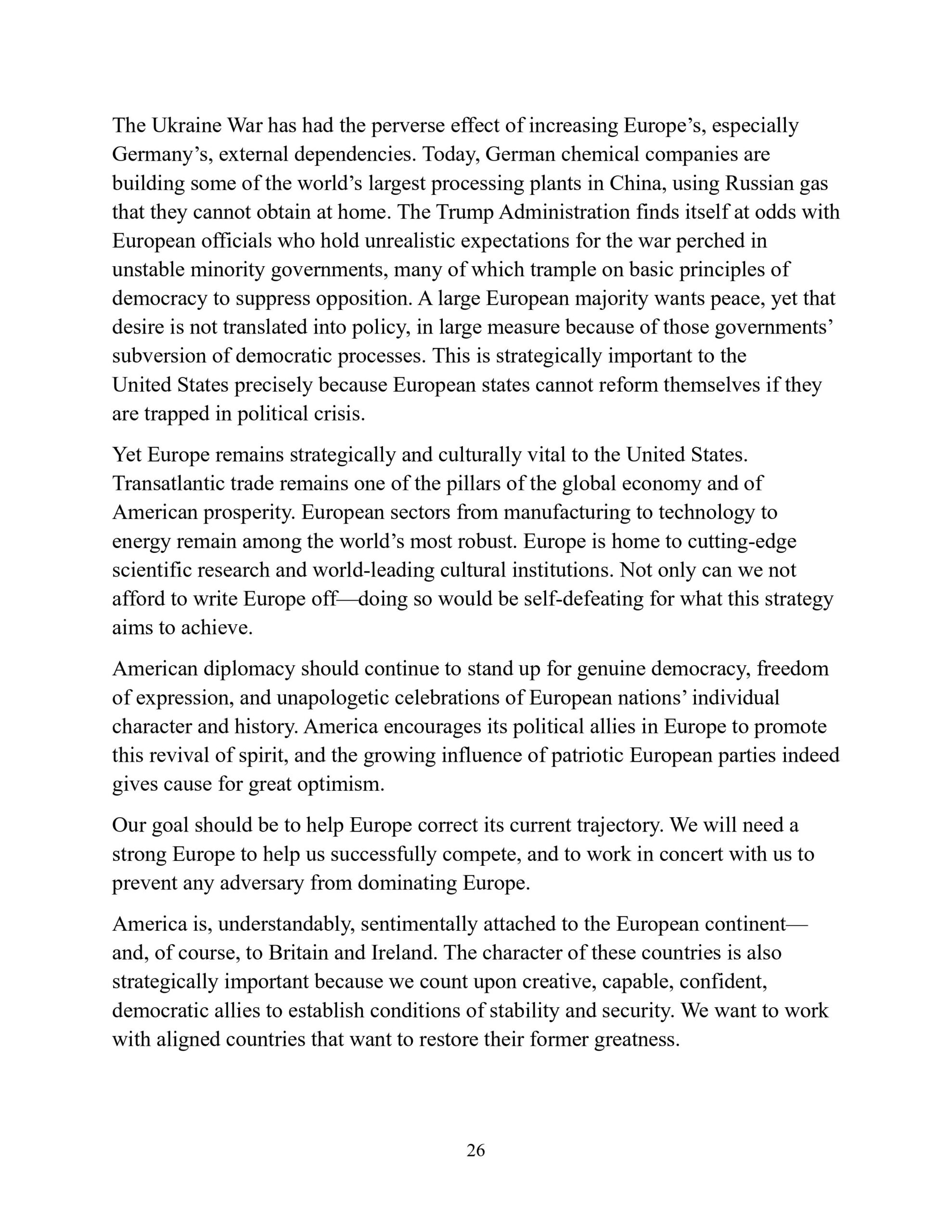
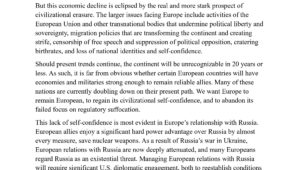
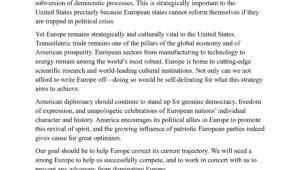
- Europe is portrayed in the Strategy as a key but seriously weakened partner. The authors point to deep processes of internal erosion undermining the continent’s stability: a dramatic decline in birth rates and aging populations, a crisis of identity and social cohesion, and uncontrolled migration, which in the U.S. assessment weakens national cohesion and generates political tensions. The United States expresses skepticism regarding the role of the European Union, arguing that its technocratic governance, centralization, and overregulation reduce states’ ability to respond to threats and weaken their sovereignty. Europe appears as a wealthy but politically fragile region undergoing rapid demographic weakening.
- The Strategy also emphasizes the structural crisis of Europe’s defense capabilities. Despite its wealth and economic potential, the continent has not built adequate military strength and remains heavily dependent on the United States. Lack of interoperability, insufficient equipment stocks, low readiness, and a weak industrial base mean that Europe cannot independently manage threats — a fact highlighted by the war in Ukraine. The U.S. notes that the prolonged conflict exposes Europe’s political divisions and its inability to sustain long-term military support, which may limit its role as a credible pillar of NATO and a U.S. ally in the future.
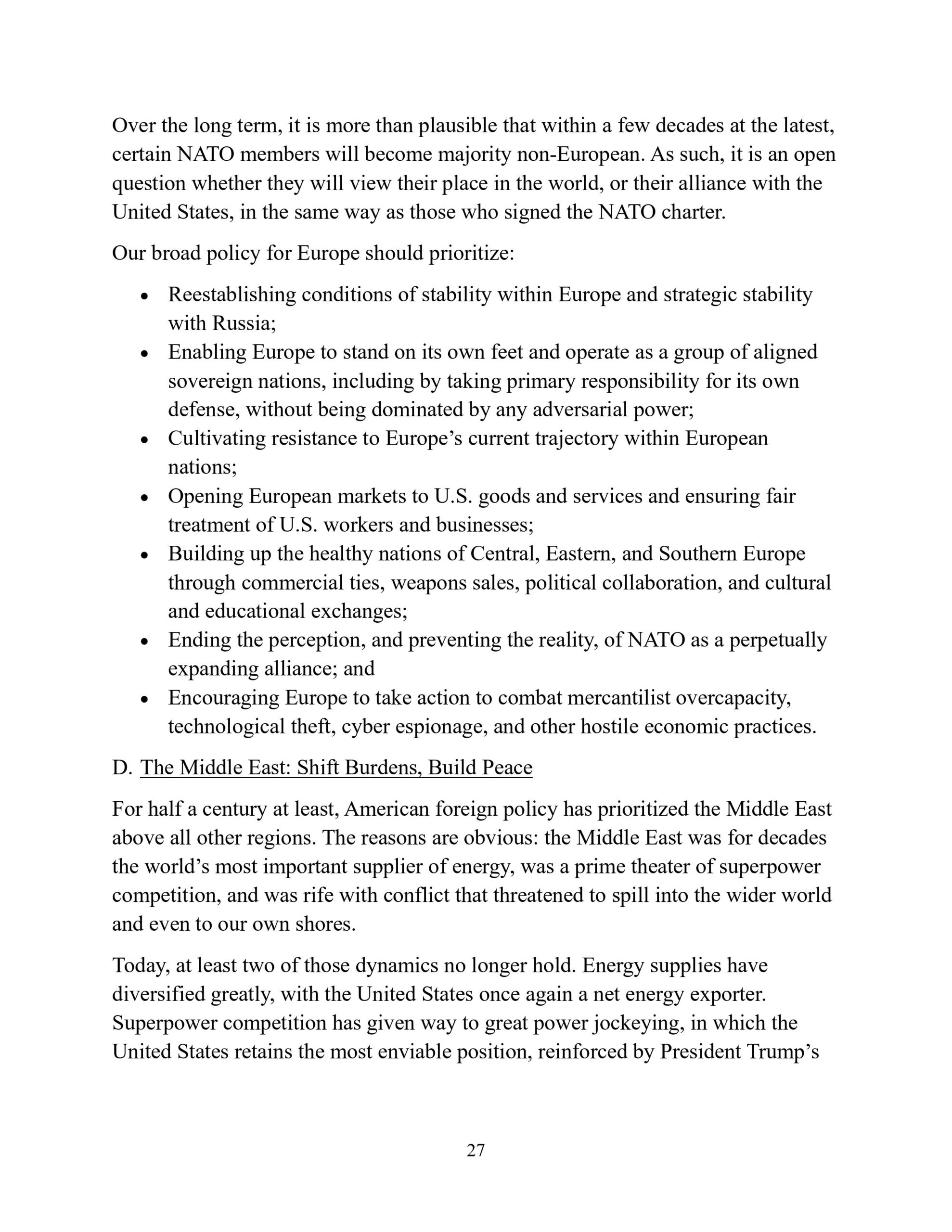
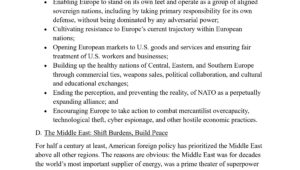
- U.S. policy toward Europe will focus primarily on: restoring conditions for internal stability in Europe and strategic stability in relations with Russia; enabling Europe to “stand on its own feet” as a group of aligned, sovereign states, including by assuming primary responsibility for its own defense; opening European markets to American goods and services; ending the perception of NATO as a “perpetually expanding alliance”; and encouraging Europe to counter mercantilist overcapacity, technology theft, cyber espionage, and other hostile economic practices. The U.S. stresses the need to rebuild Europe’s “civilizational confidence.
- Within this assessment, the ‘healthy states of Central, Eastern, and Southern Europe’ clearly stand out, portrayed as more stable, resilient, and determined in security matters. The Strategy suggests strengthening these countries through economic ties, arms sales, political cooperation, and cultural and educational exchange.
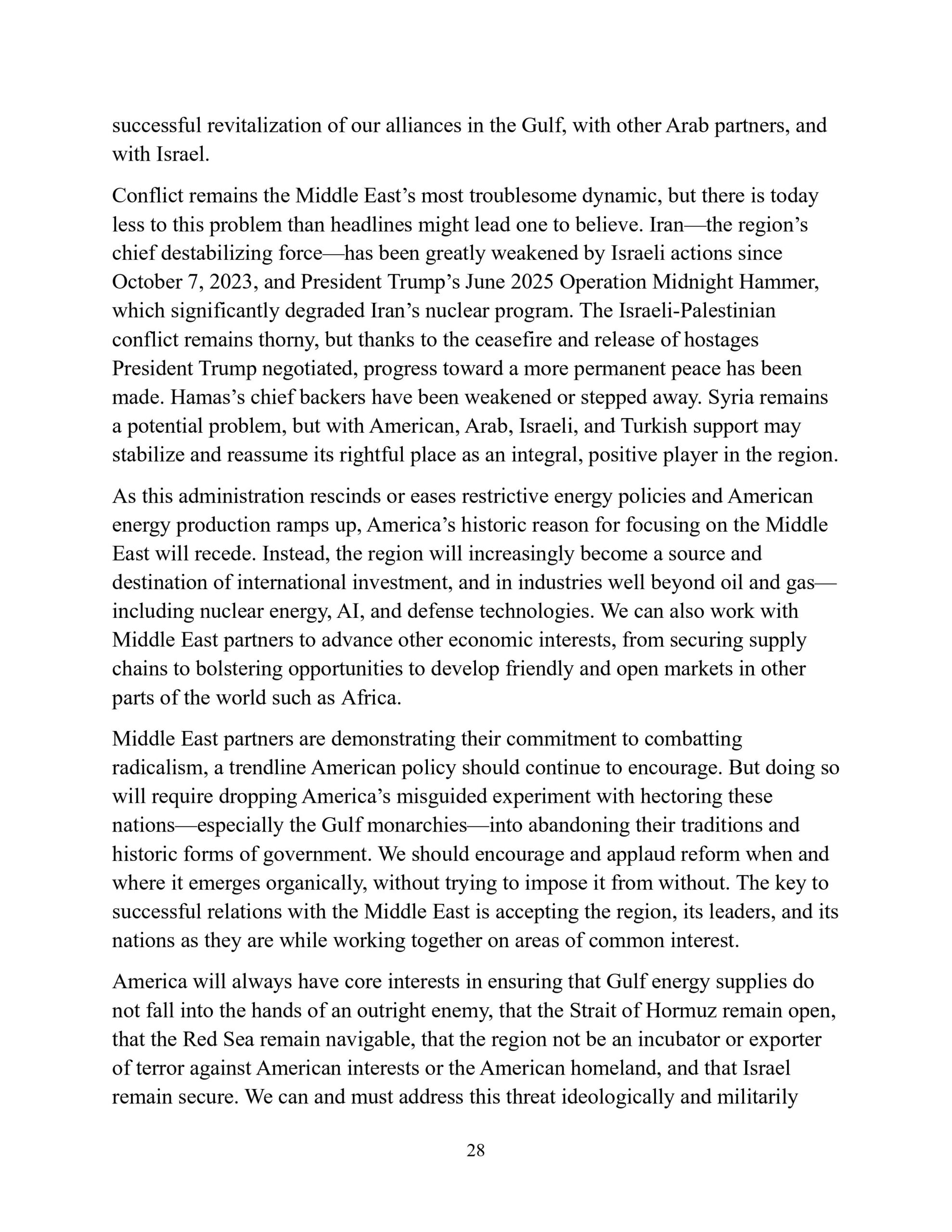
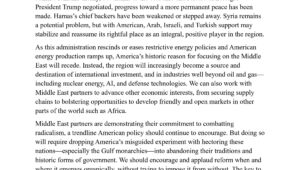
- The Middle East – the U.S. is shifting from a model of intensive intervention to one focused on maintaining a balance of power with minimal direct involvement. Priorities include Israel’s security, control of energy routes, and prevention of terrorism resurgence. The document emphasizes that the region should become a space for economic cooperation (AI, nuclear energy, defense) rather than costly military campaigns. Limiting Iran’s influence is also a key element.
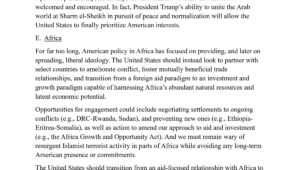
- Africa is viewed as a continent of future economic opportunities, especially in energy and critical minerals. The U.S. seeks to move away from a development-aid model toward investment and the creation of long-term partnerships. At the same time, the Strategy stresses the need to stabilize selected states, counter China’s expansion, and limit hostile terrorist activity, while avoiding long-term military missions
Full text of the new U.S. National Security Strategy in English (PDF available here):