






















On Wednesday, July 16, 2025, the Formoza Military Unit (JW 4026) announced the outcome of a tender procedure launched on June 12 for the supply of mini-class unmanned aerial vehicles (UAVs) capable of water landing.
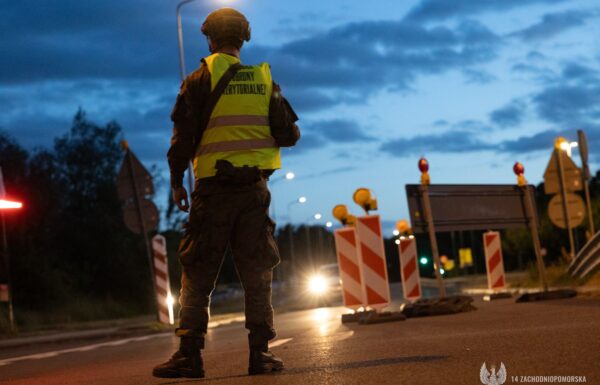
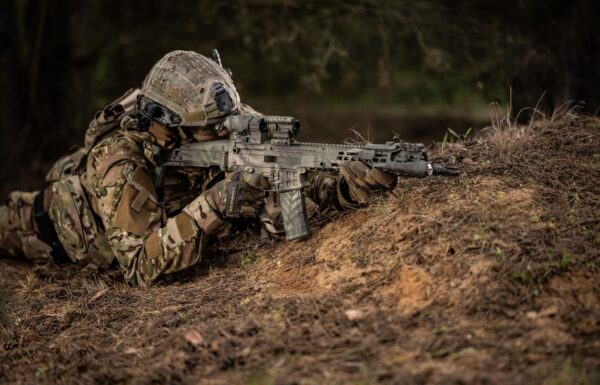
 Illustrative Photo: Łukasz Zacharczuk, JW Formoza
The deadline for submitting bids was June 27 at 8:00 a.m. The selection criteria were price (60%) and a 24-month warranty (40%). The budget for the base order was 6,000,000 PLN net (7,380,000 PLN gross), and including the optional order, it totaled 6,358,700 PLN net (7,821,201 PLN gross).
The only bid was submitted by Parasnake Arkadiusz Szewczyk, based in Kielce, with the following pricing: 4,383,474 PLN gross for the base order, 1,285,000 PLN gross for training, 1,857,177 PLN gross for the optional order, totaling 7,525,651 PLN gross. The offer received 60 points for price and 0 points for the 24-month warranty. The delivery deadline is set for November 15, 2025.
According to the terms of reference, JW Formoza required that the equipment supplied be brand new and manufactured no earlier than 2025. The complete UAV systems delivered under the signed contract must be of identical configuration, meaning that each UAV must be assembled from the same components, subsystems, and parts.
The set must include a mini-class unmanned aerial vehicle capable of water landing, a control and command system with an antenna subsystem, and operational software. In addition, logistical support packages are required to ensure continuous system operation.
The UAV system should provide the following capabilities:
- Day and night observation (search and tracking of targets);
- Compact system size – the platform must not exceed 2 meters in length and a maximum take-off weight (MTOM) of 15 kg;
- Transportability – the system must be operable for a single mission and carried by two people;
- Control range of at least 20 km;
- Extended control range of at least 60 km via an additional antenna (optional requirement, affects bid evaluation);
- Minimum flight time per mission of 120 minutes;
- Low acoustic and optical signature (quiet and low-visibility flight capability);
- Manual control via the operator’s console;
- Automatic operation mode (target tracking) in both visible and infrared spectra;
- Capability to follow a predefined flight path;
- Area surveillance of designated zones;
- Target distance measurement;
- Laser target illumination capability;
- Automatic or manual landing on water (sea) or land within a defined area of no more than 50×50 meters;
- Operation from a mobile Ground Control Station (GCS) mounted on a moving vehicle or vessel;
- Equipped with an RVT (Remote Video Terminal) with a minimum range of 5 km;
- Night operation capability that ensures stealth operation;
- Recording of image sequences along with telemetry data in both visible and infrared spectrums;
- Full operational capability under conditions specified for the system operator, including but not limited to the following environmental factors:
- Over land and water;
- At any time of day or night;
- In various terrain environments (desert, forest, mountains, urban areas, hilly/mountainous terrain, including concealed or hard-to-reach areas such as cliff shelves or escarpments);
- For real-time system monitoring without access to a GPS signal;
- In diverse climate conditions (different seasons across various climate zones: humid, arid, mountainous, and temperate-cool regions);
- In various weather conditions (rain, snow, fog, cloud cover, wind);
- In wartime/combat environments;
- With reliable operation and resistance to the effects of the marine environment.
- Low electromagnetic wave emission power;
- Resistance to control signal and GPS interference;
- Capability to operate multiple platforms in the same area (ensuring appropriate electromagnetic compatibility);
- Ability to transfer platform control between different Ground Control Stations (GCS) during a mission without interruption;
- Compatibility with various types of antenna systems depending on mission requirements;
- Compliance with the MIL-STD-810 military standard.
The aerial platform should provide the following features:
- Modular construction, allowing for field replacement of components, including the payload head;
- The platform must be capable of landing on both saltwater and freshwater, with the ability to float for at least 3 hours in sea state 3, and remain operational after retrieval from the water;
- Compliance with IP56 standard;
- Manual or autonomous flight control, with the ability to switch modes and reprogram flight parameters;
- It must provide self-positioning and the actual location of objects (latitude, longitude, and altitude) – when connected to a GPS module – and display this data over the video feed;
- Live video transmission and HD photo capture from daylight and thermal cameras;
- Weight of the aerial platform: between 6 and 15 kg;
- The platform must have a low optical and acoustic signature;
- Wind resistance: at least 12 m/s (average value);
- Flight endurance: at least 180 minutes under standard flight conditions;
- Electric propulsion;
- Automatic or manual landing mode;
- Maximum altitude: minimum 3,000 meters above sea level.
The optical sensor should be designed either as a single EO/NIR/IR unit or as separate daytime and nighttime versions, and must meet at least the following specifications:
- It should feature mechanical stabilization on at least two axes, as well as digital stabilization;
- It should provide a real-time video stream with a minimum resolution of 640×512 px at 30 fps;
- It should be capable of capturing high-resolution still images;
- It must be operable in all environments (waterproof);
- It should offer laser target illumination capability;
- It must allow unlimited rotation in the horizontal plane (PAN: 360°);
- It should allow tilt (TILT) adjustment in a range of at least -90° to +20°.
- EO:
- Resolution no less than 1920 x 1080;
- Optical zoom (minimum 30x) + digital zoom usable in combination;
- HFOV (Horizontal Field of View): from 56° to 1.2°.
- NIR:
- Sensor resolution: minimum 640 x 512 px;
- Operation in wide range of temperatures;
- Optical zoom (minimum 4x) + digital zoom;
- HFOV (Horizontal Field of View): from 10.7° to 4.7°.
- IR: (optional requirement influencing the scoring of the offer):
- Sensor resolution: minimum 640 x 512 px;
- Operation in wide range of temperatures;
- Optical zoom (minimum 7x) + digital zoom
- HFOV (Horizontal Field of View): from 40° to 5.3°
Control and Command Station (CCS):
- Must allow full control of the platform, onboard sensors, and system functions;
- Must enable system operation without external power sources for at least 3 hours;
- Must support handover between individual CCS units;
- Must allow the CCS transmitter to be turned off during the mission;
- Must be equipped with an illumination system enabling nighttime operation;
- Must include a function for initiating object tracking;
- Must include a function for initiating distance measurement;
- Must include a function for initiating video recording;
- Must include a function for programming flight along a predefined route;
- Must be equipped with a color display;
- The display should have adjustable brightness and contrast;
- The display must remain readable in direct sunlight;
- Must support digital video recording;
- Must allow the connection of different antenna systems depending on mission requirements;
- Must have an output interface for video signal retransmission;
- The controller must be operable while wearing gloves.
Antenna System:
It should include various types of antennas capable of supporting mission execution in both portable and mobile configurations. The antennas should be mountable on vehicles as well as small boats/vessels.
Control System
- Must allow the transfer of aerial platforms between individual sets (CCS units) – i.e., the ability to assign any platform to any Control and Command Station;
- Communication systems (for video transmission and control) should be resistant to interference and secured with encryption of at least AES 256;
- Data collected during the mission (audio and video streams) must be encrypted and recorded in real time;
- Must be equipped with a battery/accumulator charger with an integrated power supply and the ability to operate at various voltage levels, e.g., 12V, 24V, 110V, 230V, along with a full set of UK/US adapters;
- Must support connection to onboard power sources — 12/24V;
- It is recommended that the system meets one of the following requirements regarding electromagnetic energy emission in the radio frequency range:
- Operation within frequency ranges used by the Polish Armed Forces (SZ RP) allocated for mobile radiocommunication services;
- Operation within frequency ranges preferred by the Polish Armed Forces for this type of equipment.
- 318,25 ÷ 328,25 MHz; 345,25 ÷ 355,25 MHz – for control;
- 1350 ÷ 1400,00 MHz – for video transmission;
- 2025,00 ÷ 2070 MHz – for control and video transmission;
- 2200,00 ÷ 2250,00 MHz – for control and video transmission;
- 18− 2483,50 ÷ 2500,00 MHz – for control and video transmission;
- 4400,00 ÷ 4900,00 MHz – for control and video transmission.
Construction requirements:
- The airborne platform’s flight endurance must be no less than 120 minutes;
- Control range depending on configuration, with a maximum range of no less than 20 km;
- Minimum ceiling: 3,000 meters above sea level;
- Wind resistance: at least 12 m/s;
- Capability to operate without GPS or in the absence of a GPS signal;
- Must be equipped with an autopilot system that allows the operator to perform other tasks while the platform is in flight;
- Must be capable of flying both in manual mode and along a pre-programmed route;
- The system and software must support seamless switching between flight modes and allow for reprogramming of the flight path during the mission;
- Transmitted video must be encrypted with at least AES 256;
- Control signals must be encrypted with at least AES 256;
- Recorded data in the CCS must be encrypted (including flight parameters and video footage);
- The system must have imaging reconnaissance capability under all lighting conditions throughout the day;
- The system must have a modular design to enable quick replacement of individual components (e.g., optical head, battery), and allow for field repairs by replacing specific modules;
- The system must be transportable by a two-person crew; when packed for foot transport, the total weight must not exceed 15 kg per backpack;
- The platform must be capable of water landings and remain afloat for at least 3 hours in sea state 3 conditions;
- Must meet the IP56 standard.
One set should consist of 2 airborne platforms (with an option for a third), complete with batteries, optical heads (EO/NIR) — 1 included + 1 optional, a thermal imaging head (optional), one Control and Command Station (CCS), a full antenna set, a transport backpack, a transport case, a logistics package, an operational kit, and spare batteries.