








Defence & Space

Hanwha to deliver K9 MH wheeled howitzer prototypes to the US Army

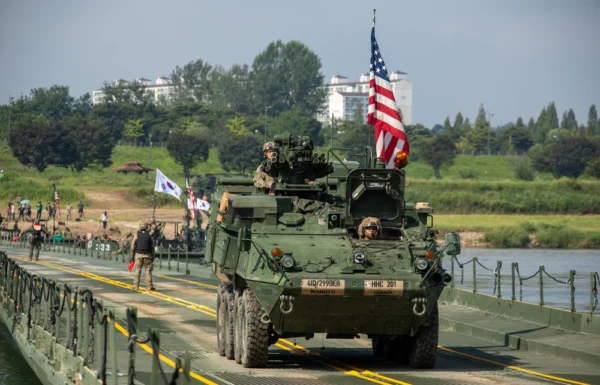
Hanwha Defense US, the US subsidiary of South Korea’s Hanwha Aerospace, will deliver six K9 MH wheeled howitzer prototypes to the…

2026-08-19 | Rafał Muczyński | 5 minutes

Rheinmetall and Hensoldt integrate Twinvis passive radar with air defense system

German defense group Rheinmetall AG and Hensoldt have announced that, during the German Air Force’s Timber Express 2026 exercise, they demonstrated…

2026-08-19 | Rafał Muczyński | 3 minutes

ICEYE Federation: How can the effectiveness of national satellite constellations be increased?

In recent years, ICEYE has been increasingly developing its portfolio of services aimed at military customers. This European company, which builds satellites…

2026-06-17 | Przemysław Gurgurewicz | 14 minutes

MSBS Grot: A Polish firearm with its own DNA

The MSBS Grot is a family of carbines and rifles developed by Polish engineers, the military, and users who gradually shaped its…

2026-06-14 | Jakub Link-Lenczowski | 12 minutes

Hanwha to deliver K9 MH wheeled howitzer prototypes to the US Army

Hanwha Defense US, the US subsidiary of South Korea’s Hanwha Aerospace, will deliver six K9 MH wheeled howitzer prototypes to the…

2026-08-19 | Rafał Muczyński | 5 minutes

Rheinmetall and Hensoldt integrate Twinvis passive radar with air defense system

German defense group Rheinmetall AG and Hensoldt have announced that, during the German Air Force’s Timber Express 2026 exercise, they demonstrated…

2026-08-19 | Rafał Muczyński | 3 minutes

U.S.-UAE artificial intelligence task force

U.S. Central Command announced an agreement with the United Arab Emirates to establish the first bilateral task force aimed at accelerating the…

2026-07-28 | Rafał Muczyński | 3 minutes

Quantum Systems and Rohde & Schwarz cooperate on unmanned systems programs

German companies Quantum Systems and Rohde & Schwarz have signed a memorandum of understanding (MoU) on cooperation in integrating electronic warfare and signals…

2026-05-13 | Rafał Muczyński | 3 minutes

MSPO 2026: Record-breaking edition driven by dual-use technologies

The 34th International Defence Industry Exhibition (MSPO) will take place at Targi Kielce on September 8–11, 2026. This year’s edition has already…

2026-08-18 | Redakcja | 5 minutes

Mehler Protection returns to Poland for MSPO 2026

Mehler Protection, part of Mehler Systems and a manufacturer of personal and platform ballistic protection, is returning to MSPO in Kielce from September…

2026-08-17 | Rafał Muczyński | 2 minutes

Hanwha to deliver K9 MH wheeled howitzer prototypes to the US Army

Hanwha Defense US, the US subsidiary of South Korea’s Hanwha Aerospace, will deliver six K9 MH wheeled howitzer prototypes to the…

2026-08-19 | Rafał Muczyński | 5 minutes

Rheinmetall and Hensoldt integrate Twinvis passive radar with air defense system

German defense group Rheinmetall AG and Hensoldt have announced that, during the German Air Force’s Timber Express 2026 exercise, they demonstrated…

2026-08-19 | Rafał Muczyński | 3 minutes

Poland: One year of Operation Safe West

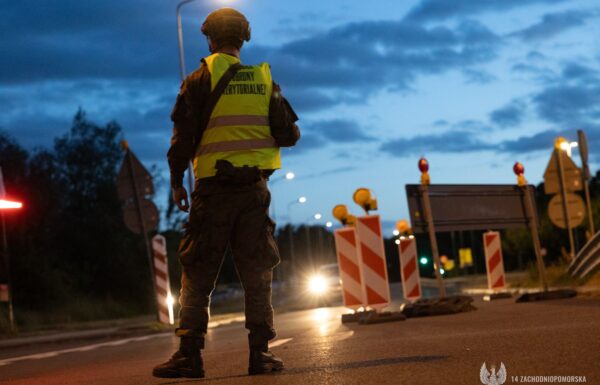
July 7, 2026, marked the first anniversary of the launch of Operation “Safe West.” One year earlier, soldiers of the…

2026-07-09 | Redakcja | 3 minutes

US Customs and Border Protection orders more Airbus H125 helicopters

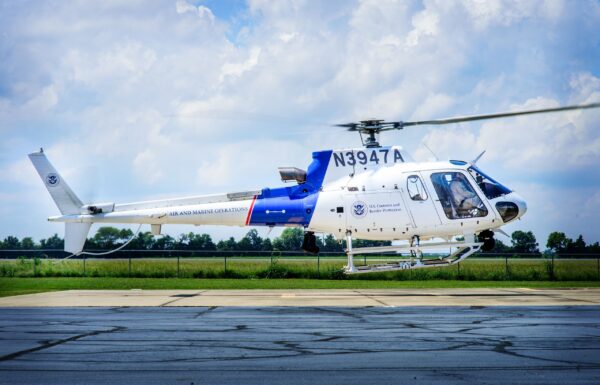
European company Airbus Helicopters has finalized a contract for the purchase of 10 H125 light helicopters by US Customs and Border Protection’s…

2026-07-09 | Rafał Muczyński | 3 minutes

Hanwha to deliver K9 MH wheeled howitzer prototypes to the US Army

Hanwha Defense US, the US subsidiary of South Korea’s Hanwha Aerospace, will deliver six K9 MH wheeled howitzer prototypes to the…

2026-08-19 | Rafał Muczyński | 5 minutes

Rheinmetall and Hensoldt integrate Twinvis passive radar with air defense system

German defense group Rheinmetall AG and Hensoldt have announced that, during the German Air Force’s Timber Express 2026 exercise, they demonstrated…

2026-08-19 | Rafał Muczyński | 3 minutes

Trump limits US participation in South Korea’s Ulchi Freedom Shield 2026 exercises

President Donald Trump has instructed the Pentagon to reduce US military participation in the annual Ulchi Freedom Shield exercise in South Korea, citing…

2026-08-17 | Rafał Muczyński | 4 minutes

Rheinmetall and Boeing deepen cooperation on European CCA project

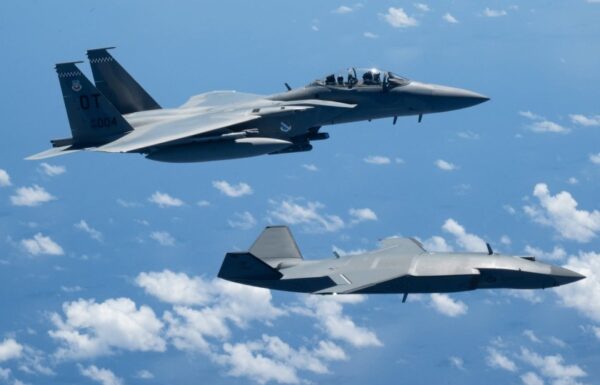
Rheinmetall and Boeing have announced the launch of a joint program aimed at rapidly introducing Collaborative Combat Aircraft (CCA) capabilities in Germany –…

2026-08-10 | Radosław Niesobski | 2 minutes

Astrolight and ATMOS Space Cargo sign laser communications cooperation agreement

Astrolight and ATMOS Space Cargo are planning the world’s first in-flight laser communications link between a spacecraft returning from orbit and…

2026-08-18 | Redakcja | 6 minutes

Airbus to supply communications satellite to Spain

Airbus Defence and Space has secured a contract from Spanish operator Hisdesat to develop and build the SpainSat NG-III satellite, Europe’s most…

2026-08-07 | Radosław Niesobski | 2 minutes
Shooting

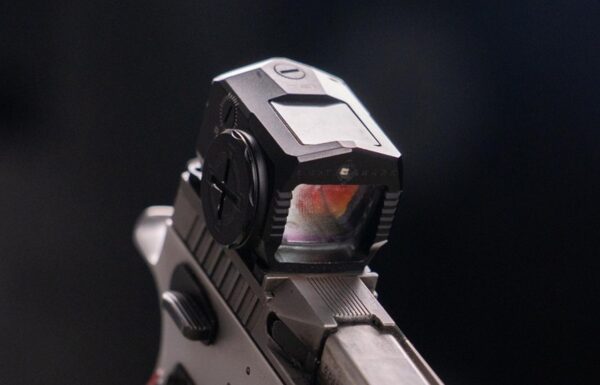
Sightmark Introduces the Mini Shot M‑Spec Solar Enclosed M4 Closed‑Emitter Red Dot Sight

Sightmark expands its lineup with a new closed‑emitter reflex sight — the Mini Shot M‑Spec Solar Enclosed M4. Designed for hunting and…

2026-08-21 | Michał Ihnatów | 2 minutes

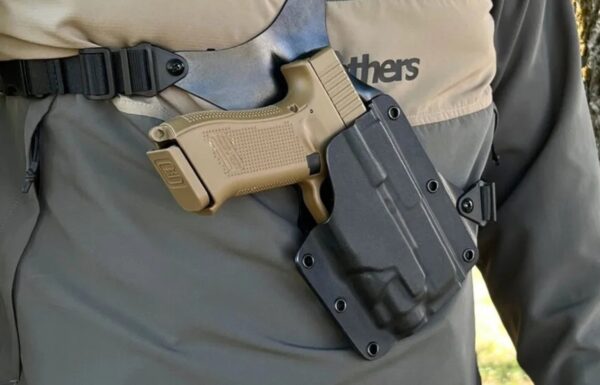
New FALCO D910 L chest holster

FALCO, a Slovak holster manufacturer with many years of experience, is introducing the D910 L — a long‑awaited Kydex chest holster welcomed by the…

2026-08-21 | Michał Ihnatów | 2 minutes

Sightmark Introduces the Mini Shot M‑Spec Solar Enclosed M4 Closed‑Emitter Red Dot Sight

Sightmark expands its lineup with a new closed‑emitter reflex sight — the Mini Shot M‑Spec Solar Enclosed M4. Designed for hunting and…

2026-08-21 | Michał Ihnatów | 2 minutes

New FALCO D910 L chest holster

FALCO, a Slovak holster manufacturer with many years of experience, is introducing the D910 L — a long‑awaited Kydex chest holster welcomed by the…

2026-08-21 | Michał Ihnatów | 2 minutes

BC ARMS USA: Polish defense company enters the American market

BC ARMS USA is a new company based in California that will offer Americans ballistic protection equipment of Polish design.

2026-07-01 | Michał Ihnatów | 2 minutes

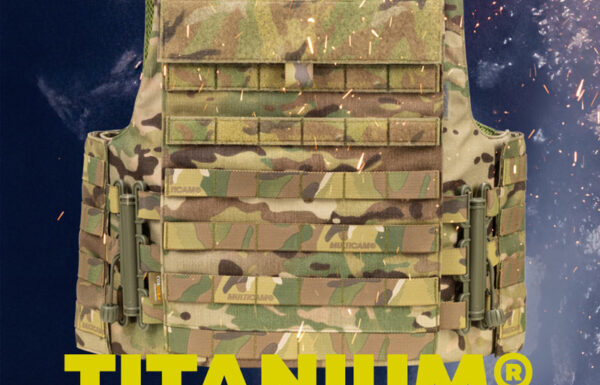
Soft armor vest Titanium Tactical QR I from Greek Anorak

The Greek company Anorak offers a soft bulletproof vest, Titanium Tactical QR I, available for sale from EUR 599 to EUR 738.

2026-06-23 | Rafał Muczyński | 2 minutes

Polish team wins King of 2 Miles 2026 competition

Jakub Sidorowicz as the shooter and Rafał Rutkowski as the spotter won the demanding King of 2 Miles long-range competition in France, scoring two…

2026-05-12 | Michał Ihnatów | 3 minutes

This Year’s Spring Delta Long Range Weekend Concludes

Another edition of the Delta Long Range Weekend has concluded. Long-range shooting enthusiasts met at the Military Institute of Armament Technology…

2026-05-11 | Grzegorz Sobczak | 4 minutes

CZ Bren 3 for Montenegro

On July 24th, 2026, Colt CZ Group officially announced the signing of an agreement for the delivery of products from Česká…

2026-07-28 | Michał Ihnatów | 2 minutes

New 1–10x LPVO: Sightmark Presidio 1–10×26 SFP

Sightmark is introducing a new Presidio 1–10×26 SFP low‑power variable optic, designed to stand out with an MRAD reticle featuring a centrally illuminated…

2026-07-22 | Michał Ihnatów | 3 minutes

Mantis TitanX now available at the Strefa Celu store

Strefa Celu (Jammas) announces the arrival of advanced Mantis TitanX training devices, which, taking the form of a Glock pistol replica…

2026-04-02 | Michał Ihnatów | 3 minutes

Delta Long Range Weekend 2026 coming on May 9

This year’s edition of Delta Long Range Weekend will take place on May 9. Do you shoot mid-range, long-range, or extreme long-range? Test…

2026-03-16 | Michał Ihnatów | 5 minutes

Growth in Firearm Permits in Poland Continues in 2025

The National Police Headquarters has released a report on firearm permits in Poland in 2025. The number of shooters continues to increase, with nearly 45,000…

2026-02-06 | Michał Ihnatów | 6 minutes

Poland: Temporary Ban on Carrying Firearms in Warsaw on November 11, 2025

Minister Marcin Kierwiński has instructed the security services to take measures ensuring safety during the Independence March in Warsaw and other events…

2025-10-30 | Michał Ihnatów | 5 minutes

5 Best Value ATN Rifle Scopes Under €1500

ATN is a leading manufacturer of daytime optics, smart night vision, and thermal vision technology. The innovative features and ergonomic designs…

2022-11-11 | Redakcja | 9 minutes

MILMAG Visits Grand Power

Grand Power is a Slovak manufacturer of the acknowledged good quality firearms. Take part in our guided tour with English subtitles.

2022-05-23 | Redakcja | 1 minutes

Mactronic Patrol RX Flashlight – Six-Month Field Review

I received the Mactronic Patrol RX for testing at the end of 2025. After more than six months of use, I can now…

2026-07-02 | Michał Ihnatów | 9 minutes

KJI K950 Carbon – a tripod for discerning shooters

The concept of tripods in shooting has firmly taken root in shooters’ minds. The idea of using tripods began to take shape during…

2026-06-11 | Jarosław Lis | 10 minutes

Light on the Rifle: Why It Changes Everything Inside a Building

Weapon-mounted lighting is one of the most discussed and least understood categories in tactical equipment. This is a guide to what it actually…

2026-07-13 | Redakcja | 5 minutes

EOTECH Holographic Sight – History, Technology, Practice

The holographic sight is a device known for nearly 30 years and used by professionals around the world. A favorite sight of many…

2024-09-02 | Michał Gaweł | 12 minutes

Orlik Reaches to the Sky

Airbus provides strong training capability to the Polish Air Force

Manuel Heredia Ortiz, CEO, Airbus Poland S.A, outlines the progress in the modernization of the PZL-130 Orlik trainer aircraft for the Polish Air Force and presents vision of future export contracts.


What is the current state of the Orlik programme for the Polish Air Force?

The upgrade of the Orlik is basically structured in three different contracts. A few years ago, what the Polish Air Force had was sixteen aircraft in the TC-II configuration. Between 2016-2017 what we signed was three contracts. First, to upgrade the fleet that was already in operation to a new version, which we call TC-II Advanced. It is basically an upgrade of the avionics to make it compatible with Western aircraft.

In the second step the Polish Air Force ordered a full flight simulator in this configuration. They had some quite unique requirements, e.g. this simulator has the possibility to do formation flights. So, there is a station for a student and a second one for the flight instructor, who flies a second aircraft. They can fly together in the simulation and you can also generate additional, artificial aircraft, so you can several aircraft in formation. This is going quite well. The installation of the simulator has already started.

The third contract was related to the twelve aircraft that were in storage and they were in a very old version, the TC-I. They’ve not been used for some time. The contract called to take those twelve aircraft and make a full retrofit from TC-I to TC-II Advanced. This means assembling new wings, engines, propellers and of course all the new avionics that come with the TC-II Advanced.

All this is going quite well. For the sixteen aircraft, we’ve already delivered eleven. At the end of the year there will be only one aircraft remaining.

We have a good, positive feedback from the Polish Air Force. They are very happy with the new version.

In regards to the dozen of more legacy Orlik, the first of them is already in the final stage of the modernization and we plan to commence deliveries in the Q4 2019. The goal is to provide this strong training capability to the Polish Air Force as soon as possible. At the end of the process, they will have 28 aircraft, which will constitute a quite significant fleet as well as the full flight simulator.

What are the major improvements in the TC-II Advanced version in comparison to the standard TC-II configuration?

The difference between the TC-II Advanced and the TC-II is mainly the cockpit, which is compatible with Western aircraft. The second thing is that until now the Orlik had a fully analogical cockpit and now we have a mix of analogical and digital indicators. I think that now we have the right balance, because you can always have a number of more fancy systems, but this increases the cost [of the platform]. We can say that we developed this version together with the Polish Air Force to make sure, that this is what they needed for the initial phase of training of the pilots.

We ended up with a very robust and proven platform, which is also very cost effective in terms of maintenance and has the right level of technological complication. That was a challenge to have this balance and to include everything that was necessary, nothing more, and I think that we’ve done it.

What was the scope of work in the upgrade of the TC-I version to the TC-II Advanced standard?

TC-II has completely new wings. So, the old wing is scrapped and we manufacture a new one. There is a new, turboprop engine. Everything that goes around the powerplant is updated as well. These are the main elements.

What was the reason for the simulator to be delivered to the Polish Air Force only after a number of upgraded aircraft have been already handed over?

It was logistics. The original contract called for the delivery in 2019. However, in the meantime the customer decided to change the location, of where the simulator will be installed. Originally it was supposed to be installed in Radom, but then the Air Force decided to install it in Deblin instead. The Air Force needed some time to prepare the infrastructure, and asked us to postpone the delivery until 2020.

Actually, we were ready in advanced and delivered a part of the system in 2018, and we’ve been ready for some months to deliver the second part.

Did the feedback from the Polish Air Force, aside from their positive experience of using the upgraded version, include any suggestions, of what still needs to be modified or improved?

It is very important that we’ve started to have a very close collaboration with the Polish Air Force to take care not only of the present of this programme but also of its future. There’s always something, that you can do. The challenge here is to make sure that we’re not on our own thinking of what the customer wants, because we may not interpret correctly what he needs. We have a very regular contact with the Polish Air Force and we’re constantly working on improvements or different packages. What we’re trying to do is to make sure that we’re working in line with the needs.

Another direction, in which we’re working as well, is to anticipate the path of evolution of this project for the next 20 years. We need to take care of the obsolescence [of the equipment].

What was the reason for the Polish Air Force to decide to modernize both variants of the Orlik trainer?

I assume that the Polish Air Force needed to have a bigger fleet [of trainer aircraft]. I think that this is not unusual. If you look at fleets other Air Forces comparable in terms of size, this is nothing unusual to have around 30 of such aircraft. Poland has big ambitions in terms of growing its fleet and replacing the older aircraft, and it needs to have pilots to do that.

What is the scope of involvement of the Polish industry in the upgrade of the Orlik platform?

I don’t think that we do anything outside of Poland. Of course, some of the equipment we do buy outside, but this is normal in this industry. However, anything, that is manufactured [for the project], is manufactured in Poland. Significant part of the work is done in house, here in our facility in Warsaw. But then we’re also working with local suppliers, like the Polish Armaments Group [PGZ, Polska Grupa Zbrojeniowa]. It still is totally a Polish product.

Who is, according to the contracts, responsible for maintenance, overhaul and repair of the upgraded aircraft?

At the beginning of 2019 we signed a frame contract for the next four years, under which we provide spare parts, technical support, when the customer alone does not have the capability to support the aircraft. But also, there’s an expectation that for longer maintenance stops, like the ones, which happen every 10 years, we will be supporting the customer. However, each time it will be the Polish Air Force to make the decision, depending on their own capabilities and how they will organize the logistics.

What is the expected service life of the aircraft?

This is 12 thousand hours.

What are the export opportunities for the Orlik trainer?

The export market is very important for us, as the manufacturer, but also, as we believe, for the current operator. When you’re the single customer, you have to finance all of the developments to the programme. On the one hand, this is good, because you can steer the programme in the way you want, but you have no one to share the cost with. I think this is very well understood by the Polish Air Force.

It is a very good moment, because this upgrade programme has been a perfect excuse to re-establish the final assembly line. Basically, 80% of the final assembly line had to be put back into operation. For the last 5-6 years, all this tooling was in storage, and now it’s back in use.

All this, the will of the customer to invest for the next 10-20 years in a big fleet of trainer aircraft and simulator systems, as well as the fact that we have an active final assembly line, are important signals to the market. The message which we received from our prospective customers is that this [Orlik] is a European product, it’s not a paper aircraft and it provides a lot of certainty and a lot of confidence to prospective customers.

We have plans to go with the Orlik to the market and at the same time we are contacted by the customers, who approach us. For the next 5 years we see some prospects in Europe as well as in South Asia.

What are the numbers of aircraft, which you expect to sale on export markets?

When we’re making our projections for the next 5 years, we see that the market has potential for big numbers [of aircraft], but at the moment we’re a bit conservative. We need to understand that there is a significant effort needed on our side to move from a local programme to an export contract.

Will signing of the first few export contracts lead to any modification, or even build-up of your assembly line or even the whole manufacturing facility?

I think this will depend on the volume and the ramp up. It depends if the customer is requesting big volumes in the short period of time. We’re too early in the process to know that. At least one of the prospective customers has already signalled that if this opportunity matures, they would like us to accelerate, so if this goes forward, we will have to do it. However, my preference is to use the systems as it is today, because it’s already tested and proven.