
















On Friday, 27 February 2026, the Ministry of the Interior and Administration (MSWiA) announced that Prime Minister Donald Tusk had signed regulations extending the third alert level (CHARLIE) in areas of railway lines managed by PKP Polskie Linie Kolejowe S.A. and PKP Linia Hutnicza Szerokotorowa Sp. z o.o., as well as the second alert level (BRAVO) across the remaining territory of the Republic of Poland, in relation to Polish energy infrastructure located outside its borders, and the second CRP alert level (BRAVO-CRP) throughout the entire territory of the Republic of Poland. The alert levels will remain in force until 31 May 2026 at 11:59 p.m.
 Image: Ministry Of the Interior and Administration
The Prime Minister introduces alert levels pursuant to the provisions of the Act of 10 June 2016 on Anti-Terrorism Activities.
The second alert level (BRAVO) is preventive in nature and is related to the current geopolitical situation in the region, involving various forms of hybrid attacks carried out by the Russian Federation and Belarus against Poland and other European Union countries, as well as the consequences of Russia’s armed attack on Ukraine.
BRAVO is the second level in the four-tier alert scale and may be introduced in the event of an increased and foreseeable risk of a terrorist incident, even though a specific target has not been identified.
The third alert level (CHARLIE) is introduced in the event of:
- An occurrence confirming a probable target of a terrorist attack aimed at:
- public safety or public order,
- the security of the Republic of Poland,
- the security of another state or international organization, while posing a potential threat to the Republic of Poland;
- Receipt of reliable and confirmed information about a planned terrorist incident on the territory of the Republic of Poland;
- Receipt of reliable and confirmed information about a planned terrorist incident whose effects may concern Polish citizens staying abroad, Polish institutions, or Polish infrastructure located outside the territory of the Republic of Poland.
The CRP alert level (BRAVO-CRP) has been introduced to counter threats in cyberspace.
Alert levels primarily serve as a signal to security services and the entire public administration to exercise particular vigilance.
The tasks of state authorities related to the introduction of alert levels are specified in the Regulation of the Prime Minister of 25 July 2016 on the scope of measures carried out at individual alert levels and CRP alert levels.
Under the BRAVO level, tasks include, among others:
- Intensified inspections of large gatherings by the Police, Border Guard, or Military Police;
- Increased monitoring of public facilities and other facilities that could potentially become targets of terrorist attacks;
- Ensuring the availability, on an alert basis, of personnel designated to implement procedures in the event of a terrorist incident;
- Warning staff about possible threats;
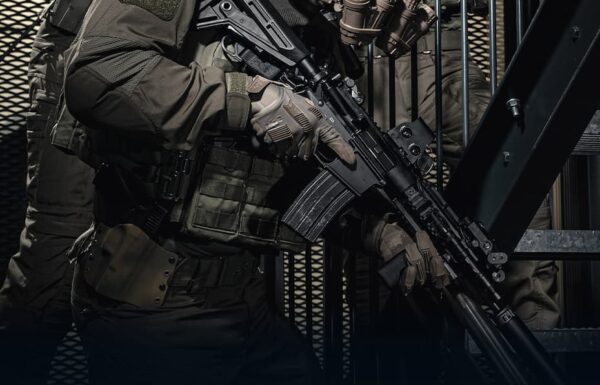
- The obligation for uniformed officers or soldiers directly performing security tasks to carry long firearms and wear bulletproof vests;
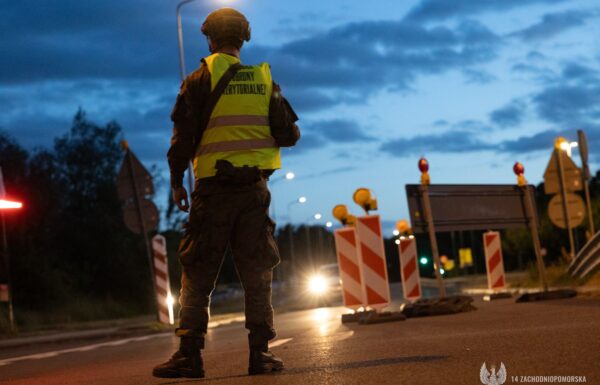
- Additional checks of vehicles, individuals, and public buildings in high-risk areas;
- Strengthening the protection of public transport and important public facilities;
- Introducing entry bans for unauthorized persons to kindergartens, schools, and universities.
Under the BRAVO-CRP alert level, tasks include in particular:
- Enhanced monitoring of the security status of ICT systems of public administration bodies and systems forming part of critical infrastructure;
- Monitoring and verifying whether electronic communications security has been breached;
- Checking the availability of electronic services;
- Informing institutional staff of the need to exercise increased vigilance;
- Ensuring the availability, on an alert basis, of personnel responsible for system security;
- Introducing 24-hour on-call duty for administrators of systems crucial to the functioning of the organization and for personnel authorized to make decisions concerning ICT system security.
Under the CHARLIE alert level, measures include:
- Introducing on-call duty for officials responsible for implementing procedures in the event of terrorist incidents;
- Verifying the availability of facilities designated as temporary relocation sites in case of population evacuation;
- Issuing weapons, ammunition, and personal protective equipment to authorized individuals assigned to carry out protective tasks;
- Introducing additional 24-hour supervision of locations that require it and that have not previously been subject to monitoring.
During the period in which an alert level is in force, special attention should be paid to any unusual situations and potential threats, such as individuals behaving atypically, unattended packages, bags or backpacks left in public places, or vehicles (especially transport vehicles) parked near gathering sites.
Security during the alert period depends not only on the actions of the appropriate services, but also on the preparedness of administrators of public facilities, who are required to carry out increased inspections, as well as on the vigilance of citizens.
📢 ➡️ W związku decyzją premiera @donaldtusk o przedłużeniu obowiązywania stopni alarmowych do końca 31 maja 2026 r., przypominamy, że:
Trzeci stopień alarmowy CHARLIE oznacza sygnał do działań na wyższym poziomie prewencji.
🚨 Co robią służby❓ Tu dzieje się dużo więcej „na… pic.twitter.com/q5dedP3yN0
— MSWiA 🇵🇱 (@MSWiA_GOV_PL) February 27, 2026
Prezes Rady Ministrów na podstawie art. 16 ust. 1 pkt 1 ustawy z dnia 10 czerwca 2016 roku o działaniach antyterrorystycznych (Dz. U. z 2025 r. poz. 194) podpisał zarządzenia:
▪️nr 15 z dnia 26 lutego 2026 roku w sprawie wprowadzenia drugiego stopnia alarmowego (stopień BRAVO)… pic.twitter.com/bGe9qYBROt
— Rządowe Centrum Bezpieczeństwa (@RCB_RP) February 27, 2026
See also: