







Defence & Space

POL-PLAN – mobile hall infrastructure for the military and uniformed services

POL-PLAN, a company based in Stęszew, Poznań County, Greater Poland Voivodeship, offers lightweight, modular, and durable military halls designed for military, logistics,…

2026-06-14 | Redakcja | 3 minutes

Greece to buy Brazilian C-390 Millennium aircraft

The Greek parliament has approved requests from the country’s Ministry of Defense concerning the purchase of a package of foreign equipment…

2026-06-13 | Rafał Muczyński | 6 minutes

F-35 flyover over Poland: Not just air shows and political battles

The sight of F-35s over successive Polish cities attracts public interest, and that is hardly surprising. For many people, this…

2026-06-13 | Sławek Zagórski | 5 minutes

SAFE in Poland: first contracts challenge PiS claims of German purchases

For many months, the debate around the SAFE program in Poland was conducted in an atmosphere of political warnings and catastrophic forecasts.…

2026-06-05 | Sławek Zagórski | 6 minutes

Brazil cleared to buy Stingers

The U.S. State Department has approved the sale of a batch of FIM-92K Stinger man-portable air-defense missile systems to Brazil.

2026-06-13 | Rafał Muczyński | 2 minutes

F-35 flyover over Poland: Not just air shows and political battles

The sight of F-35s over successive Polish cities attracts public interest, and that is hardly surprising. For many people, this…

2026-06-13 | Sławek Zagórski | 5 minutes

Quantum Systems and Rohde & Schwarz cooperate on unmanned systems programs

German companies Quantum Systems and Rohde & Schwarz have signed a memorandum of understanding (MoU) on cooperation in integrating electronic warfare and signals…

2026-05-13 | Rafał Muczyński | 3 minutes

Artificial Intelligence to Help Polish Interior Ministry Services Fight Fires and Crime, and Protect Borders

Artificial intelligence will help services subordinate to the Ministry of the Interior and Administration fight fires and crime, and protect borders.…

2026-05-08 | Redakcja | 4 minutes

Direct Action Invites You to Eurosatory 2026

Eurosatory 2026 will once again bring together leading defence‑industry manufacturers in one place, showcasing the latest technological advancements. Direct Action, a top-tier…

2026-06-12 | Michał Ihnatów | 3 minutes

Rohde & Schwarz presents NEMACS directional encrypted communications system

During the ongoing ILA Berlin 2026 trade fair, German company Rohde & Schwarz presented the NEMACS (Networked Multipoint Array Communications…

2026-06-12 | Rafał Muczyński | 3 minutes

POL-PLAN – mobile hall infrastructure for the military and uniformed services

POL-PLAN, a company based in Stęszew, Poznań County, Greater Poland Voivodeship, offers lightweight, modular, and durable military halls designed for military, logistics,…

2026-06-14 | Redakcja | 3 minutes

Greece to buy Brazilian C-390 Millennium aircraft

The Greek parliament has approved requests from the country’s Ministry of Defense concerning the purchase of a package of foreign equipment…

2026-06-13 | Rafał Muczyński | 6 minutes

SAFE: Romania’s Ministry of Internal Affairs orders Airbus H160 and H145 helicopters

Under the EU’s SAFE loan program, Romania’s Ministry of Internal Affairs has ordered 12 multi-role helicopters from the European company…

2026-06-11 | Rafał Muczyński | 4 minutes

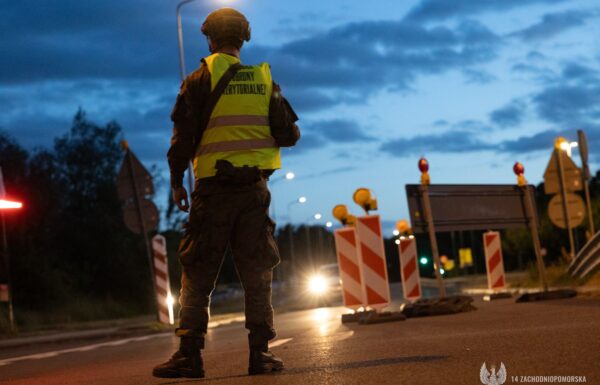
200 Days of Operation Horyzont in Poland: Territorial Defence Forces Support Critical Infrastructure Security Day and Night

June 9 marks 200 days since the launch of Operation Horyzont, which is being carried out by soldiers of the Polish Armed…

2026-06-09 | Redakcja | 4 minutes

Greece to buy Brazilian C-390 Millennium aircraft

The Greek parliament has approved requests from the country’s Ministry of Defense concerning the purchase of a package of foreign equipment…

2026-06-13 | Rafał Muczyński | 6 minutes

Brazil cleared to buy Stingers

The U.S. State Department has approved the sale of a batch of FIM-92K Stinger man-portable air-defense missile systems to Brazil.

2026-06-13 | Rafał Muczyński | 2 minutes

F-35 flyover over Poland: Not just air shows and political battles

The sight of F-35s over successive Polish cities attracts public interest, and that is hardly surprising. For many people, this…

2026-06-13 | Sławek Zagórski | 5 minutes

U.S. under secretary of state for arms control and international security visits Poland

Secretary of State at the Polish Ministry of National Defense Paweł Zalewski met with U.S. Under Secretary of State for Arms…

2026-06-13 | Redakcja | 2 minutes

ILA Berlin 2026: Rafael and Reflex Aerospace form strategic partnership on smart space solutions

Israeli company Rafael Advanced Defense Systems and Germany’s Reflex Aerospace announced a strategic partnership at ILA Berlin 2026, presenting a new class of…

2026-06-11 | Redakcja | 4 minutes

SpaceX to build SB-AMTI satellite-based airborne target detection system for the US Space Force

The United States Space Force (USSF) has awarded a 4.16 billion USD contract to SpaceX under the program to build the SB-AMTI satellite-based…

2026-05-30 | Rafał Muczyński | 4 minutes
Shooting

Direct Action Invites You to Eurosatory 2026

Eurosatory 2026 will once again bring together leading defence‑industry manufacturers in one place, showcasing the latest technological advancements. Direct Action, a top-tier…

2026-06-12 | Michał Ihnatów | 3 minutes

KJI K950 Carbon – a tripod for discerning shooters

The concept of tripods in shooting has firmly taken root in shooters’ minds. The idea of using tripods began to take shape during…

2026-06-11 | Jarosław Lis | 10 minutes

KJI K950 Carbon – a tripod for discerning shooters

The concept of tripods in shooting has firmly taken root in shooters’ minds. The idea of using tripods began to take shape during…

2026-06-11 | Jarosław Lis | 10 minutes

S&B IR-DIM Tracer – tracer ammunition visible only through night vision

Sellier & Bellot offers tracer ammunition visible only through night vision. IR-DIM gives users equipped with NV devices the advantages…

2026-06-08 | Michał Ihnatów | 2 minutes

Direct Action Invites You to Eurosatory 2026

Eurosatory 2026 will once again bring together leading defence‑industry manufacturers in one place, showcasing the latest technological advancements. Direct Action, a top-tier…

2026-06-12 | Michał Ihnatów | 3 minutes

Helikon-Tex Apex Lightweight Combat Shirt now available

The Apex Lightweight Combat Shirt from Helikon-Tex, presented at Enforce Tac 2026, is now available. Made entirely from breathable synthetic fabric,…

2026-06-03 | Michał Ihnatów | 2 minutes

Polish team wins King of 2 Miles 2026 competition

Jakub Sidorowicz as the shooter and Rafał Rutkowski as the spotter won the demanding King of 2 Miles long-range competition in France, scoring two…

2026-05-12 | Michał Ihnatów | 3 minutes

This Year’s Spring Delta Long Range Weekend Concludes

Another edition of the Delta Long Range Weekend has concluded. Long-range shooting enthusiasts met at the Military Institute of Armament Technology…

2026-05-11 | Grzegorz Sobczak | 4 minutes

Hubertus Pro to supply new shotguns for the Polish Armed Forces

Warsaw-based company Hubertus Pro will supply shotguns to Military Unit 4101 in Lubliniec and the Military Gendarmerie, with the total value of…

2026-06-05 | Michał Ihnatów | 3 minutes

WBP PIAST: “Two Rifles” on One Permit

Wytwórnia Broni Jacek Popiński of Rogów is introducing a special offer under which shooters can order a PIAST rifle with an additional…

2026-05-13 | Michał Ihnatów | 1 minutes

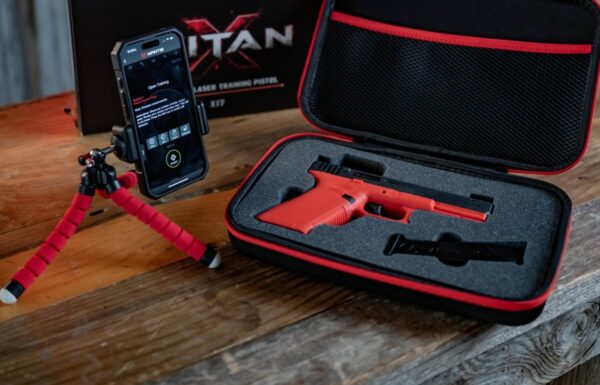
Mantis TitanX now available at the Strefa Celu store

Strefa Celu (Jammas) announces the arrival of advanced Mantis TitanX training devices, which, taking the form of a Glock pistol replica…

2026-04-02 | Michał Ihnatów | 3 minutes

Delta Long Range Weekend 2026 coming on May 9

This year’s edition of Delta Long Range Weekend will take place on May 9. Do you shoot mid-range, long-range, or extreme long-range? Test…

2026-03-16 | Michał Ihnatów | 5 minutes

Growth in Firearm Permits in Poland Continues in 2025

The National Police Headquarters has released a report on firearm permits in Poland in 2025. The number of shooters continues to increase, with nearly 45,000…

2026-02-06 | Michał Ihnatów | 6 minutes

Poland: Temporary Ban on Carrying Firearms in Warsaw on November 11, 2025

Minister Marcin Kierwiński has instructed the security services to take measures ensuring safety during the Independence March in Warsaw and other events…

2025-10-30 | Michał Ihnatów | 5 minutes

5 Best Value ATN Rifle Scopes Under €1500

ATN is a leading manufacturer of daytime optics, smart night vision, and thermal vision technology. The innovative features and ergonomic designs…

2022-11-11 | Redakcja | 9 minutes

MILMAG Visits Grand Power

Grand Power is a Slovak manufacturer of the acknowledged good quality firearms. Take part in our guided tour with English subtitles.

2022-05-23 | Redakcja | 1 minutes

KJI K950 Carbon – a tripod for discerning shooters

The concept of tripods in shooting has firmly taken root in shooters’ minds. The idea of using tripods began to take shape during…

2026-06-11 | Jarosław Lis | 10 minutes

KJI Mag Series – Alternative Rifle Tripod Mounting Systems That Make Shooting Easier

We recently wrote about KJI and its new products in connection with SHOT Show 2026. This time, we’re taking a closer look at a line…

2026-02-17 | Mariusz Piwowar | 5 minutes

EOTECH Holographic Sight – History, Technology, Practice

The holographic sight is a device known for nearly 30 years and used by professionals around the world. A favorite sight of many…

2024-09-02 | Michał Gaweł | 12 minutes

Firearms Ownership in Poland in the 1990s

The Act of January 31, 1961, On Firearms, Ammunition, and Explosives (Journal of Laws of 1961, No. 6, item 43), discussed in detail in MILMAG Military Magazine issue 7/2018, remained in force until March 20, 2000. On that date, the currently binding Act of May 21, 1999, on Firearms and Ammunition (Journal of Laws of 1999, No. 53, item 549) came into effect.

The first significant changes, also signaling the upcoming political thaw and the fall of the Polish People’s Republic, came into effect on January 1, 1989, with the introduction of the Act of December 23, 1988, On Economic Activity. It was commonly referred to as the “Wilczek Act,” named after the author of the bill, Minister of Industry Mieczysław Wilczek. The act legalized private economic activity in Poland. It stipulated that a license would be required for the production and trade of explosives, firearms, and ammunition (Article 11, Section 1, Point 3).

Consequences of changes

As a consequence, based on the transitional provision in Article 36 of the Wilczek Act, several regulations were removed from the Act on Firearms, Ammunition, and Explosives. These included provisions stipulating that the trade of firearms and ammunition could only be conducted by state-owned enterprises with a permit issued by the Minister of Internal Trade in consultation with the Minister of Internal Affairs (Article 16 of the 1961 Act), and that the trade of explosives required a permit from the competent trade authority of the presidium of the provincial national council, issued in consultation with the relevant provincial command of the Citizens’ Militia (Article 23 of the 1961 Act).

Subsequently, a regulation issued by the Minister of Internal Affairs on October 29, 1990, concerning the extension of specific provisions of the Act on Firearms, Ammunition, and Explosives to particular types of bladed weapons and items whose use may pose a threat to public safety (Journal of Laws of 1990, No. 76, item 451), brought under the scope of the Act pistols, revolvers, and other devices for launching incapacitating agents, stun guns with specified voltage and energy levels, crossbows, and certain types of bladed weapons (§1 of the regulation).

Weapons for personal protection

/ Photo: Artur Wagner

At the same time, during the period in question, access to handguns became noticeably easier. Permits for them were issued to individuals engaged in business activities, especially those who frequently transported large sums of money, as well as to private companies involved in cash transport and the protection of people and property (1).

The popularity of gas weapons also increased during this time, with permits being issued for them for personal protection purposes. On the one hand, this popularity is believed to have stemmed from a societal reaction to the long-standing, de facto ban on firearm ownership. Just as importantly, there was a noticeable rise in crime rates (2). Gas weapons were actively promoted by their manufacturers, as well as by Polish firearms retailers.

By 1992, there were already more than 1,400 stores and retail outlets in Poland where firearms could be purchased (3). While broader access did not lead to an improvement in public safety, the feared wave of accidents or increased crime involving legally owned firearms did not materialize. In 95% of cases, firearms used to commit crimes were held illegally (4).

Although this skips ahead of the legislative chronology, it is worth presenting some statistical data at this point. Compared to 1990, the number of legally owned firearms in Poland rose to over 250,000 by 1999, reaching a total of 581,611 weapons. This figure included 45,515 handguns, 193,319 hunting rifles, 70,042 sport shooting firearms, and 265,523 gas weapons (5).

(1) J. Kasprzak, W. Brywczyński: Nielegalne posiadanie broni i amunicji. Studium prawno-kryminalistyczne, Białystok 2013, s. 41.
(2) Ibidem, s. 42.
(3) J. Kasprzak: Wybrane problemy prawno-kryminalistyczne związane z posiadaniem i użyciem broni palnej w Polsce w larach 1990-2000, (w:) red. W. Bednarek, S. Pikulski: Prawne i administracyjne aspekty bezpieczeństwa osób i porządku publicznego w okresie transformacji ustrojowo-gospodarczej, Olsztyn 2000, s. 155, (za:) J. Kasprzak, W. Brywczyński: Nielegalne posiadanie…, s. 42.
(4) Ibidem, (za:) J. Kasprzak, W. Brywczyński: Nielegalne posiadanie…, s. 42.
(5) Ibidem, (za:) J. Kasprzak, W. Brywczyński: Nielegalne posiadanie…, s. 42.


Firearms and homicides

The above data should be contrasted with figures concerning the use of firearms as a means of homicide in Poland between 1960 and 1995. Until 1978, the annual number of firearm-related homicides did not exceed four, and there were years in which no such cases were recorded at all.

An increase occurred in 1979, when there were eight firearm-related homicides, and in 1980, when firearms were used in 11 cases. In 1981, the number dropped to 2. Between then and 1990, the yearly figures were as follows: in 1982 – 3, 1983 – 4, 1984 – 9, 1985 – 4, 1986 – 2, 1987 – 5, 1988 – 2, 1989 – 4, and 1990 – 9. In 1991, the number rose to 21, then to 40 in 1992, 62 in 1993, 100 in 1994, 107 in 1995, and 104 in 1996 (6).

Professor Józef Wójcikiewicz, in an expert analysis prepared for the Task Force on Public Safety and Police Reform led by Jan Widacki, as part of the program Security – Citizen – State, wrote in 1999 that “although a significant portion of firearms used in homicides were undoubtedly possessed illegally, one should not overlook the fact that the number of legally owned handguns increased in 1997 by 4,119 units, which represented a 25% rise compared to 1996” (7).

It should also be remembered—something the author neglected to mention—that a surge in organized crime, gang violence, and bloody struggles for power and territory among rival mafia groups marked the early 1990s in Poland. This makes it all the more necessary not merely to mention in passing, but to clearly emphasize the fact that a significant share of firearms used in homicides were illegally possessed (8).

(6) J. Wójcikiewicz: Posiadanie broni palnej przez obywateli, Warszawa-Kraków 1999, s. 15.
(7) Ibidem.
(8) And I write these words—as a former student and attendee of those lectures—with full respect and a justified suspicion that, in 1999, knowledge about the details of mafia feuds was more limited, and gangsters, along with their wives, were not giving interviews or writing books.

Case Of Szczepan P.

Returning to the main topic, a significant increase in the number of permits issued in the 1990s may have been influenced by a landmark ruling of the Supreme Administrative Court in Warsaw on March 9, 1994 (case no. III SA 702/93). The case concerned Szczepan P., who in August 1992 applied for a permit to possess a gas weapon, citing threats from his neighbors and providing examples of their behavior.

Both the Voivodeship Police Commander and, following an appeal, the Chief of Police, issued negative decisions. They argued that the circumstances presented by the applicant did not justify issuing the permit. The Chief of Police further stated that Article 5, Section 1 of the Act leaves the evaluation of the applicant’s arguments to administrative discretion.

Szczepan P. then filed a complaint with the court, to which the Chief of Police responded that issuing a weapon permit to a 77-year-old physically weak man living alone in a village near individuals who abuse alcohol would not solve the problem but, on the contrary, could provoke increased aggression from the intoxicated individuals. In the Chief’s view, self-defense in such a scenario should be replaced by firm action from the Police and the Prosecutor’s Office against the troublemakers, following a formal report of the offense filed by the victim.

A groundbreaking judgment

The Supreme Administrative Court did not share the view of the second-instance authority, ruling that a decision issued under Article 5, Section 1 of the Act on Firearms, Ammunition, and Explosives is not a discretionary decision. According to the Court, such a conclusion cannot be drawn from the content of the provision in question. The Court ruled the opposite—that if the circumstances specified in the provision are met, the Police authorities are obligated to issue a firearms permit. This is known as a mandatory (non-discretionary) decision.

For this reason, I consider the ruling to be a landmark, even though in this particular case the Court ultimately sided with the Chief of Police and concluded that the circumstances required by the Act were not present in the case of Szczepan P.

Referring to previous case law, the Court reiterated that a gas weapon permit may only be issued if the threat to the applicant’s life or health is clearly greater than the risk faced by the average citizen.

This concerns a situation in which a person is so clearly distinct from the general population that this distinction creates a high probability of attack by third parties. Elderly individuals living alone are not a rare phenomenon in our society. The same applies, in the Court’s view, to neighborly disputes.

Returning to the aforementioned breakthrough—the Supreme Administrative Court made it clear in its ruling that the permitting authority was obligated to verify only the presence of a positive condition (factual circumstances justifying the issuance of a permit) and the absence of negative conditions (those listed in Article 7 of the Act) (9). At this stage, it is difficult to determine whether the above-mentioned ruling had even a minimal impact on the mindset of officials at the National Police Headquarters. However, I am inclined to believe that nothing has changed in that regard.

(9) J. Wójcikiewicz: Posiadanie broni palnej…, s. 25.

Further changes

The following amendment to the law, although insignificant for civilian entities, did not come until February 8, 1997, when a revision of the Act (10) came into force. It stipulated that the requirement to obtain a permit issued by the Citizens’ Militia (MO) authorities would not apply to soldiers of foreign armed forces staying on the territory of the Republic of Poland under an international agreement concluded by Poland (11). This exemption applied exclusively to service weapons.

In March 1998, the rules for issuing bearer permits (permits not tied to a specific individual) were also amended (Article 14 of the 1961 Act). With the enactment of the Act on the Protection of Persons and Property, it was explicitly allowed for business entities and organizational units that had established internal security services to obtain such permits, provided that the weapons were necessary for performing the duties of those services in accordance with a security plan. Permits could also be granted to businesses that had obtained licenses to conduct economic activity in the field of personal and property protection services (12).

On September 1, 1998, in connection with the entry into force of the new Criminal Code, the penalty provisions regarding the unlawful disposal of firearms or ammunition, explosives, or explosive devices were clarified (Article 28, Section 1 of the 1961 Act). However, the punishment remained unchanged, up to 3 years of imprisonment. The amendment was limited solely to updating the terminology in line with the new criminal law provisions (13).

The communist-era law remained in force until March 20, 2000, when the currently binding (though frequently amended) Act of May 21, 1999, On Firearms and Ammunition (Journal of Laws of 1999, No. 53, item 549) came into effect. In its original version, this Act also retained the problematic administrative discretion granted to Provincial Police Commanders, a practice unfavorable to gun owners.

Adam Koper is a legal counsel and runs the law office Adam Koper Kancelaria Prawna.

(10) Act of November 21, 1996, amending the Acts on Firearms, Ammunition and Explosives; on the Universal Duty of Defense of the Republic of Poland; the Penal Code; the Code of Criminal Procedure; Public Roads; Customs Law; on the Protection of the State Border; and on the Accommodation of the Armed Forces of the Republic of Poland (Journal of Laws of 1997, No. 6, item 31) – Article 1.
(11) A telling sign of the times of transition was the fact that even in 1997, many legal acts still referred to the “Citizens’ Militia.” In reality, however, this was not an oversight by successive parliaments, as the Act of April 6, 1990 on the Police (Journal of Laws of 1990, No. 30, item 179), which came into force on May 10, 1990, specified in Article 153 that: “Wherever the law refers to the Citizens’ Militia and its officers, it shall be understood to mean the Police and police officers.” The name of this defunct uniformed formation was gradually removed from successive pieces of legislation.
(12) Act of August 22, 1997, on the Protection of Persons and Property (Journal of Laws of 1997, No. 114, item 740) – Article 51.
(13) Act of June 6, 1997 – Introductory Provisions to the Penal Code (Journal of Laws of 1997, No. 88, item 554) – Article 5 § 2, point 8.