































At the Farnborough International Airshow 2026 in the United Kingdom, held from July 20 to 24, British company BAE Systems and U.S.-based Lockheed Martin unveiled Blizzard, a multirole, autonomous, modular unmanned aircraft. It is the result of cooperation between the companies’ advanced research and development divisions, Lockheed Martin Skunk Works and BAE Systems FalconWorks, announced on September 9, 2025.
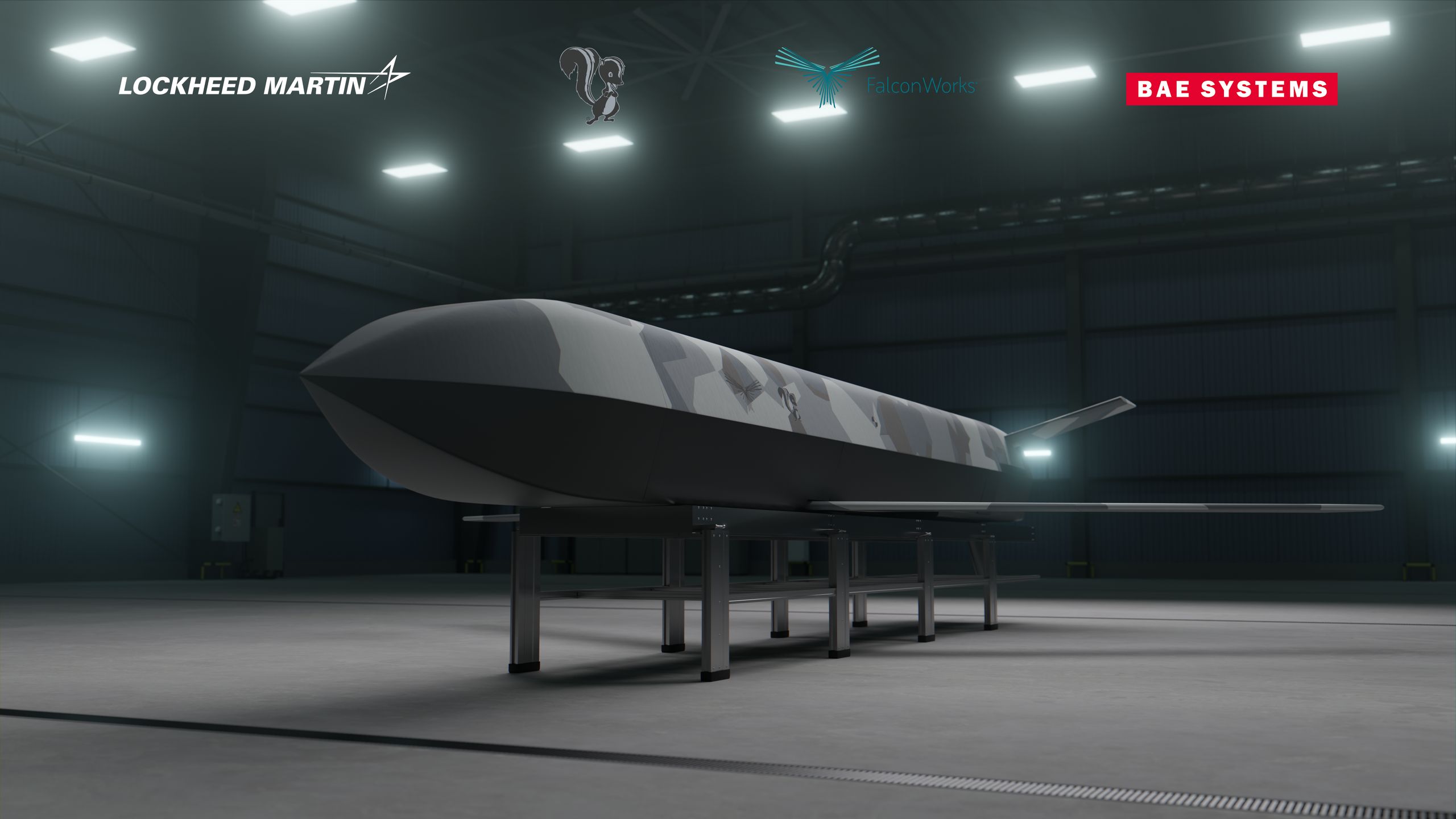 Image: BAE Systems
Blizzard, which resembles a cruise missile, is intended to be rapidly deployable, affordable, and modular, supporting a wide range of missions through its ability to carry different payloads, including electronic warfare and strike packages. It is also expected to offer multiple launch options and a high cruising speed.
The aircraft is planned to be deployable from airborne, ground, and maritime platforms, as well as from the cargo hold of a wide-body transport aircraft in a palletized roll-on/roll-off configuration. It is also intended to operate in GPS/GNSS-denied and electromagnetically contested environments.
Its open systems architecture could allow new payloads, software, and mission functions to be integrated rapidly without redesigning the entire vehicle, although BAE Systems has not disclosed the technical interfaces or standards underpinning the architecture.
The Blizzard program brings together two advanced research and development organizations. FalconWorks contributes more than 25 years of BAE Systems experience in air combat technologies, electronic warfare, autonomy, and rapid prototyping, while Skunk Works brings nearly 90 years of advanced aircraft design and development expertise.
Blizzard nevertheless remains a development program. No customer, production contract, flight-test schedule, or planned service-entry date has yet been publicly confirmed.
Two of defence’s most secretive labs rarely work together 🤫 This time, they did.
Meet Blizzard: a modular, multi-mission uncrewed air system from BAE Systems FalconWorks and @LockheedMartin Skunk Works®. Multiple launch options. One purpose.
🔗 https://t.co/CBWXKOQ7De pic.twitter.com/H1LWBWl2ki
— BAE Systems (@BAESystemsplc) July 20, 2026
See also: