











Defence & Space

Ukrainian DKBB Luch and European consortium MBDA to develop Neptun 2 missile

At the Eurosatory 2026 trade show, taking place June 15-19 of this year in Paris, Ukrainian company DKBB Luch and European consortium…

2026-06-20 | Rafał Muczyński | 3 minutes

Eurosatory 2026: Ukrainian company Yartura presents the Dancer 4.5.0 drone

At the Eurosatory 2026 trade show, taking place June 15-19 of this year in Paris, Ukrainian company Yartura presented the Dancer 4.5.0…

2026-06-20 | Rafał Muczyński | 3 minutes

ICEYE Federation: How can the effectiveness of national satellite constellations be increased?

In recent years, ICEYE has been increasingly developing its portfolio of services aimed at military customers. This European company, which builds satellites…

2026-06-17 | Przemysław Gurgurewicz | 14 minutes

MSBS Grot: A Polish firearm with its own DNA

The MSBS Grot is a family of carbines and rifles developed by Polish engineers, the military, and users who gradually shaped its…

2026-06-14 | Jakub Link-Lenczowski | 12 minutes

Ukrainian DKBB Luch and European consortium MBDA to develop Neptun 2 missile

At the Eurosatory 2026 trade show, taking place June 15-19 of this year in Paris, Ukrainian company DKBB Luch and European consortium…

2026-06-20 | Rafał Muczyński | 3 minutes

Eurosatory 2026: Ukrainian company Yartura presents the Dancer 4.5.0 drone

At the Eurosatory 2026 trade show, taking place June 15-19 of this year in Paris, Ukrainian company Yartura presented the Dancer 4.5.0…

2026-06-20 | Rafał Muczyński | 3 minutes

Quantum Systems and Rohde & Schwarz cooperate on unmanned systems programs

German companies Quantum Systems and Rohde & Schwarz have signed a memorandum of understanding (MoU) on cooperation in integrating electronic warfare and signals…

2026-05-13 | Rafał Muczyński | 3 minutes

Artificial Intelligence to Help Polish Interior Ministry Services Fight Fires and Crime, and Protect Borders

Artificial intelligence will help services subordinate to the Ministry of the Interior and Administration fight fires and crime, and protect borders.…

2026-05-08 | Redakcja | 4 minutes

Eurosatory 2026: Ukrainian company Yartura presents the Dancer 4.5.0 drone

At the Eurosatory 2026 trade show, taking place June 15-19 of this year in Paris, Ukrainian company Yartura presented the Dancer 4.5.0…

2026-06-20 | Rafał Muczyński | 3 minutes

Ukrainian SkyFall drones at the French Eurosatory 2026 trade show

At the Eurosatory 2026 trade show, taking place June 15-19 of this year in Paris, Ukrainian company SkyFall presented the Shrike series…

2026-06-20 | Rafał Muczyński | 3 minutes

Ukrainian DKBB Luch and European consortium MBDA to develop Neptun 2 missile

At the Eurosatory 2026 trade show, taking place June 15-19 of this year in Paris, Ukrainian company DKBB Luch and European consortium…

2026-06-20 | Rafał Muczyński | 3 minutes

Eurosatory 2026: Ukrainian company Yartura presents the Dancer 4.5.0 drone

At the Eurosatory 2026 trade show, taking place June 15-19 of this year in Paris, Ukrainian company Yartura presented the Dancer 4.5.0…

2026-06-20 | Rafał Muczyński | 3 minutes

SAFE: Romania’s Ministry of Internal Affairs orders Airbus H160 and H145 helicopters

Under the EU’s SAFE loan program, Romania’s Ministry of Internal Affairs has ordered 12 multi-role helicopters from the European company…

2026-06-11 | Rafał Muczyński | 4 minutes

200 Days of Operation Horyzont in Poland: Territorial Defence Forces Support Critical Infrastructure Security Day and Night

June 9 marks 200 days since the launch of Operation Horyzont, which is being carried out by soldiers of the Polish Armed…

2026-06-09 | Redakcja | 4 minutes

Ukrainian DKBB Luch and European consortium MBDA to develop Neptun 2 missile

At the Eurosatory 2026 trade show, taking place June 15-19 of this year in Paris, Ukrainian company DKBB Luch and European consortium…

2026-06-20 | Rafał Muczyński | 3 minutes

Latvian BLAZE interceptor drones for France

After extensive testing, the French Armed Forces have ordered BLAZE autonomous interceptor drones from Latvia’s Origin Robotics, which will deliver…

2026-06-17 | Rafał Muczyński | 4 minutes

F-35 flyover over Poland: Not just air shows and political battles

The sight of F-35s over successive Polish cities attracts public interest, and that is hardly surprising. For many people, this…

2026-06-13 | Sławek Zagórski | 5 minutes

U.S. under secretary of state for arms control and international security visits Poland

Secretary of State at the Polish Ministry of National Defense Paweł Zalewski met with U.S. Under Secretary of State for Arms…

2026-06-13 | Redakcja | 2 minutes

ICEYE Federation: How can the effectiveness of national satellite constellations be increased?

In recent years, ICEYE has been increasingly developing its portfolio of services aimed at military customers. This European company, which builds satellites…

2026-06-17 | Przemysław Gurgurewicz | 14 minutes

ILA Berlin 2026: Rafael and Reflex Aerospace form strategic partnership on smart space solutions

Israeli company Rafael Advanced Defense Systems and Germany’s Reflex Aerospace announced a strategic partnership at ILA Berlin 2026, presenting a new class of…

2026-06-11 | Redakcja | 4 minutes
Shooting

Soft armor vest Titanium Tactical QR I from Greek Anorak

The Greek company Anorak offers a soft bulletproof vest, Titanium Tactical QR I, available for sale from EUR 599 to EUR 738.

2026-06-23 | Rafał Muczyński | 2 minutes

MILTAC to supply ammunition for the Polish Biathlon Union

MILTAC has won a Polish Biathlon Union tender for the supply of small-caliber sports ammunition for national teams, Sports Excellence Schools,…

2026-06-17 | Michał Ihnatów | 3 minutes

MILTAC to supply ammunition for the Polish Biathlon Union

MILTAC has won a Polish Biathlon Union tender for the supply of small-caliber sports ammunition for national teams, Sports Excellence Schools,…

2026-06-17 | Michał Ihnatów | 3 minutes

KJI K950 Carbon – a tripod for discerning shooters

The concept of tripods in shooting has firmly taken root in shooters’ minds. The idea of using tripods began to take shape during…

2026-06-11 | Jarosław Lis | 10 minutes

Soft armor vest Titanium Tactical QR I from Greek Anorak

The Greek company Anorak offers a soft bulletproof vest, Titanium Tactical QR I, available for sale from EUR 599 to EUR 738.

2026-06-23 | Rafał Muczyński | 2 minutes

Eurosatory 2026: Haix Shadow Falcon Pro Mid for rope operations

At the Eurosatory 2026 trade show in Paris, Haix presented its latest mid-height boot model, the Shadow Falcon Pro Mid, featuring a construction…

2026-06-17 | Michał Ihnatów | 3 minutes

Polish team wins King of 2 Miles 2026 competition

Jakub Sidorowicz as the shooter and Rafał Rutkowski as the spotter won the demanding King of 2 Miles long-range competition in France, scoring two…

2026-05-12 | Michał Ihnatów | 3 minutes

This Year’s Spring Delta Long Range Weekend Concludes

Another edition of the Delta Long Range Weekend has concluded. Long-range shooting enthusiasts met at the Military Institute of Armament Technology…

2026-05-11 | Grzegorz Sobczak | 4 minutes

Eurosatory 2026: Grand Power M4M1 and offerings for security services

At the Eurosatory 2026 trade show in Paris, Slovak firearms manufacturer Grand Power presented a selection of its offerings aimed at institutional customers, including…

2026-06-17 | Michał Ihnatów | 2 minutes

MSBS Grot: A Polish firearm with its own DNA

The MSBS Grot is a family of carbines and rifles developed by Polish engineers, the military, and users who gradually shaped its…

2026-06-14 | Jakub Link-Lenczowski | 12 minutes

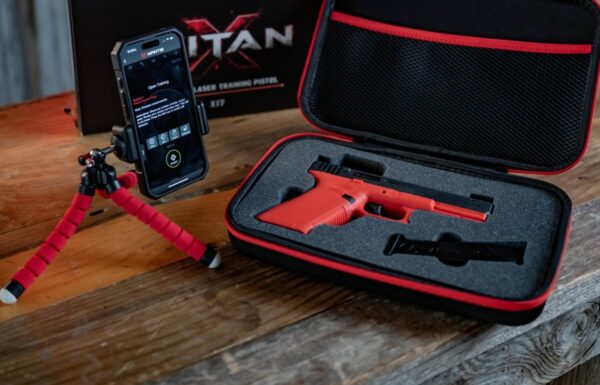
Mantis TitanX now available at the Strefa Celu store

Strefa Celu (Jammas) announces the arrival of advanced Mantis TitanX training devices, which, taking the form of a Glock pistol replica…

2026-04-02 | Michał Ihnatów | 3 minutes

Delta Long Range Weekend 2026 coming on May 9

This year’s edition of Delta Long Range Weekend will take place on May 9. Do you shoot mid-range, long-range, or extreme long-range? Test…

2026-03-16 | Michał Ihnatów | 5 minutes

Growth in Firearm Permits in Poland Continues in 2025

The National Police Headquarters has released a report on firearm permits in Poland in 2025. The number of shooters continues to increase, with nearly 45,000…

2026-02-06 | Michał Ihnatów | 6 minutes

Poland: Temporary Ban on Carrying Firearms in Warsaw on November 11, 2025

Minister Marcin Kierwiński has instructed the security services to take measures ensuring safety during the Independence March in Warsaw and other events…

2025-10-30 | Michał Ihnatów | 5 minutes

5 Best Value ATN Rifle Scopes Under €1500

ATN is a leading manufacturer of daytime optics, smart night vision, and thermal vision technology. The innovative features and ergonomic designs…

2022-11-11 | Redakcja | 9 minutes

MILMAG Visits Grand Power

Grand Power is a Slovak manufacturer of the acknowledged good quality firearms. Take part in our guided tour with English subtitles.

2022-05-23 | Redakcja | 1 minutes

KJI K950 Carbon – a tripod for discerning shooters

The concept of tripods in shooting has firmly taken root in shooters’ minds. The idea of using tripods began to take shape during…

2026-06-11 | Jarosław Lis | 10 minutes

KJI Mag Series – Alternative Rifle Tripod Mounting Systems That Make Shooting Easier

We recently wrote about KJI and its new products in connection with SHOT Show 2026. This time, we’re taking a closer look at a line…

2026-02-17 | Mariusz Piwowar | 5 minutes

EOTECH Holographic Sight – History, Technology, Practice

The holographic sight is a device known for nearly 30 years and used by professionals around the world. A favorite sight of many…

2024-09-02 | Michał Gaweł | 12 minutes

AMSTA will defend the borders

Automated perimeter defense systems are the newest tool used to protect national borders and crucial infrastructure facilities, such as airfields, military compounds, industrial plants, seaports, refineries, and other critical targets.


ASMTA (Advanced Monitoring of Stand-off Areas) offered by MindMade, a member of WB Group, is an example of such technology. The Polish solution stands out thanks to complex build and scalability. By using seismic sensors and cameras suitable for both day and night operation, the network allows detection and analysis of received signals with the help of proprietary algorithms.

Photo: Jakub Link-Lenczowski, MILMAG

The technology is based on a network of smart seismic sensors and cameras (normal and thermal) and specialized algorithms that analyze received signals. They operate as a distributed intelligence, meaning that each component works independently of others. Such a solution makes scaling the system to individual users’ demands much easier. Because of that, AMSTA is a modular product with an open architecture. Additional sensors can be connected into the network, and different recognition and defense devices can be synergized with the system. According to notes of the WB Group, the system can be linked with unmanned aerial vehicles (UAV) and security measures such as mines and grenade launchers, capable of slowing down any intruders significantly.

The system can be utilized in two variants. One is stationary, as a permanent element of critical infrastructure’s security (known under the name AMSTA Fence), and the mobile one, designed for construction of impromptu security zones (AMSTA Deploy).

Regardless of the variant used, the system is based on the same component. All elements are linked via two-way wireless communication network. Thanks to the use of distributed intelligence, each element operates independently. Dedicated algorithms are responsible for analysis of signals, recognizing and classifying detected objects. By default, AMSTA detects humans, animals, and vehicles of all types. The open system (self-learning) allows expansion of its databases to cover any unusual objects detected by its sensors.

AMSTA seismic detectors

Seismic sensors are the core of the AMSTA system. The first of them is the Seismic Sensor with GPS (SSG). It is a smart, omnidirectional detector placed in the ground around the borders of the protected zone. It analyzes received seismic waves and classifies them in terms of risk. The signals are compared with the database of vehicles, objects, and living creatures and the sensor passes information about potentially threatening ones. False alarms are not passed further by SSG. According to the manufacturer, it allows for exceptional longevity of the batteries – between 3 months and 4 years (they can also be powered by cable from the 220V power grid). Human activity can be detected approximately 100 meters away from the sensor, while the vehicles can be detected up to 300 meters.

Second type of seismic detector is the Sector Seismic Sensor (SSS). It is a smart, self-learning, omnidirectional detector of a new generation, designed to detect objects moving over the ground. It is placed in the earth and analyzes seismic waves, detects and classifies two classes of objects—”humans” and “vehicles” with the help of proprietary algorithms. After detecting an intrusion, it sends a radio warning that includes the classification and localization of the intruder. Self-learning data processing algorithms and the database of signal signatures reduces the number of false alarms (such as detection of animals).

Observation cameras

When seismic sensors detect a moving object and determine the sector through which it moves, an appropriate camera is activated – working in both day and night modes – to identify the detected object immediately. Like the seismic sensors, the cameras can be placed across the protected zone in permanent positions, such as dedicated masts or constructions present, or spread as needed in temporary locations, such as hanging from trees or set on tripods.

Communication modules are responsible for transmission of data between system components, up to the Stationary Control Station (SSK) that manages the system. Retransmitters can send and receive control signals coming from other elements of the system, such as seismic sensors and cameras. They cooperate with SSK through Ethernet interface, connecting applications of the Stationary Control Station with the remote devices via radio communication; LCS for contacting seismic sensors, and signalization channel for cameras, and DCS for broadband connectivity with cameras.

In regions where classical detectors can’t be used for some reason, AMSTA can operate using microwave or infrared emitters instead. They allow the user to build a microwave “fence” that automatically sends a warning signal when its beams are breached, transmitting location of the breach to the SSK.

Communication

Secure communication between components of the system is enabled by a network composed of two layers: LCS and DCS. Local Communication System (LCS) covers the data transmissions between sensors and effectors. Maximum range of communication in open terrain is up to 2000 meters. Depending on the user’s needs, the LCS network can operate in different frequency bands, including dedicated and special frequencies, ensuring greater reliability and coverage, regardless of the local terrain.

Distant Communication System (DCS) handles the two-way data exchange between LCS, server, and the control station. Its system nodes are linked with each device. DCS uses mobile networks (3G/4G/LTE modems) or dedicated communication channels using frequencies assigned to the specific user (such as military PERAD radio station). All the DCS data transmission is handled through its server.

AMSTA’s ability to cooperate with the PERAD system is a particularly interesting aspect of its modularity. It allows communication with sensors and control stations using dedicated military radio frequencies and ensures transmission of large data packets up to 10 kilometers. In particularly large security zones, the radio signal can be retransmitted, allowing for effective communication in urban and forest areas, and extension of its range to 20 kilometers. PERAD station can be connected directly to the Ethernet port of a computer and can connect to the FONET digital communication platform.

All the information received from sensors goes to the control and monitoring station (SSK) which takes the form of application run on a reinforced laptop, tablet, or stationary device used by the system operator. The application includes modules for dynamic configuration of the system, full supervision over the technical condition of components, analysis of data received from sensors and their following visualization in the form of messages (alarm signals), warnings (intruder identifying icons) on the on-screen map, and video images that verify alarm classification in real time. When the system detects a threat to the protected facility or area, the system dispatcher may decide to take appropriate action. He can send a patrol or a drone to intercept the intruder, he can activate loudspeakers issuing warnings to the trespassers, or he might turn on floodlights, all depending on specific security measures set up within the protected zone. The SSK application has an additional advantage – it can be installed on smartphone-sized handheld devices carried by patrols sent to the place where the alarm was initiated. The device can receive live transmission from local cameras or an unmanned aerial vehicle sent first, providing the patrol with full situational awareness while they neutralize threats to protected objects and areas.

Control station

Photos and graphics: Grupa WB

All the information received from sensors goes to the control and monitoring station (SSK) which takes the form of application run on a reinforced laptop, tablet, or stationary device used by the system operator. The application includes modules for dynamic configuration of the system, full supervision over the technical condition of components, analysis of data received from sensors and their following visualization in the form of messages (alarm signals), warnings (intruder identifying icons) on the on-screen map, and video images that verify alarm classification in real time. When the system detects a threat to the protected facility or area, the system dispatcher may decide to take appropriate action. He can send a patrol or a drone to intercept the intruder, he can activate loudspeakers issuing warnings to the trespassers, or he might turn on floodlights, all depending on specific security measures set up within the protected zone. The SSK application has an additional advantage – it can be installed on smartphone-sized handheld devices carried by patrols sent to the place where the alarm was initiated. The device can receive live transmission from local cameras or an unmanned aerial vehicle sent first, providing the patrol with full situational awareness while they neutralize threats to protected objects and areas.

Using AMSTA system

AMSTA presents a new standard of quality for securing key objects and areas. The war in Ukraine, and the prior crisis on Polish-Belarusian border clearly showed the importance of automated perimeter security systems. Protection of military compounds, airfields, and key industrial plants requires engaging a significant number of resources and staff. Automation offered by MindMade’s product quickens and streamlines the security protocols.

Significantly, AMSTA is compatible with military communication systems, enabling its implementation into the future combat field management applications. Today, the WB Group system is already used to protect eastern border of the European Union.

Źródło: Grupa WB