





























The Orka program has finally reached the stage of selecting a bidder and, as one could guess for several weeks, Sweden was chosen. The political decision is clear, but among naval personnel the enthusiasm stems mainly from the fact that a decision has finally been made.
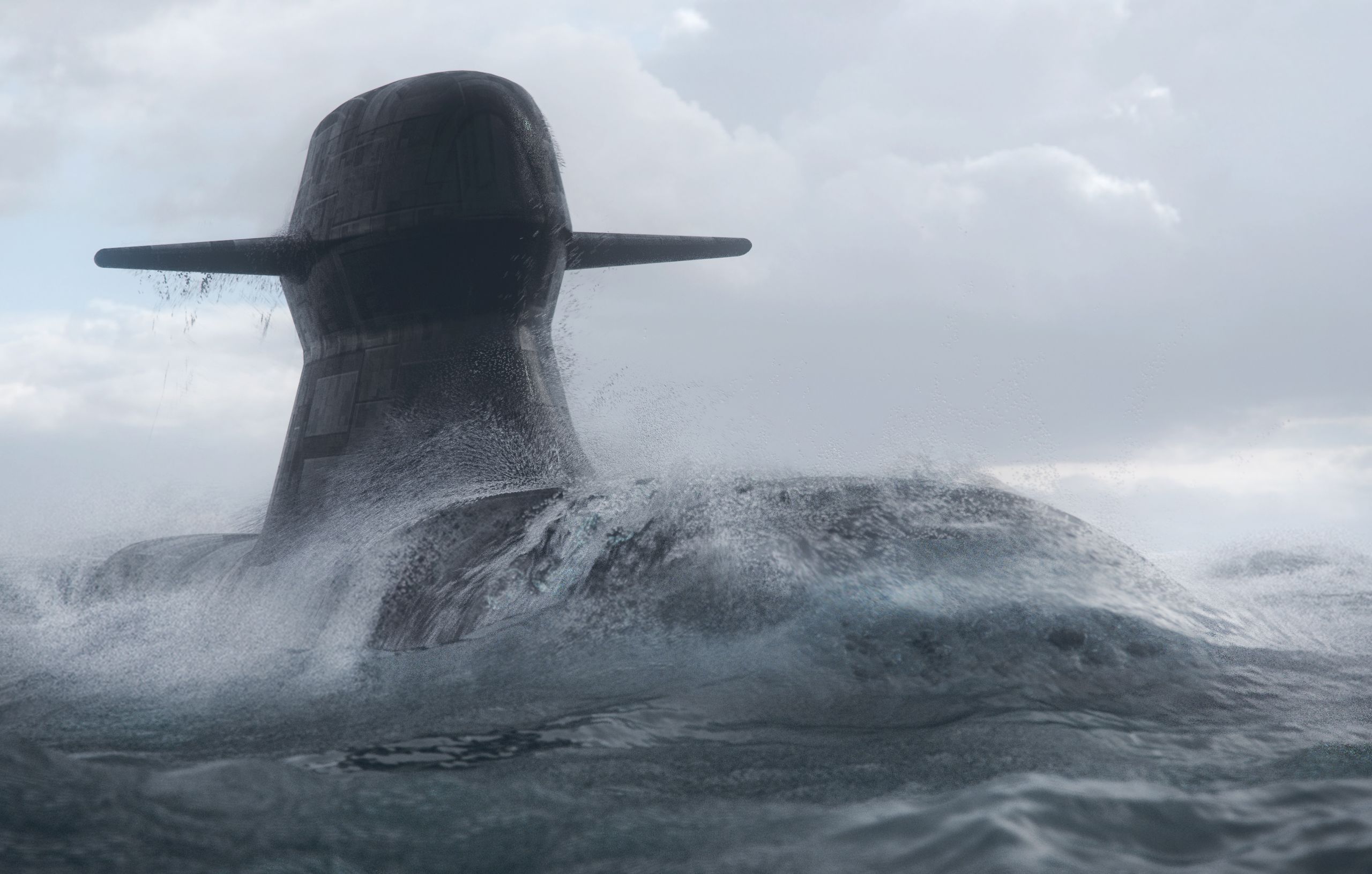 Images: Saab Defence and Security
Anyone who was hoping for a design related to the German U212A will be disappointed. The government has chosen a different logic. According to assurances, Sweden’s Saab is to deliver the vessels quickly, efficiently, and ideally at a pace never before seen in the construction of a submarine.
This is precisely the aspect that raises the most emotion. It must be admitted that believing in the schedule presented by Minister Władysław Kosiniak-Kamysz requires strong faith in the capabilities of the Karlskrona shipyard.
The prototype A26 Blekinge is already delayed by five, perhaps six years compared with the latest assurances. Construction of the first vessel only began in 2022, and despite ambitious promises made in the mid-2010s, the submarine has not only not been completed, but its commissioning date continues to be pushed back (currently 2031). Of course, this is related to the fact that the customer requested major technical changes to the vessel’s design during the project’s execution (Saab received an additional order concerning the Swedish A26 submarines).
Against this backdrop, the claim that Poland will receive its first submarine by 2030 sounds risky. Especially when the minister states that how the Swedes resolve the issue is their problem. Except that it is not a trivial matter, because to resolve it in such a short time, Saab might have to hand over to Poland a vessel it is currently building for its own navy; however, such a decision would likely require numerous intergovernmental arrangements
Small Margin
This rush does not come out of nowhere. ORP Orzeł, the only Polish submarine that still functions in any reasonable way, spends more time in dry docks than at sea. The most recent episode, when it was supposed to grace celebrations in Świnoujście with its presence but in practice returned to Gdynia due to a battery failure, shows the real, not the desired, state of affairs. Fortunately, the malfunction is fairly simple to repair.
The Submarine Squadron is on the verge of losing continuity of capability, and in the world of underwater warfare that is difficult to rebuild. Therefore, introducing a stopgap solution is not a good idea, it is the only possible one. The opportunity lies in the Gotland class (modernized and equipped with air-independent propulsion), on which most of the technologies intended for the A26 have been tested. This would be a qualitative leap for our submariners.
All of this shows that in the Orka program, politics seems to be the key factor. The government has chosen the option safest in terms of image, cooperating with a country with which we have close defense relations, which itself is intensively rearming after joining NATO, and which is not Germany.
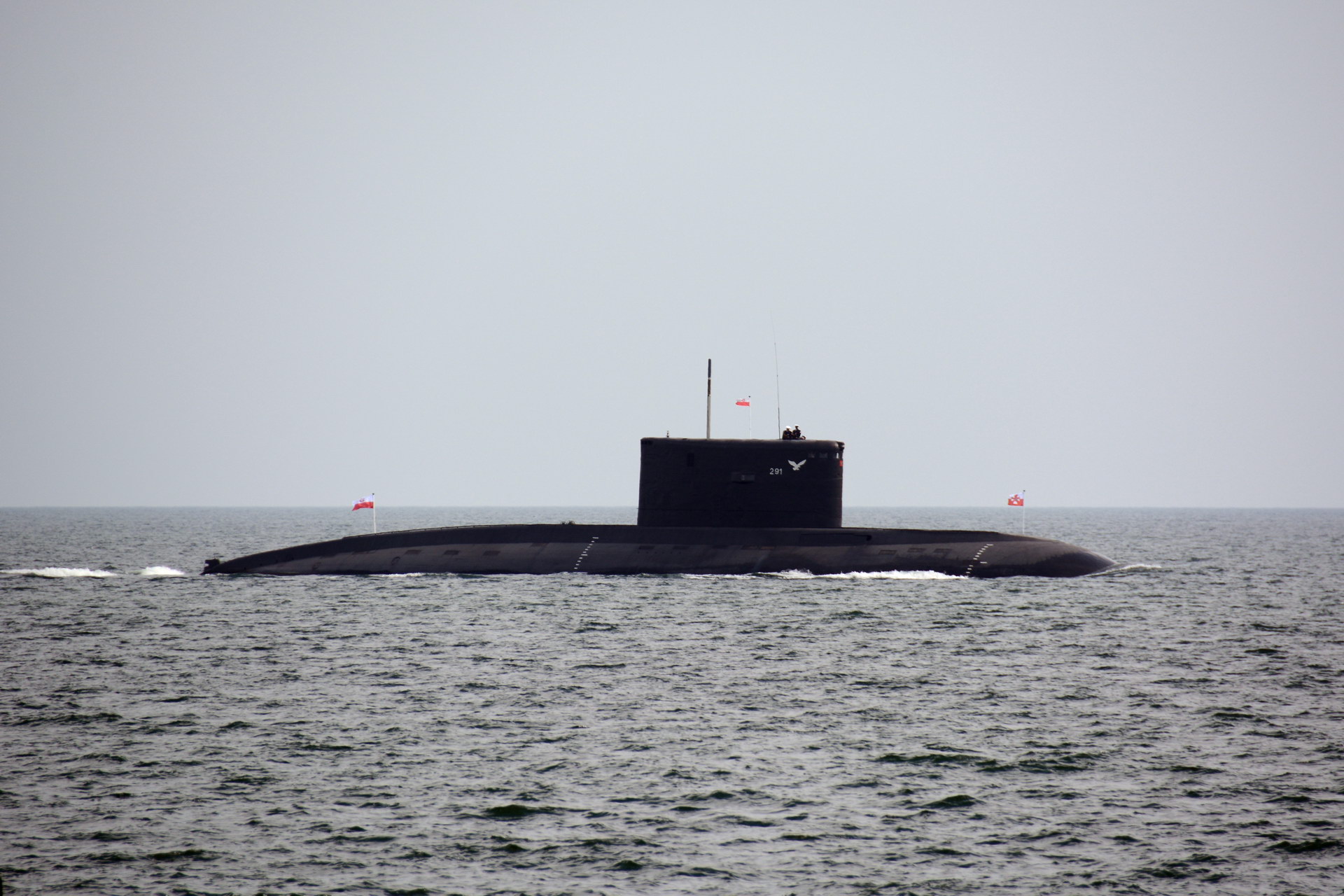 ORP Orzeł (291), Project 877E Paltus (NATO reporting name: Kilo), during this year’s naval parade in Hel / Photo: Przemysław Gurgurewicz, MILMAG
A safe solution?
However, this image-safe choice comes at a price. Poland may become the only foreign user of A26-class submarines, which, due to years of delays, may turn out to be somewhat outdated by the time they enter service. Not because the Swedes are incapable of building submarines, but because the world has moved on, and solutions that were impressive a decade ago are now slowly becoming obsolete. This includes, for example, lead-acid batteries or the Stirling engine, which offers many advantages (including operational safety), but it is undeniable that competitors have surpassed it in terms of performance.
The true irony, however, is that if the scenario whispered behind the scenes comes true, Poland will receive both prototype A26 submarines, the very ones that have drained the Swedish budget for years and led to the development of the completely new A30 design. The Swedes plan to move forward anyway, and handing over the delayed vessels may prove politically convenient for them.
No real choice?
At the same time, it is hard not to notice that any new submarines, regardless of the chosen technology, will be something of a miracle for the Polish fleet. Today, sailors have equipment at their disposal that belongs in a museum, not in the Baltic Sea. It is a bitter consolation, but a realistic one.
The problem is that if we once again fall out of sync with the schedule, if, once again, political declarations turn out to be paper, the submarine squadron will have to wait longer than it should. And at sea, there is a rule that no press release can bend: ships cannot be built with words.
This is why this story is not just about whether the Swedes will fall behind schedule, but whether the Polish state has once again made a promise whose fulfillment would require a miracle. And in the Orka program, we have yet to see such a miracle.
I am glad that Orka will finally reach port. I have been attached to this program, because I have been writing about it since 2012. Seeing how risky the political plans seem, it looks like I may have the opportunity to keep writing about it for the next decade.
More on Orka program
- Everything We Know About the Swedish Submarine for Poland’s Orka Program
- Orka Program: Poland Has Chosen Swedish Submarines
- Polish Ministry of Defence Completes Review of Documentation for the Orka Submarine Program
- MSPO 2025: Polish Armaments Group Signs Agreements with BAE Systems and Saab
- Polish Ministry of National Defence on the Orka Program: Progressing According to Plan and Without Delays
- Swedish A26 Submarine and Poland’s Orka Program
