


























On Wednesday, September 3, 2025, the U.S. company Lockheed Martin Missiles and Fire Control (part of Lockheed Martin) announced the signing of a framework agreement worth up to 9.8 billion USD with the U.S. Army Contracting Command for the delivery of 1,970 PAC-3 MSE interceptor missiles for the MIM-104 Patriot air and missile defense system. The contract also includes a package of accompanying equipment. This is the largest contract in history for the procurement of these effectors.
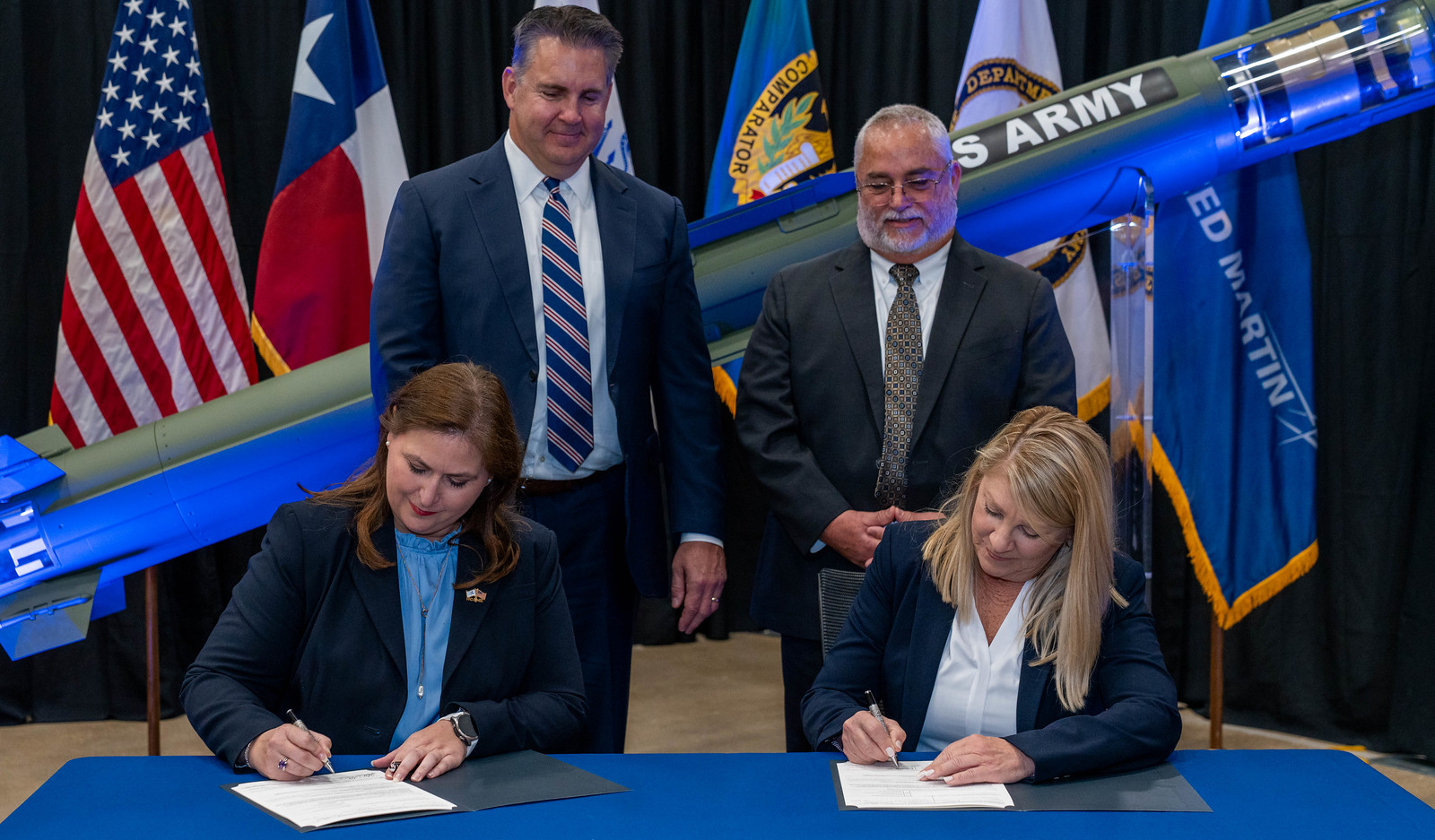 Photo: Lockheed Martin
“PAC-3 MSE’s recent combat performance solidified it as a must-have capability for America and its allies around the world,” said Jason Reynolds, vice president and general manager of Integrated Air and Missile Defense at Lockheed Martin. “With this contract, we’ll be delivering record numbers of PAC-3 MSE for years to come, ensuring our customers have the advanced missile defense solutions they need to defend what matters most.”
Lockheed Martin continues to increase production of PAC-3 missiles to meet growing demand. The company is set to deliver more than 600 missiles in 2025 for the first time. This is the result of proactive efforts to ramp up production, including significant internal investments aimed at accelerating the output of PAC-3 MSE interceptors nearly two years before the contract was signed (Lockheed Martin to increase annual PAC-3 MSE interceptor production).
The PAC-3 MSE system has been tested in Ukraine and the Middle East against advanced threats, including hypersonic missiles, tactical ballistic missiles, cruise missiles, and other aerial threats.
PAC-3 MSE missiles, an evolution of the CRI (Cost Reduction Initiative), were developed to enhance the MIM-104 Patriot system’s capability to intercept ballistic missiles. The project gave them more powerful rocket motors, and their performance was improved in terms of range and intercept altitude. PAC-3 MSE can also be used to destroy maneuvering targets such as cruise missiles as well as manned and unmanned aircraft. They lack a traditional explosive warhead and instead destroy targets using kinetic energy (hit-to-kill).
A key aspect of the U.S. Army’s record-breaking contract is the fact that, thanks to offset agreements in Poland’s Wisła program, companies belonging to Polish Armaments Group (PGZ) are part of the PAC-3 MSE supply chain:
- Wojskowe Zakłady Elektroniczne (Military Electronic Works), which recently began prototype production of ACM (Attitude Control Motors) thrusters and will soon start producing ACS (Attitude Control Section) modules, the upgraded ELES (Enhanced Electronics System), J-Box (Junction Box) switching units, and MCU (Motor Controller Unit) modules;
- Wojskowe Zakłady Lotnicze No. 1 (Military Aviation Works No. 1), which recently opened a production line for launch canisters for these missiles;
- Wojskowe Zakłady Uzbrojenia (Military Armament Works), which supply Heater Controller Units (HCU); WZU has also signed an agreement with Raytheon Polska (part of U.S. corporation RTX) to open a Cable Harness Center of Excellence for the production of over 80 cable types for the Patriot system.
Additionally, under offset agreements with RTX: Huta Stalowa Wola manufactures M903 launchers; Zakłady Mechaniczne Tarnów deliver actuators for the launchers; Wojskowe Zakłady Elektroniczne supply DLTM (Data Link Terminal Module) components and recently received a contract to supply ESA (Energy Storage Assembly) modules for the latest LTAMDS radars. Earlier, PIT-Radwar provided IFF (Identification Friend or Foe) systems for older AN/MPQ-65 radars. Several Polish entities also deliver components exclusively for the Wisła program, in line with the requirements of the Polish Armed Forces.
Missile defense just got a $9.8B boost. 💥
PAC-3 MSE is combat-proven, precision-driven and scaling up.
With the @USArmy, we're advancing production and innovation to stay ahead of emerging threats. pic.twitter.com/EuazyNHgNY
— Lockheed Martin (@LockheedMartin) September 3, 2025
