













The Textile Seminar ‘Smart Textiles in the Service of Defense’ brought together a large group of experts at the Kętrzyn Castle, all specializing in issues related to the broad field of military and uniformed service apparel. The event gathered representatives from industry, academia, government administration, the armed forces, and uniformed services. It focused on the latest solutions and trends in the field of specialized textiles and their wide applications in defense and security. This was the first edition of the event, and the organizers announced that it is intended to become a recurring one. Thanks to the support provided by the Mayor of Kętrzyn, Karol Lizurej, the seminar could be held in a city with a rich textile heritage.
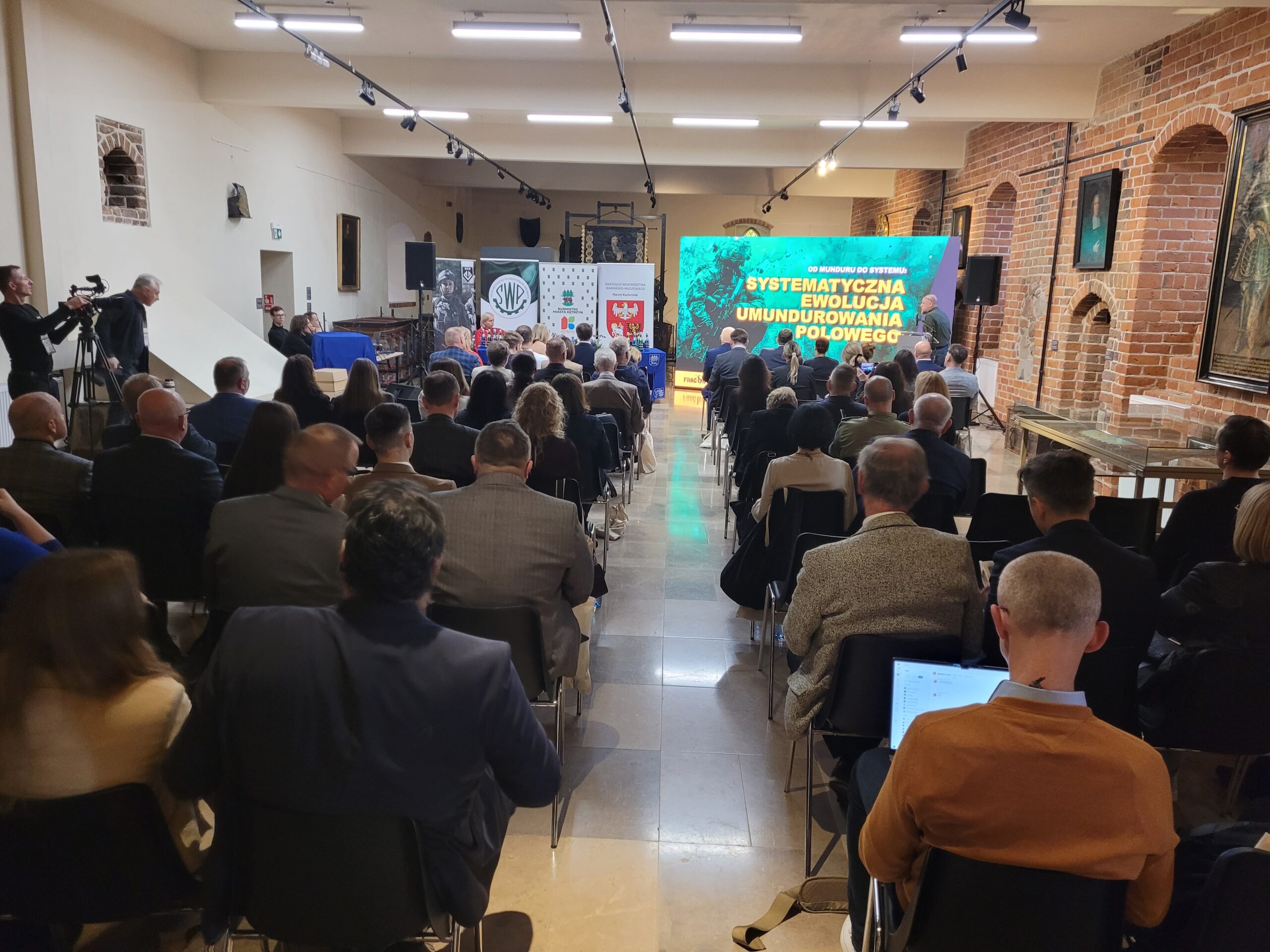
The Textile Seminar ‘Smart Textiles in the Service of Defense’ was held in one of the halls of the Kętrzyn Castle
Uniforms in Theory and Practice
During the seminar, we had the opportunity to listen to many interesting presentations, several of which deserve particular attention. One of them was delivered by Prof. Małgorzata Matusiak, DSc, Eng., from the Institute of Textile Architecture at the Lodz University of Technology, who gave a lecture entitled ‘Selected Issues of Comfort in the Use of Uniform Clothing,’ opening the substantive part of the seminar. The presentation discussed definitions necessary to describe the subject, theoretical assumptions, and the practical aspects of laboratory research aimed at determining wear comfort under controlled conditions, without elements of subjective user assessment. Professor Matusiak also presented new solutions in the field of fibers used in the production of uniform clothing, illustrated by the example of garments used by the Fire Service.
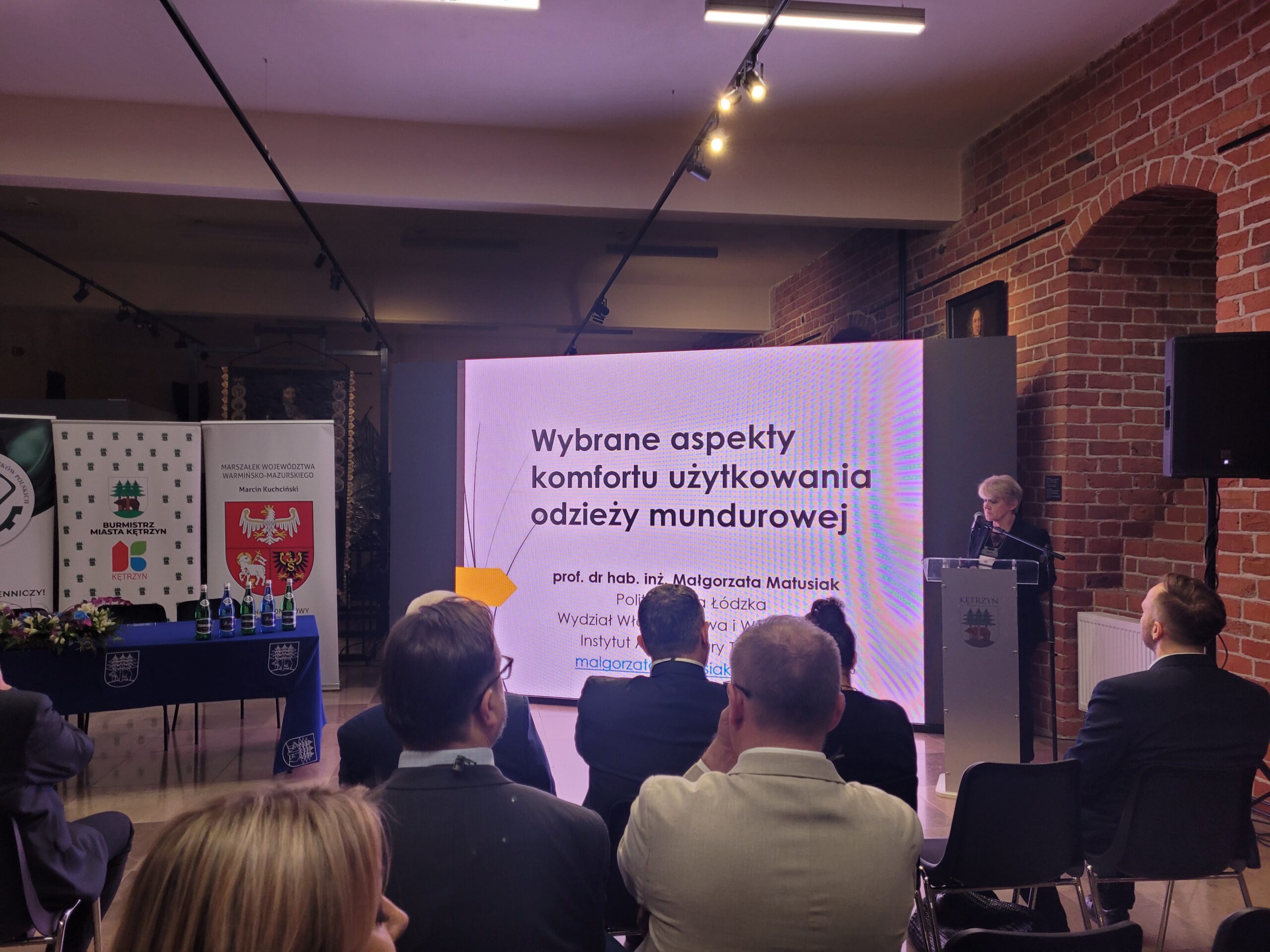
Presentation by Prof. Małgorzata Matusiak from the Lodz University of Technology
Lt. Col. (ret.) Michał Sitarski presented the concept of the uniform as a multilayer clothing system. He discussed the history of the implementation and development of this concept, including the latest version of the U.S. Army’s ECWCS uniform system, and compared it with the newest uniform concept adopted by the Polish Land Forces. He concluded his presentation by highlighting new directions in the development of uniform systems, which are beginning to take on additional functions, for example, by incorporating sensors to monitor soldiers’ health status.
Solutions for the Future
An interesting note here: one of the following presentations was given by Wojciech Paprota, CEO of the start-up Walletmed, which specializes in such systems. Wojciech Paprota presented the progress of work on uniform undergarments developed by his company, designed to monitor soldiers’ health conditions. Through a series of sensors integrated into the clothing, it is possible to track, for example, a soldier’s heart activity and other vital functions. This data can then be transmitted, for instance, to command centers.
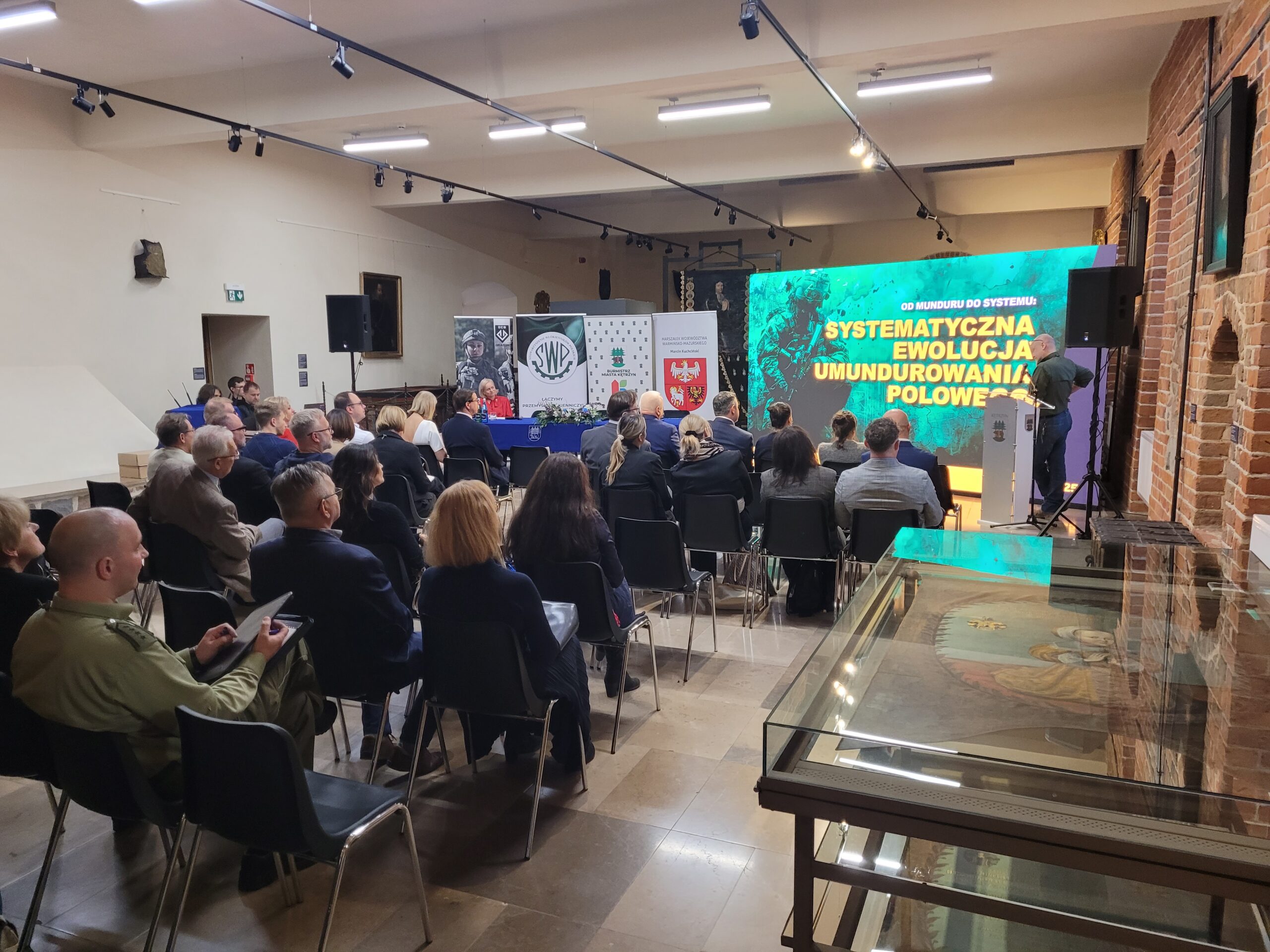 Presentation by Lt. Col. (Ret.) Michał Sitarski on the Uniform as a System
At present, the method of transmitting data in a way that does not reveal a soldier’s position remains an open question. Walletmed is currently focusing primarily on methods of monitoring vital functions, treating this issue as a higher priority. In this way, the concept of smart textiles is no longer just a futuristic idea.
The presentation attracted significant interest from the company Unifeq, whose representatives declared their support for Walletmed’s work on this solution and their willingness to assist in implementing the new technologies.
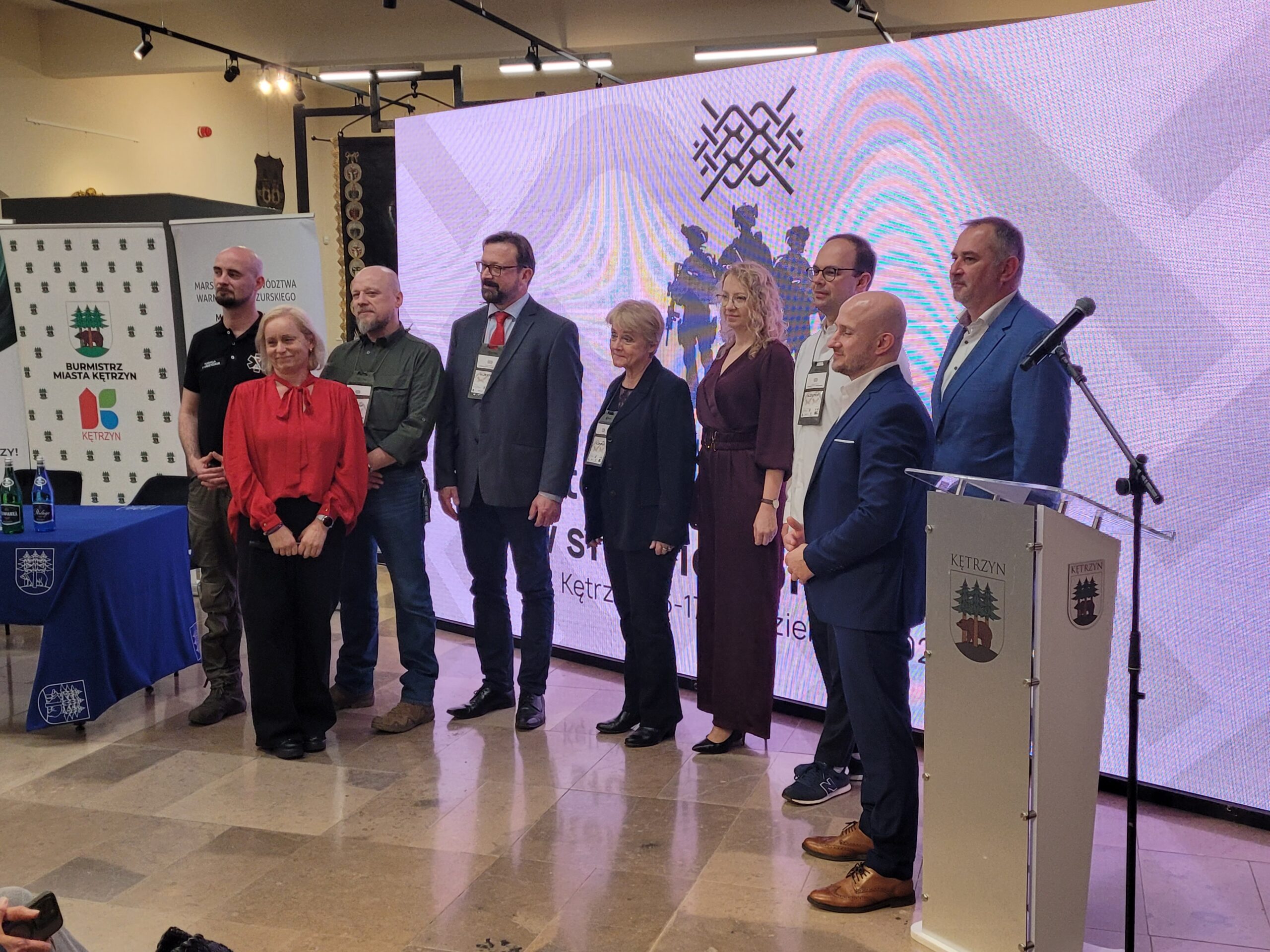
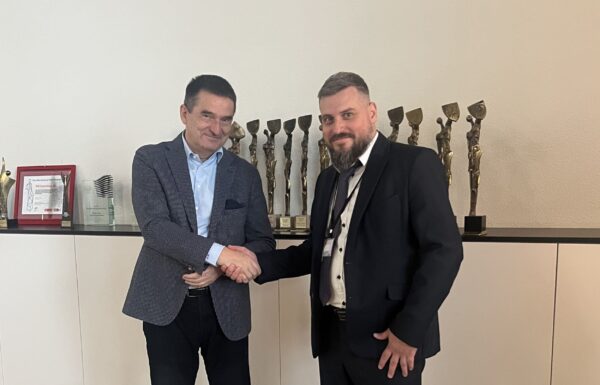
Speakers of the First Textile Seminar ‘Smart Textiles in the Service of Defense’ / Photos by Grzegorz Sobczak
Krzysztof Dzwoniarski, representing the company Unifeq Europe, delivered a presentation on operational requirements in the design of bulletproof vests. He discussed the latest development trends in this field, covering various aspects of design. These include both the materials used for ballistic inserts and the different levels of protection against various types of ammunition, as well as the areas of a soldier’s body that are to be protected.
