


























On Wednesday, 10 December 2025, PGZ Stocznia Wojenna, which is part of the Polish Armaments Group (PGZ), announced that it had signed an agreement with the British company James Fisher and Sons PLC (JFD) for the integration of an advanced saturation diving and submarine rescue system on the Ratownik rescue vessel currently under construction.
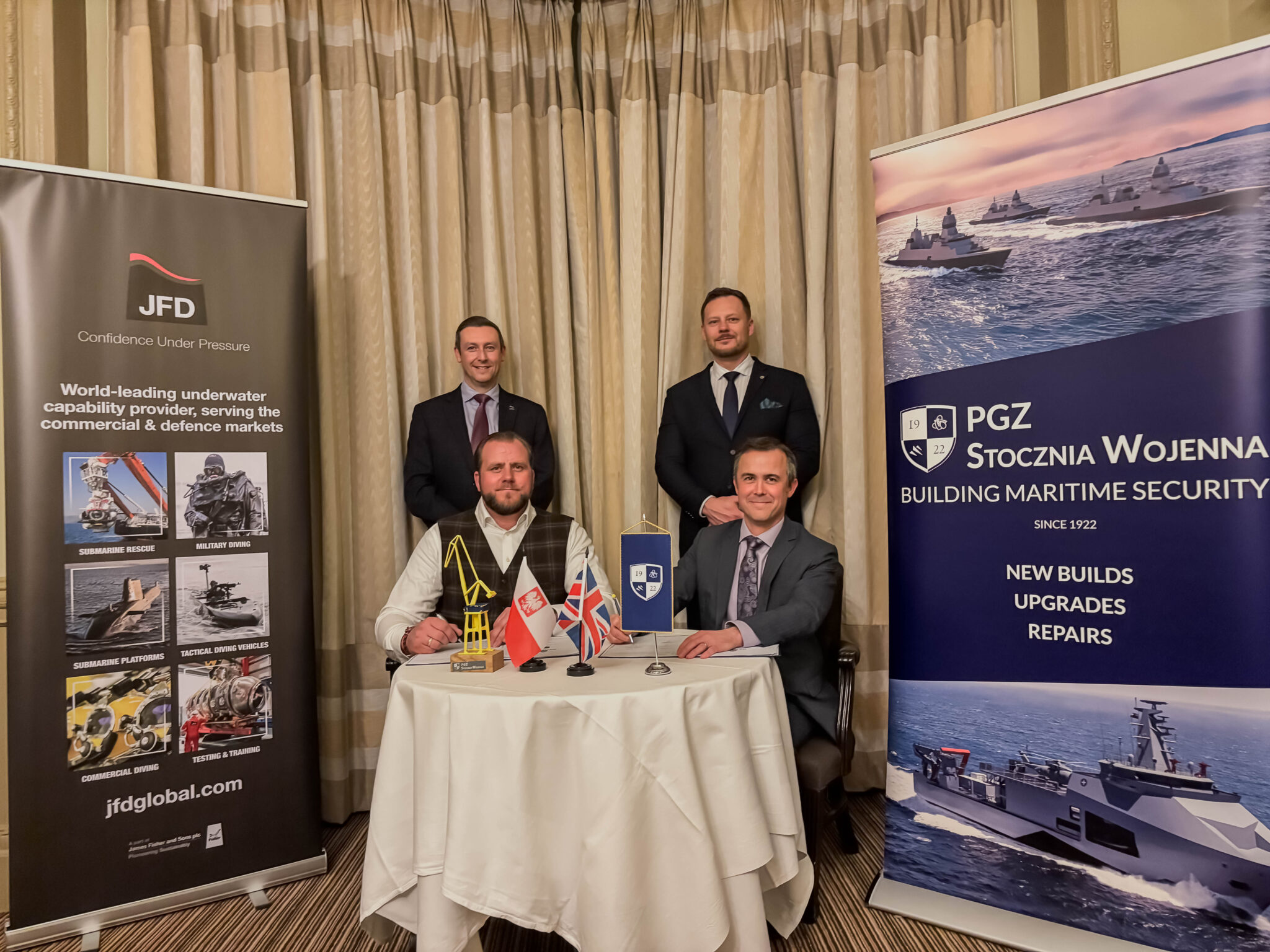 Photos and images: PGZ Stocznia Wojenna, James Fisher and sons PLC
The contract includes the delivery and integration of a classified hyperbaric chamber complex together with a life-support system. Ratownik will be compatible with the NATO Submarine Rescue System (NSRS) – a system managed by JFD since 2015 on behalf of the naval forces of the United Kingdom, France, and Norway.
JFD conducted a pre-design study and feasibility assessment for system integration in 2019. During the construction phase, the company will draw on its expertise in the world’s most technologically advanced saturation diving systems.
According to the manufacturer, the system will consist of three decompression chambers for 32 crew members of a conventional submarine, a diving bell for deep-water operations including saturation dives, a hyperbaric rescue boat, a TUP (Transfer Under Pressure) lock enabling transfer under constant pressure between the below-deck complex and the deck, a storage area for breathing-gas cylinders, and auxiliary equipment (such as a bell winch with cable umbilical and a boat crane).
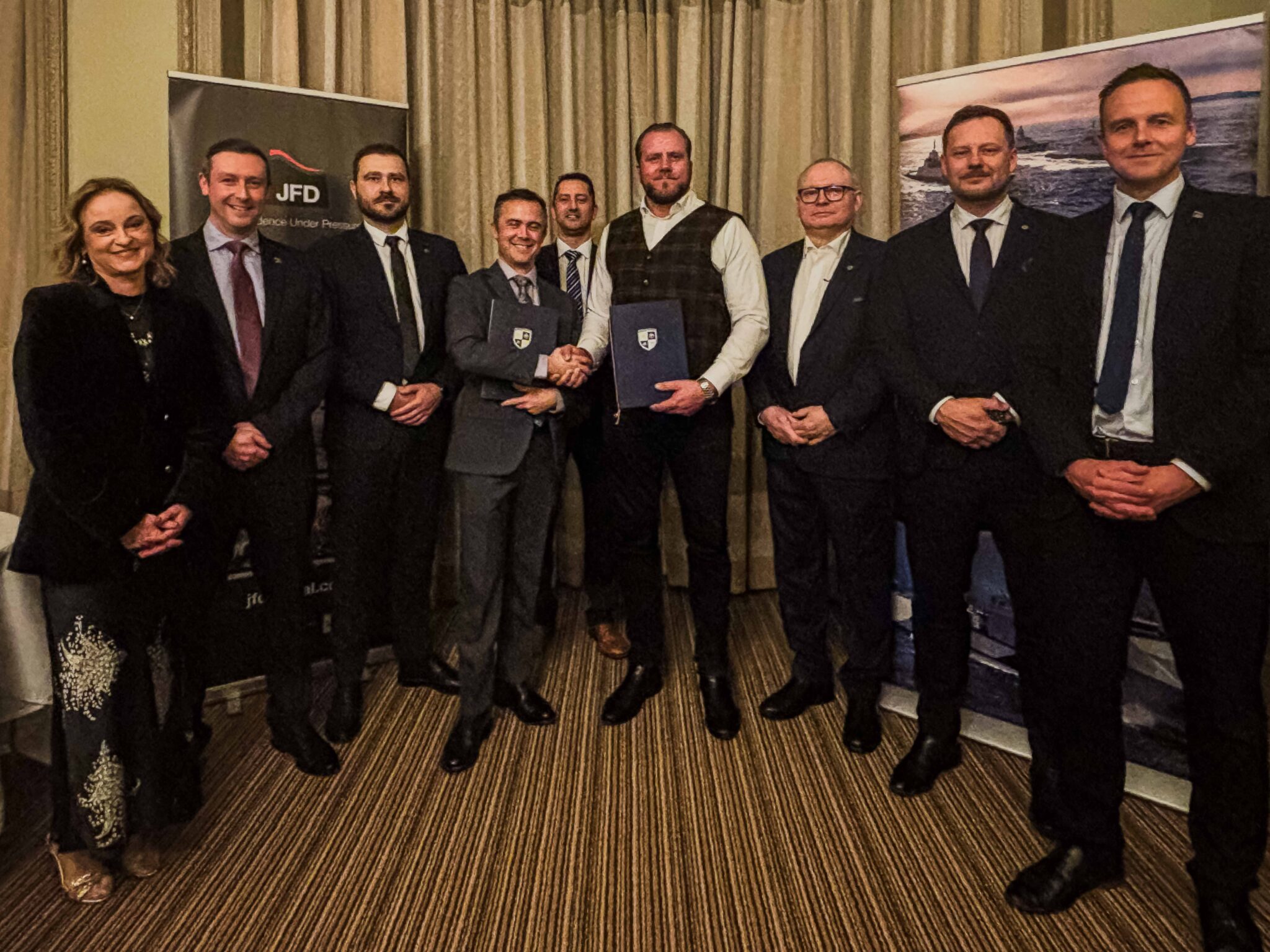
Rob Hales, Head of Defence at James Fisher, said: “We are proud to support PGZ Stocznia Wojenna (PGZ Naval Shipyard) and the Polish Navy to deliver this world class capability. Combining the shipyard’s shipbuilding experience with our submarine rescue and saturation diving expertise will deliver an exceptional capability for Poland, as it invests into its future submarine fleet and the protection of critical underwater infrastructure. We would like to thank PGZ Stocznia Wojenna and the Polish Navy for their trust in us to deliver this mission critical capability.”
Marcin Ryngwelski, President of PGZ Stocznia Wojenna: “Ratownik will provide the Polish Navy with advanced submarine rescue and saturation diving capabilities essential for operations in the Baltic Sea. The vessel will serve as a strategic asset for both submarine rescue operations and the protection of critical underwater infrastructure. As Poland’s primary naval shipbuilder, PGZ Stocznia Wojenna is committed to delivering this advanced capability for the Polish Navy. Our collaboration with JFD Global brings together our shipbuilding experience with their expertise in complex hyperbaric systems, ensuring NATO-standard interoperability and operational readiness.”
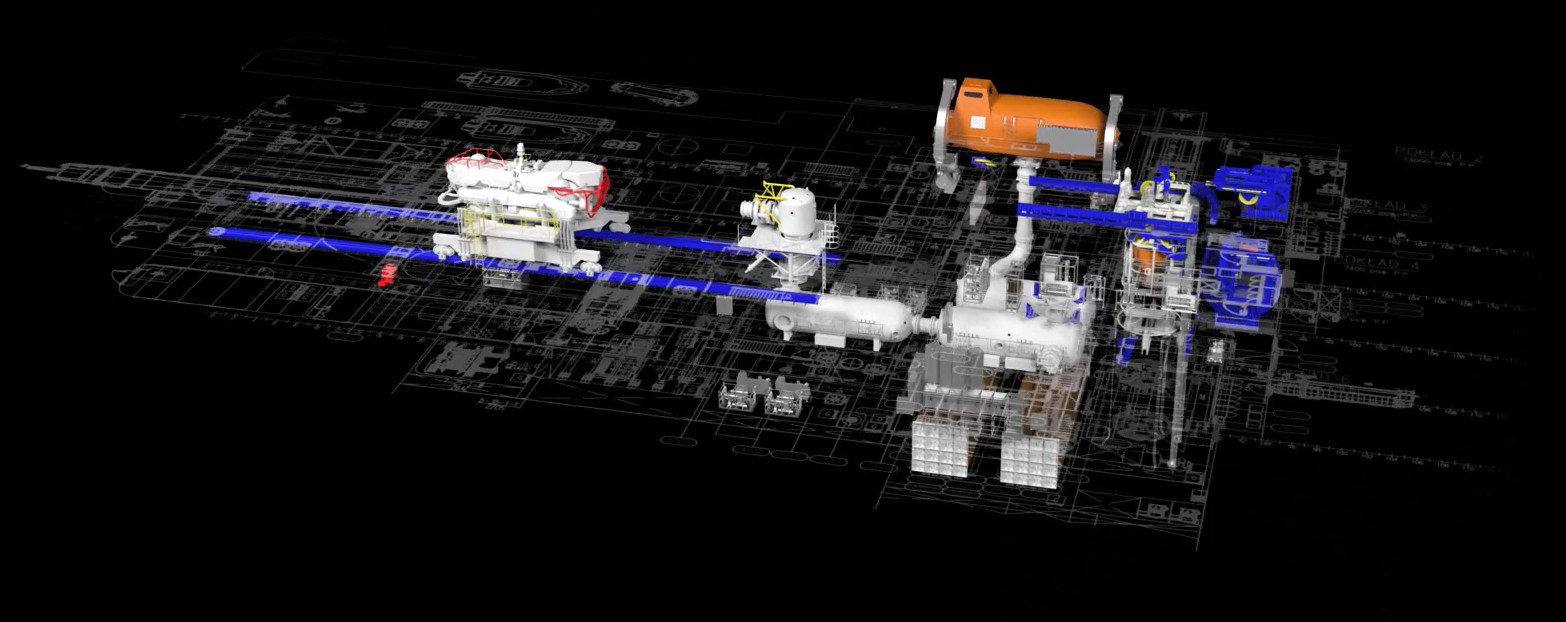 Hyperbaric Chamber Complex with Life-Support System
Jan Grabowski, Vice President of PGZ Stocznia Wojenna added:
“It is a privilege to enter into this contract for a state-of-the-art system, whose foremost purpose is to safeguard lives and ensure uncompromising safety based on the highest standards of reliability.”
Earlier, on 6 December of this year, as part of the Ratownik program, PGZ Stocznia Wojenna signed a contract in Canada with OSI Maritime Systems for the delivery of an Integrated Bridge & Navigation System (IBNS), which will be a variant of the advanced Integrated Navigation & Tactical System (INTS). Meanwhile, on 8 October of this year, during the 23rd BALTEXPO International Maritime and Military Fair in Gdańsk, an agreement was signed with the German company Schottel for the delivery of azimuth thrusters.
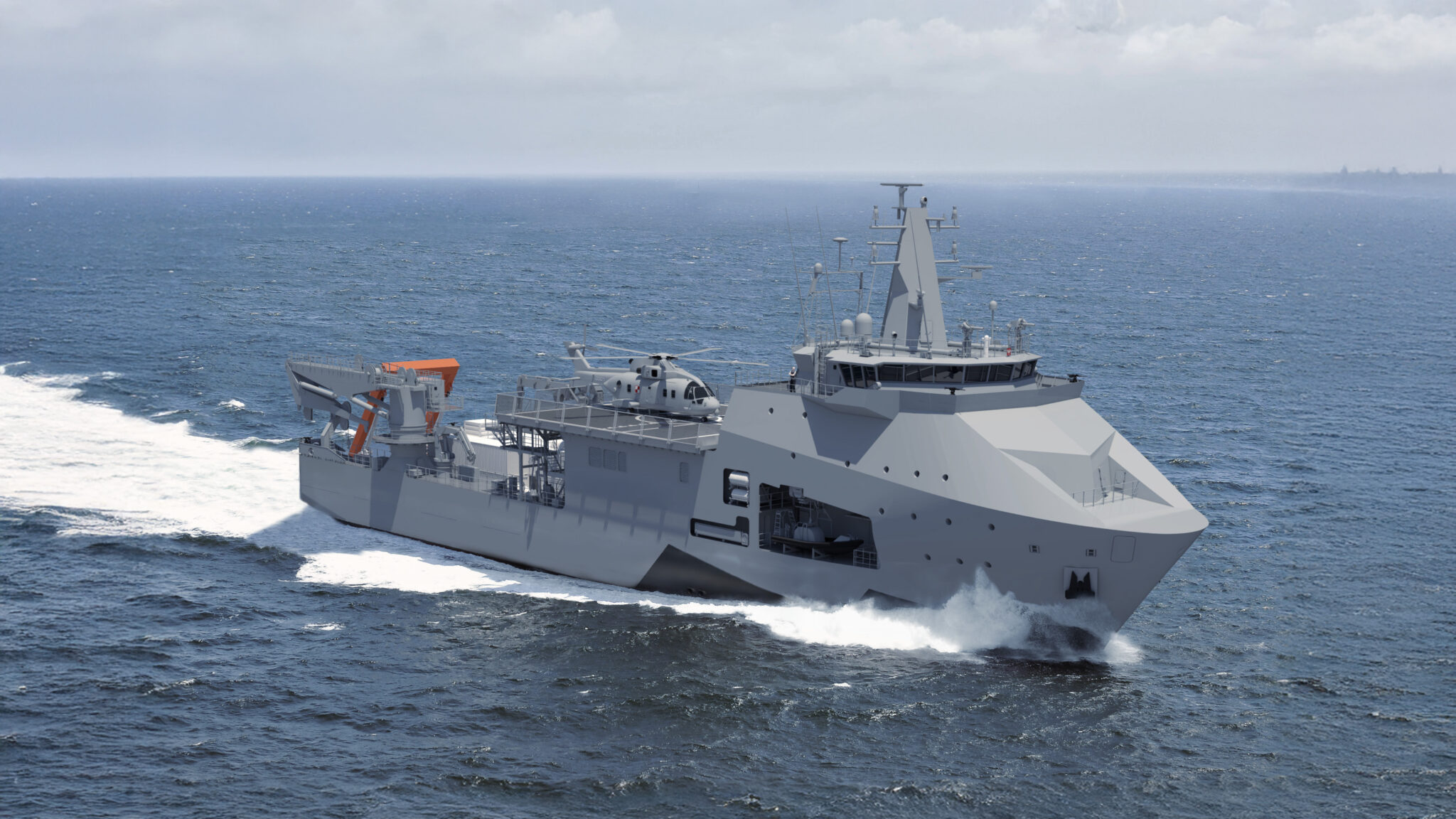
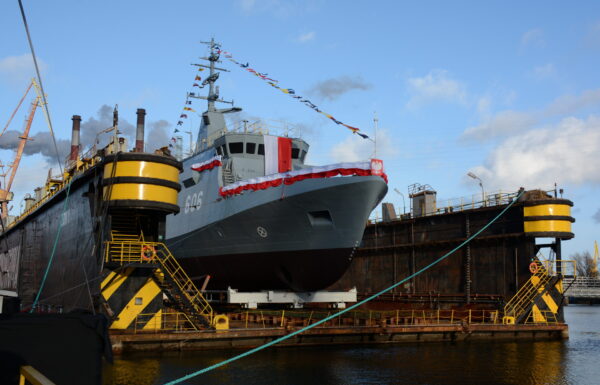
The Project 108 rescue vessel will be a large ship with a displacement of approximately 6,500 tons, a length of about 96 meters, and a beam of 18.8 meters. The vessel is expected to have a speed of around 18 knots and a range of approximately 6,000 nautical miles. The crew will consist of about 100 people, with additional accommodations for 9 more. The ship will replace the aging rescue vessels of the Polish Navy and will serve both as a national asset and within NATO operations.
The first steel cutting for the vessel took place on 26 November of this year. The keel is scheduled to be laid in February next year, the launch is planned for 2027, and delivery to the customer is expected at the end of 2029.
