






















During the 33rd International Defence Industry Exhibition MSPO 2025, held on 2–5 September at Targi Kielce, Belma, which part of the Polish Armaments Group (PGZ), presented the Bluszcz optionally manned scatterable mine-laying system.
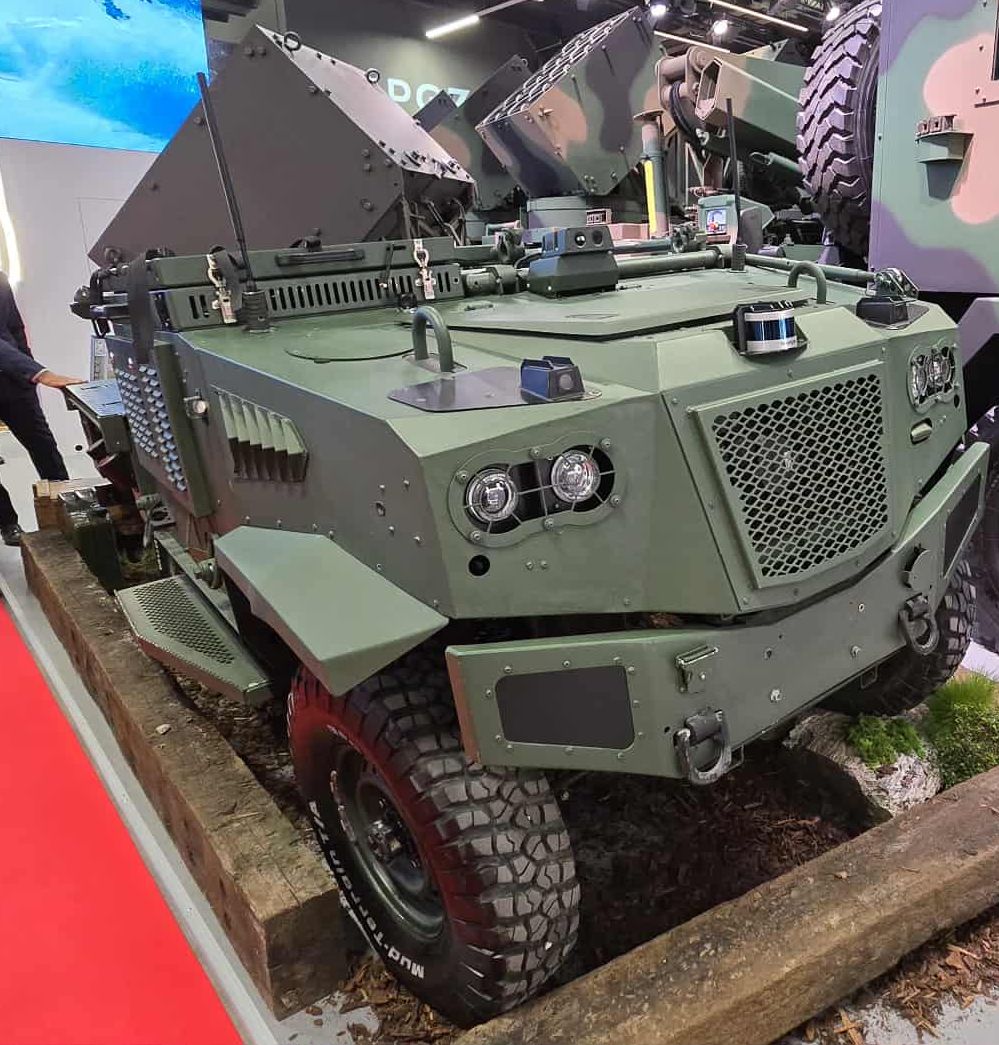 Photo: Jakub Link-Lenczowski, MILMAG
The optionally manned scatterable mine-laying system codenamed Bluszcz is a modern solution designed for the rapid and precise creation of minefields. Its innovative feature is the ability to switch between manual and remote operation depending on the threat level.
The vehicle is equipped with a central control system that enables unmanned operation, including autonomous functions allowing a pre-programmed route to be executed.
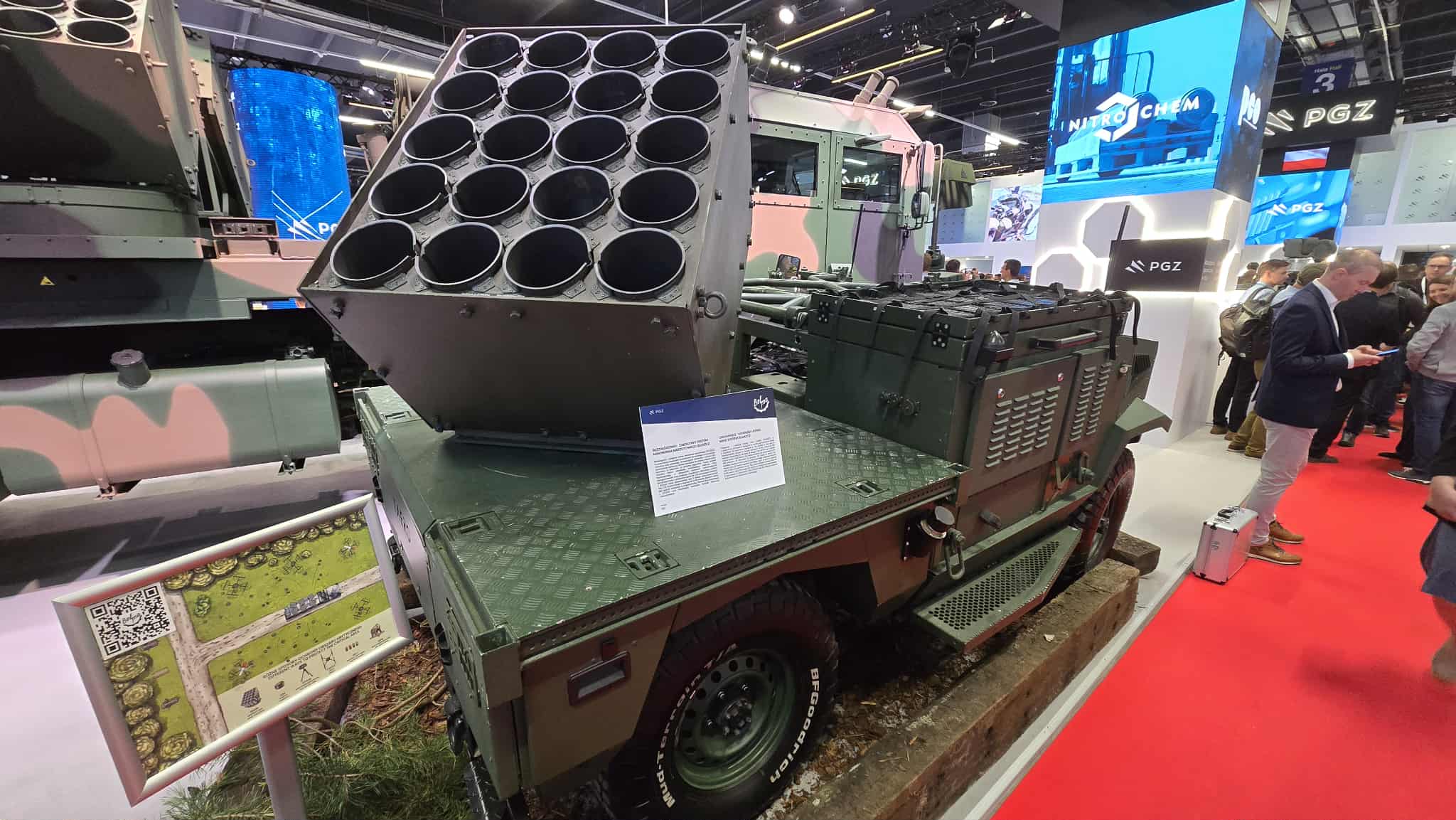 Photo: Jakub Link-Lenczowski, MILMAG
The core component of the system is an integrated launcher module mounted on the chassis, consisting of a set of barrels loaded with 20 interchangeable cassettes, each containing five MN-123 anti-tank mines. The system can lay mines in a strip between 30 and 90 meters wide. Both the coverage area and the density of the minefield are fully programmable.
Bluszcz was developed in cooperation with the Białystok-based company STEKOP and the Military Institute of Armored and Automotive Technology (WITPiS) in Sulejówek. The platform is based on the optionally manned/unmanned TAERO vehicle.
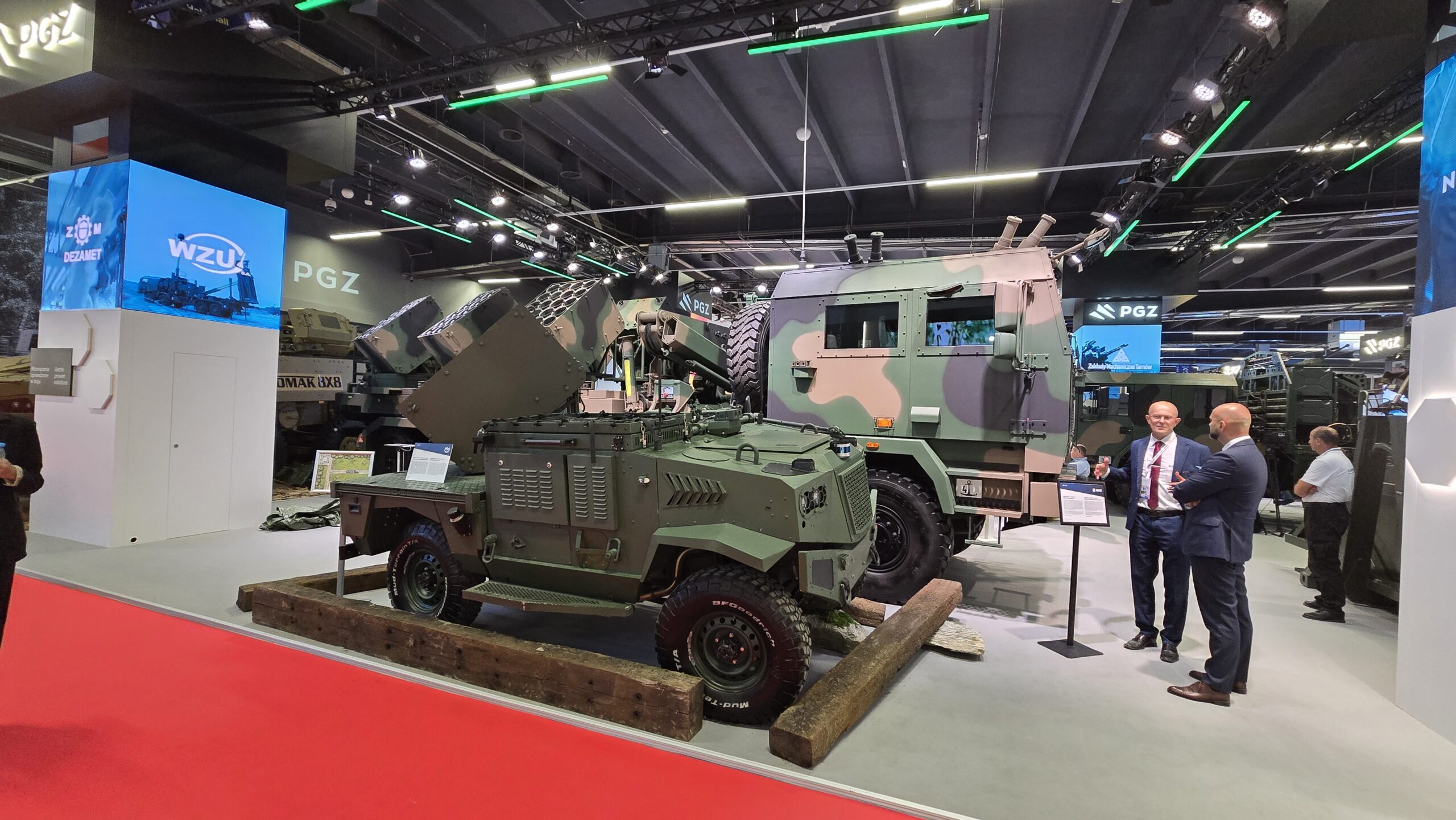 Photo: Belma
Currently, Belma is a supplier of scatterable mine-laying components, together with Huta Stalowa Wola (responsible for the chassis), as part of market consultations for new tracked scatterable mine-laying vehicles for the Polish Armed Forces. The company is also the supplier of 24 Baobab-K wheeled scatterable mine-laying vehicles (PMN) on an armored Jelcz 8×8 chassis, scheduled for delivery between 2026 and 2028 (the first serial-production example, as announced by HSW, was displayed next to the Bluszcz vehicle; see photo above – editor’s note).
The system also uses MN-123 anti-tank scatterable mines (similar to the older ISM Kroton). These mines, with a diameter of 180 mm and a height of 90 mm, weigh 3.7 kg. They can be equipped with Explosively Formed Penetrator (EFP) charges capable of penetrating 60 mm of armor. Detonation can be triggered by a magnetic, delayed, or immediate fuze. Before deployment, each mine can be programmed to detonate at a chosen moment, after a specified time following fuze activation or after a designated number of vehicles has passed over it. In accordance with international conventions, MN-123 mines are designed to self-neutralize after a predetermined time. Neutralization is achieved either by detonation or by disabling the mine’s ability to trigger the explosive charge.
