























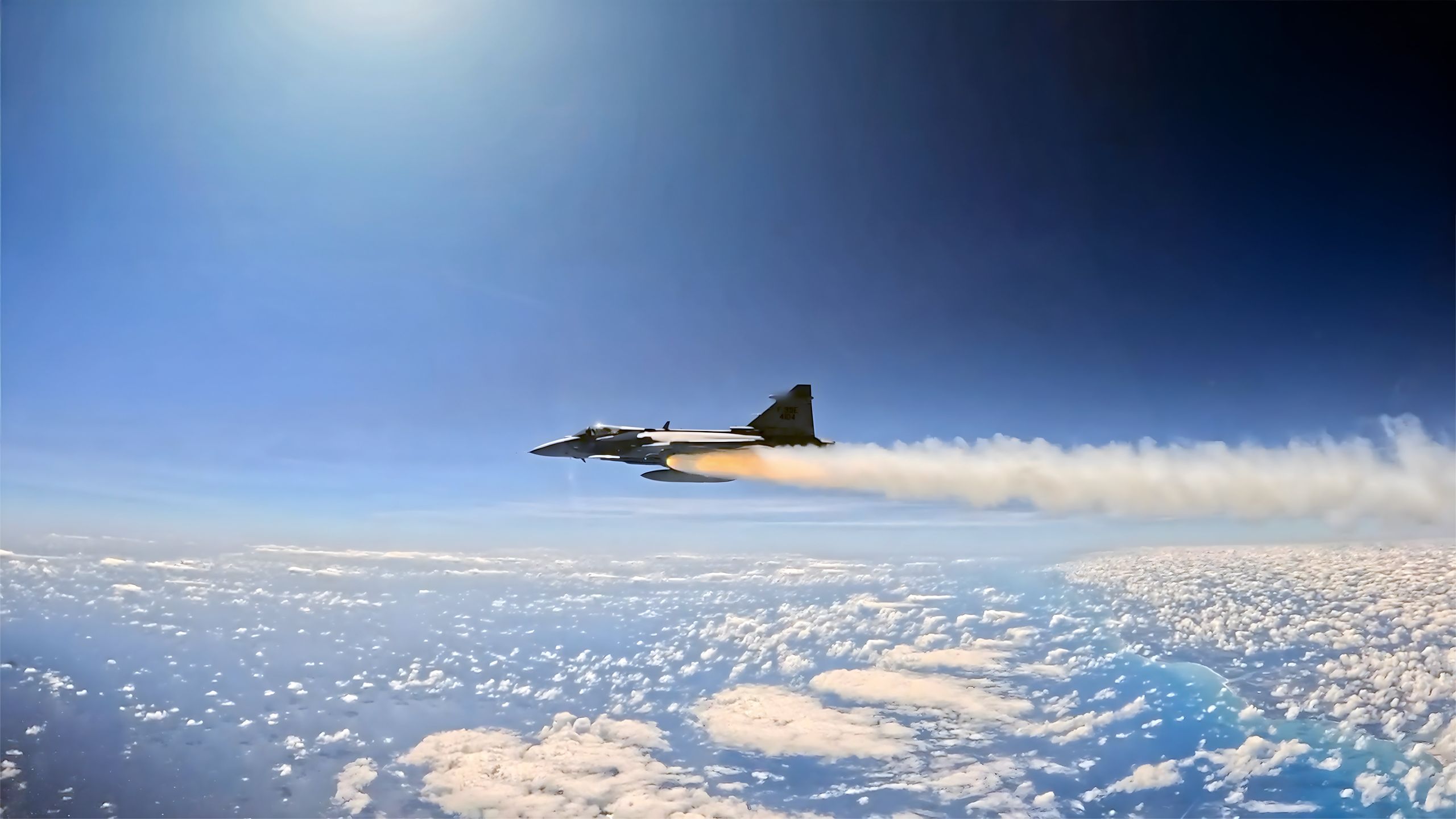
On Tuesday, 2 December 2025, the Swedish company Saab Defence and Security announced that in November this year the Brazilian Air Force (Força Aérea Brasileira, FAB) certified the F-39E/F Gripen multirole aircraft (locally designated JAS 39E/F) for the MBDA Meteor beyond-visual-range air-to-air missile (BVRAAM).
 Photos: Saab Defence and Security
The first live-fire tests with two missiles, conducted last month from a single-seat F-39A Gripen, were carried out as part of the BVR-X technical exercise, involving personnel from the 1st Air Defence Group (1º GDA) based at Natal Air Base in Rio Grande do Norte, northeastern Brazil. The test aircraft was accompanied by three other Gripens. The test missiles accurately struck their designated targets – Leonardo Mirach 100/5 unmanned aerial vehicles, simulating hostile combat aircraft.
“The BVR-X was a crucial step in expanding the capabilities of the F-39E Gripen. The Gripen and METEOR combination projects Brazil’s combat power and strengthens the deterrence required by our Air Force and, above all, by the country. With advanced sensors, mission systems and electronic warfare capabilities, combined with a missile designed to make evasion virtually impossible, this combination provides a decisive advantage in air combat,” said Air Major General Breno Diogenes Gonçalves, Commander of Natal Air Base and Director of the Technical Exercise.
“The success of this operation reflects the strong partnership between the Brazilian Air Force, Saab and MBDA. Through this close collaboration, we are bringing cutting-edge technology to Brazil. The Gripen and METEOR combination places the country among the few nations worldwide with access to this level of air combat innovation,” said Peter Dölling, Managing Director at Saab Brasil.
“METEOR is one of the best examples of what is at the core of MBDA’s DNA: cooperation. It is the result of the joint effort of six European nations, led by MBDA, to create the most sophisticated air-to-air weapon system in operation today. The missile, already certified for use with Gripen E in Sweden, is a game-changer that ensures air superiority for its operator. Brazil now benefiting from this capability is an element of pride for MBDA,” explained Ricardo Mantovani, Vice President Export Sales Americas at MBDA.
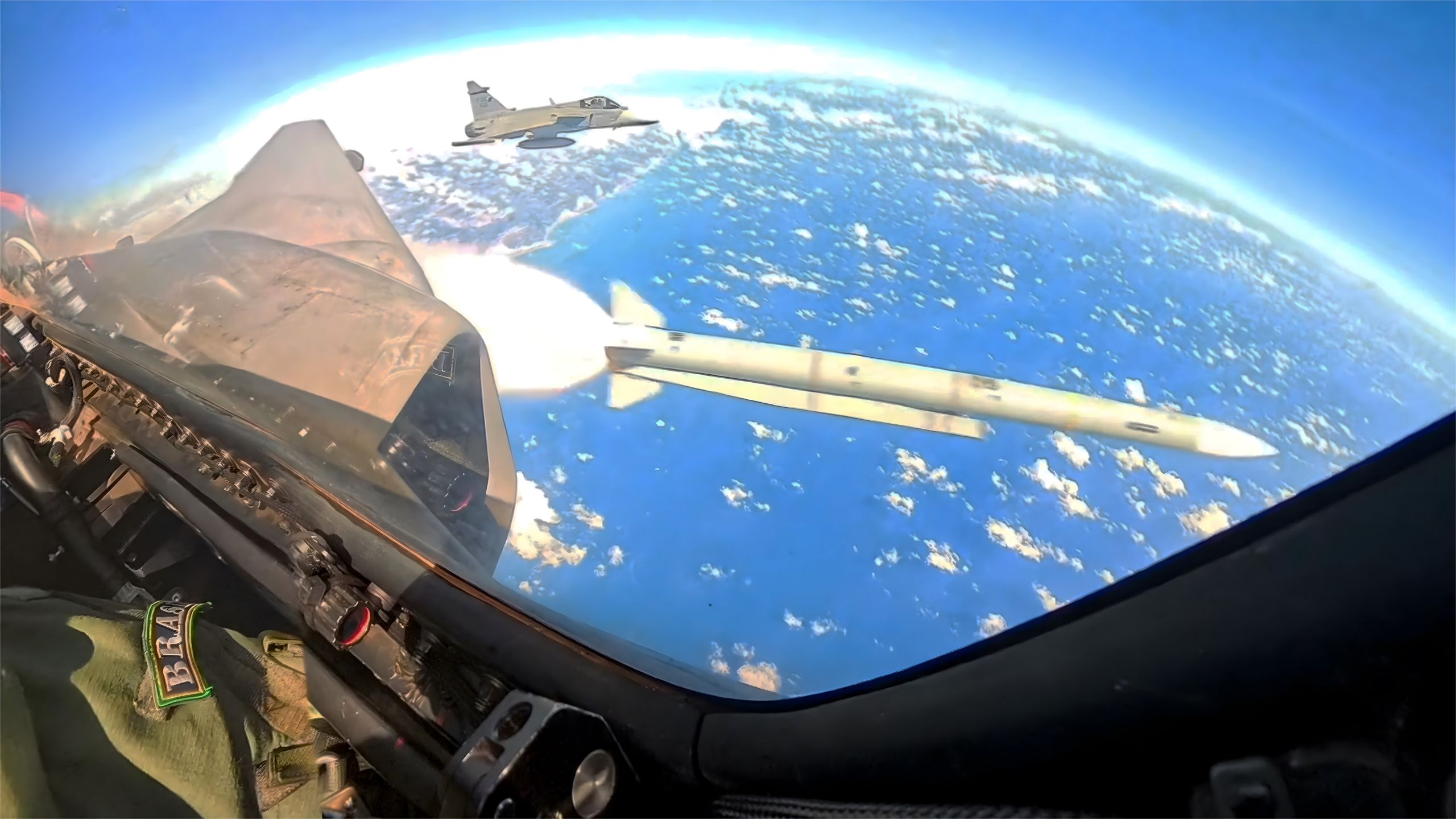
Preparations for the BVR-X technical exercise were carried out with support from Saab, MBDA, and several FAB units, including the Operational Applications Institute, which received key knowledge regarding missile employment. Maritime patrol aircraft also helped secure the sea area to ensure safe launch conditions for the Meteor missiles.
Earlier, Brazil had certified its newest combat aircraft for aerial refueling from the Embraer KC-390 Millenium transport/tanker aircraft.
As mentioned, Meteor missiles are certified for use on Swedish Gripens, both the earlier JAS 39C/D and the newer JAS 39E, including with the new UML (Universal Missile Rail Launcher) rails developed from the L3Harris Technologies MELP5 (Missile Eject Launcher, Pylon 5). In March this year, Sweden ordered a new batch of these missiles. The first Meteor batch was ordered in September 2010, and Initial Operational Capability (IOC) was declared in 2016.
The Meteor missile was developed jointly by Sweden, Italy, Spain, Germany, France, and the United Kingdom. In addition to these nations, it has entered service with the armed forces of Croatia, Greece, India, Qatar, and Thailand, and South Korea and the United Arab Emirates will join in the future. Hungary had previously planned to acquire it, while Saudi Arabia ultimately withdrew.
MBDA Meteor missiles can be used in all weather conditions against combat aircraft, unmanned aerial vehicles, and cruise missiles. The missile uses active radar homing and is equipped with a datalink, allowing it to operate in a network-centric environment and improving the precision of air operations. It is 3.7 m long, 178 mm in diameter, and weighs 190 kg. It is powered by a variable-flow solid-fuel ramjet engine. The weapon features both impact and proximity fuzes and a fragmentation warhead. As a BVRAAM-class missile, it can destroy targets at distances of up to approximately 150 km. Since 2016, the Meteor has also served as the basis for the JNAAM (Joint New Air-to-Air Missile) being developed in cooperation with Japan.
