
















On Tuesday, 18 November 2025, in Washington, U.S. President Donald Trump hosted Saudi Crown Prince Mohammed bin Salman. During the visit, a number of agreements were signed concerning defense, the extraction of key raw materials, civilian nuclear energy, artificial intelligence, technologies, and trade.
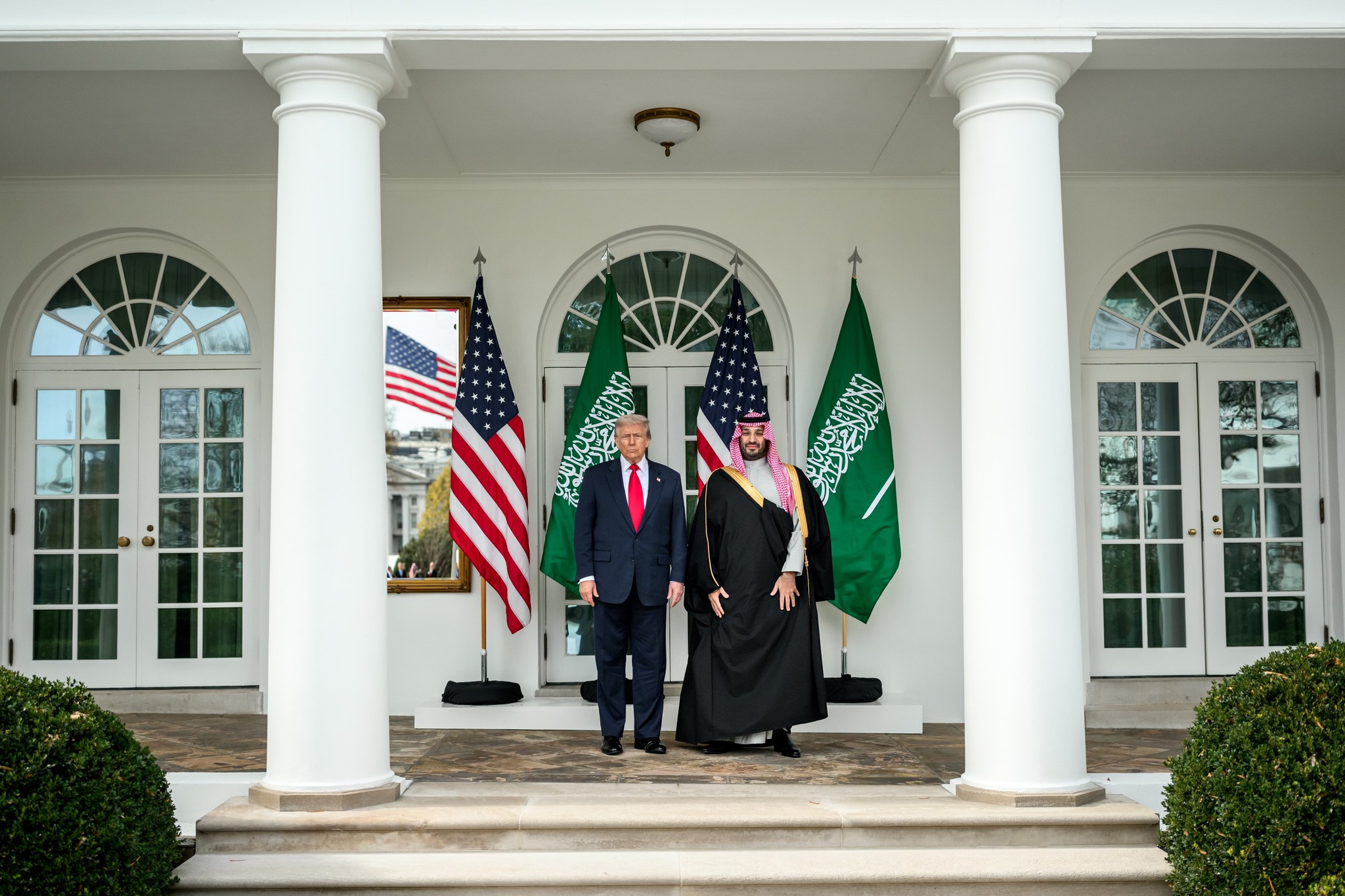 Photo: Daniel Torok, White House Press Office
The signed document, titled the Strategic Defense Agreement (SDA), is based on a series of economic agreements with Riyadh concluded on 13 May of this year during Trump’s visit to Saudi Arabia, with a total value of 600 billion USD, of which nearly 142 billion USD is allocated to defense-related agreements (Record U.S.–Saudi defense deals).
It has now been announced that the commitments will increase to nearly 1 trillion USD, and the agreements include:
- a civil nuclear cooperation agreement, cooperation on critical minerals, and a memorandum on artificial intelligence;
- the Strategic Defense Agreement concerning Saudi Arabia’s future purchases of nearly 300 M1A2 Abrams tanks, F-35 Lightning multirole aircraft, and unmanned aerial systems.
Interestingly, according to the defense outlet Breaking Defense, General Atomics Aeronautical Systems Inc. (GA-ASI) is negotiating the sale to Saudi Arabia of a record number of up to 130 MQ-9B SeaGuardian maritime combat drones and 200 systems from the new Gambit family of unmanned aerial platforms, the so-called Loyal Wingmen.
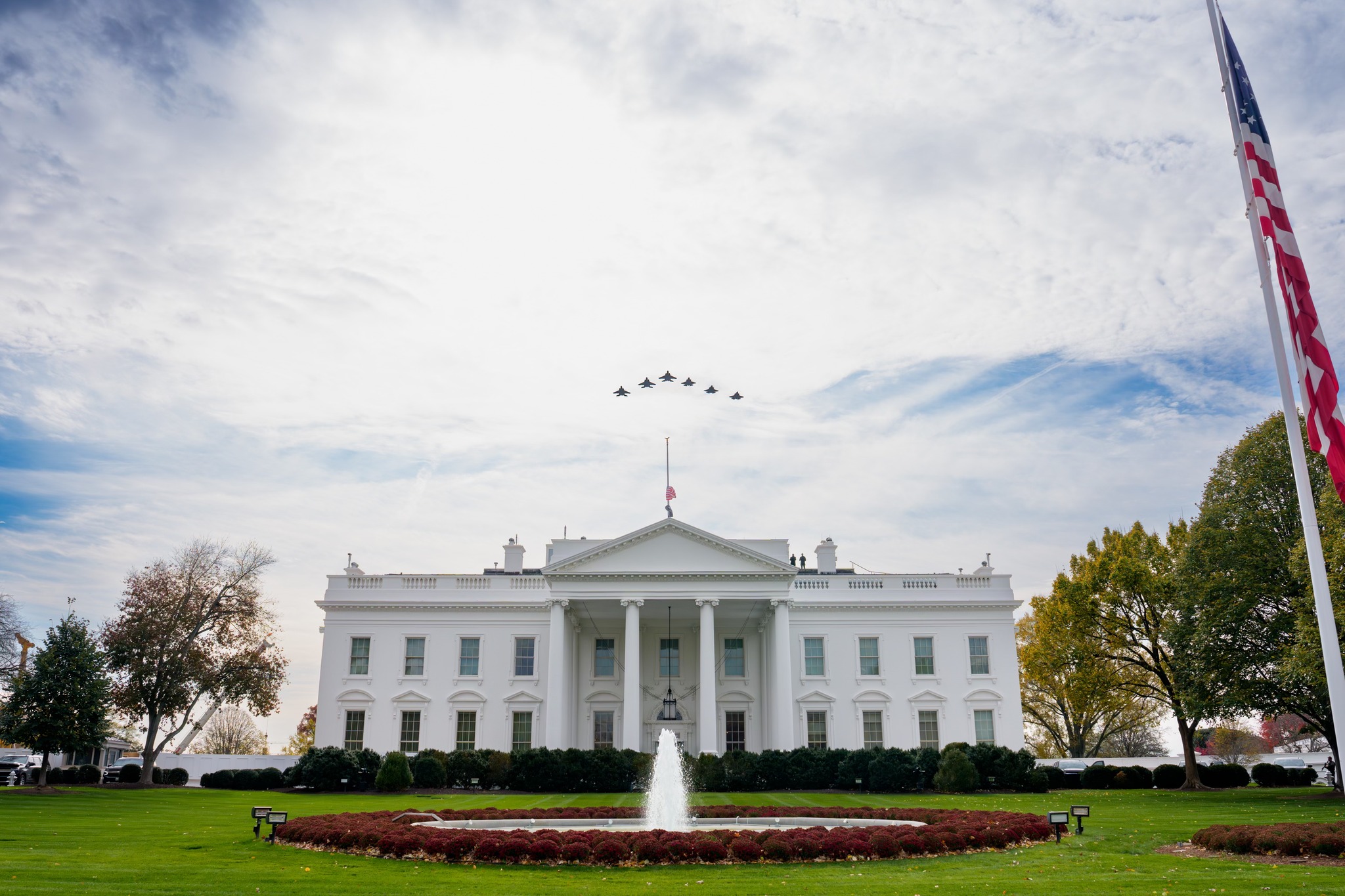 Six F-35A Lightning II aircraft flew over the White House during the Crown Prince’s welcome ceremony / Photo: Andrea Hanks, White House Press Office
The details of the sale of the F-35A Lightning II will be thoroughly reviewed due to the U.S. defense policy known as QME (Qualitative Military Edge), in place since 2008, which guarantees support for Israel’s technological superiority in the Middle East region. According to a Reuters report from 4 November of this year, the government in Riyadh is interested in purchasing 48 fifth-generation multirole aircraft.
The Royal Saudi Air Force (Al-Quwwat Al-Jawiyah Al-Malakiyah as-Su’udiyah) operates Eurofighter Typhoon Tranche 2 and 3A multirole aircraft (71 units), older F-15C/D Eagles (62 units), newer F-15S (Saudi) / F-15SA (Saudi Advanced; 207 units), as well as aging Panavia Tornado IDS aircraft (81 units).
At the same time, the authorities in Riyadh are holding talks with various partners and have recently shown interest in an additional 40 Typhoons, French Dassault Rafales, or participation in fifth- or sixth-generation aircraft programs based on the South Korean KAI KF-21 Boramae project, the UK–Italy–Japan sixth-generation GCAP (Global Combat Air Programme), or the Turkish fifth-generation TF Kaan.
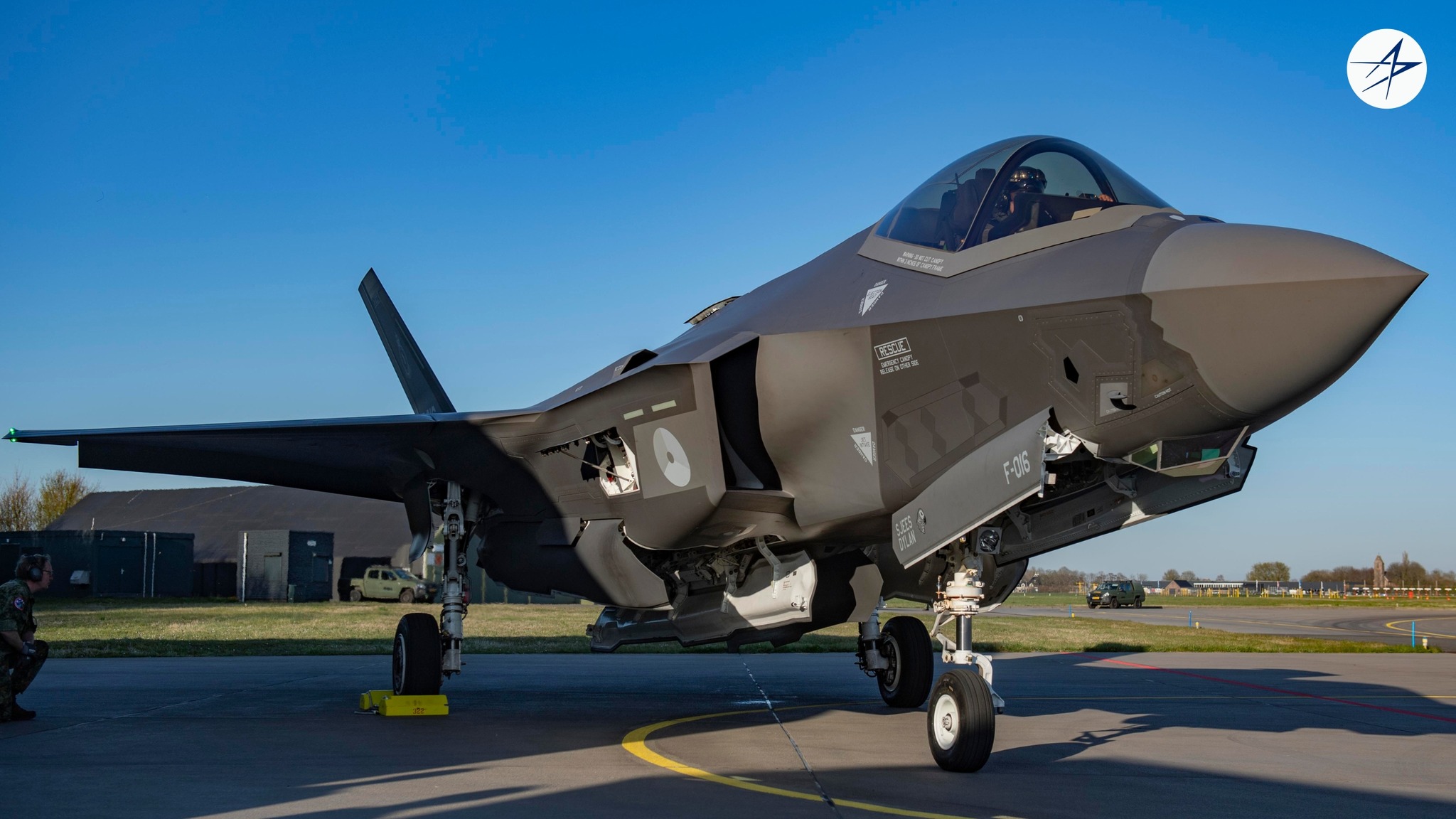 F-35A Lightning II / Photo: Lockheed Martin
The inventory of the Royal Saudi Air Force (Al-Quwwat Al-Jawiyah Al-Malakiyah as-Su’udiyah) also includes hundreds of large unmanned aerial platforms, such as the domestically produced Saqr-1/2/3/4 (over 230 units), Chinese CAIG Wing Loong II (300 units), as well as South African Denel Seeker 400, German EMT Luna X-2000, Italian Selex ES Falco, and the domestic Samoom. Turkish Bayraktar Akinci systems are also in the process of being acquired.
As for Abrams tanks, the newest variant currently in production is the M1A2SEPv3, which has been exported to Australia (75 units ordered), Poland (250 units), and Taiwan (108 units in the downgraded M1A2T version). It will next be delivered to Romania (54 units) and Bahrain (50 units). This means that Saudi Arabia will become the largest user of this version after the United States, surpassing Poland. Currently, the Royal Saudi Land Forces operate around 575 older M1A2S Abrams tanks and 660 M60A3s, with an additional 140 French AMX-30SA kept in reserve.
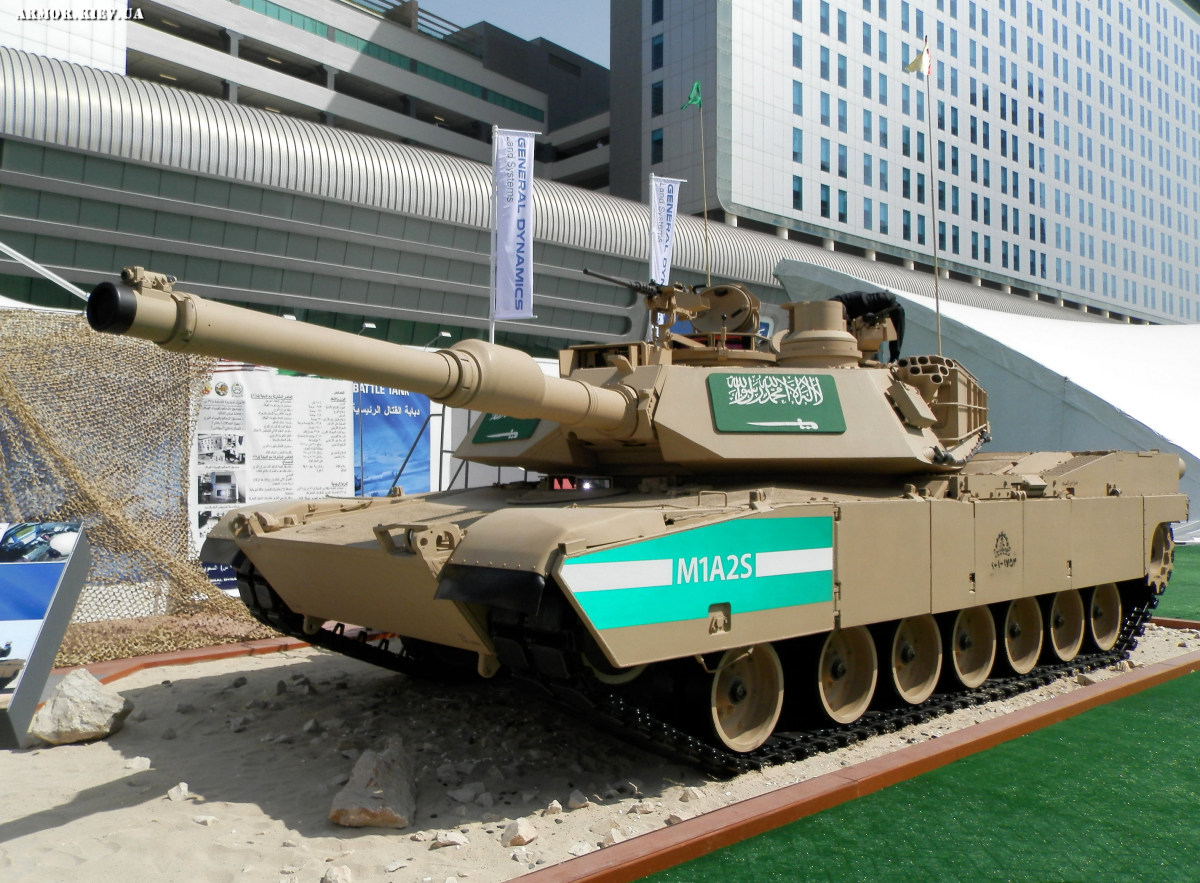 Saudi M1A2S Abrams tank / Photo: General Dynamics Land Systems
Saudi Arabia remains the largest U.S. partner in the Foreign Military Sales (FMS) program, with the value of active cases amounting to more than 129 billion USD as of May this year.
In just the past few months, the U.S. Department of State has approved the export of the following weapons and military equipment to Saudi Arabia:
- On 2 May 2025: approval for the sale of 1,000 AIM-120C-8 AMRAAM (Advanced Medium-Range Air-to-Air Missile) medium-range air-to-air missiles for up to 3.5 billion USD.
- On 20 March 2025: approval for the sale of 2,000 WGU-59/B APKWS II (Advanced Precision Kill Weapon System II) laser-guidance kits for up to 100 million USD.
- On 3 January 2025: approval for the sale of 20 Mark 54 MAKO Mod 0 lightweight 324 mm anti-submarine torpedoes for up to 78.5 million USD.
- On 24 October 2024: approval for the sale of 1,000 BGM-71 TOW 2A/2B heavy anti-tank guided missiles for up to 440 million USD.
- On 11 October 2024: approval for the sale of 220 AIM-9X Tactical Sidewinder short-range air-to-air missiles for up to 251.8 million USD, 2,500 AGM-114R3 Hellfire II anti-tank guided missiles for 655 million USD, and 10,000 rounds of 105 mm HEAT (High-Explosive Anti-Tank) M456 ammunition for up to 139 million USD.
- On 22 December 2023: approval for the launch of a military pilot training program and training for other personnel of the Royal Saudi Air Force and other branches of the armed forces, with a maximum estimated value of 1 billion USD.
- On 21 September 2023: approval for the sale of a support and spare-parts package, among others for tanks, infantry fighting vehicles, armored vehicles, and U.S.-made weapons, worth up to 500 million USD.
