


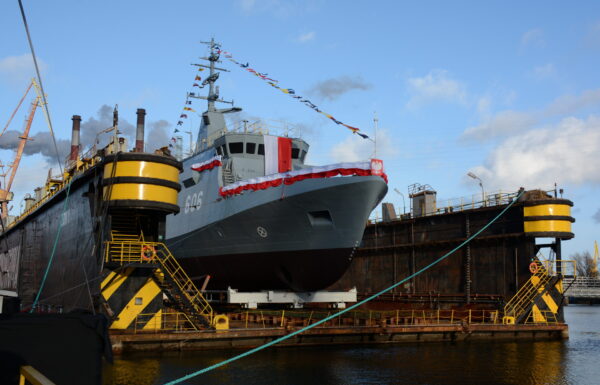





















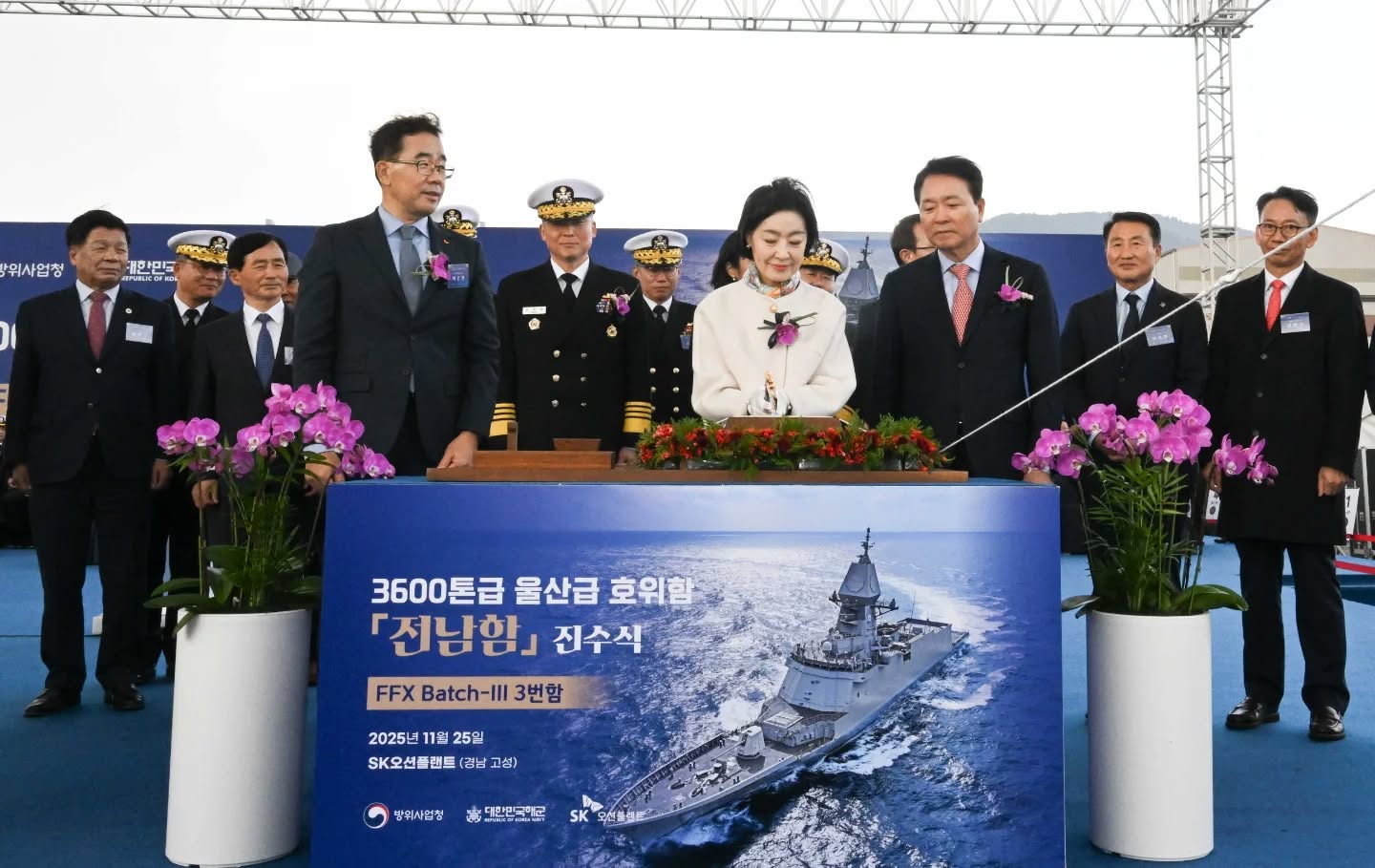
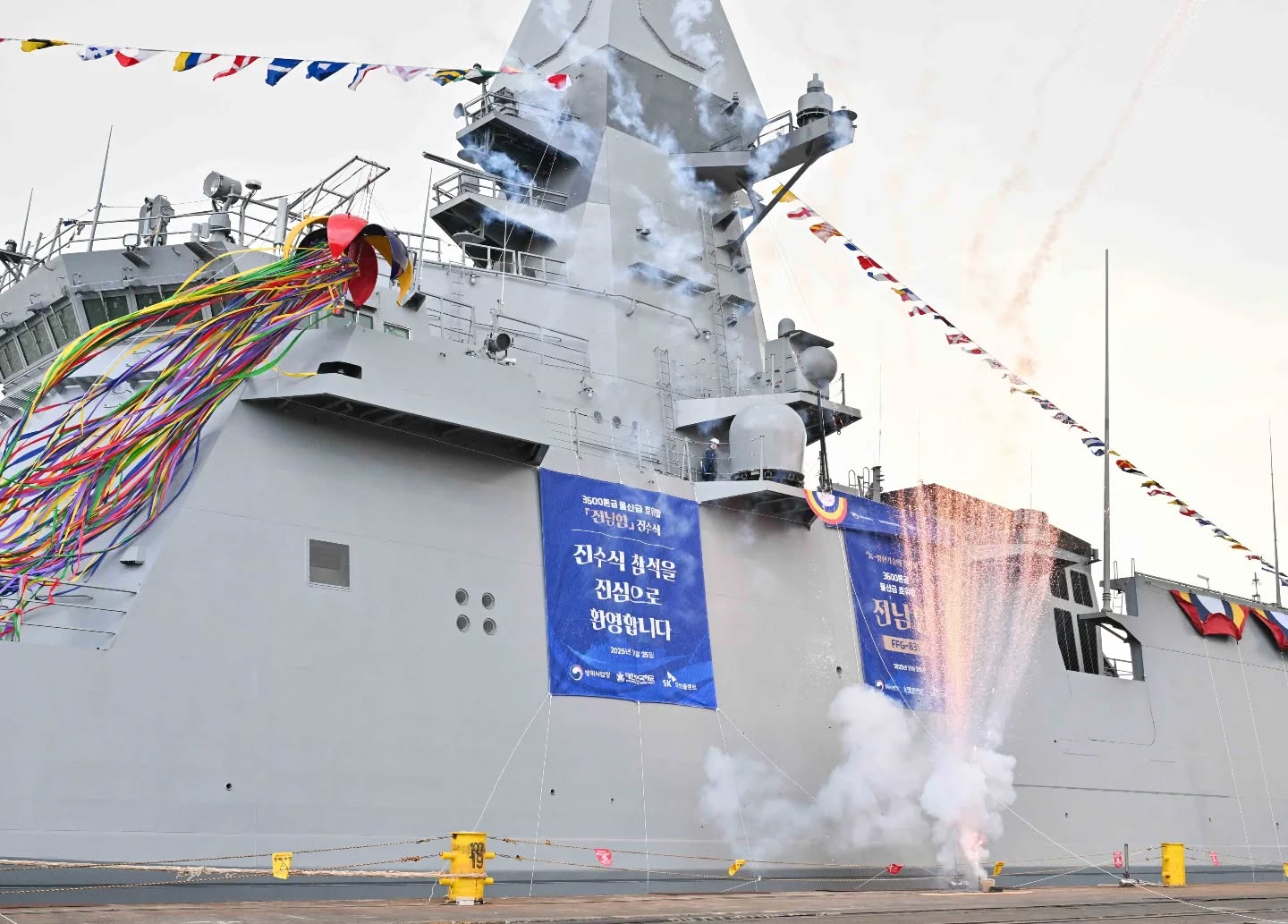
On Tuesday, 25 November 2025, at the shipyard of the South Korean company SK Oceanplant in Goseong, Gangwon Province, in the northeastern part of the country, a launching ceremony was held for the third of six Chungnam-class missile frigates under the FFX Batch-III program, the future ROKS Jeonnam (FFG-831).
 Photos: Republic of Korea Navy
According to information from the Public Affairs Office of the Republic of Korea Navy (Daehanminguk Haegun), which will operate the vessel, the handover is scheduled for December 2026, with entry into service to follow after the completion of the activation process. The ship was ordered in October 2022, and steel cutting and keel laying took place in 2024.
Around 150 guests attended the launching ceremony, including the Chairman of the National Assembly’s Defense Committee, Sung Il-jong, as the guest of honor; Chief of Naval Operations Admiral Kang Dong-gil; Deputy Minister of the Defense Acquisition Program Administration (DAPA) Kang Hwan-seok; SK Oceanplant CEO Lee Seung-cheol; as well as numerous officials from the Navy, DAPA, and the shipyard.
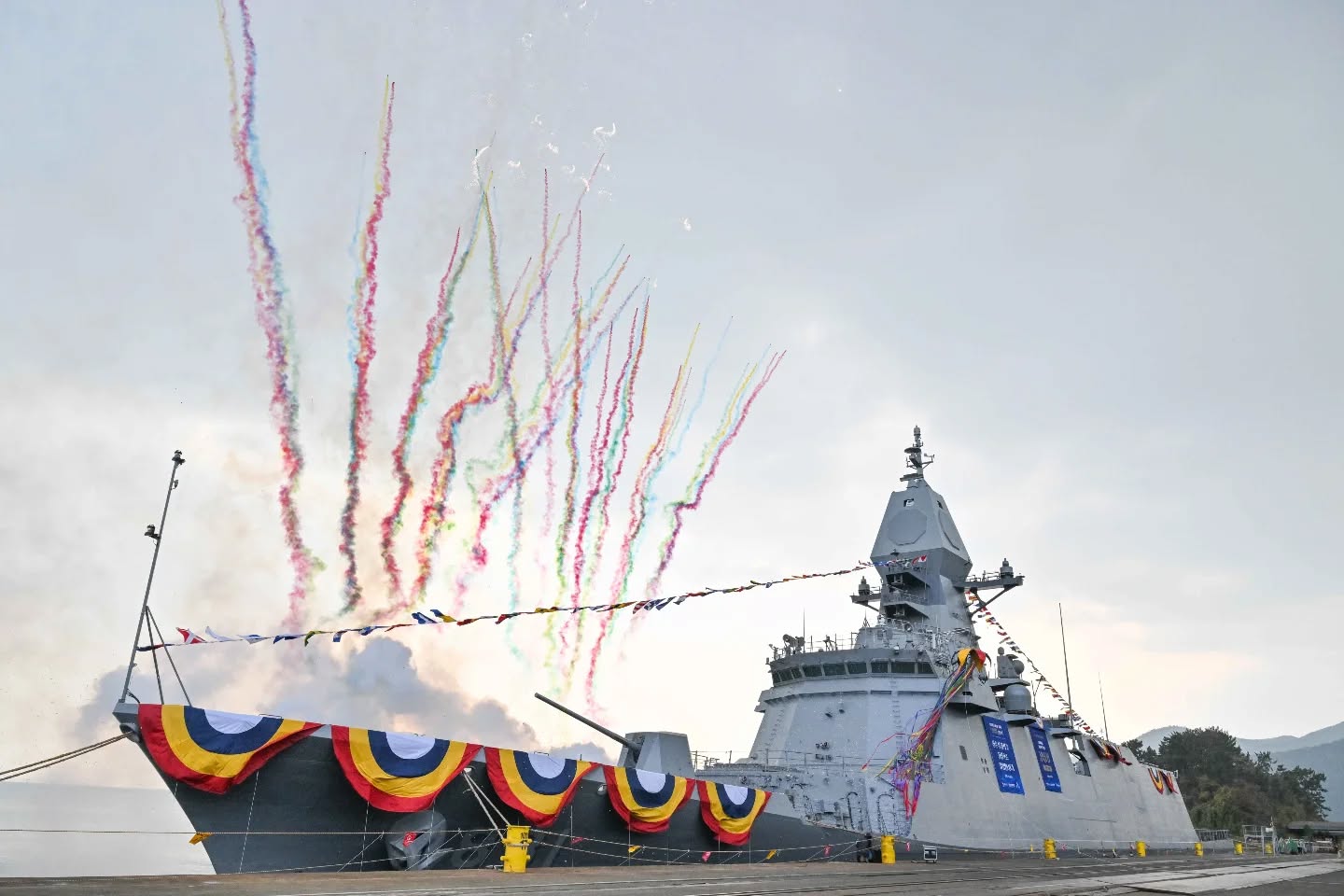
The ceremony program included a briefing on the ship, the official announcement of its name, congratulatory speeches, and a safe-launch procedure in accordance with established naval practice. As tradition dictates, the wife of Chairman Sung, Im Sun-hee, cut the ceremonial launching rope attached to the bow, symbolically initiating the launch process, after which the invited guests jointly smashed a bottle of champagne against the hull.
Interestingly, the first ship was built by Hyundai Heavy Industries (HHI) at its shipyard in Ulsan. ROKS Chungnam (FFG-828) was ordered on 16 March 2020, its keel was laid on 25 April 2022, and it was launched on 10 April 2023. The vessel entered service on 24 December 2024. It serves as a test platform for the integrated mast and combat management system intended for South Korea’s next-generation guided-missile destroyers, codenamed KDDX or alternatively KDX-IV.
The second vessel, the third one discussed here, and the fourth in the series are being built by SK Oceanplant. The keel of the first ship in this batch, the future ROKS Gyeoungbuk (FFG-829), was laid on 1 April 2024, and it was launched on 20 June of this year. It is scheduled for delivery to the customer in June 2026. The third vessel, the yet-unnamed FFG-832, is to be delivered in June 2027. The final two ships, FFG-833 and FFG-835, are being built by Hanwha Ocean, with deliveries planned for December 2027 and June 2028.
Currently, the Republic of Korea Navy operates six Incheon-class guided-missile frigates (FFX Batch-I) with a full displacement of 3,251 tonnes, delivered since 2013, and six Daegu-class frigates (FFX Batch-II) with a full displacement of 3,650 tonnes, delivered since 2018, with two additional units on order.
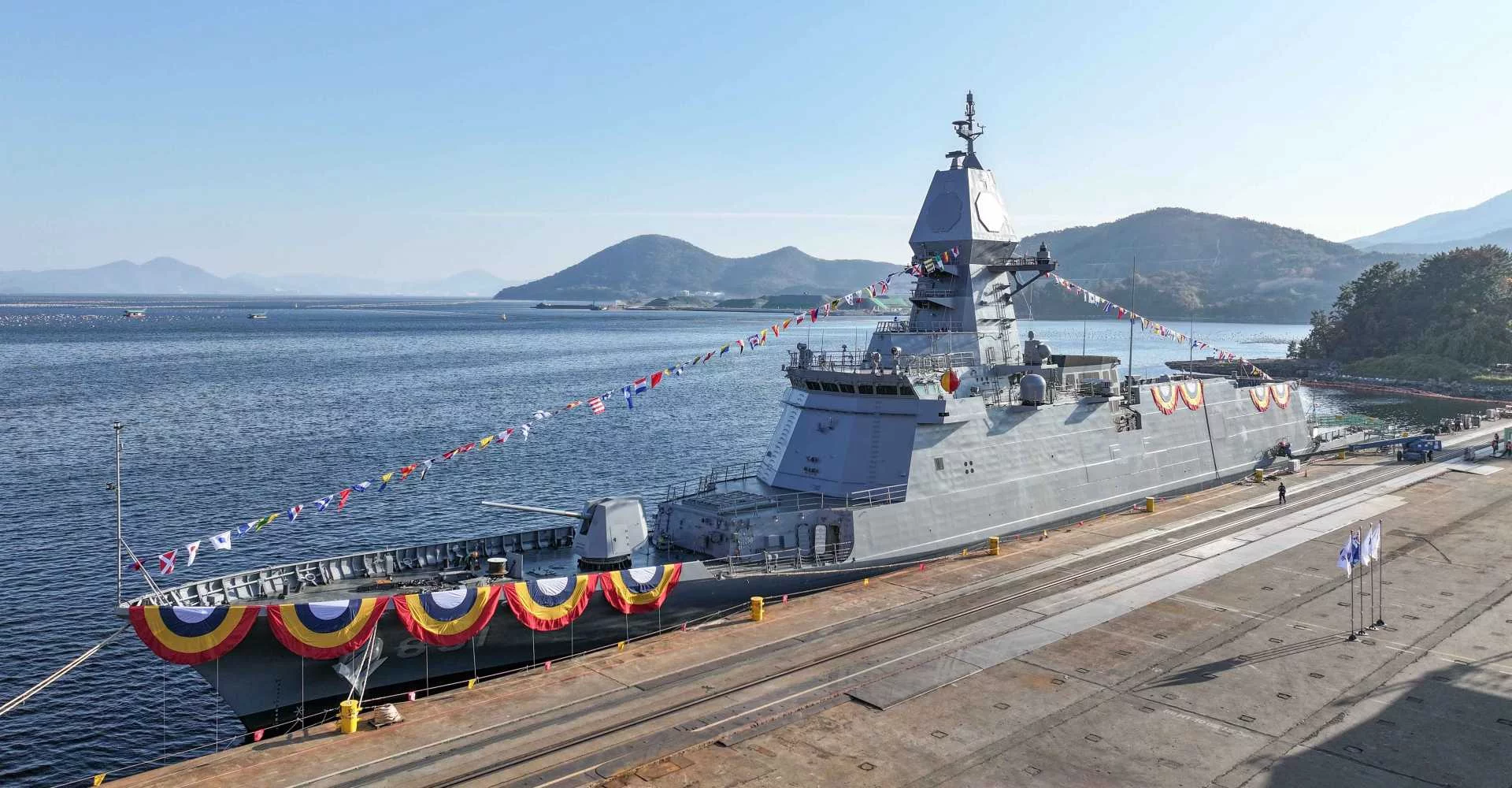
The Chungnam-class air-defense missile frigates have a standard displacement of 3,500 tons and a full displacement of 4,300 tons, a length of 129 meters, and a beam of 14.8 meters. The ships will be capable of reaching a maximum speed of up to 30 knots thanks to a CODLOG propulsion system equipped with Rolls-Royce MT30 gas turbines.
The prototype Chungnam is the first ship in the Republic of Korea Navy to receive the domestically-produced, four-sided, multifunction AESA (Active Electronically Scanned Array) radar, the FFX B3 MFR (Multi-Functional Radar), housed in an integrated mast supplied by Hanwha Systems. It replaces the Israeli EL/M-2248 MF-STAR radar used on earlier vessels. The ship is also equipped with an infrared search and track (IRST) system and an electro-optical targeting system (EOTS).
One of the most important improvements over the Incheon and Daegu classes is the increased number of universal K-VLS (Korean Vertical Launch System) cells, sixteen in total, for K-SAAM surface-to-air and missile-defense interceptors. The ship is additionally armed with a 127 mm BAE Systems Mk 45 Mod 4 naval gun with a 62-caliber barrel, domestically produced LIG Nex1 CIWS-II close-in weapon systems, and will also carry anti-ship cruise missiles. It is possible that after 2030, this class will be equipped with the Hycore hypersonic cruise missile, although this will require integration of the newly designed K-VLS II launchers.
See also:
