





























FGM-148F Javelin
On Wednesday, November 19, 2025, the U.S. Defense Security Cooperation Agency (DSCA) published the approval for the possible sale to the Republic of India of a batch of FGM-148F Javelin anti-tank guided missiles in a package worth up to 45.7 million USD.
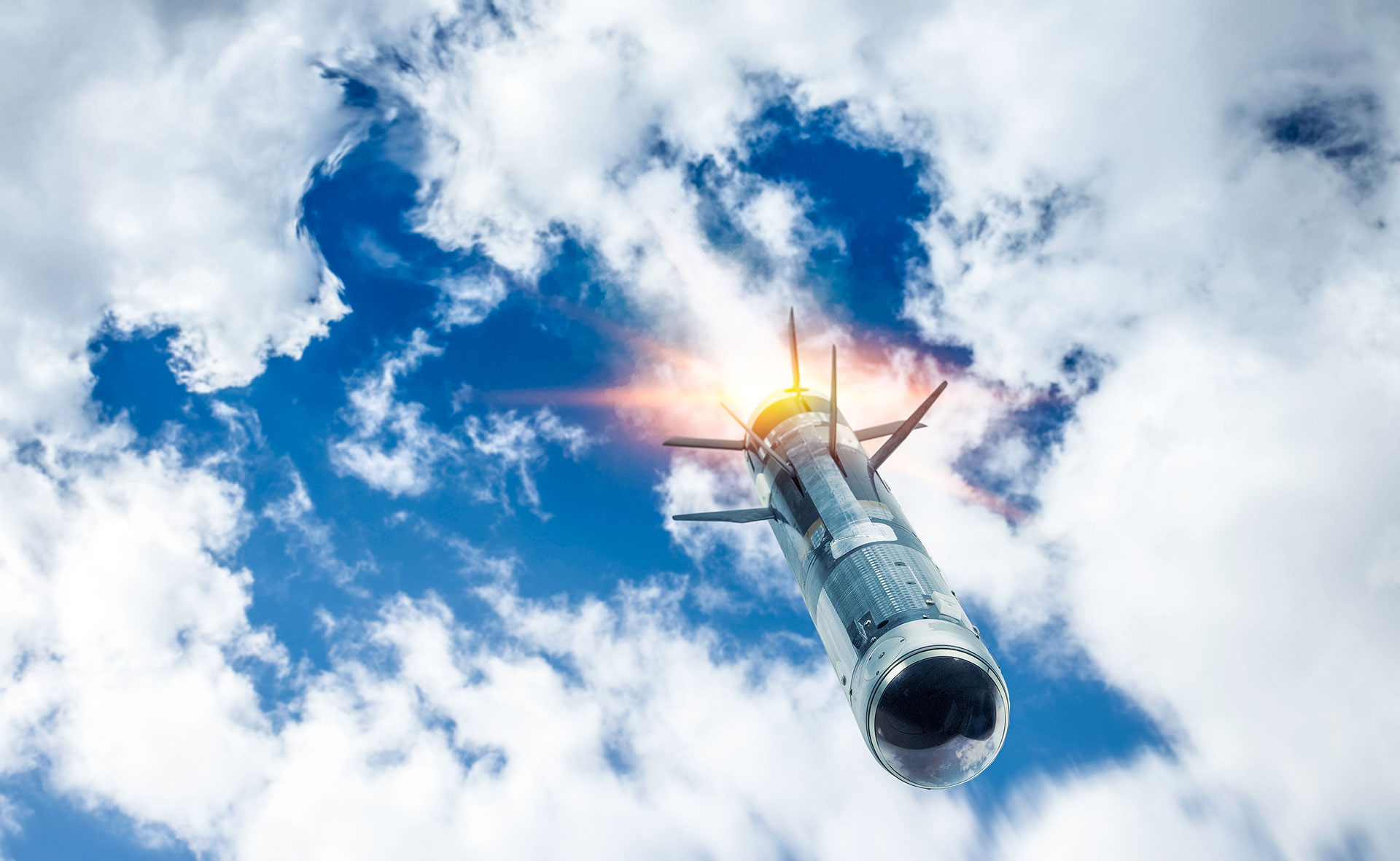 Photo: Lockheed Martin
According to the published notice, the government in New Delhi requested the acquisition of 100 FGM-148F Javelin anti-tank guided missiles, one missile for flight testing, and 25 LWCLU (Lightweight Command Launch Unit) or Javelin Block 1 CLU (Command Launch Unit) launch/control units.
In addition, the package includes the following non-MDE (Major Defense Equipment) items: Basic Skill Trainers (BST) for the LWCLU or CLU, training ammunition, Battery Coolant Units (BCU), Interactive Electronic Technical Manuals (IETM), Javelin operator manuals, life-cycle support services, physical security control system support, spare parts, system integration and checkout services, technical assistance from the TAGM (Tactical Aviation and Ground Munitions) project office and the SAMD (Security Assistance Management Directorate) of AMCOM (U.S. Army Aviation and Missile Command), tool kits, training, CLU Block 1 modification services, and other related logistics and program support elements. The contractor will be the Javelin JV joint venture (RTX and Lockheed Martin).
It is worth recalling that on February 11 of this year, Lockheed Martin announced that the Javelin Joint Venture and India’s Bharat Dynamics Limited (BDL) had signed a Memorandum of Understanding (MoU) concerning the potential launch of FGM-148F Javelin production in India. The agreement covered an assessment of the possibilities for co-production and final assembly in India should the Indian Ministry of Defence purchase the Javelin system, which in previous years had procured Israel’s Rafael Spike MR and LR2 missiles.
The latest variant of the system currently in production is the FGM-148F Javelin, equipped with a new Multi-Purpose Warhead (MPWH) featuring an explosively formed charge. Its armor penetration is rated at the equivalent of 600–800 mm of rolled homogeneous armor (RHA). The missile has an engagement range of 65 to 4,750 m, and the system weighs 22.3 kg. In the U.S. Army, the FGM-148F is gradually replacing the FGM-148E Block I currently in service.
Aside from the U.S. Army, the first country to decide to purchase this variant was Poland (which is also interested in co-production), followed by Lithuania, Australia, and the United Kingdom. In 2021, Thailand and Norway also ordered new missiles, although without specifying the variant (likely still the FGM-148E). On December 12, 2023, Romania received approval to purchase missiles; on January 11, 2024, Kosovo; on March 19, 2024, Morocco; on September 20, 2024, Bulgaria; on October 3, 2024, Tunisia; on April 23 of this year – Ireland; and on May 22 – Estonia. Albania, Brazil, and Latvia are expected to join them in the near future. Overall, all variants of the system are in service with the armed forces of 24 countries, including Ukraine, where they were delivered as military aid from the United States and the United Kingdom.
M982 Excalibur
On the same day, India received approval to purchase another batch of Raytheon/BAE Systems M982 Excalibur 155 mm precision-guided artillery shells for NATO-caliber howitzers, in a package worth up to 47.1 million USD.
 Image: RTX
The request covered 216 M982A1 Excalibur artillery rounds. The package also includes the following non-MDE (Major Defense Equipment) items: ancillary equipment, Portable Electronic Fire Control Systems (PEFCS), improved platform integration kits (iPIK), fuzes, propelling charges, U.S. government technical assistance, technical data, repair and return services, and other related logistics and program support elements. The contractor will be RTX.
Plans for India’s purchase of the first batch of Excalibur rounds under an urgent operational requirement were first reported on July 7, 2019, by the Indian newspaper The Economic Times. In October of the same year, more than 600 rounds were procured, and in December, they underwent live-fire testing with the 155 mm M777A2 ultralight towed howitzer at the Pokhran artillery range. The ammunition was later integrated with the FH77 B02, Dhanush, and the K9 Vajra-T self-propelled howitzers (India ordered 307 ATAGS howitzers along with artillery tractors).
In July of this year, reports emerged that the Indian military planned to urgently acquire additional rounds following their intensive use during Operation Sindur in May of this year against Pakistan.
According to U.S. assessments, the M982A1 demonstrated over 96% reliability at the test range. However, there have been reports of effective Russian jamming of the rounds on the Ukrainian front, where they were fired from M777A2 and AHS Krab howitzers, using electronic warfare systems such as the R-330Zh Zhitel, Krasukha-4, Tirada-2, and Pole-21. Initial battlefield effectiveness, estimated at 55–70%, reportedly dropped to 5–7%, prompting the United States to halt deliveries in May 2024. RTX subsequently began implementing modifications to the rounds.
Considerations include improving accuracy, currently 4–20 m, achieved through GPS and inertial guidance. A key issue remains their use in environments where GPS signals are absent or jammed. Options being examined include a thermal-seeker solution for semi-active laser guidance or other seeker types to enable more autonomous target acquisition.
In recent years, approval to purchase this ammunition has been granted to Denmark (339 rounds) and the Kingdom of the Netherlands (199 rounds). Earlier, the ammunition entered service with the armed forces of Canada, Australia, Sweden, Spain, and Jordan. Norway and Germany have also expressed interest.
