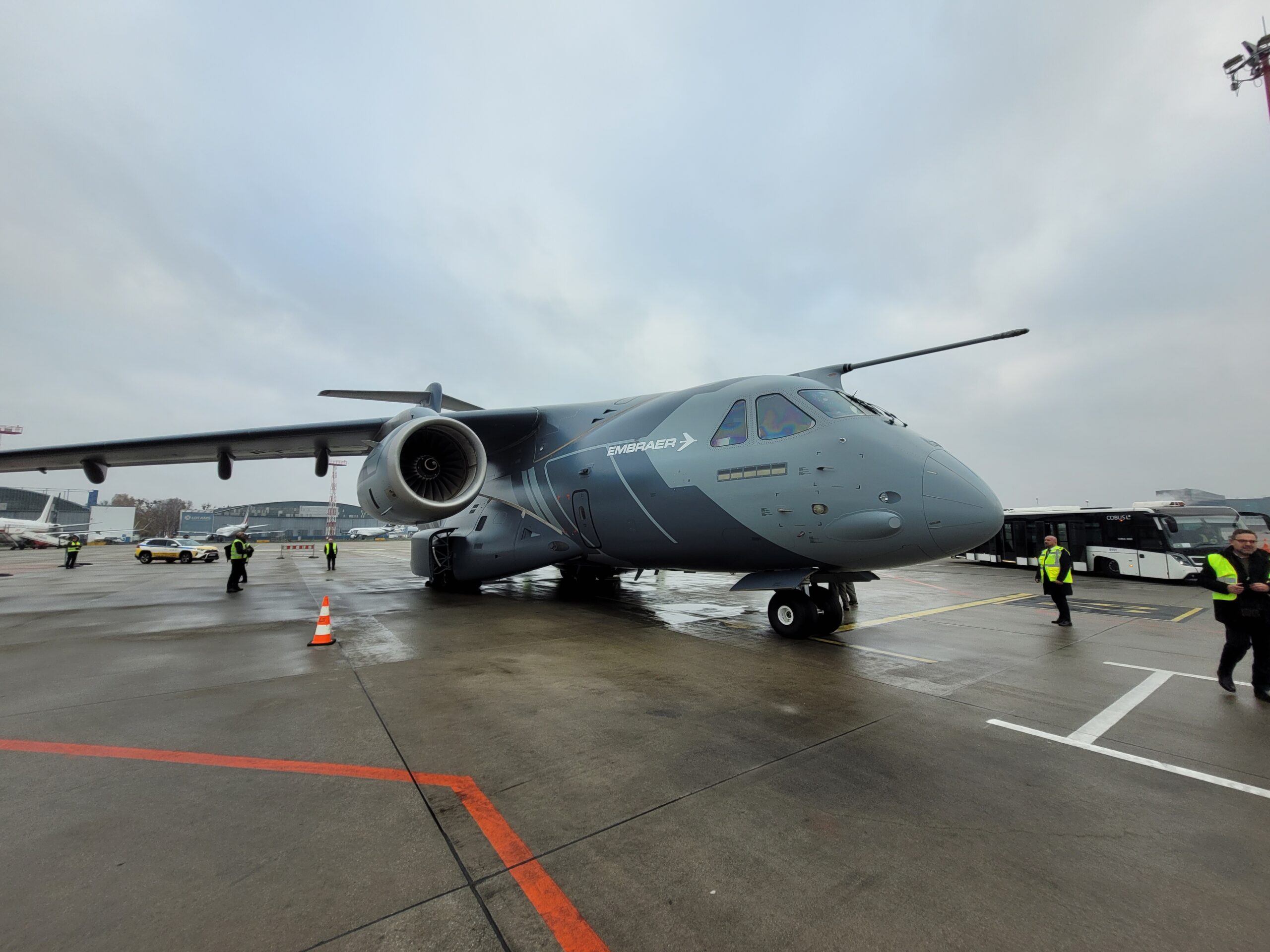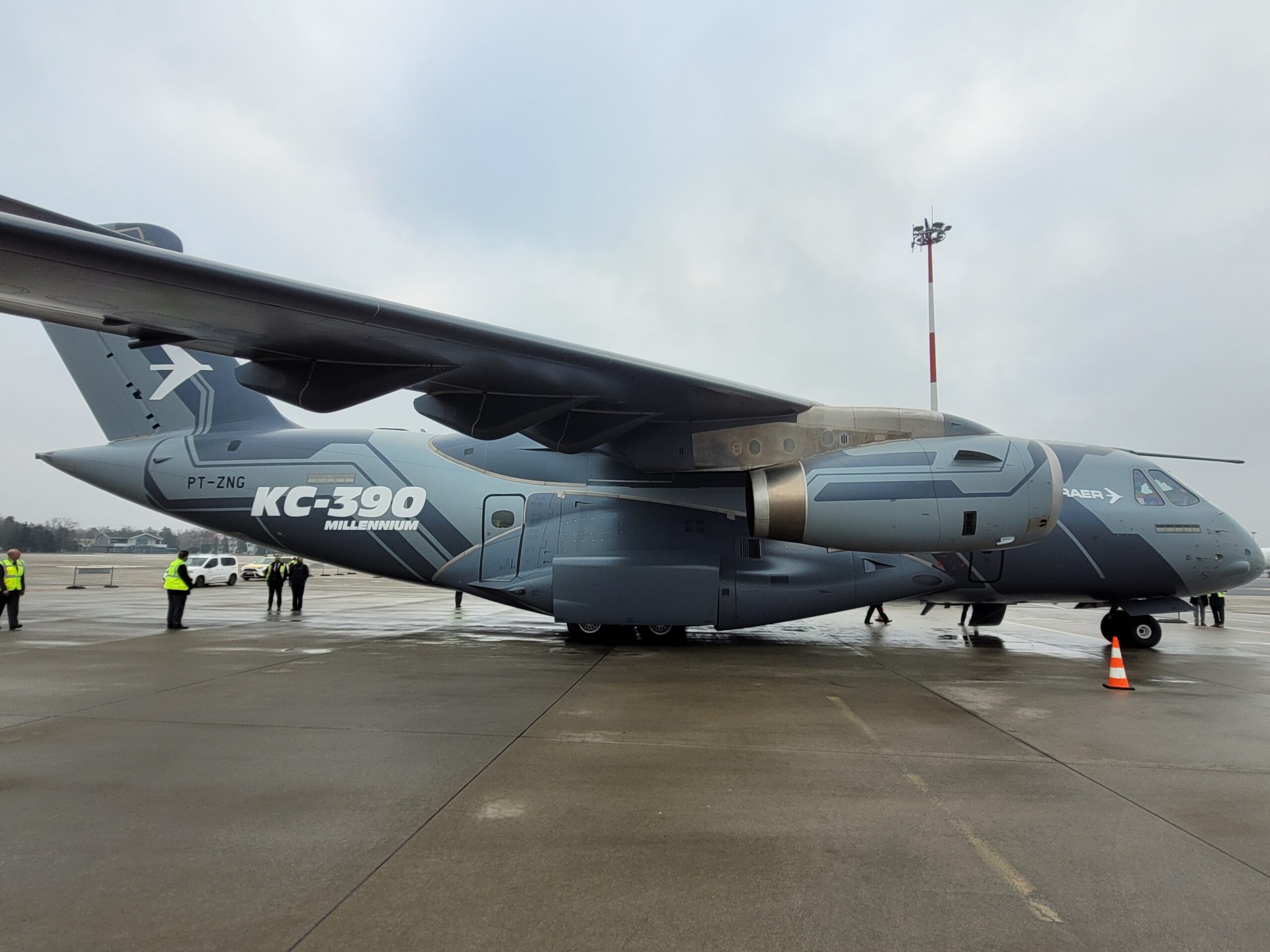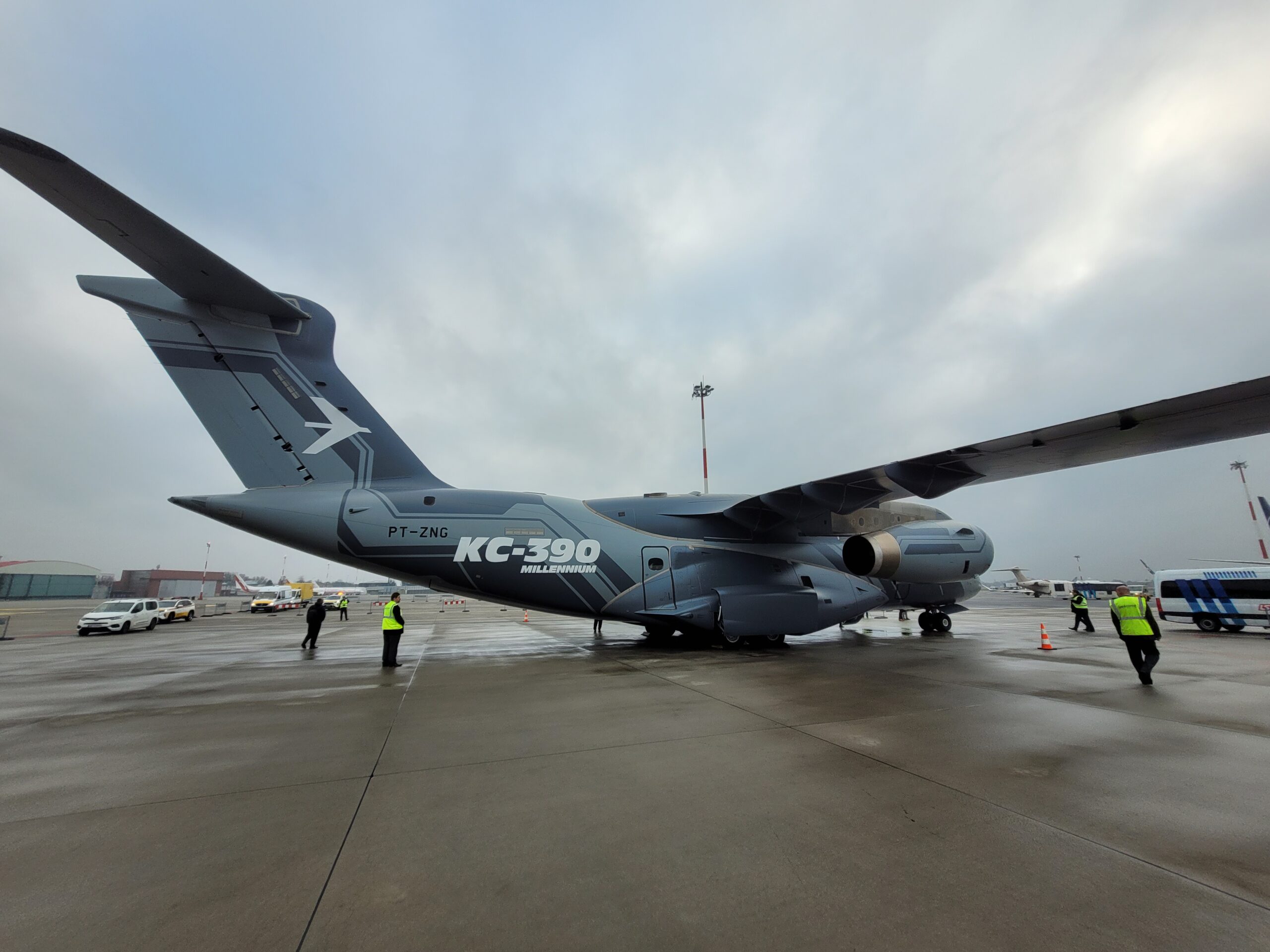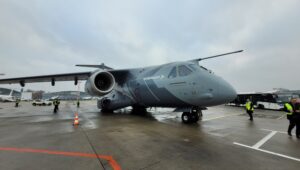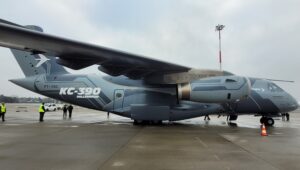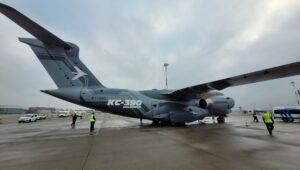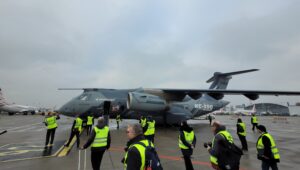



















On Tuesday, 2 December 2025, Embraer officially presented its KC-390 Millennium multirole transport aircraft in Poland. One of the demonstrator aircraft landed at Warsaw Chopin Airport. The day before, the KC-390 had been shown to Polish Air Force representatives at the Powidz Air Base. After the demonstration in Warsaw, it departed for Bydgoszcz. The presentation was accompanied by the signing of cooperation agreements with companies of the Polish Armaments Group (PGZ) (Polish Armaments Group and Embraer sign cooperation agreements).
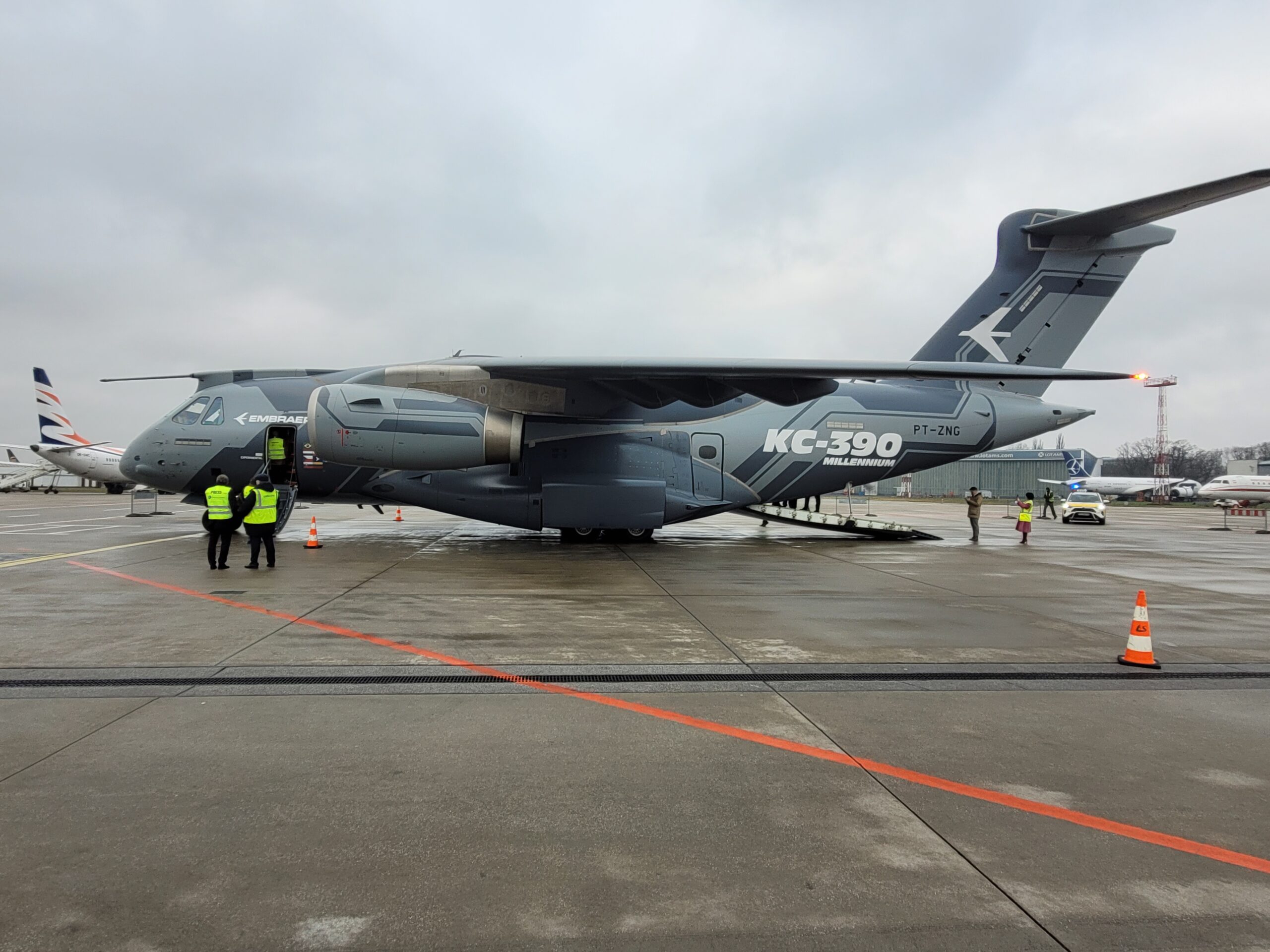
The medium transport aircraft Embraer KC-390 presented at Warsaw Chopin Airport
Since entering service with the Brazilian Air Force (Força Aérea Brasileira) in 2019, the aircraft also entered service with the Portuguese Air Force in 2023. A year later, it entered service with the Hungarian Air Force.
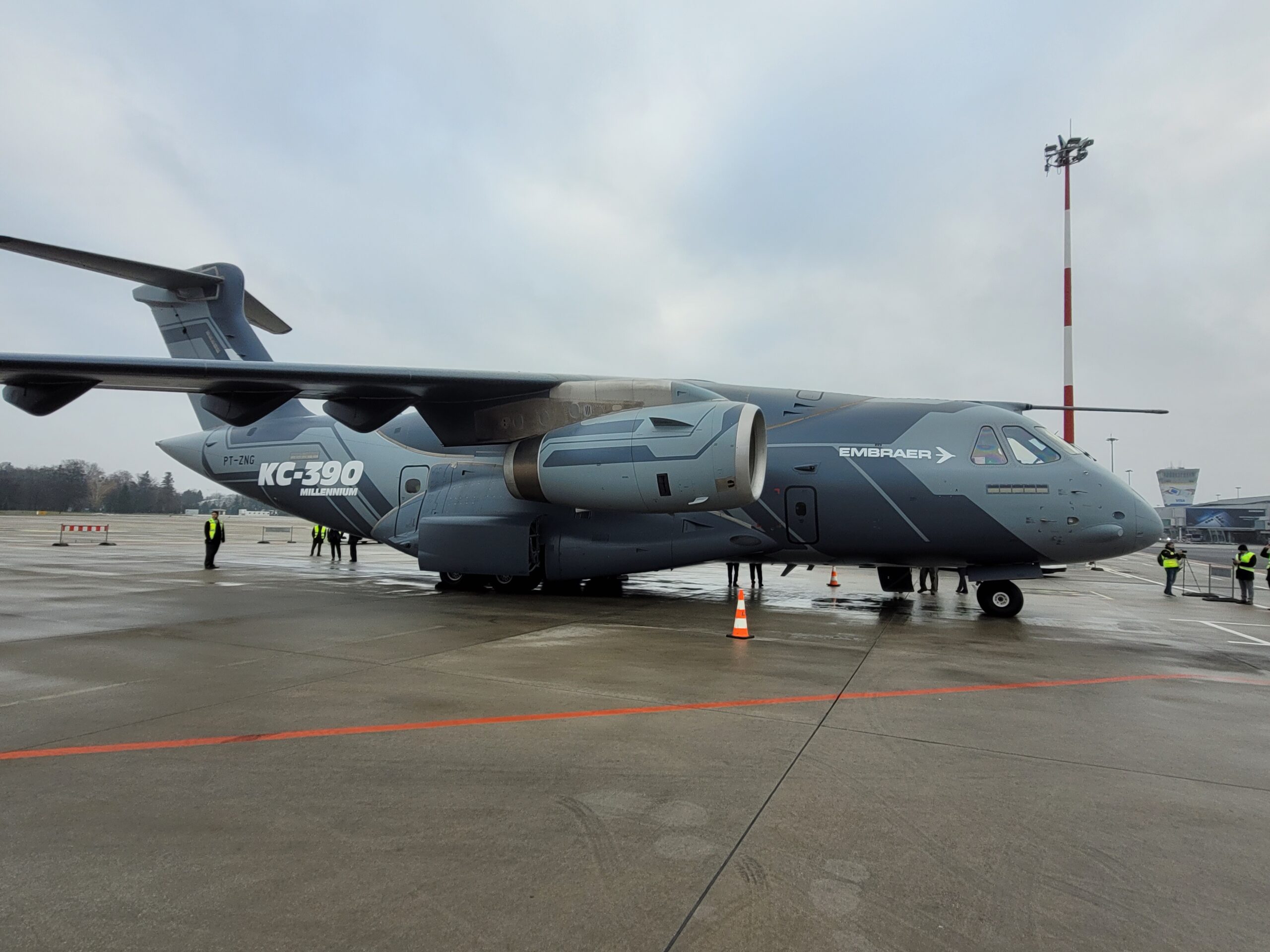
The C-390 aircraft family is powered by two IAE V2500-E5 turbofan engines, each producing 139.4 kN of thrust.
Last year, Embraer received orders from the air forces of the Netherlands, Austria, the Czech Republic, and one undisclosed customer. This year, Sweden, Lithuania, and Slovakia have placed orders for the C-390.
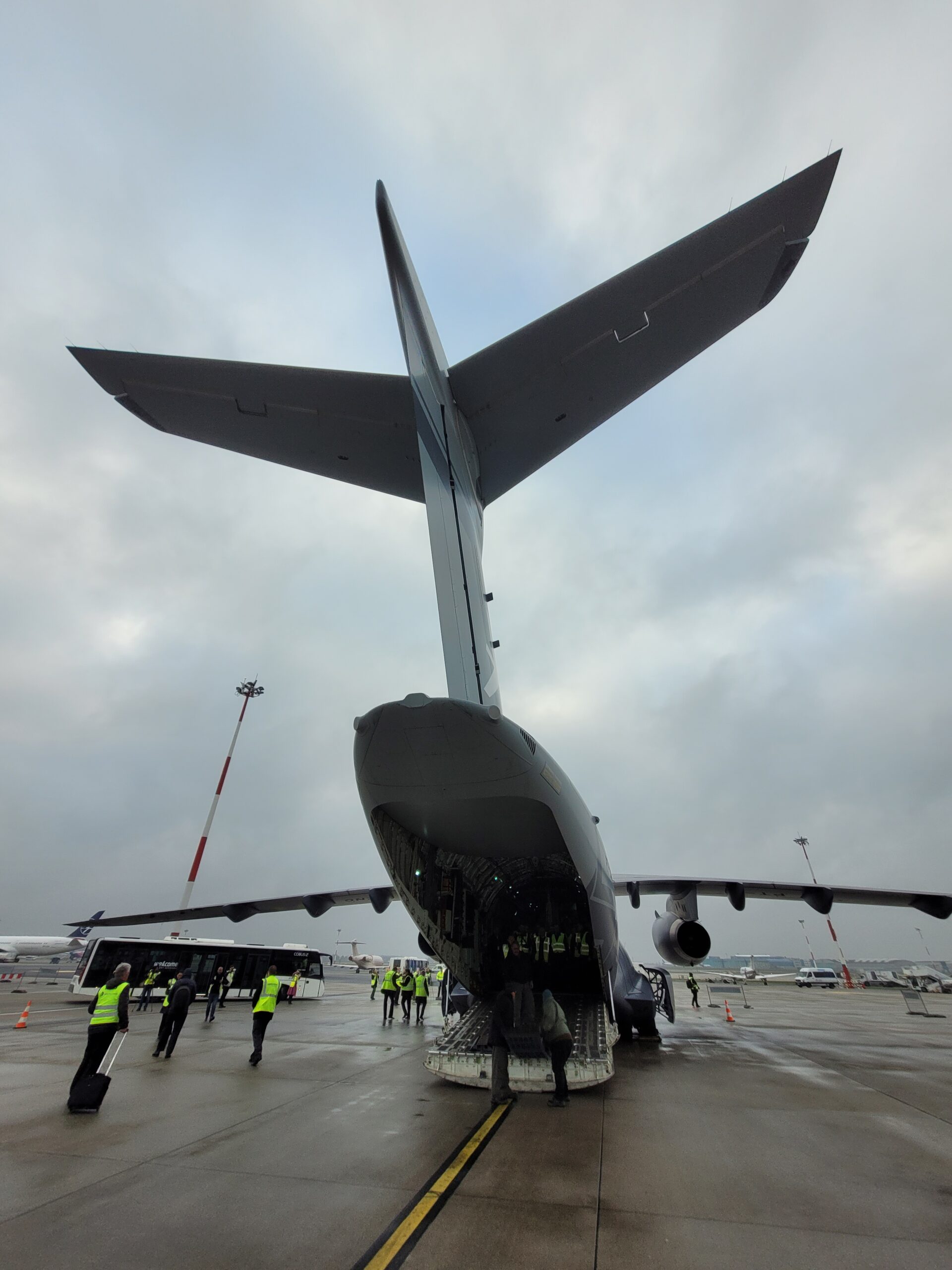
The cargo ramp of the KC-390 aircraft
Altogether, the Força Aérea Brasileira has ordered 19 aircraft of this type; Portugal six, with an option for an additional ten; Hungary has ordered two units; and the Republic of Korea, which signed a contract for C-390 deliveries in 2023, will receive three aircraft. The order for the Royal Netherlands Air Force includes five aircraft, with an option for nine more. Austria has ordered four, the Czech Republic two, and an undisclosed customer also two. Sweden has ordered four units. Lithuania plans to acquire three KC-390s, as does Slovakia. This means that the C-390 will be operated by at least seven NATO member states (and additionally by one more EU member state).
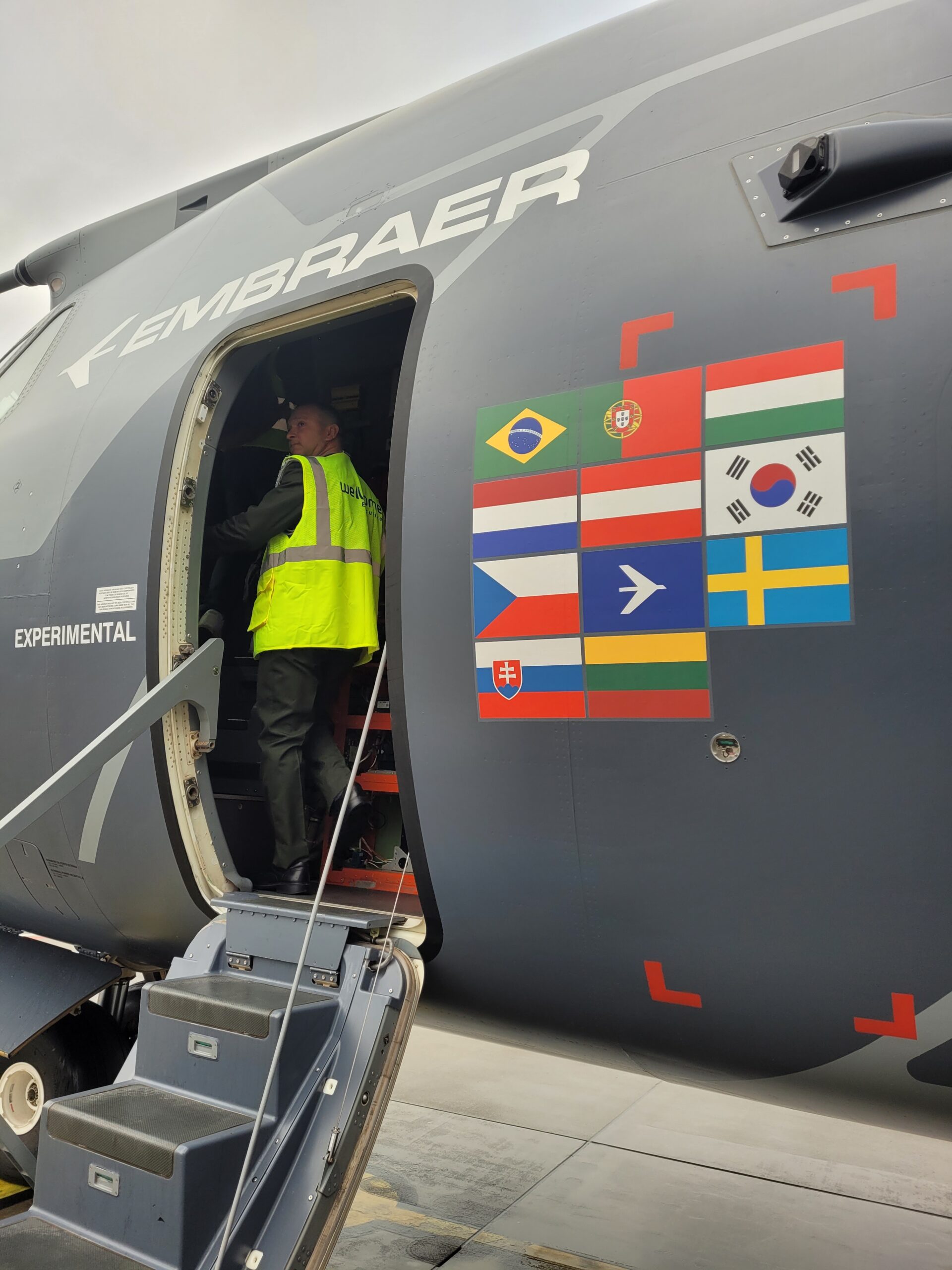
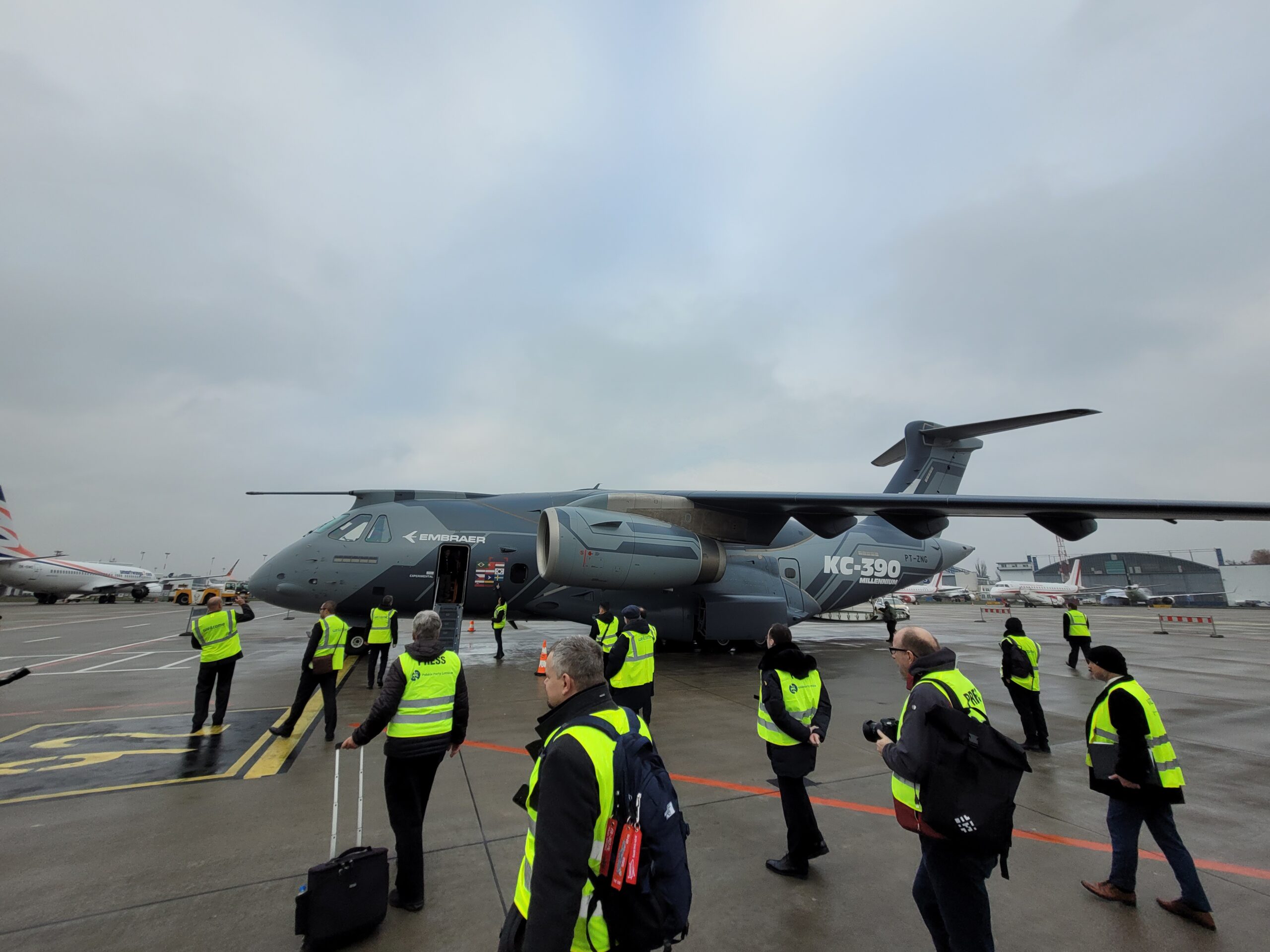
The prototype aircraft presented in Warsaw bears on its fuselage the flags of the countries that have purchased aircraft from the C-390 family
In Europe, technical maintenance of C-390 aircraft is carried out by the Portuguese. Air Base No. 11 in Beja hosts both the maintenance center and the crew training facility for these aircraft. The Brazilian company reports that the currently operating C-390 fleet has demonstrated a mission-readiness rate of 93% and a mission completion rate of over 99%.
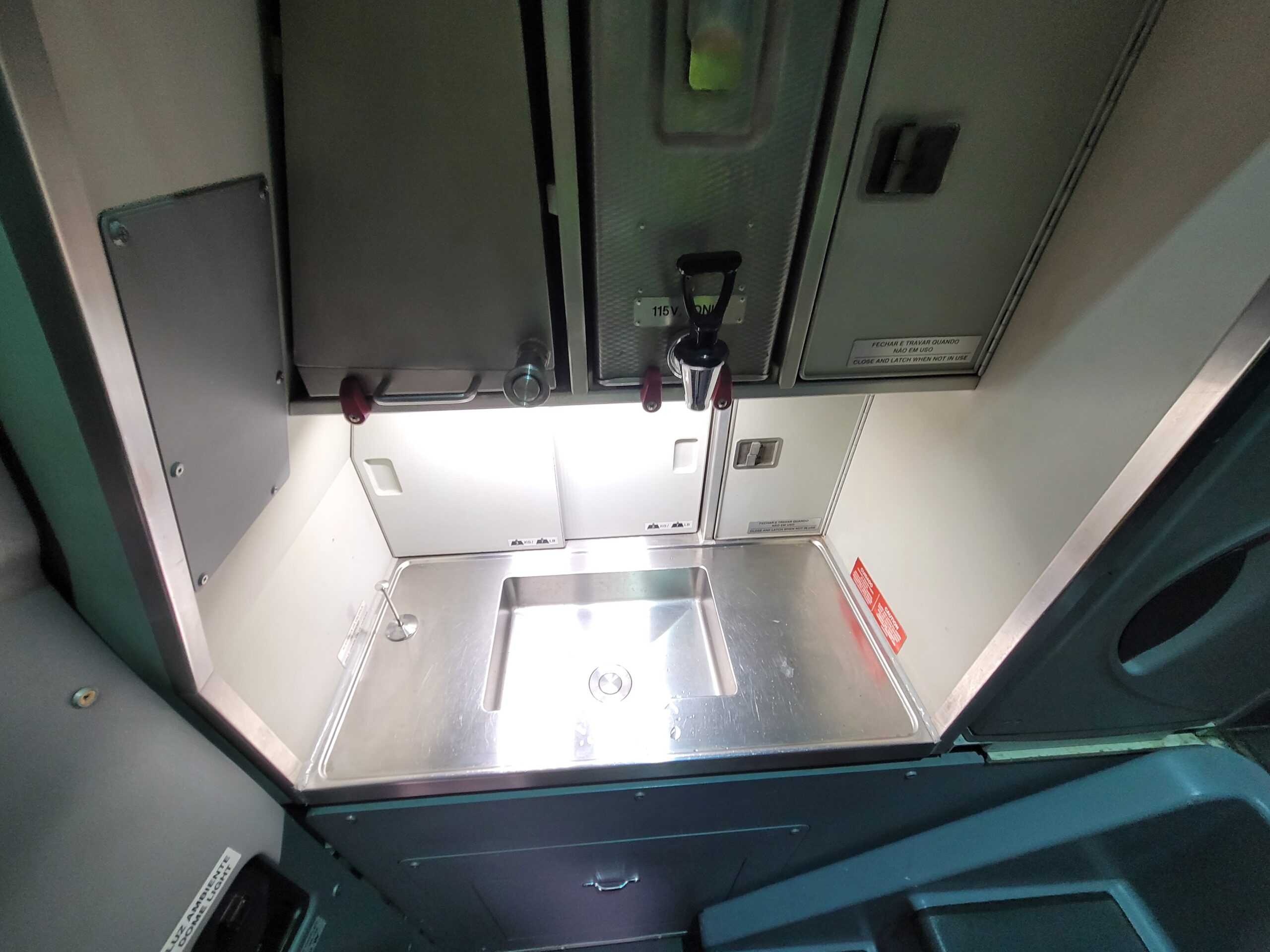
Crew rest compartment equipped with amenities to facilitate long-range flights
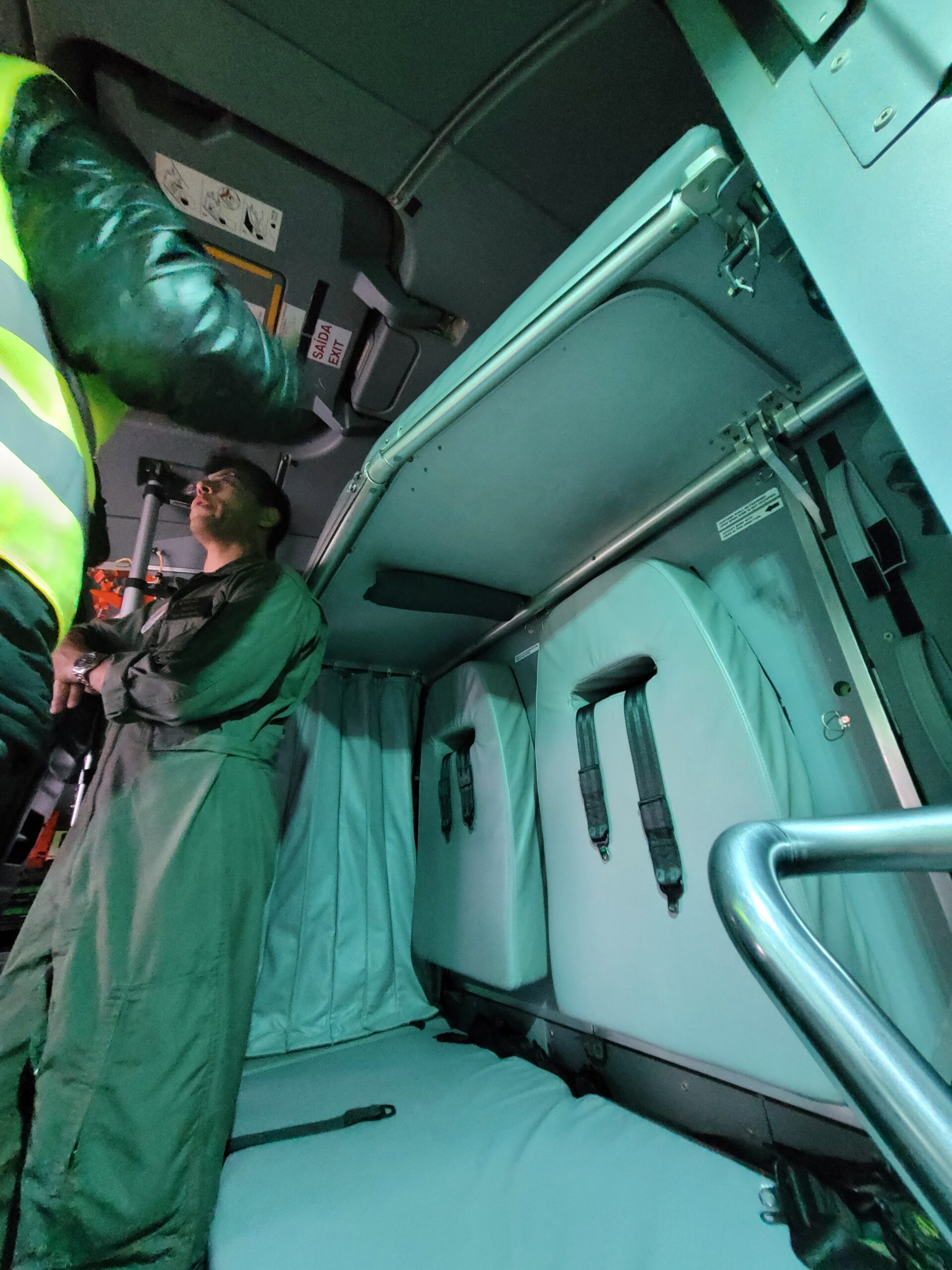
Rest compartment with two bunks for crew members
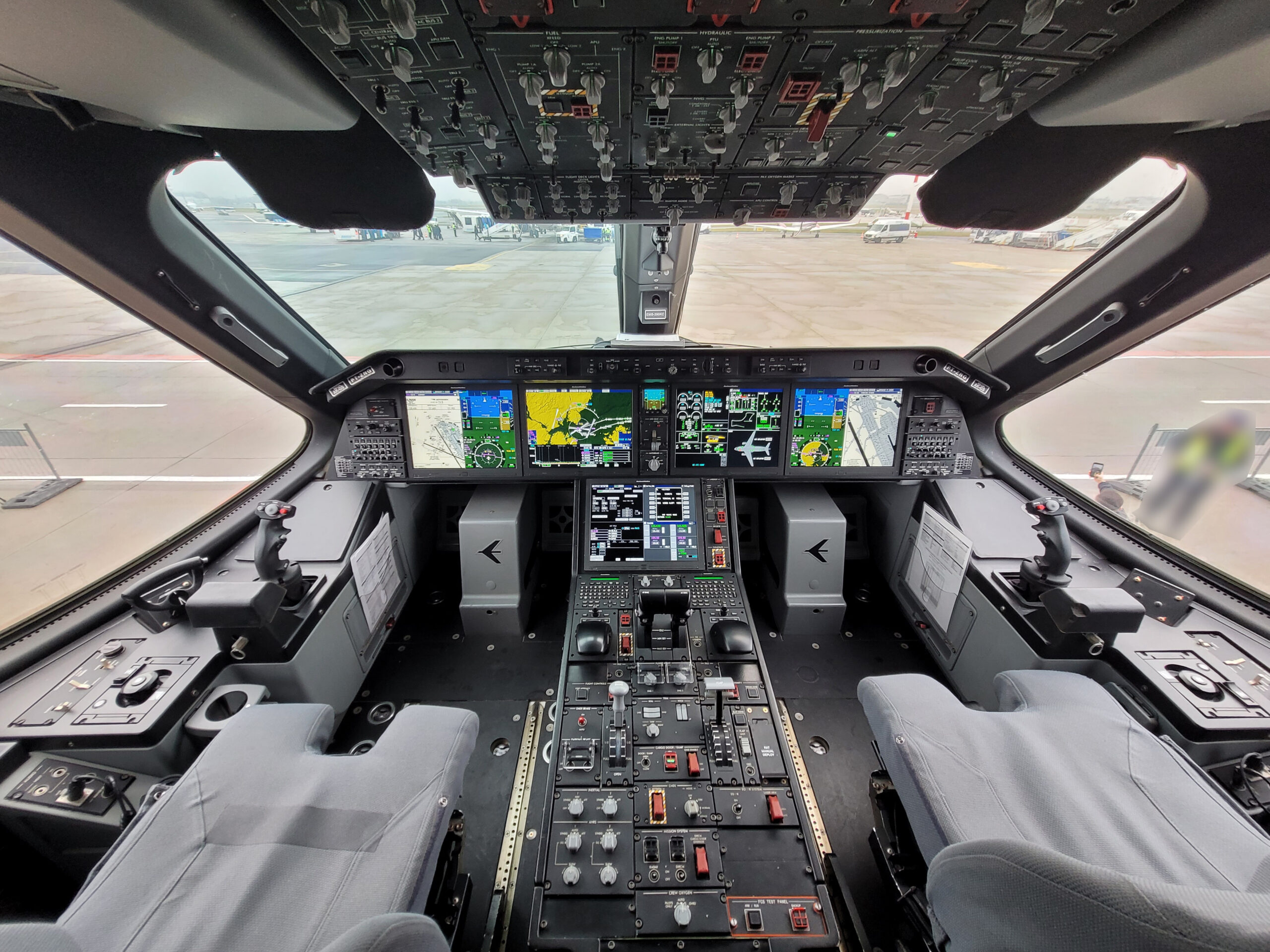
The KC-390’s crew consists of two pilots and a loadmaster. The pilots operate a fly-by-wire flight-control system with sidestick controllers and have a cockpit equipped with multifunction displays
The C-390 can carry a payload of up to 26 metric tones, outperforming comparable medium transport aircraft. For example, the C-130H can carry 19 metric tons. Thanks to its two turbofan engines (IAE V2500-E5, each providing 139.4 kN of thrust), it reaches a cruise speed of 870 km/h. By comparison, the C-130H cruises at 541 km/h. The Brazilian aircraft’s cargo hold is also slightly larger than that of the C-130, giving the C-390 greater overall transport capacity.
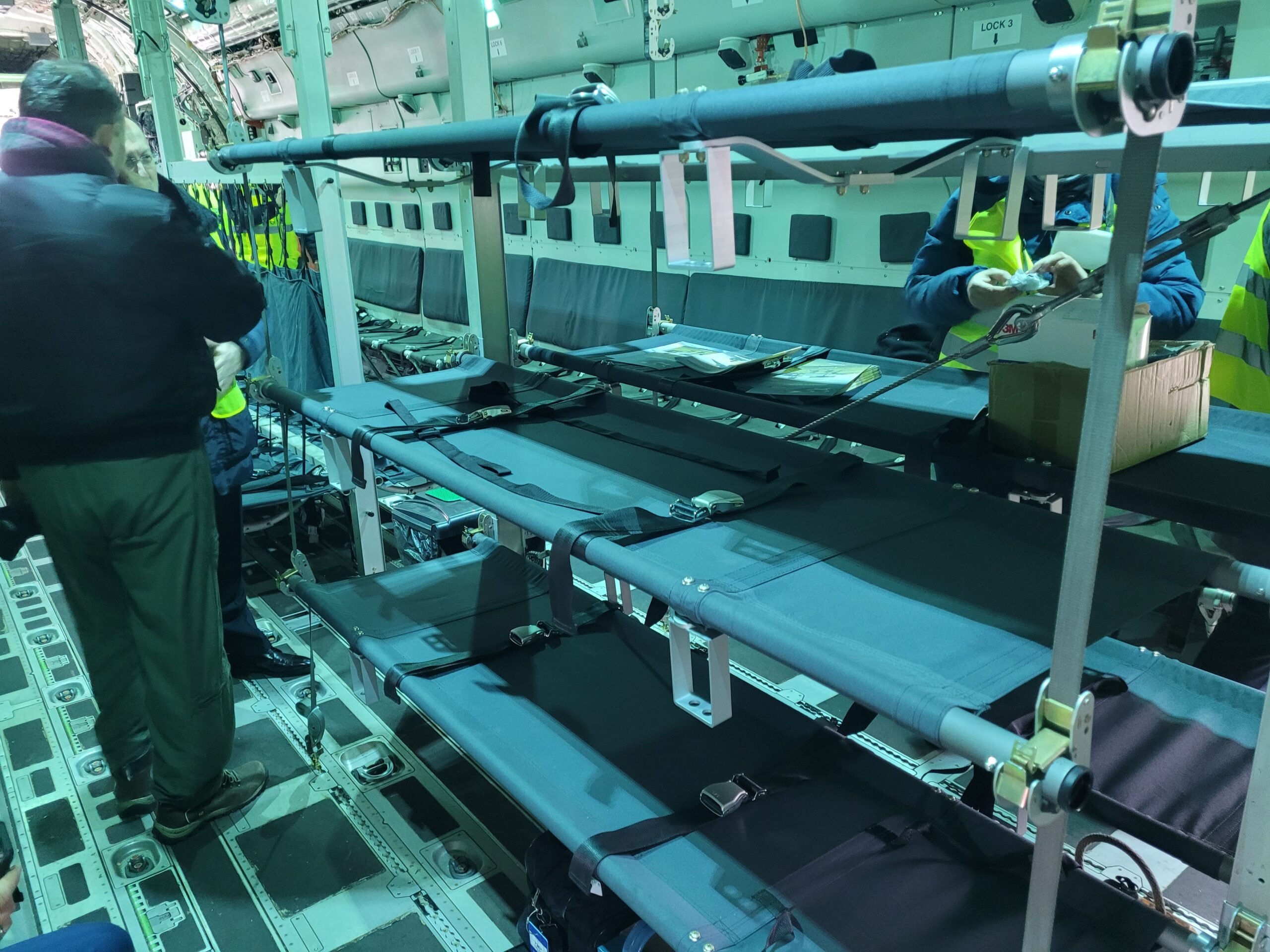
A section of the cargo compartment configured for medical evacuation
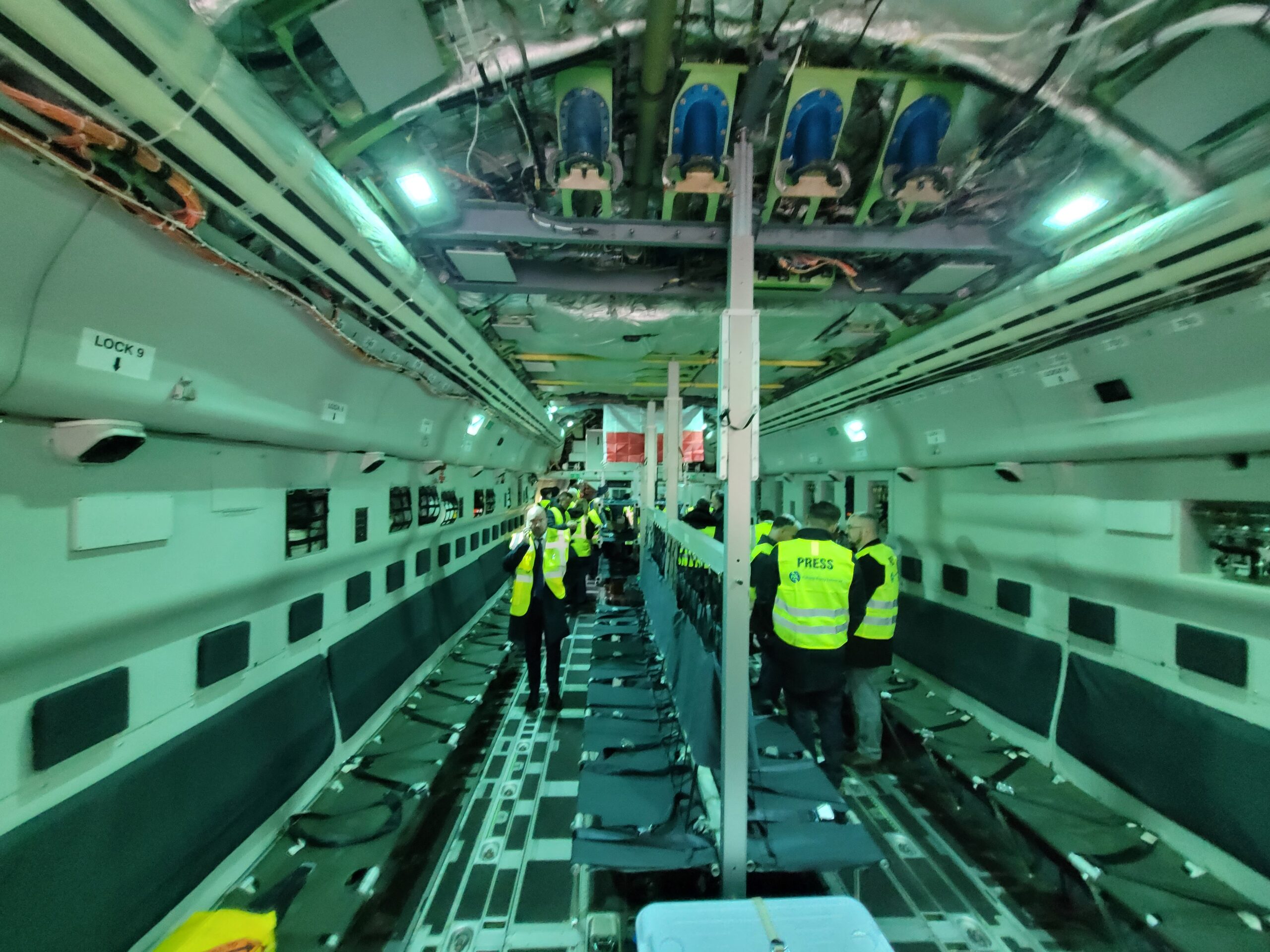
Cargo compartment configuration intended for transporting paratroopers
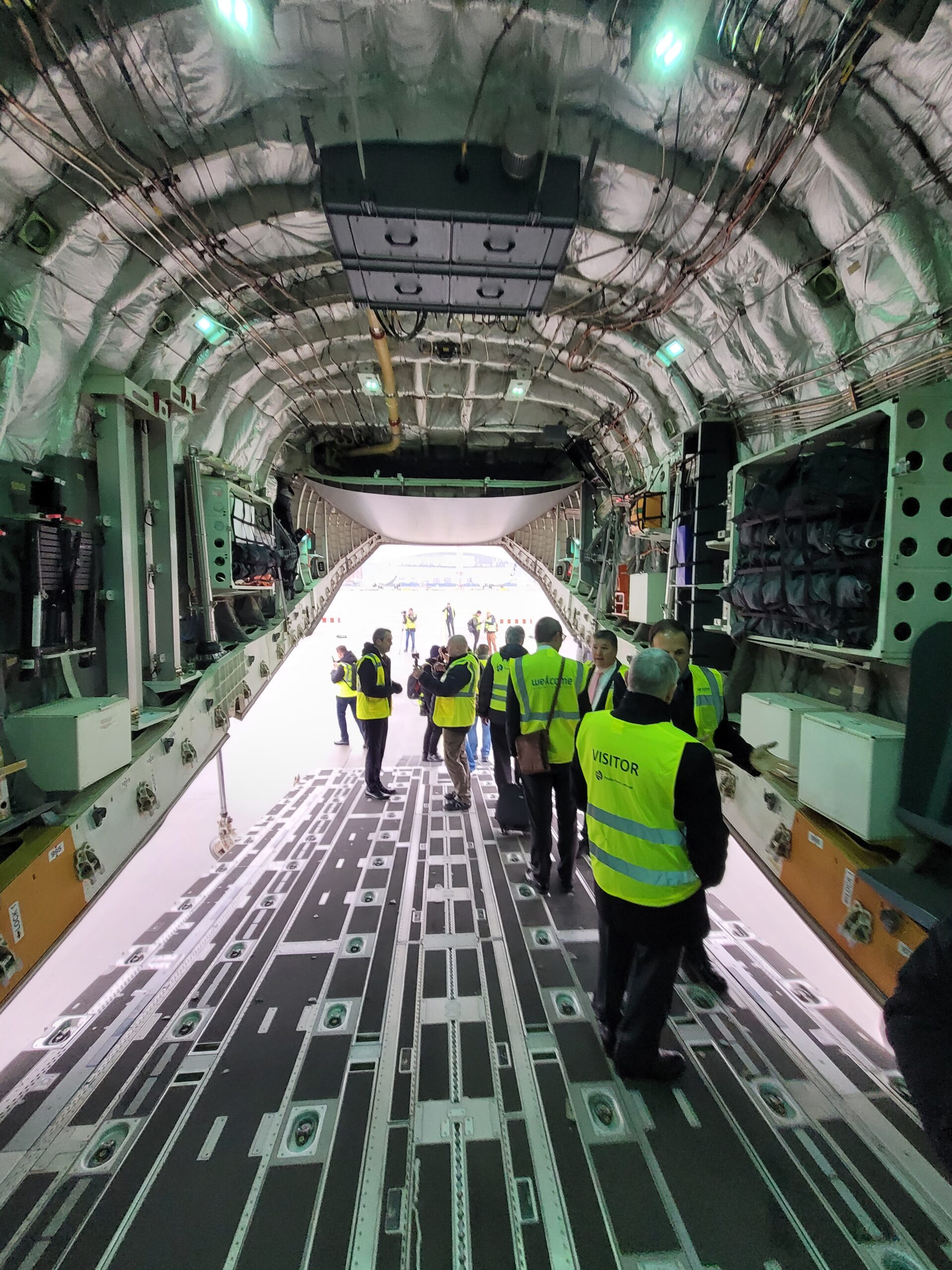
A ramp enabling the loading and unloading of cargo
The aircraft can transport, for example, a Black Hawk helicopter or HIMARS launchers. The C-390 can perform a wide range of missions, such as cargo and troop transport and airdrop, medical evacuation, search and rescue, firefighting, and humanitarian operations. It can operate from temporary airstrips with unpaved runways, such as compacted earth, grass, and gravel. Thus, the C-390 is an attractive option for air forces seeking to replace their current Hercules fleets with a modern design.
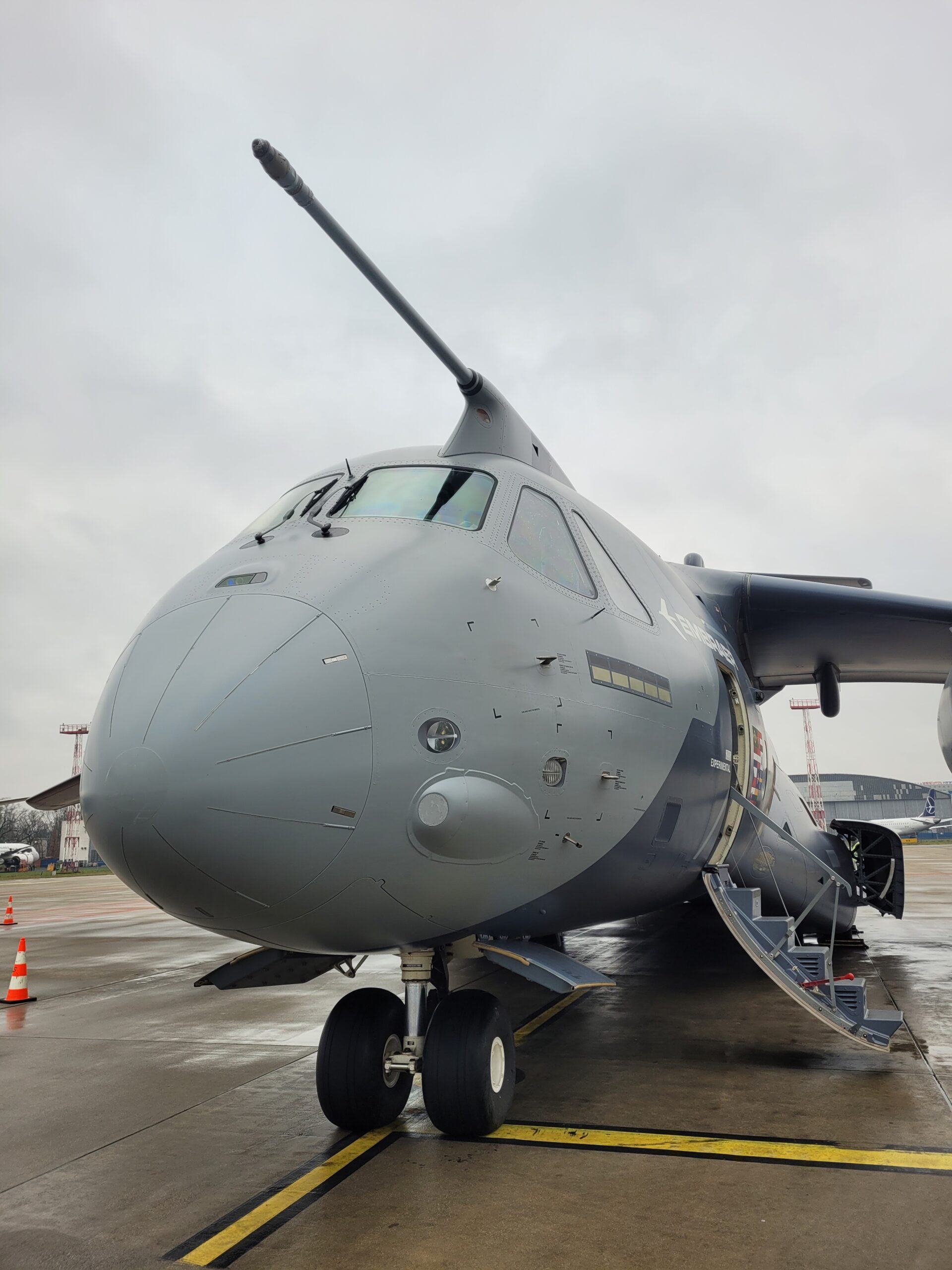
The KC-390 aircraft is equipped with a probe that allows it to receive fuel from another aircraft via a flexible hose. / Photos: Grzegorz Sobczak, MILMAG
The aircraft can be equipped with an aerial refueling system – the version fitted with it is designated KC-390, and this is the variant presented in Warsaw. Aircraft of this version are already performing aerial refueling missions using under-wing pods with flexible hoses. Importantly, they not only serve as flying tankers; the aircraft can also take on fuel from another tanker when needed, using a flexible refueling hose – receiving fuel, for example, from another KC-390.