


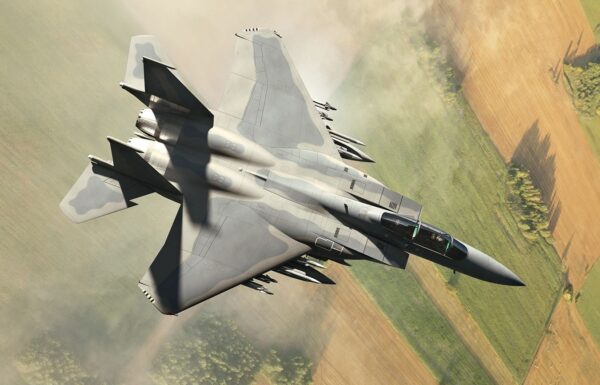















On Monday, 1 December 2025, the U.S. Defense Security Cooperation Agency (DSCA) announced that the U.S. Department of State had approved a potential sale to the Kingdom of Bahrain of a support package for the operation of Lockheed Martin F-16 Fighting Falcon multirole aircraft, valued at up to 445 million USD.
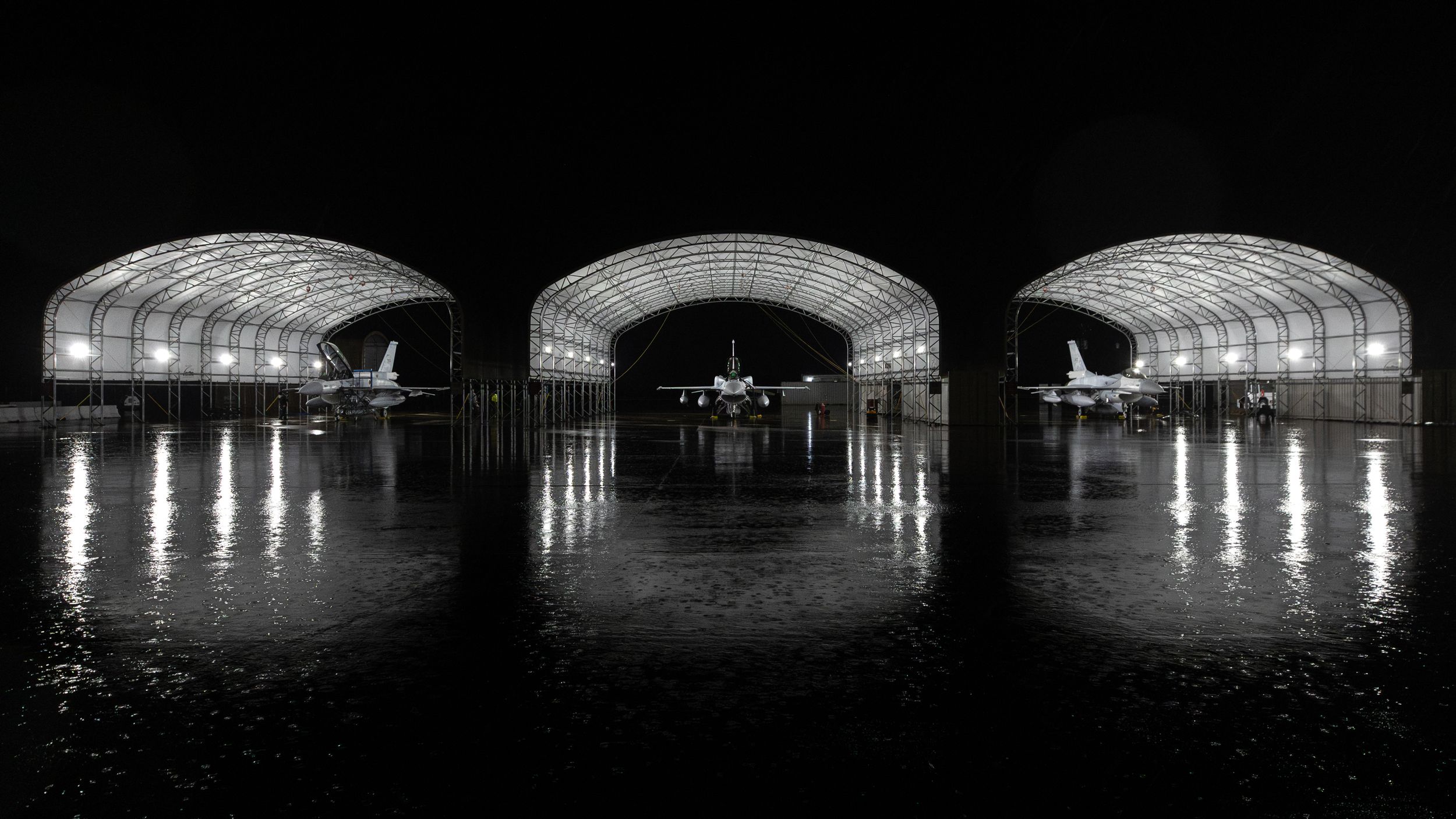 Photo: Lockheed Martin
According to the published information, the government in Manama requested authorization to acquire components for the aircraft, missile-transport containers, parts for radar-warning receiver systems, spare parts for missile guidance and control sections, weapons-system support, ground-support equipment, and laboratory instruments and equipment.
These items will be added to a previous package valued at up to 47 million USD, which fell below the congressional notification threshold. That earlier package covered major and minor modifications, the CPIN (Computer Program Identification Numbers) system, aircraft support equipment, spare parts for weapon pylons and support equipment, additional spare parts, consumables and accessories, repair and return support, delivery and support of classified and unclassified software, classified and unclassified publications and technical documentation, studies and surveys, transportation support, engineering, technical, and logistics services provided by the U.S. government and contractors (General Electric Aerospace and Lockheed Martin), as well as other related logistical and program support elements.
The Royal Bahraini Air Force (RBAF) operates 17 older F-16C/D Block 40s and has ordered 16 of the newest F-16C/D Block 70s, of which five have been delivered so far. The first Bahraini aircraft, an F-16D, was unveiled on 21 November 2022 and made its maiden flight on 24 January 2023. It was officially handed over on 10 March 2023, while deliveries began in March 2024 with the first three aircraft. The aircraft have been assigned to the 1st and 2nd Tactical Fighter Squadrons. Notably, Bahrain’s F-16C/D Block 70s are the first to be equipped with the new AN/ALQ-254V(1) Viper Shield electronic warfare system from L3Harris Technologies – flight testing took place in February this year.
Originally, in 1987, Bahrain purchased 8 F-16Cs and 4 F-16Ds Block 40 under the Peace Crown program. Deliveries were completed before 1991. Following the increased U.S. military presence after the First Gulf War, Bahrain sought to further strengthen its air force by replacing its F-5 Tiger II fleet. Initial discussions focused on acquiring a special version of the F-16N (F-16C/D Block 30) retired from the U.S. Navy and USMC, but ultimately Bahrain chose to acquire 10 new F-16C Block 40s instead.
On 8 September 2017, Bahrain received U.S. State Department approval to purchase 19 F-16C/D Block 70 aircraft for up to 2.785 billion USD, as well as a modernization package to upgrade 20 F-16C/D Block 40s to the same standard, valued at 1.082 billion USD. Ultimately, in November that year, a contract was signed for the purchase of 16 F-16C/D Block 70s for over 2.3 billion USD. Bahrain had sought new F-16s for years, but the administration of President Barack Obama blocked the sale due to concerns about human-rights issues. Approval was granted after Donald Trump took office in 2017. Bahrain is currently considering upgrading its older aircraft to the F-16V standard (equivalent to Block 70) or purchasing additional new-production F-16 Block 70s.
See also:
